
Hear from Our Customers
Your floors take more abuse than almost any other surface in your home. Foot traffic, humidity from being near the water, temperature swings, spills, furniture dragging across them daily. If they’re installed wrong or with subpar materials, you’ll see it fast—gaps, warping, cracking, uneven wear.
Done right, new floors do more than look good. They handle Blue Point’s coastal climate without buckling. They make cleaning easier. They reduce noise. And if you’re selling, they return serious value—hardwood alone can add 3-5% to your home’s resale price, sometimes more depending on the buyer.
But here’s what matters before any of that: you need someone who shows up on time, communicates clearly, doesn’t surprise you with extra charges halfway through, and actually knows how to install flooring that holds up. That’s not a given in this industry, and it’s exactly where most homeowners get burned.
We’ve been handling interior renovations across Suffolk County since 2016. We’re licensed, insured, and we specialize in flooring installation for homes and commercial spaces throughout Blue Point and the surrounding area.
We don’t use sales pressure. We don’t pad estimates with hidden fees. You get a clear quote, a realistic timeline, and work that’s done right the first time. Our approach is simple: show up when we say we will, do the job to code and beyond, and treat your property like it’s our own.
Blue Point homeowners deal with specific challenges—humidity, salt air, older home layouts. We’ve worked in enough local properties to know what holds up and what doesn’t. That experience shows in how we recommend materials, prep subfloors, and handle installations that last.

First, we come to your property and assess the space. We’re looking at your existing floors, subfloor condition, room layout, moisture levels, and what you’re trying to accomplish. You tell us your budget and preferences, and we’ll recommend what actually makes sense—not what’s most expensive.
Once you approve the estimate, we schedule the work around your timeline. Before installation, we prep the subfloor. This step matters more than most people realize—it’s what keeps your new floors level and prevents future problems. We remove old flooring if needed, check for damage, make repairs, and ensure everything is clean and dry.
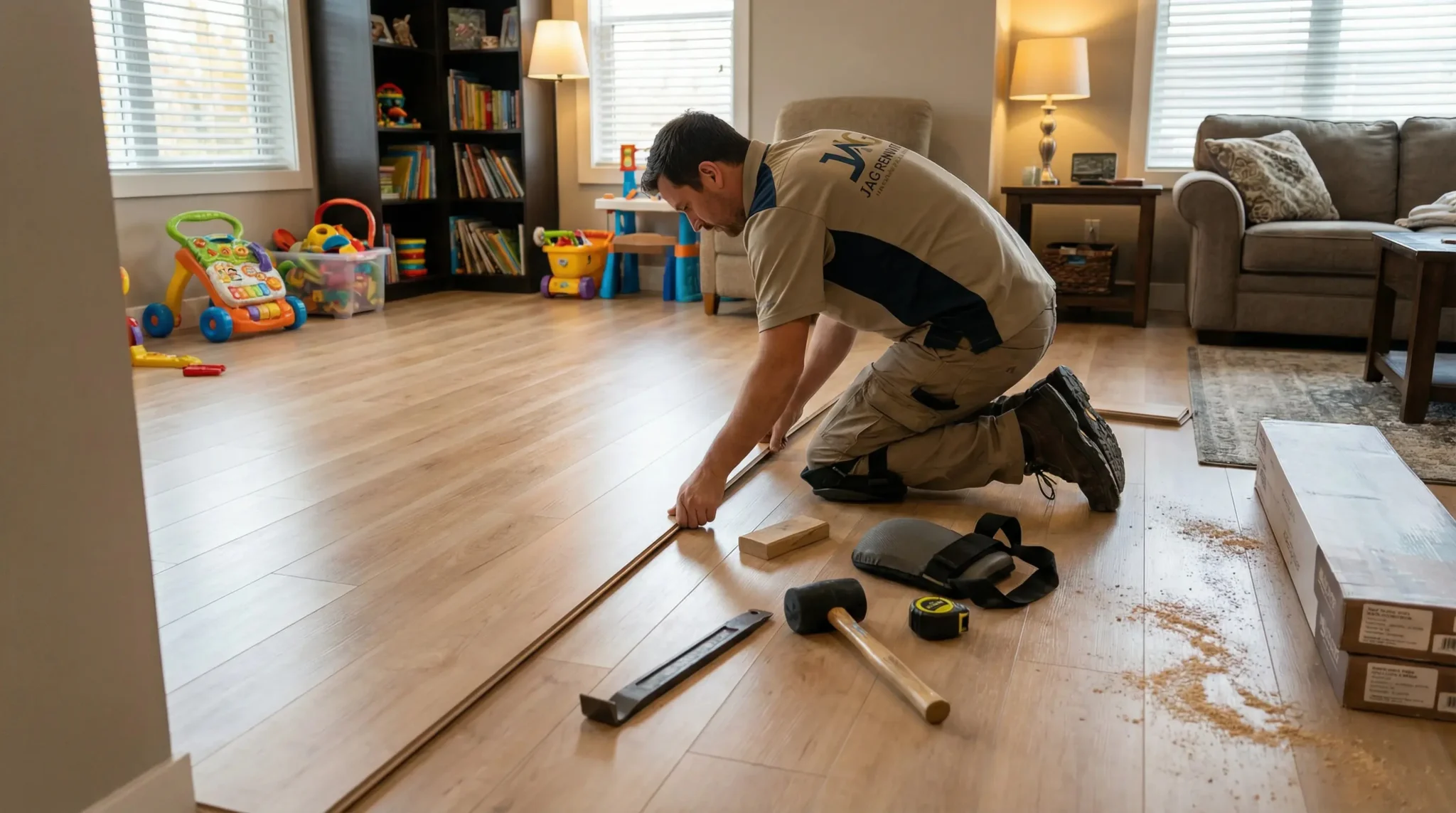
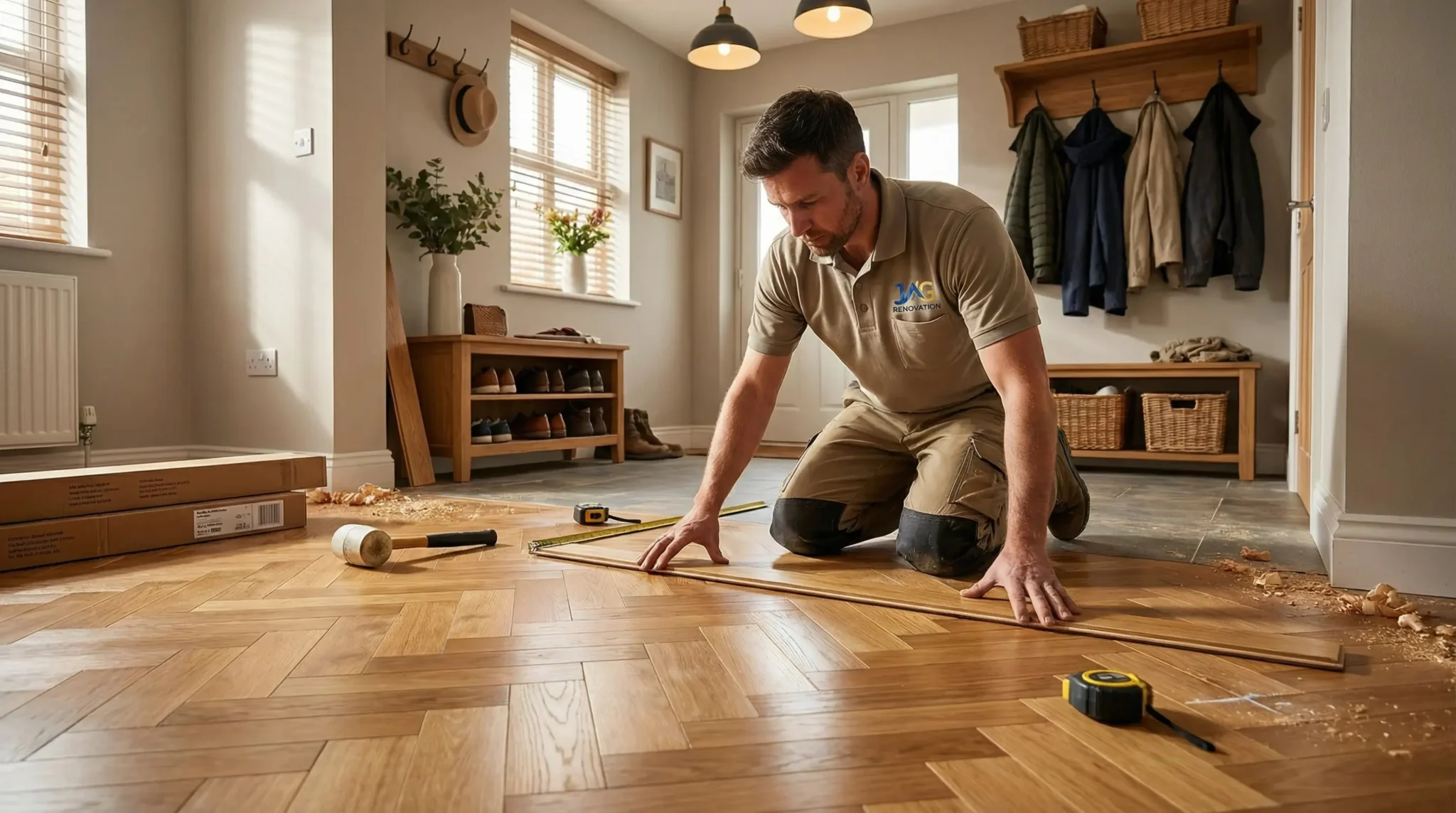
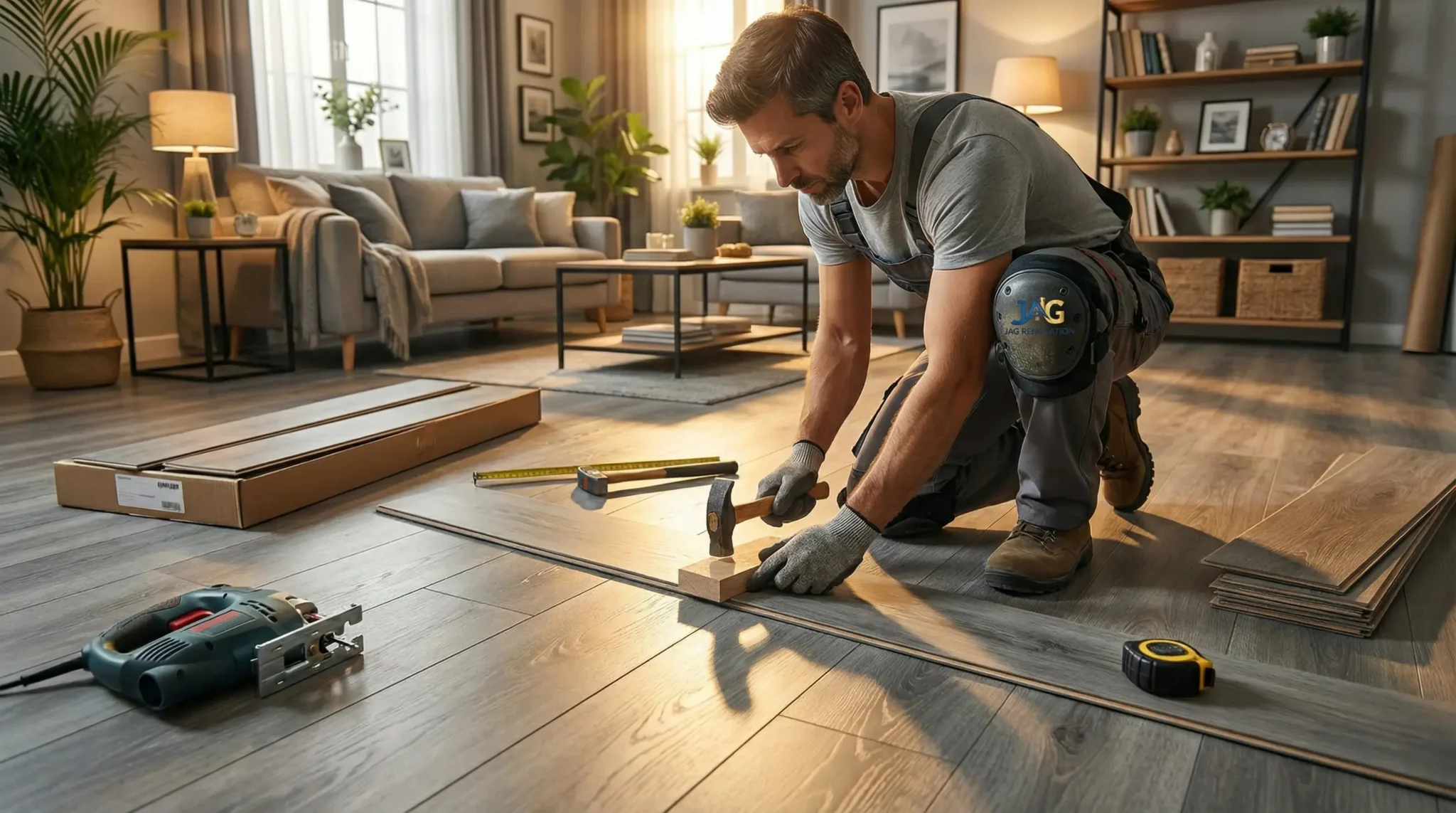
Then we install. Depending on the material—hardwood, tile, vinyl plank, laminate—the process varies, but the standard doesn’t. We use dust containment when possible, keep the work area contained, and clean up daily. After installation, we do a final walkthrough with you to make sure everything meets expectations before we call it done.
Ready to get started?
We handle hardwood floor installation, tile floor installation, luxury vinyl plank and tile, laminate flooring installation, and carpet when it fits the project. Each material has trade-offs, and the right choice depends on your space, budget, and how you use the room.
Hardwood is still king for resale value and longevity, but it requires proper acclimation and humidity control—especially important in Blue Point’s coastal environment. Engineered hardwood gives you a similar look with better moisture resistance. Tile works well in bathrooms, kitchens, and entryways where water exposure is high. Vinyl flooring has come a long way—luxury vinyl plank is durable, waterproof, and handles temperature changes better than most options.
For commercial flooring projects, we focus on durability and maintenance. High-traffic areas need materials that won’t show wear in six months. We’ve installed flooring in local businesses, rental properties, and office spaces where downtime costs money and the floor needs to perform under constant use.
Blue Point homes vary widely—some are newer builds, others are older properties with unique layouts and challenges. We’ve worked in both. The key is matching the material to the structure and making sure the installation accounts for how the building moves, where moisture comes from, and what the floor will actually endure over time.

For an average-sized room—say 200-300 square feet—you’re looking at one to three days depending on the material. Hardwood and tile take longer because of prep work, adhesive cure times, and finishing. Vinyl plank and laminate go faster since they’re floating floors that click together.
Whole-home projects obviously take longer. A 1,500 square foot home might take a week to ten days if we’re doing multiple rooms with different materials. The timeline also depends on what we find when we pull up old flooring. If there’s subfloor damage or moisture issues, we fix those first—it adds time but prevents bigger problems down the road.
We’ll give you a realistic schedule upfront. We don’t rush jobs to move on to the next one. You’ll know when we’re starting, when we’ll be working each day, and when we expect to finish.
Luxury vinyl plank is hard to beat for moisture resistance and stability. It’s waterproof, handles temperature swings without expanding or contracting much, and it’s durable enough for high-traffic areas. It’s become the go-to for a lot of coastal homeowners for good reason.
Tile is another solid choice, especially porcelain. It doesn’t react to humidity, it’s easy to clean, and it lasts decades if installed correctly. The grout needs to be sealed, but that’s a small maintenance task compared to dealing with warped wood.
If you want hardwood, engineered hardwood is smarter than solid in this climate. It’s constructed in layers, which makes it more stable when humidity fluctuates. Solid hardwood can still work, but it requires careful installation, proper acclimation, and you need to manage indoor humidity levels year-round. We’ll walk you through the pros and cons based on your specific space.
It depends on the material, room size, subfloor condition, and complexity of the layout. As a rough guideline: vinyl plank runs $3-$7 per square foot installed. Laminate is similar. Tile ranges from $5-$15+ depending on the tile itself and the pattern. Hardwood installation typically starts around $8-$12 per square foot and goes up from there based on the wood species and finish.
Those are ballpark numbers. The real cost comes down to your specific project. If we need to remove old flooring, repair subfloors, or work around tricky layouts, that affects the price. We give you a detailed written estimate before any work starts, and we don’t add surprise charges later.
One thing to keep in mind: cheap installations cost more in the long run. Floors that aren’t prepped right or installed to code start failing within a year or two. You end up paying twice—once for the bad job, once to fix it. We price our work fairly, and it’s done right the first time.
Yes. We install flooring for homeowners and businesses throughout Blue Point and Suffolk County. The approach is different depending on the project, but the standard stays the same—proper prep, quality installation, clear communication.
Commercial projects usually have tighter timelines and higher durability requirements. Retail spaces, offices, and rental properties need floors that handle constant traffic without showing wear too quickly. We use commercial-grade materials and installation methods that hold up under those conditions.
For residential flooring, the focus shifts to aesthetics, comfort, and how the floor fits your lifestyle. We take more time talking through options because you’re living with this decision daily. Both types of projects get the same level of care and attention to detail—we just adjust our approach based on what the space needs.
There will be some disruption—that’s unavoidable when you’re tearing out old floors and installing new ones. But we minimize it as much as possible. We contain the work area, use dust barriers, and clean up at the end of each day so you’re not living in a construction zone.
Noise is part of the process, especially during demo and subfloor prep. If you work from home or have young kids, we can work around your schedule when possible. Most of the loud work happens in the first day or two.
You’ll need to move furniture out of the rooms we’re working in, or we can help with that depending on the scope. Some materials require cure time before you can walk on them—tile and hardwood with certain finishes need 24-48 hours. We’ll walk you through what to expect so there are no surprises. The goal is to get in, do the work right, and get out of your way as quickly as we can without cutting corners.
We check that during the initial assessment. Common signs include soft spots, squeaking, visible water damage, uneven areas, or a musty smell. If your old flooring has gaps, buckling, or sections that feel loose, that’s often a subfloor issue underneath.
In Blue Point, moisture is a frequent culprit. Older homes especially can have subfloor damage from leaks, humidity, or poor ventilation over the years. If we find problems, we’ll show you exactly what’s going on and explain what needs to be fixed. Sometimes it’s a small repair, sometimes it’s replacing sections of plywood or underlayment.
Skipping subfloor repairs is a mistake. Your new flooring is only as good as what’s underneath it. If the base isn’t solid and level, the floor won’t perform right no matter how good the installation is. We handle subfloor work as part of the project when needed—it’s not an upsell, it’s just doing the job correctly from the ground up.