
Hear from Our Customers
You’re not just replacing what’s underfoot. You’re making a decision that affects your home’s value, your daily comfort, and how much maintenance you’ll deal with for the next decade or more.
When your floors are installed correctly, you don’t think about them. They handle the traffic from kids and pets without showing wear in the first year. They don’t creak, shift, or develop gaps when humidity changes with the seasons. You can clean them without worrying about damaging the finish.
The right flooring also changes how your home feels. Rooms look bigger with wide-plank options. Spaces feel warmer with the right tone and texture. And when it’s time to sell, buyers notice quality work—it’s one of the first things they see and feel when they walk through your door.
You also avoid the nightmare scenarios: contractors who go silent mid-project, surprise costs that double your budget, or installations that fail within months because someone cut corners. That’s what happens when you hire based on the lowest bid instead of actual competence.
We’ve been handling flooring projects across East Northport and Suffolk County since 2016. We’ve worked in older homes where the subfloor needed serious attention before any new material could go down. We’ve handled new construction where timing and coordination mattered as much as the install itself.
What keeps people calling us back isn’t just the work—it’s how we communicate. You’ll get a clear timeline before we start. You’ll know what the project will cost, what materials we’re using, and what to expect each day. If something changes, you’ll hear about it immediately, not after the fact.
East Northport homes come with their own challenges. Many properties here were built decades ago, which means subfloor issues, uneven surfaces, and moisture concerns are common. We’ve seen it all, and we know how to handle it without inflating the scope or the price. You’re hiring people who’ve done this hundreds of times in homes just like yours.

First, we walk through your space and assess what you’re working with. That means checking the subfloor, looking for moisture issues, measuring everything, and talking through your options based on how you actually use the space. If you have pets, kids, or high traffic areas, that changes the recommendation.
Once you’ve picked your material—whether it’s hardwood, tile, vinyl, or laminate—we give you a fixed price and a timeline. No vague estimates. You’ll know what day we start, how long it takes, and what prep work is required on your end, like moving furniture or arranging for pets to be out of the house.
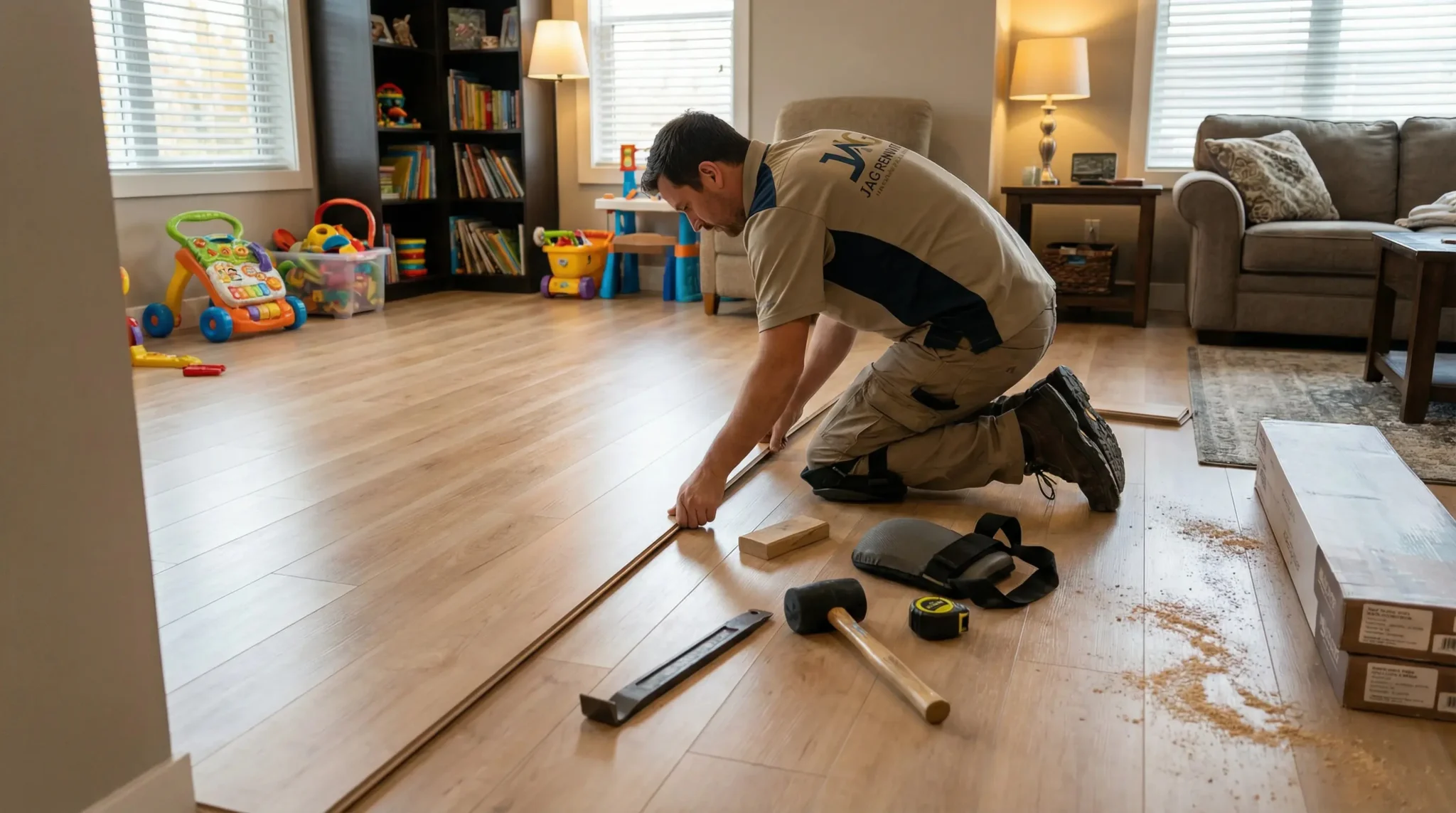
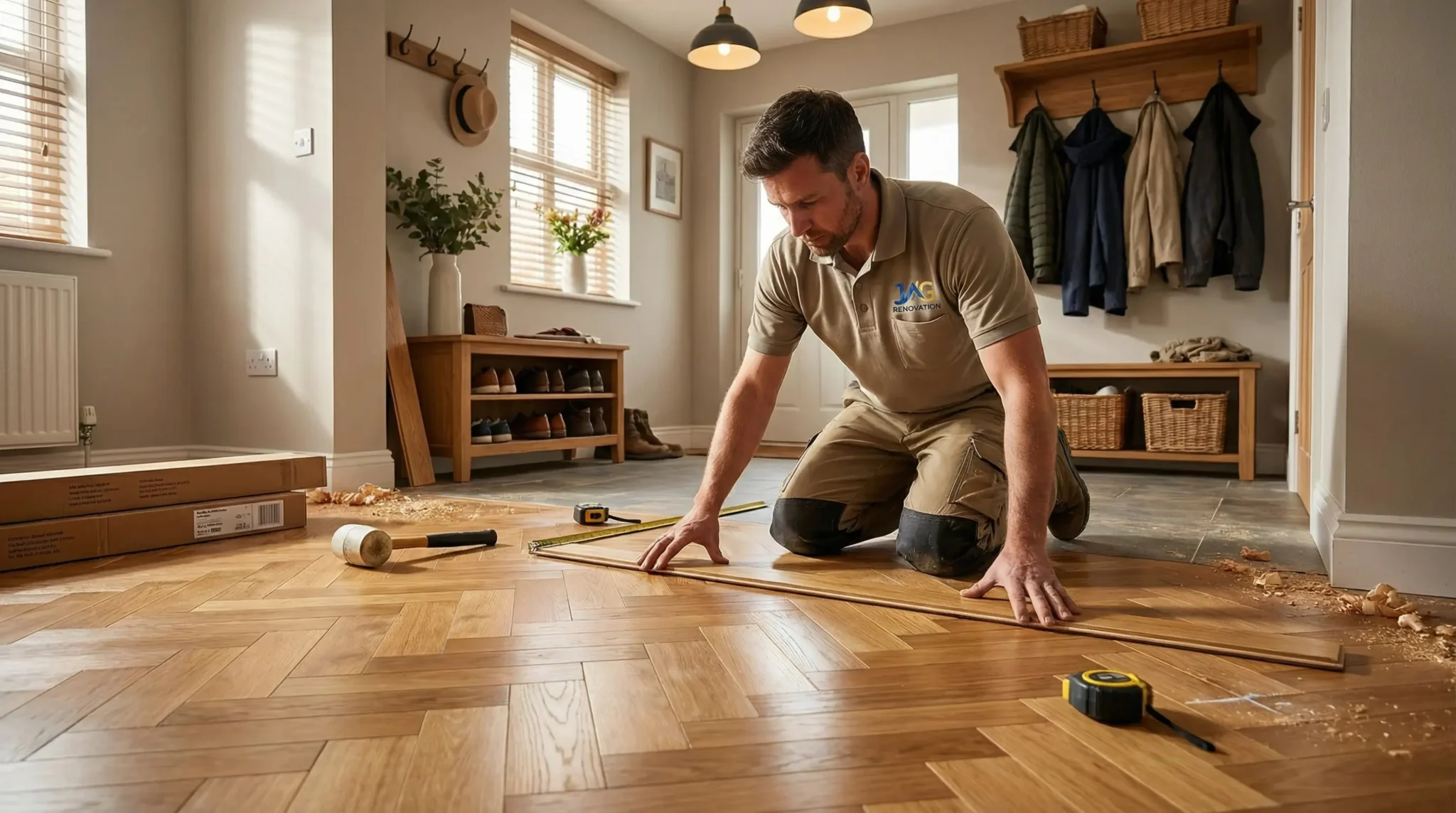
During installation, we handle the subfloor prep, material acclimation, and the actual install. Depending on what you’re putting down, that might mean sanding and leveling, moisture barriers, or underlayment. For tile flooring installation, there’s layout planning, mortar work, and grouting. For hardwood or laminate flooring installation, it’s about precision cuts, proper spacing, and finishing work.
After the install, we walk you through maintenance. You’ll know what products to use, what to avoid, and how to keep your floors looking good without extra effort. If anything needs adjustment in the weeks after, we come back. That’s part of the job.

Ready to get started?
Every flooring job starts with an honest assessment. We’re not upselling you on materials you don’t need, and we’re not pretending your subfloor is fine when it’s not. If there’s an issue, you’ll know about it upfront, along with what it takes to fix it and what it costs.
You’ll get options that make sense for your space. Vinyl flooring works well in basements or areas where moisture is a concern—it’s durable, waterproof, and looks significantly better than it did ten years ago. Tile is ideal for kitchens, bathrooms, and entryways where water and wear are constant. Hardwood is still the gold standard for living areas and bedrooms if your subfloor can support it. Laminate offers a middle ground—decent look, lower cost, faster install.
In East Northport, where home values sit above $700K, flooring isn’t just cosmetic. It’s part of your home’s equity. Buyers here expect quality, and they’ll notice if your floors are buckling, discolored, or poorly installed. We handle this with an eye on resale value, not just aesthetics.
We also coordinate around your schedule. If you need us to work in stages so you’re not displaced for a week, we can do that. If you need the job done fast because you’re listing the house, we’ll make it happen. The timeline depends on square footage, material choice, and subfloor condition—but you’ll have a realistic estimate before we start, not halfway through when it’s too late to adjust.

If your floors are solid hardwood and the damage is surface-level—scratches, dullness, minor staining—refinishing is the smarter move. You’re looking at 25-50% of the cost of replacement, and the process takes 3-5 days. The downside is the dust, the smell of finish curing, and needing to stay out of the space while it dries.
Replacement makes sense when the wood itself is compromised. That means warping, deep water damage, structural issues with the subfloor, or floors that have already been refinished multiple times and don’t have enough material left to sand down again. Engineered hardwood and laminate can’t be refinished at all—they get replaced.
If you’re not sure, we’ll tell you. There’s no point in refinishing floors that won’t hold up, and there’s no reason to replace floors that just need a fresh finish. The decision comes down to the condition of what’s already there and how much life is left in it.
Vinyl flooring is fully waterproof, which makes it the best option for basements, bathrooms, and laundry rooms. Luxury vinyl plank (LVP) looks nearly identical to hardwood and holds up to moisture, scratches, and heavy use. It’s also softer underfoot than tile or laminate, which some people prefer. Installation is faster and cheaper than most other options.
Laminate flooring looks similar to vinyl but isn’t waterproof—it’s water-resistant at best. It works well in bedrooms, living rooms, and dining areas where spills are rare. The core is made from compressed wood fiber, so if water sits on it too long, it swells and warps. It’s more affordable than hardwood but doesn’t have the same resale appeal.
Tile flooring is the most durable option and completely waterproof, but it’s cold, hard, and more expensive to install. Ceramic tile floor installation requires mortar, grout, and precision layout work. It’s ideal for kitchens, bathrooms, and entryways. Once it’s down, it lasts decades—but if a tile cracks, you’re replacing individual pieces, and matching old grout color is nearly impossible.
For a standard room—say, 200-300 square feet—vinyl or laminate flooring installation takes 1-2 days. That includes subfloor prep, underlayment, and the install itself. Hardwood takes longer because of acclimation time (the wood needs to sit in your home for a few days before installation) and finishing work if it’s unfinished planks.
Tile floor installation is the slowest. Layout and mortar work happen on day one. Grout goes in on day two. Then you wait another 24-48 hours before walking on it or moving furniture back. For a bathroom, expect 3-4 days. For a kitchen, closer to a week.
The timeline also depends on what we find when we pull up your old flooring. If the subfloor is uneven, damaged, or has moisture issues, that adds time. We’ll know more after the initial assessment, but we won’t start the install until the subfloor is ready. Skipping that step is how you end up with floors that fail in the first year.
Yes, but how much depends on the scope. For a whole-house flooring job, everything needs to be out of the rooms we’re working in. Some homeowners handle this themselves. Others hire movers or rent a storage unit for a week. If you’re only doing one or two rooms, you can shift furniture into other parts of the house.
We can work around heavy items like bed frames or dressers if needed, but it slows things down and limits access. The cleaner the space, the faster and cleaner the install. If you’re replacing flooring in the kitchen, that means clearing out lower cabinets too—we need access to the floor edges where the material meets the cabinetry.
For tile flooring work, dust and debris are part of the process, so you’ll want anything valuable or fragile out of the area. For vinyl or laminate, it’s cleaner overall, but you still don’t want furniture in the way when we’re cutting and laying planks. Plan for the space to be empty, and you’ll avoid delays.
Vinyl flooring typically runs $3-7 per square foot installed, depending on the quality of the product. Luxury vinyl plank costs more than basic sheet vinyl, but it also looks better and lasts longer. For a 300-square-foot room, you’re looking at $900-2,100.
Laminate flooring installation costs about the same—$3-8 per square foot installed. The price goes up with thicker planks, better wear layers, and more realistic wood patterns. It’s a solid middle option if you want the look of hardwood without the cost.
Tile flooring is more expensive. Ceramic tile floor installation runs $7-15 per square foot installed, and that’s before you factor in custom layouts, larger tiles, or premium grout. A 100-square-foot bathroom could cost $700-1,500 just for the floor. Hardwood is the highest—$8-15 per square foot installed for solid wood, and more if you’re going with wider planks or exotic species. These are rough ranges. Your actual cost depends on square footage, subfloor condition, material choice, and how much prep work is needed.
Start by checking how they communicate. If it takes days to get a response or they’re vague about pricing, that’s a red flag. You want someone who answers questions clearly, shows up on time for estimates, and gives you a detailed quote—not a rough ballpark that doubles later.
Ask about their experience with your specific type of project. A commercial flooring contractor might not be the best fit for a residential job, and someone who mostly does new construction might not know how to handle the quirks of an older East Northport home. You want a residential flooring contractor who’s worked in spaces like yours.
Check references, but also trust your gut. If someone’s pushing you toward the most expensive option without explaining why, or if they’re dismissive of your concerns, walk away. The right contractor explains your options, respects your budget, and doesn’t disappear once the deposit clears. You’re hiring someone who’ll be in your home for days—make sure they’re people you’re comfortable having around.
Other Services we provide in East Northport