
Hear from Our Customers

You stop worrying about whether the contractor will show up. You stop second-guessing if you’re getting ripped off or if corners are being cut to hit a lower price.
When your flooring installation is handled by licensed professionals who’ve been doing this for nearly a decade, the job gets done on schedule. The seams line up. The transitions are clean. You’re not calling someone back three months later because the tile is cracking or the laminate is buckling.
Your home feels more comfortable. It looks better. And if you’re planning to sell down the road, quality floors add real value—not the kind that looks good in photos but fails an inspection.
You get floors built to handle daily life in Suffolk County homes. Floors that hold up to foot traffic, humidity changes, and whatever your family throws at them. That’s what happens when the work is done right the first time.
We’ve been handling interior renovations across Suffolk County since 2016. We’re licensed, insured, and we specialize in the kind of work that doesn’t need a callback.
Most of our flooring projects in Miller Place are residential—homeowners replacing outdated carpet, upgrading to hardwood, or installing tile in kitchens and bathrooms. We also handle full-home flooring remodels where every room gets new floors on a coordinated timeline.
We’re not the cheapest option, and that’s intentional. You’re paying for proper subfloor prep, quality materials, and installation that doesn’t cut corners. The difference shows up in how long your floors last and how few problems you deal with after we’re done.

First, we come to your home in Miller Place to assess the space. We’re looking at subfloor condition, moisture levels, room layout, and how you actually use the space. That determines which flooring types make sense and which don’t.
We walk you through material options—hardwood, laminate, vinyl, tile—and explain the real differences. Not sales talk. Actual pros and cons based on your lifestyle, budget, and what holds up best in Suffolk County homes.
Once you decide, we handle the prep work. That means pulling up old flooring, checking for subfloor damage, making repairs if needed, and ensuring everything is level. Skipping this step is where most flooring jobs fail early.
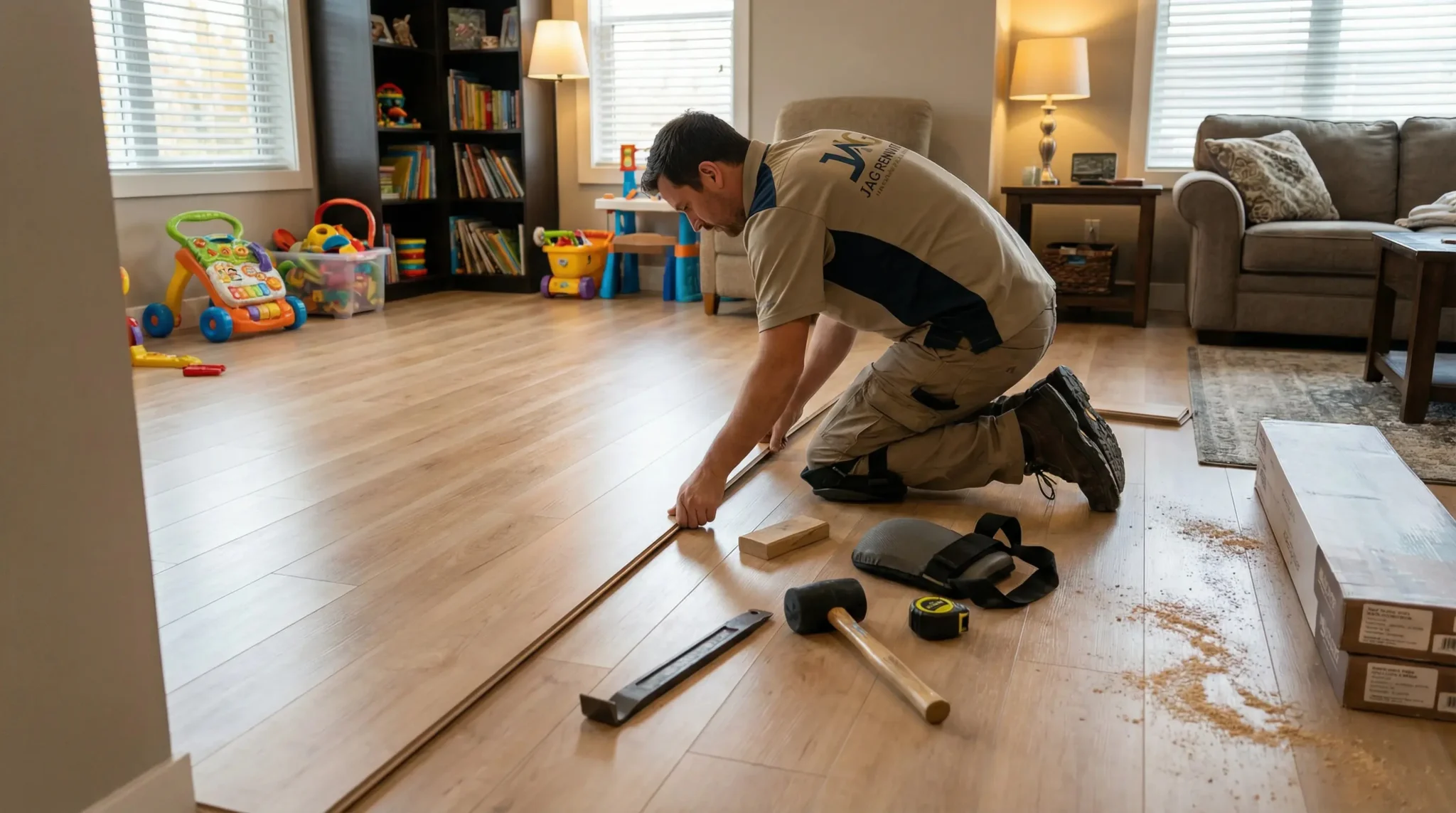
Installation comes next. We work clean, stick to the schedule, and don’t leave a mess at the end of each day. Depending on the size of the job and the material, most residential flooring projects take anywhere from a few days to a week.
After installation, we walk the job with you. You see the finished work, we address any questions, and you’re clear on how to maintain your new floors. Then we’re done—but we’re still reachable if something comes up later.

Ready to get started?
We install hardwood, engineered wood, laminate, luxury vinyl plank, vinyl sheet flooring, ceramic tile, and porcelain tile. If it goes on a residential floor in Miller Place, we’ve done it.
Every flooring installation includes subfloor inspection and prep. We don’t install over problems—we fix them first. That means checking for moisture issues, leveling uneven surfaces, and replacing damaged sections. It’s not optional.
We also handle removal of your old flooring and disposal. You’re not dealing with a dumpster in your driveway or hauling materials yourself.
For tile work, we do custom layouts, waterproofing in wet areas like bathrooms, and precision cuts around fixtures and doorways. For hardwood and laminate, that means proper acclimation, expansion gaps, and transitions between rooms that actually look intentional.
Miller Place homes—especially older ones near the water—deal with humidity swings. We account for that during installation. The materials we recommend and the way we install them factor in seasonal movement so your floors don’t buckle or gap six months later.
You also get transparent pricing up front. No surprise charges. No upsells mid-project. The number we give you is the number you pay unless you change the scope of work.

Most homeowners in Miller Place spend between $3,000 and $8,000 to replace flooring, depending on square footage, material choice, and how much prep work the subfloor needs. A single room with vinyl or laminate might run $1,500 to $2,500. A whole-home hardwood installation can push $15,000 or more.
Material costs vary widely. Luxury vinyl plank runs $3 to $7 per square foot installed. Laminate is similar. Ceramic tile ranges from $5 to $10 per square foot. Solid hardwood starts around $8 and goes up depending on species and finish.
Labor is usually 40-60% of the total cost. That includes demo, subfloor prep, installation, and cleanup. If your subfloor has water damage or needs leveling, that adds to the bill—but it’s not optional if you want floors that last.
The cheapest bid isn’t always the best move. Contractors who undercut everyone else are either skipping prep work, using lower-grade materials, or rushing the job. You’ll pay for it later in repairs or early replacement.
It depends on the room and how you live. For kitchens and bathrooms, tile or luxury vinyl plank makes the most sense. Both handle moisture well, and tile especially holds up to heavy use without showing wear.
For living rooms, bedrooms, and dining areas, hardwood or engineered wood adds value and looks great. Engineered wood is more stable in humid environments, which matters in Suffolk County. Solid hardwood is an option if your subfloor and budget allow for it, but it requires more maintenance.
Laminate is a solid middle-ground option. It’s cheaper than hardwood, more scratch-resistant, and easier to maintain. It doesn’t add as much resale value, but it’s a smart choice if you have kids, pets, or a tighter budget.
Carpet still works in bedrooms if you want something soft underfoot, but it’s harder to keep clean and doesn’t last as long as hard-surface options. Most Miller Place homeowners are moving away from carpet except in specific spaces.
Vinyl plank has come a long way. The newer products look surprisingly close to real wood, they’re waterproof, and they’re tough. If you’re replacing flooring in a basement or a rental property, vinyl is hard to beat for durability and cost.
A single room usually takes one to two days, depending on the material and the condition of the subfloor. If we’re installing luxury vinyl plank in a bedroom with a solid subfloor, that’s often a one-day job.
Tile takes longer. A bathroom floor might take two to three days once you factor in setting the tile, letting it cure, and grouting. Kitchens can take three to five days depending on size and layout complexity.
Whole-home flooring projects typically run one to two weeks. That includes demo, subfloor work, installation, and finishing details like baseboards and transitions. We work room by room when possible so you’re not displaced from your entire house.
Delays happen when we find subfloor damage that wasn’t visible during the estimate. Water damage, rot, or structural issues have to be fixed before we install new flooring. We’ll walk you through what we find and what it’ll take to fix it before moving forward.
Most residential flooring contractors in Miller Place will give you a timeline during the estimate. If someone can’t give you a clear schedule or keeps pushing the start date, that’s a red flag.
Yes, in most cases. We can move smaller furniture like chairs, side tables, and lamps, but larger pieces like beds, dressers, and couches should be cleared out before we start. It protects your belongings and lets us work faster.
If you can’t move everything yourself, let us know during the estimate. We can arrange for furniture moving, but it usually adds to the cost and the timeline. Some flooring contractors include light furniture moving in their bid—we’re upfront about what’s covered and what’s not.
Everything needs to come off the floor, including area rugs, floor lamps, and anything stored in the room. We also need clear access to the work area, so hallways and doorways should be open.
For tile work in bathrooms, the toilet comes out during installation and goes back in after. Same with vanities if we’re running tile underneath. We handle that as part of the job.
The clearer the space is when we arrive, the faster the work goes. If we’re spending half a day moving stuff, that’s time we’re not installing your floor—and it stretches the project timeline.
Start with where the floor is going and what kind of wear it’ll see. Tile is the most durable option and the best choice for moisture-prone areas like bathrooms, laundry rooms, and entryways. Ceramic tile is affordable and tough. Porcelain tile is even more water-resistant and works well in high-traffic areas.
Laminate flooring looks like hardwood but costs less and holds up better to scratches. It’s not waterproof, so it’s not ideal for bathrooms or basements where moisture is an issue. It works great in bedrooms, living rooms, and dining areas where you want the look of wood without the maintenance.
Vinyl flooring—especially luxury vinyl plank—is waterproof, easy to install, and available in styles that mimic wood or tile. It’s softer underfoot than tile or laminate, which some people prefer. It’s also a smart choice for basements or homes with kids and pets because it’s nearly indestructible.
Cost is another factor. Vinyl is usually the cheapest installed option. Laminate is next. Tile can range from budget-friendly ceramic to high-end porcelain or natural stone, so the price range is wider.
If resale value matters, tile and hardwood add more to your home’s value than laminate or vinyl. But if you’re planning to stay in your Miller Place home for years and you want something low-maintenance, vinyl or laminate might make more sense day-to-day.
Licensed and insured contractors cost more, but you’re paying for protection and accountability. If something goes wrong—subfloor damage, improper installation, injury on the job—you’re covered. Unlicensed contractors leave you holding the liability and the repair costs.
A licensed residential flooring contractor in Miller Place has met state requirements, carries insurance, and has a track record you can verify. That matters when you’re spending thousands of dollars on a project that affects your home’s structure and value.
Cheaper bids usually mean shortcuts. That could be skipping subfloor prep, using lower-grade materials, or rushing the installation. The floor might look fine at first, but problems show up months later—buckling, cracking, gaps, or uneven wear.
You also lose recourse if the work is bad. Licensed contractors have reputations to protect and insurance to cover mistakes. Unlicensed workers can walk away, and you’re stuck paying someone else to fix it.
If you’re comparing bids and one is significantly lower, ask why. What’s different about the materials? What prep work is included? How long will the job take? A detailed breakdown tells you whether you’re comparing apples to apples or paying for two completely different levels of work.