
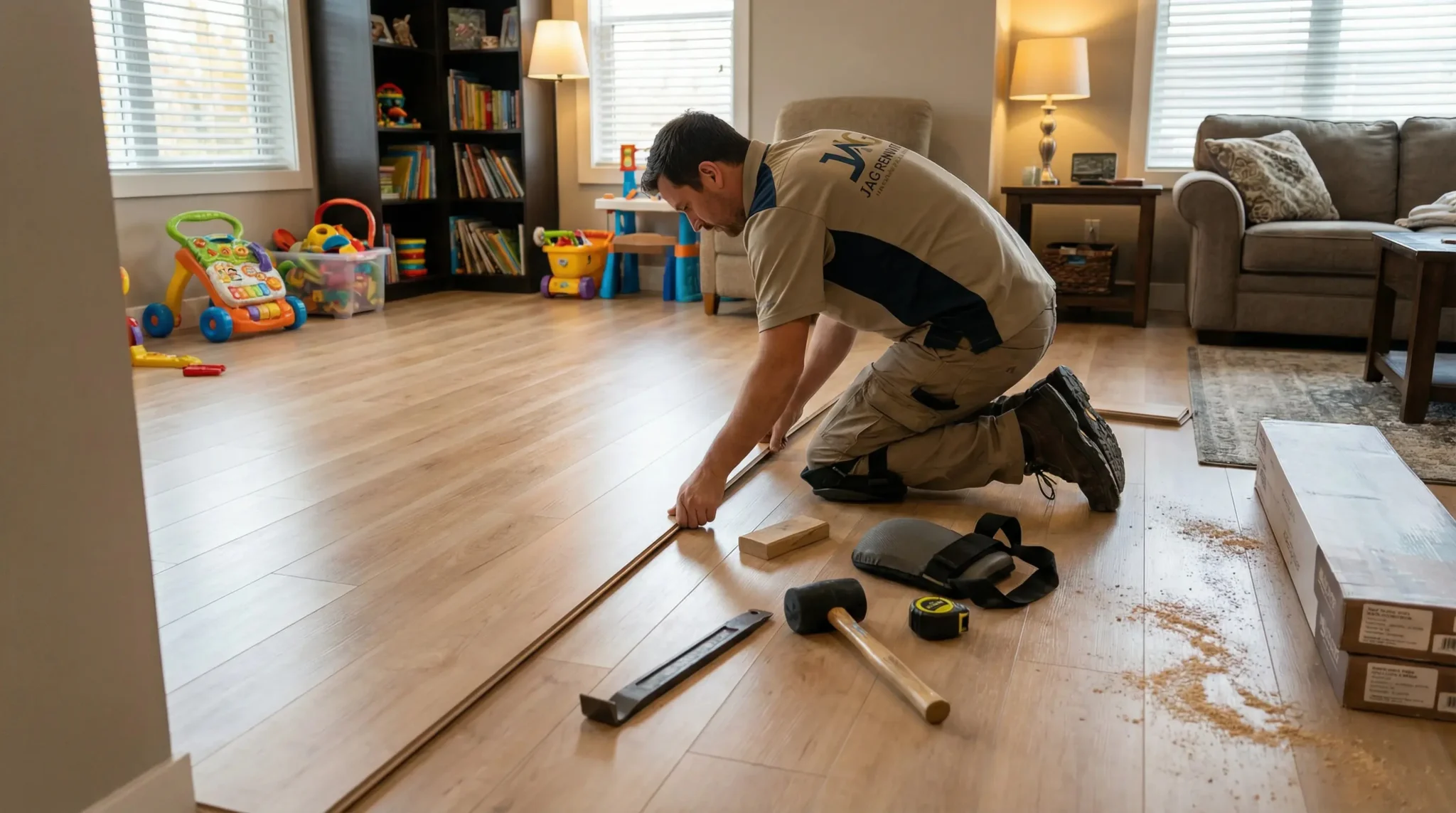
Hear from Our Customers
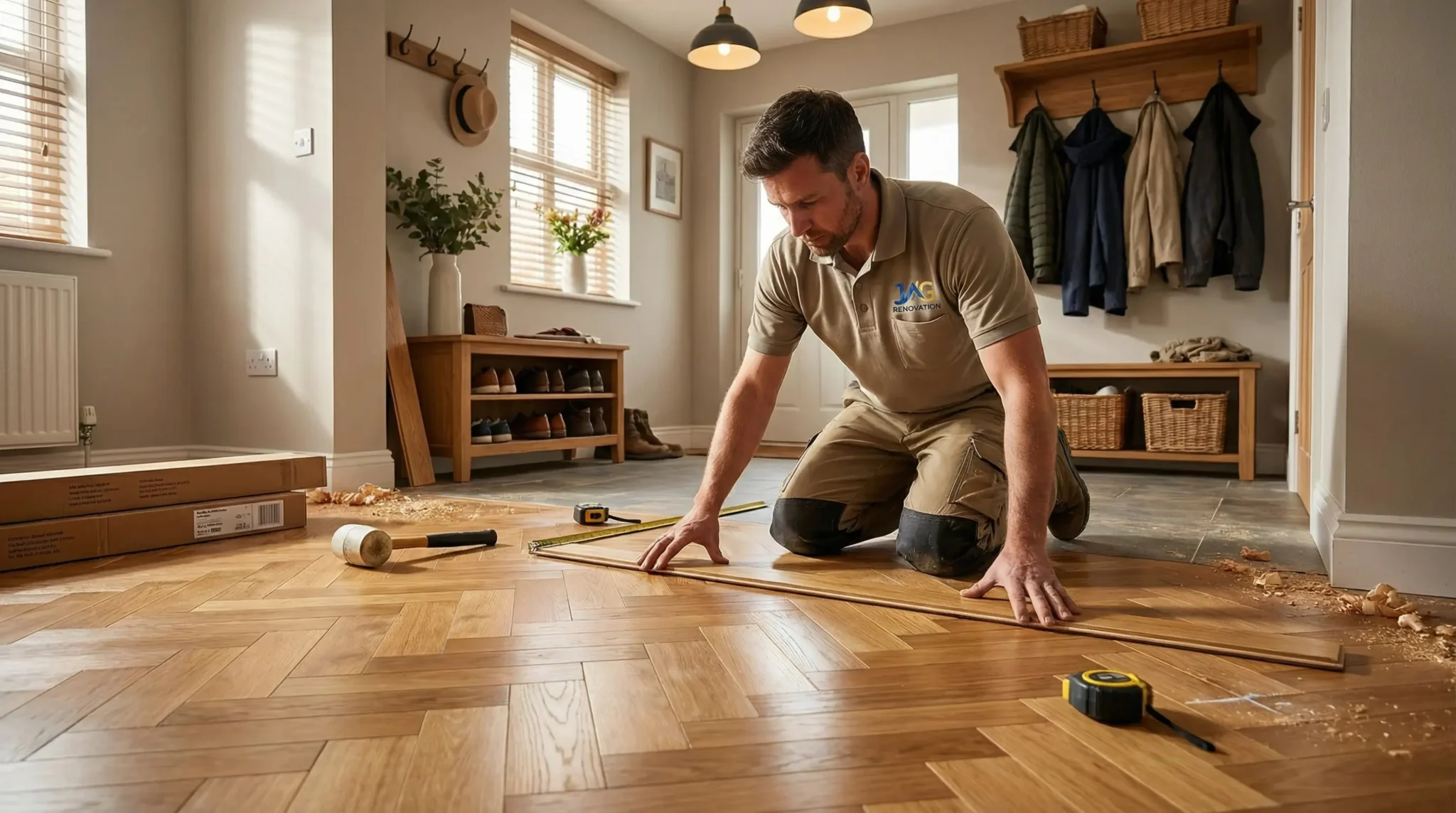
Your floor is only as good as what’s underneath it and who puts it down. That’s not marketing talk—it’s the difference between a floor that looks great for six months and one that holds up for years.
When subfloor prep gets skipped or rushed, you end up with squeaks, gaps, and planks that shift. When seams aren’t lined up right or transitions aren’t thought through, it shows immediately. And when someone cuts corners on acclimation or moisture testing, you’re looking at buckling or separation down the road.
Proper flooring installation means your investment doesn’t turn into a regret. It means rooms that feel finished, not “good enough.” It means you’re not calling someone back in a year to fix what should’ve been done correctly from the start.
We handle hardwood, luxury vinyl, tile, laminate, and carpet. Each material has its own requirements, and we treat them that way. You get a floor that performs the way it’s supposed to—without the surprises that come from cutting corners you didn’t even know existed.
We’ve been doing this in North Patchogue and across Suffolk County for almost ten years. Not as a side gig. Not as a stepping stone. This is what we do.
That means we’ve seen the common problems—floors installed over uneven subfloors, transitions that don’t line up, materials chosen for the wrong application. We’ve also seen what works. What holds up in Long Island homes where humidity shifts and foot traffic is constant.
You’re not getting a crew that learned last month on YouTube. You’re working with licensed, insured professionals who’ve handled hundreds of installs and know how to troubleshoot before problems become expensive fixes. We keep you in the loop, show up when we say we will, and don’t bury costs in fine print. That’s not revolutionary—it’s just how it should be done.

First, we come out to see what you’re working with. We’re looking at your existing floor, the subfloor condition, moisture levels, and how the space is used. That tells us what materials make sense and what prep work is actually needed—not what a sales script says you need.
Once you approve the estimate, we schedule the work around your life, not ours. We protect your furniture and belongings, pull up old flooring if needed, and address any subfloor issues before new material goes down. This is the step that gets skipped most often, and it’s the one that matters most.
Then we install. Depending on the material—whether it’s luxury vinyl planks, ceramic tile, engineered hardwood, or laminate—we follow manufacturer specs for acclimation, spacing, adhesive, and fastening. We check level and alignment as we go, not after.
Finally, we install transitions, baseboards, and any trim work. We clean up completely. You’re left with a finished floor, not a project you have to manage or fix later.
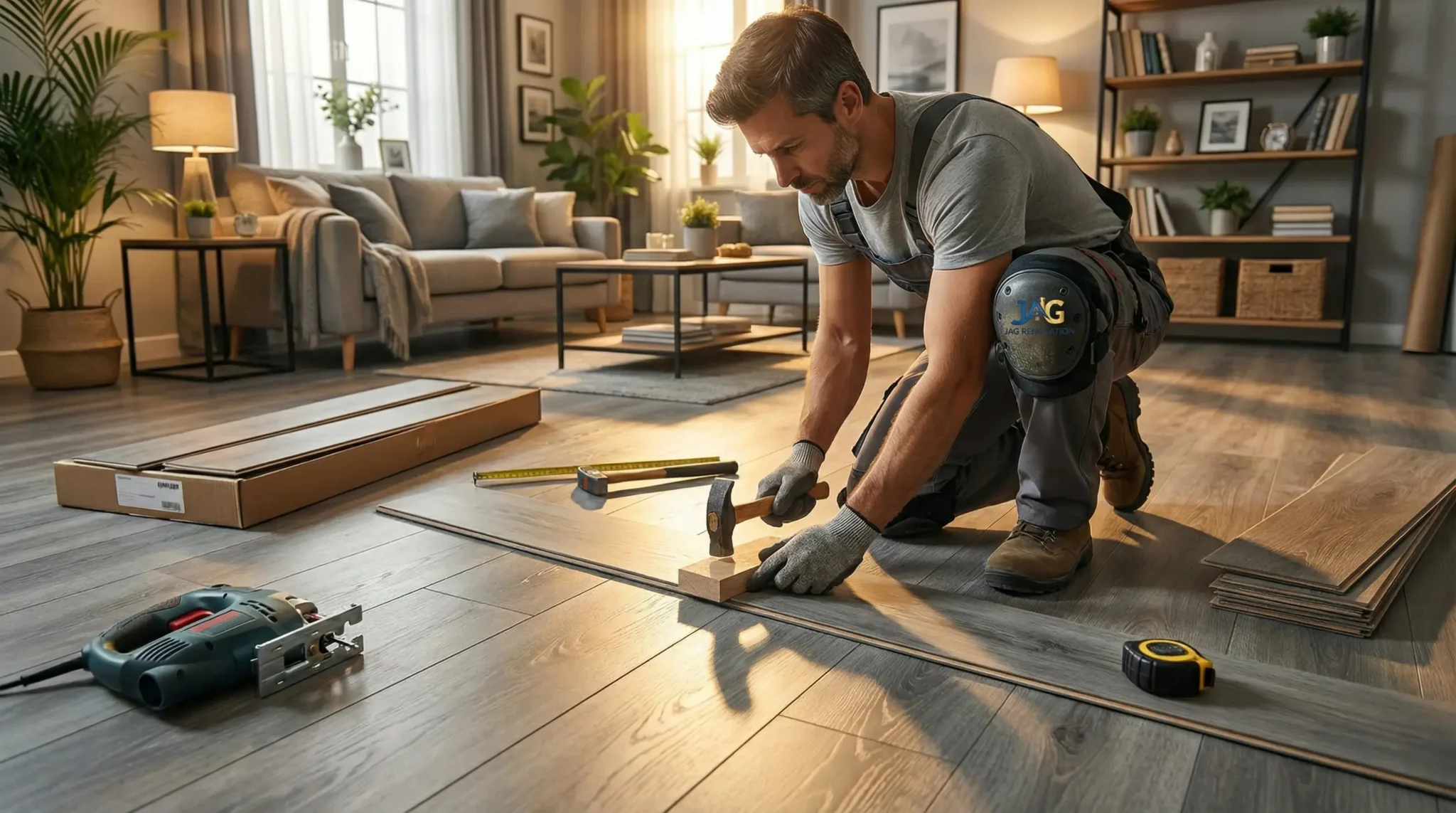
Ready to get started?
We install hardwood, engineered wood, luxury vinyl tile and plank, laminate, ceramic and porcelain tile, and carpet. Each has a place depending on your space, your budget, and how you live.
Luxury vinyl is popular in North Patchogue for good reason. It’s waterproof, durable, and handles the humidity swings Long Island throws at it. It works in kitchens, bathrooms, basements—anywhere moisture is a concern. Installation is faster than tile and more forgiving than hardwood, but it still requires a flat, clean subfloor to perform right.
Tile flooring is still the go-to for bathrooms and entryways. Porcelain holds up better than ceramic in high-traffic areas, and proper underlayment prevents cracking. The grout matters as much as the tile—we use epoxy grout in wet areas because it doesn’t stain or break down like traditional grout.
Hardwood and engineered wood bring warmth and value, but they need to acclimate to your home’s environment before installation. Engineered wood is more stable in fluctuating humidity, which makes it a smarter choice for Long Island basements and ground-level rooms. Laminate gives you the look of wood at a lower price point, and modern laminate is far more durable than the stuff from ten years ago.
We’ll walk you through what makes sense for your space. Not what’s trendy. Not what we have extra of. What actually works.

For a standard 12×12 room, most flooring installations take one to two days. That includes removing old flooring, prepping the subfloor, and installing the new material.
Luxury vinyl and laminate are usually faster—often completed in a day for straightforward layouts. Tile takes longer because of mortar and grout cure times. Hardwood installation depends on whether we’re nailing, stapling, or gluing, and whether the subfloor needs leveling.
Larger spaces or rooms with complicated layouts, multiple transitions, or subfloor repairs will add time. We’ll give you a realistic timeline upfront based on what your project actually involves, not a best-case scenario that assumes everything goes perfectly.
Luxury vinyl plank and tile are hard to beat for durability in active households. They’re waterproof, scratch-resistant, and handle the wear that comes with kids and pets better than most other options.
Porcelain tile is another solid choice, especially in entryways and kitchens. It won’t scratch, dent, or stain, and it’s easy to clean. The downside is it’s cold and hard underfoot, which matters if you’re standing on it a lot.
If you want the look of hardwood, engineered wood with a strong finish holds up better than solid hardwood. Look for aluminum oxide or ceramic-infused finishes—they resist scratching far better than standard polyurethane. Laminate is also more scratch-resistant than people expect, especially the newer products with AC4 or AC5 ratings. We’ll show you samples and explain what each material can actually handle in real life.
Yes, the room needs to be empty before we start. We can move smaller furniture and items if needed, but larger pieces like beds, dressers, and entertainment centers should be cleared out beforehand.
Moving furniture isn’t included in standard flooring installation pricing, but we can arrange it for an additional cost if that’s easier for you. Some homeowners prefer to handle it themselves to save money. Others would rather pay to have it done.
Either way, the space needs to be completely clear so we can access the subfloor, check for level issues, and install without working around obstacles. That’s how you get clean lines, proper spacing, and a finished result that actually looks professional. We’ll walk you through what needs to happen before we arrive so there’s no confusion on install day.
We check the subfloor during the initial visit. We’re looking for soft spots, squeaks, unevenness, water damage, and whether it’s structurally sound enough to support new flooring.
If the subfloor has dips or humps beyond a quarter inch over ten feet, it needs leveling. If there’s moisture damage, rot, or termite damage, those sections need replacement. If it’s just squeaky, we can screw it down to the joists to eliminate movement.
Skipping subfloor prep is the most common mistake in flooring installation, and it’s the one that causes the most problems later. Vinyl and laminate will telegraph every imperfection. Tile will crack. Hardwood will squeak and gap. We don’t skip this step, and we don’t charge you for repairs you don’t actually need. If your subfloor is solid, we’ll tell you. If it’s not, we’ll explain exactly what needs to happen and why.
Luxury vinyl is waterproof. Laminate is not. That’s the biggest functional difference, and it’s why vinyl works in bathrooms, laundry rooms, and basements where laminate doesn’t.
Luxury vinyl is made from PVC with a photographic layer and a wear layer on top. It’s softer underfoot, quieter, and more forgiving on your knees and back if you’re standing a lot. It’s also more scratch-resistant than laminate in most cases.
Laminate is made from compressed wood fiber with a photographic layer and a protective coating. It feels more like real wood when you walk on it, and higher-end laminate often looks more realistic than lower-end vinyl. But if it gets wet and stays wet, it swells and ruins the planks. Luxury vinyl doesn’t have that problem. Both are DIY-friendly for floating installations, but we install both correctly the first time so you’re not dealing with gaps, peaks, or clicking issues six months later.
It depends on the material. Luxury vinyl, laminate, and engineered wood installed as floating floors can handle light foot traffic immediately. You can walk on them as soon as we’re done.
Tile floors need 24 to 48 hours before you walk on them, and grout needs another 72 hours to cure fully before it gets wet. Hardwood installed with adhesive needs 12 to 24 hours. If we’re refinishing existing hardwood, you’re looking at several days before it’s ready for furniture and normal use.
We’ll give you specific instructions based on what we installed and what products we used. Rushing it doesn’t save time—it risks damaging the floor before it’s even had a chance to set properly. We’ll let you know exactly when you can move furniture back in, when you can clean, and when the floor is fully cured and ready for everyday life.