
Hear from Our Customers
You’re not replacing flooring just to replace it. You want something that looks better than what’s there now, holds up to actual life, and doesn’t need redoing in three years because someone cut corners.
That’s hardwood that doesn’t creak or separate. Tile that stays level and doesn’t crack at the grout lines. Vinyl that looks like the real thing and handles water, pets, and foot traffic without peeling or fading.
When the install’s finished, your floors should feel solid underfoot. No hollow spots. No gaps. No dust left behind in corners or vents. Just clean work that makes your home feel newer and more comfortable than it has in years.
We’ve been handling floor installations across North Sea and Suffolk County for nearly ten years. We’re licensed, insured, and we show up when we say we will.
Most of our work comes from people who’ve been burned before by contractors who overpromised, underdelivered, or disappeared halfway through. We don’t operate that way. You get a clear quote upfront, honest answers about what your space needs, and work that’s done right the first time.
North Sea homes deal with humidity from being near the water, older subfloors that need attention, and homeowners who want quality without the markup. We get it because we’ve been doing this here long enough to know what works and what doesn’t.

First, we come look at your space. We check the subfloor, measure everything, talk about what you’re hoping to accomplish, and give you a straightforward price. No pressure to decide on the spot.
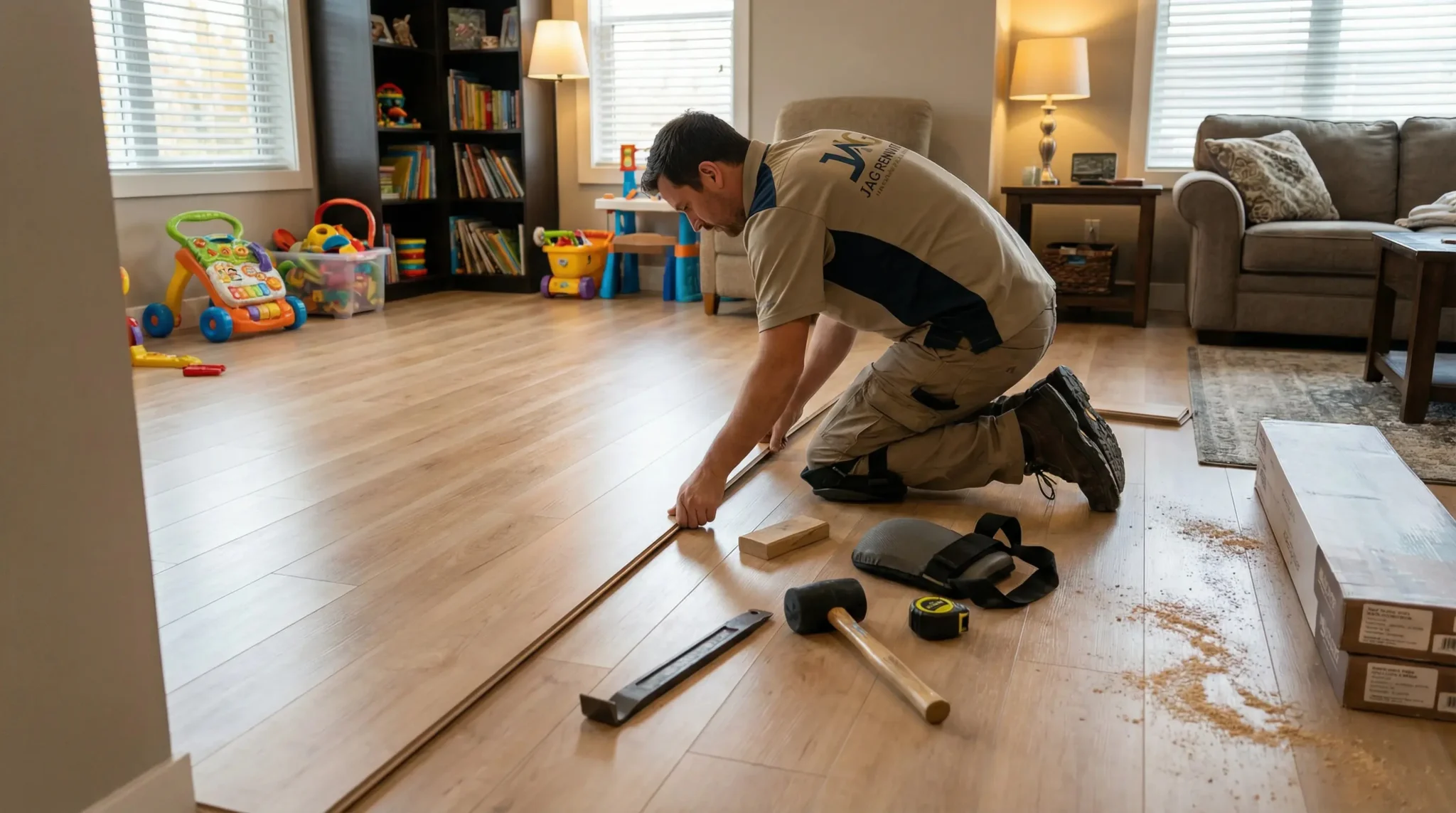
Once you’re ready to move forward, we schedule the work around your life as much as possible. We pull up the old flooring, prep the subfloor so it’s level and solid, then install your new floors using the right techniques and materials for the job.
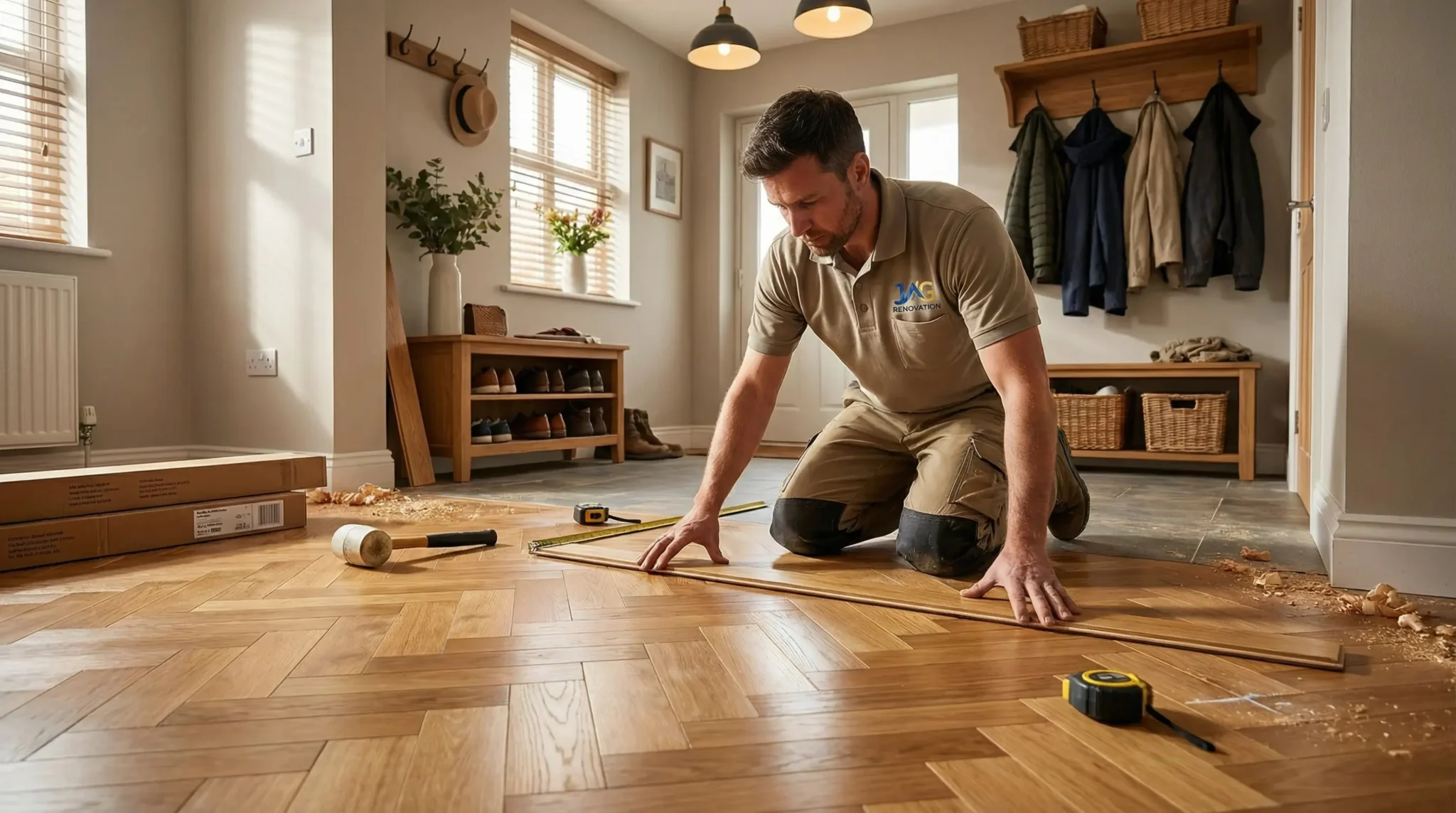
For hardwood, that means proper acclimation, the right nailer or adhesive for your subfloor type, and sanding with dust containment systems so your home doesn’t turn into a dust storm. For tile, it’s ensuring proper underlayment, using quality thinset, and spacing everything correctly so it doesn’t crack. Vinyl and laminate get the same attention to detail—proper underlayment, careful cuts around doorways and transitions, and a finished look that doesn’t scream “budget install.”
We clean up completely when we’re done. You shouldn’t have to spend your weekend vacuuming sawdust out of every corner.

Ready to get started?
Hardwood works beautifully in North Sea homes, especially in living rooms, bedrooms, and dining areas. It adds value, can be refinished when it eventually shows wear, and holds up for decades when installed correctly. We handle solid hardwood and engineered options depending on your subfloor and moisture conditions.
Vinyl flooring has come a long way. Luxury vinyl plank looks like real wood, handles moisture better than hardwood, and costs less. It’s a smart choice for kitchens, bathrooms, basements, and homes with pets or kids. We install it so seams are tight and transitions don’t create trip hazards.
Tile makes sense in bathrooms, entryways, and mudrooms where water’s a concern. Ceramic and porcelain both work well, and proper installation means it won’t crack or come loose. We take time to get the layout right so cuts aren’t awkward and grout lines stay consistent.
Laminate flooring gives you the wood look at a lower price point. It’s durable, easy to maintain, and works in most rooms. We make sure it’s installed with proper expansion gaps so it doesn’t buckle when humidity changes, which matters in coastal areas like North Sea.

It depends on what you’re installing and how much prep work your subfloor needs. Vinyl typically runs between $4 and $7 per square foot installed. Ceramic tile ranges from $5 to $20 depending on the tile you choose and the complexity of the layout. Hardwood costs more, usually starting around $8 per square foot and going up from there based on species and finish.
Those are ballpark numbers. Your actual cost depends on the size of the space, the condition of what’s underneath, and whether we’re dealing with stairs, multiple rooms, or tricky transitions. The best way to know what you’re looking at is to have us come measure and give you a real number based on your specific situation.
We don’t play games with pricing. You get a clear quote that includes materials, labor, and prep work. If we find something unexpected once we start, we talk to you before doing extra work.
Luxury vinyl plank is hard to beat for durability. It’s scratch-resistant, waterproof, and doesn’t dent like hardwood can when you drop something heavy. If your dog has an accident or your kid spills juice, it wipes up without staining or warping.
Tile is another solid option, especially in high-traffic areas. It doesn’t scratch, doesn’t absorb moisture, and lasts forever. The grout needs occasional resealing, but the tile itself is nearly indestructible.
Hardwood can work if you choose harder species like oak or maple and keep nails trimmed on pets. It will show wear over time, but that’s also why hardwood’s valuable—you can refinish it. Laminate sits somewhere in the middle. It handles traffic well and resists scratches better than hardwood, but it can’t be refinished if it does get damaged.
A single room usually takes one to three days depending on the flooring type and how much prep the subfloor needs. Vinyl and laminate go down faster than hardwood or tile. If we’re doing multiple rooms or a whole floor of your house, plan on a week or so.
Tile takes longer because adhesive and grout need time to cure before you can walk on it. Hardwood needs time to acclimate to your home’s humidity before we install it, which adds a few days to the timeline before we even start.
We’ll give you a realistic schedule upfront and keep you updated if anything changes. Most of our projects finish on time because we don’t overbook ourselves or rush through jobs to get to the next one.
Yes, rooms need to be empty before we start. We can work around a few small items if needed, but furniture needs to be out so we can access the entire floor, pull up old material, and install new flooring properly.
If moving heavy furniture is a problem, we can help with that or recommend someone who can. Some flooring companies include furniture moving in their quote, but it usually adds to the cost. We’d rather be upfront about it than build it into the price without telling you.
Once the floor’s done and fully cured, you can move everything back in. For tile, that means waiting at least 24 hours. For most other flooring types, you can walk on it and move furniture back the same day or the next day.
Sometimes, but not always. Vinyl and laminate can often go over existing flooring if it’s flat, solid, and in decent shape. Tile and hardwood usually require removing what’s there first so we can ensure the subfloor is level and sound.
Installing over old flooring saves time and money, but it’s not worth it if the existing floor is damaged, uneven, or will cause problems down the road. We’d rather pull it up and do it right than create a situation where your new floor fails because of what’s underneath.
When we look at your space, we’ll tell you honestly whether installing over existing flooring makes sense or if removal is the better move. The goal is a floor that lasts, not just a floor that goes in quickly.
Solid hardwood is exactly what it sounds like—planks milled from a single piece of wood, usually three-quarters of an inch thick. It can be sanded and refinished multiple times over its life, which is why it lasts so long. It needs to be nailed or stapled down to a wood subfloor and doesn’t do well in basements or over concrete where moisture’s an issue.
Engineered hardwood has a real wood top layer bonded to layers of plywood underneath. It’s more stable in humid conditions and can be installed over concrete, which makes it more versatile. You can refinish it, but not as many times as solid hardwood because the top layer is thinner.
Both look great when installed correctly. The choice comes down to where you’re installing it, what your subfloor is, and how much refinishing potential you want down the road. For most North Sea homes, either works well depending on the room and conditions.