
Hear from Our Customers
You’re not just replacing what’s underfoot. You’re upgrading how your home feels every single day.
Good flooring installation means no buckling six months in. No gaps that catch dust or let drafts through. No callbacks because someone rushed the acclimation or skipped the moisture test. It means walking into your kitchen or living room and actually feeling proud of the space—not wondering when the next issue will pop up.
When your floors are installed correctly, they add real value to your home. In Southampton, where median home values with quality hardwood flooring hit $3.6 million, the right floor isn’t just aesthetic. It’s an investment that buyers notice and appraisers respect. You get durability that handles daily life, materials that age well, and a finish that doesn’t require constant maintenance or early replacement.
We’ve spent close to ten years working on interior projects across Southampton and the surrounding Hamptons area. We’ve seen what works in coastal homes, what doesn’t, and how to handle the humidity and seasonal shifts that affect flooring performance here.
We’re not the contractor who gives you a low number to win the job, then nickel-and-dimes you with change orders. Our pricing is clear from the start. No pressure, no upselling, no surprises when the invoice comes.
You’ll work with the same team from consultation to cleanup. We show up when we say we will, communicate throughout the project, and make sure you understand what’s happening at every step. That’s how we’ve built our reputation locally—one honest project at a time.

First, we come to your home and assess the space. We’re looking at subfloor condition, moisture levels, room layout, and how you actually use the space. If you’ve got kids, pets, or high foot traffic, that changes the material recommendation. We’ll walk you through options that fit your lifestyle and budget—not just what’s trendy or most profitable for us.
Once you’ve chosen your material, we order it and let it acclimate in your home for several days. This step prevents warping and movement after installation. It’s not optional, and we won’t skip it to speed things up.
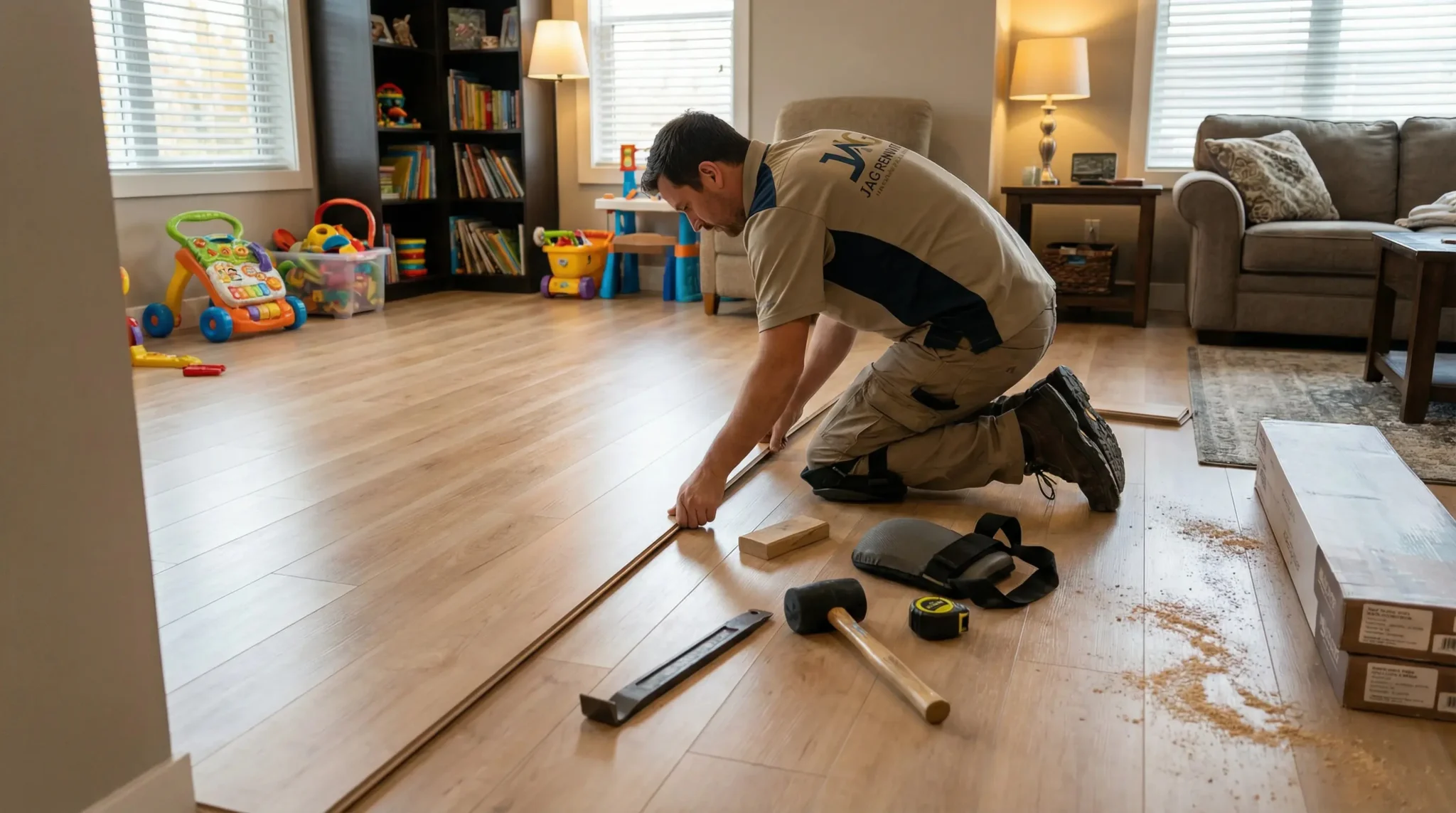
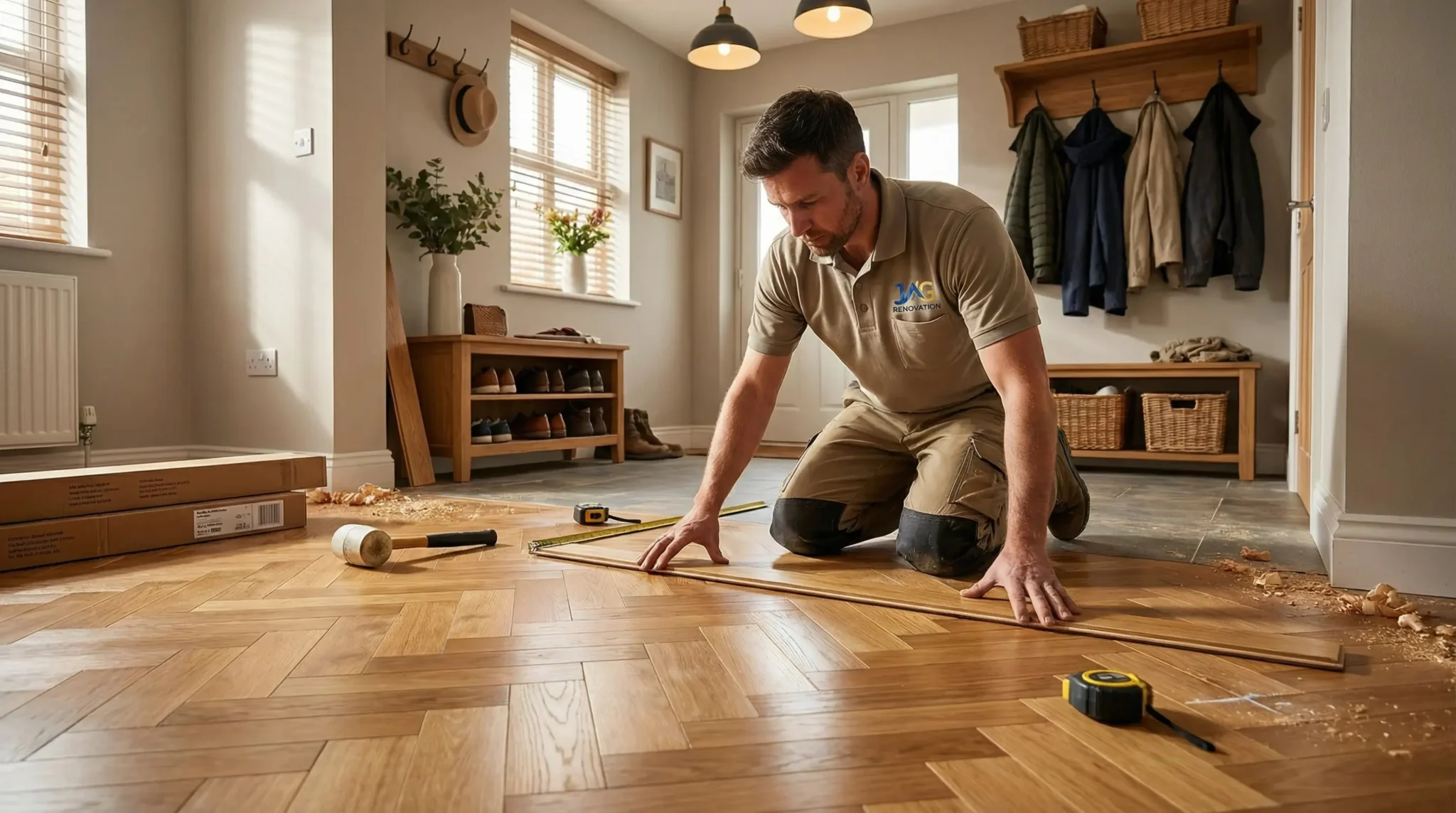
During installation, we prep the subfloor properly, ensure correct expansion gaps, and use the right adhesives or fasteners for your specific material. Whether it’s tile flooring contractor work in a bathroom, laminate flooring installation in a basement, or hardwood in your main living area, the process is methodical. We protect your furniture, contain dust as much as possible, and clean up completely before we leave.
After the install, we walk the job with you and make sure you’re clear on care instructions. Then we follow up a few weeks later to confirm everything is performing as expected.

Ready to get started?
Every flooring job we take on includes subfloor inspection and prep. If there’s an issue underneath—whether it’s an uneven concrete slab or damaged plywood—we address it before any new material goes down. Skipping this step is how floors fail early.
You’ll get material recommendations based on your specific space. Vinyl flooring works well in moisture-prone areas like basements or mudrooms. Ceramic tile floor installation is ideal for bathrooms and entryways where water exposure is frequent. Hardwood and laminate flooring installation fit living rooms, bedrooms, and dining areas where warmth and aesthetics matter most.
In Southampton, we’re seeing more homeowners move toward luxury vinyl with realistic wood textures and enhanced wear layers. It handles the coastal humidity better than traditional hardwood in certain applications, and it’s easier to maintain. We’ll explain the pros and cons of each material honestly, so you can make an informed decision.
Installation includes all necessary underlayment, transitions between rooms, and baseboards or quarter-round trim as needed. We also handle furniture moving and post-job cleanup. You’re not left with a mess or a half-finished project. When we say it’s done, it’s done.

Most residential flooring projects take between three and seven days, depending on square footage and material type. A single room with vinyl or laminate can often be completed in two to three days. Larger spaces or whole-home hardwood installations take closer to a week.
The timeline also depends on subfloor condition. If we need to level concrete or replace damaged plywood, that adds time upfront. We’d rather spend an extra day on prep than install over a problem that’ll show up later.
Material acclimation is built into the schedule. Hardwood and laminate need to sit in your home for at least 48 to 72 hours before installation. This lets the material adjust to your home’s temperature and humidity, which prevents expansion or contraction after it’s down. We don’t skip this, even if you’re in a hurry.
Luxury vinyl and ceramic tile handle coastal humidity better than traditional hardwood. Vinyl has come a long way—it now offers realistic wood textures, thick wear layers, and waterproof cores that won’t buckle if moisture gets underneath.
Tile is another strong choice, especially in entryways, kitchens, and bathrooms. It’s completely waterproof, easy to clean, and holds up to sand and salt tracked in from the beach. Porcelain tile is denser than ceramic and even more resistant to moisture absorption.
If you’re set on hardwood, engineered wood performs better than solid hardwood in humid environments. It’s constructed in layers, which makes it more stable and less prone to warping. We can also recommend finishes and sealants that add extra protection. The key is matching the material to your home’s specific conditions, not just picking what looks good in a showroom.
For most homes in the Southampton area, flooring installation runs between $1,500 and $4,500 per room, depending on material and square footage. Vinyl and laminate tend to fall on the lower end. Hardwood and high-end tile push toward the higher range.
Whole-home projects vary widely based on layout and material choices. A 1,500-square-foot home might range from $8,000 to $18,000. That includes removal of old flooring, subfloor prep, new material, installation labor, and finishing work like baseboards and transitions.
We provide upfront pricing after assessing your space. No vague estimates or surprise charges later. If your subfloor needs work, we’ll tell you during the consultation—not halfway through the job. You’ll know what you’re paying before we start, and that number won’t change unless you decide to change the scope.
Yes. We remove old flooring, haul it off-site, and dispose of it properly. That’s included in your project cost.
Removal process depends on what’s currently down. Carpet and vinyl come up relatively quickly. Tile and hardwood take longer, especially if they’re glued down or if we need to protect the subfloor underneath for reuse. We use dust containment methods during demo to keep the mess contained, though some dust is inevitable.
If your old floor contains asbestos or other hazardous materials—common in homes built before the 1980s—we’ll let you know during the assessment. In those cases, we bring in a licensed abatement contractor before proceeding. Safety isn’t negotiable, and we won’t cut corners to save time or money.
Sometimes, but not always. It depends on the condition of the existing floor and what you’re installing over it.
If your current tile is level, stable, and well-adhered, we can often install luxury vinyl or laminate over it. This saves time and money on removal. But if the tile is cracked, loose, or uneven, it needs to come up first. Installing over a compromised surface just transfers the problem to your new floor.
Hardwood is trickier. If it’s solid and level, we might be able to install engineered wood or laminate on top with the right underlayment. But if the hardwood is cupped, warped, or damaged, removal is the better move. We’ll assess your specific situation during the consultation and recommend the most cost-effective approach that doesn’t compromise quality. You won’t pay for unnecessary removal, but we also won’t install over a problem that’ll come back to bite you.
A floor remodeling contractor handles the full scope—not just the installation. That means subfloor repair, moisture mitigation, layout planning, and integration with other trades if you’re doing a larger renovation.
General installers often focus only on putting down the material. If there’s a subfloor issue, they’ll tell you to call someone else. If your baseboards need replacing or your transitions don’t line up, that’s another call. You end up coordinating multiple people, which drags out the timeline and increases your hassle.
We handle it all in-house. If your bathroom needs tile flooring contractor work and your kitchen needs vinyl, we’re managing both. If your basement flooring project requires moisture barriers or minor framing adjustments, we take care of it. You’re working with one team, one point of contact, and one clear timeline from start to finish. That’s the difference.