
Hear from Our Customers
You’re not just replacing what’s underfoot. You’re making a decision that affects your home’s value, your daily comfort, and how much you’ll spend on maintenance over the next decade.
Bad flooring installation shows up fast. Gaps between planks. Tiles that crack within months. Vinyl that peels at the seams. Those aren’t material problems—they’re installation problems. And they cost you twice: once for the botched job, and again to fix it.
Quality flooring work means your hardwood doesn’t buckle when humidity changes. Your tile stays level and secure. Your laminate handles foot traffic without separating at the joints. The difference isn’t what you see on day one—it’s what still looks good five years later.
When the job’s done right, your floors add real value to your home. Hardwood can return up to 70% of your investment when you sell. But only if it’s installed correctly. Buyers notice crooked lines, uneven transitions, and sloppy finishing work. So do appraisers.
Jaguar Renovations has spent close to ten years working on homes across Stony Brook and the surrounding Suffolk County area. We’re licensed, insured, and we’ve seen what happens when contractors cut corners on prep work or rush through installations to get to the next job.
We don’t operate that way. Every flooring project gets the same attention to subfloor prep, moisture testing, and proper acclimation of materials. We don’t upsell you on products you don’t need, and we don’t hide costs in vague line items.
Stony Brook homeowners deal with specific challenges: older homes with uneven subfloors, varying humidity levels throughout the year, and the need for durable materials that can handle Long Island’s climate. We account for all of it before the first plank goes down.

First, we assess your existing floors and subfloor condition. This isn’t a quick glance—we’re checking for moisture issues, structural concerns, and whether your subfloor needs leveling. Skipping this step is how other contractors end up with callbacks six months later.
Next, we walk you through material options based on your space, your budget, and how you actually use the room. Hardwood in a kitchen? We’ll tell you why that might not be your best move. High-traffic entryway? We’ll recommend materials that can take the abuse without showing wear in a year.
Once materials are selected, we handle acclimation. Wood and laminate need time to adjust to your home’s temperature and humidity before installation. Rushing this causes expansion, contraction, and gaps. We don’t rush it.
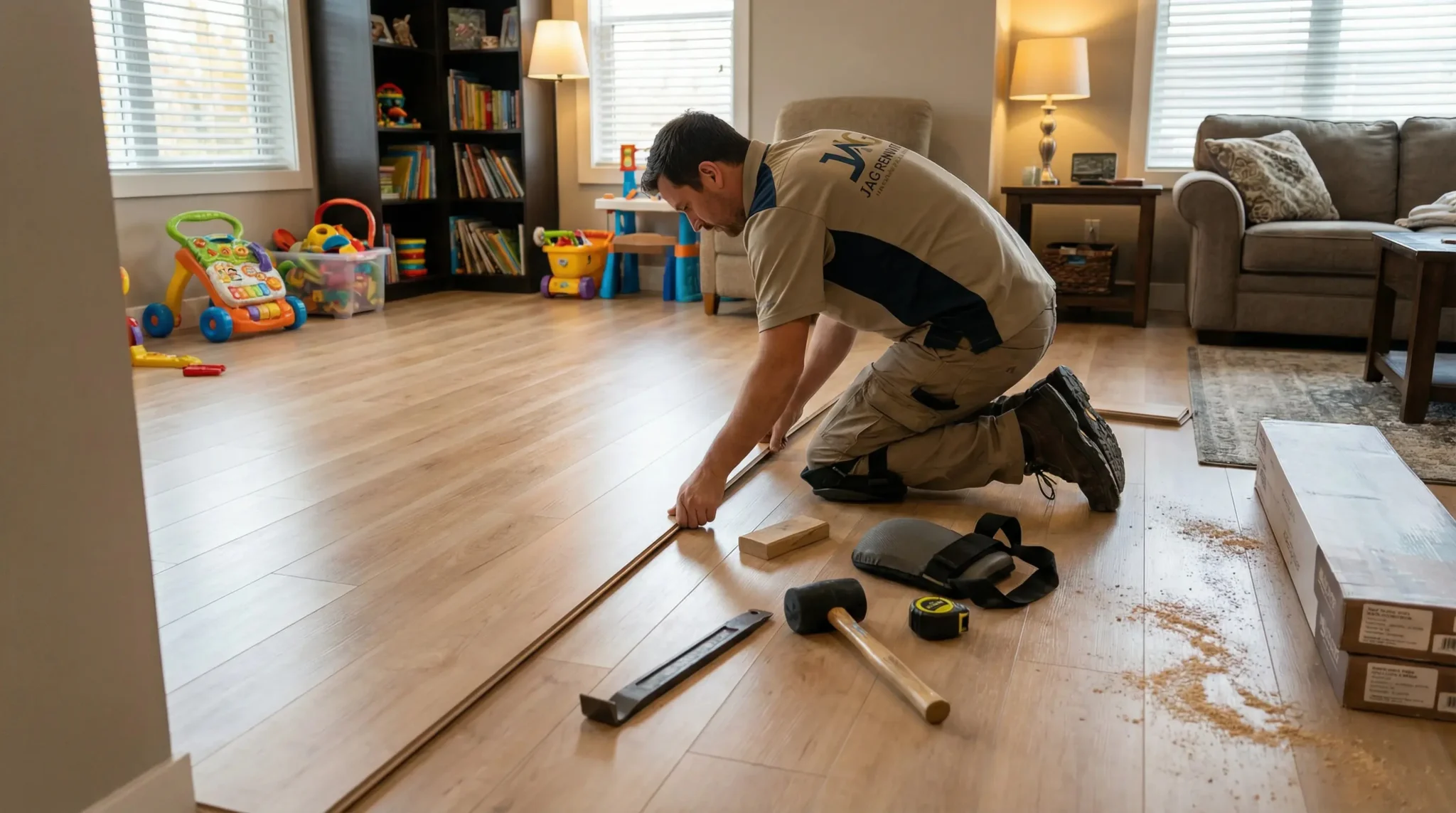
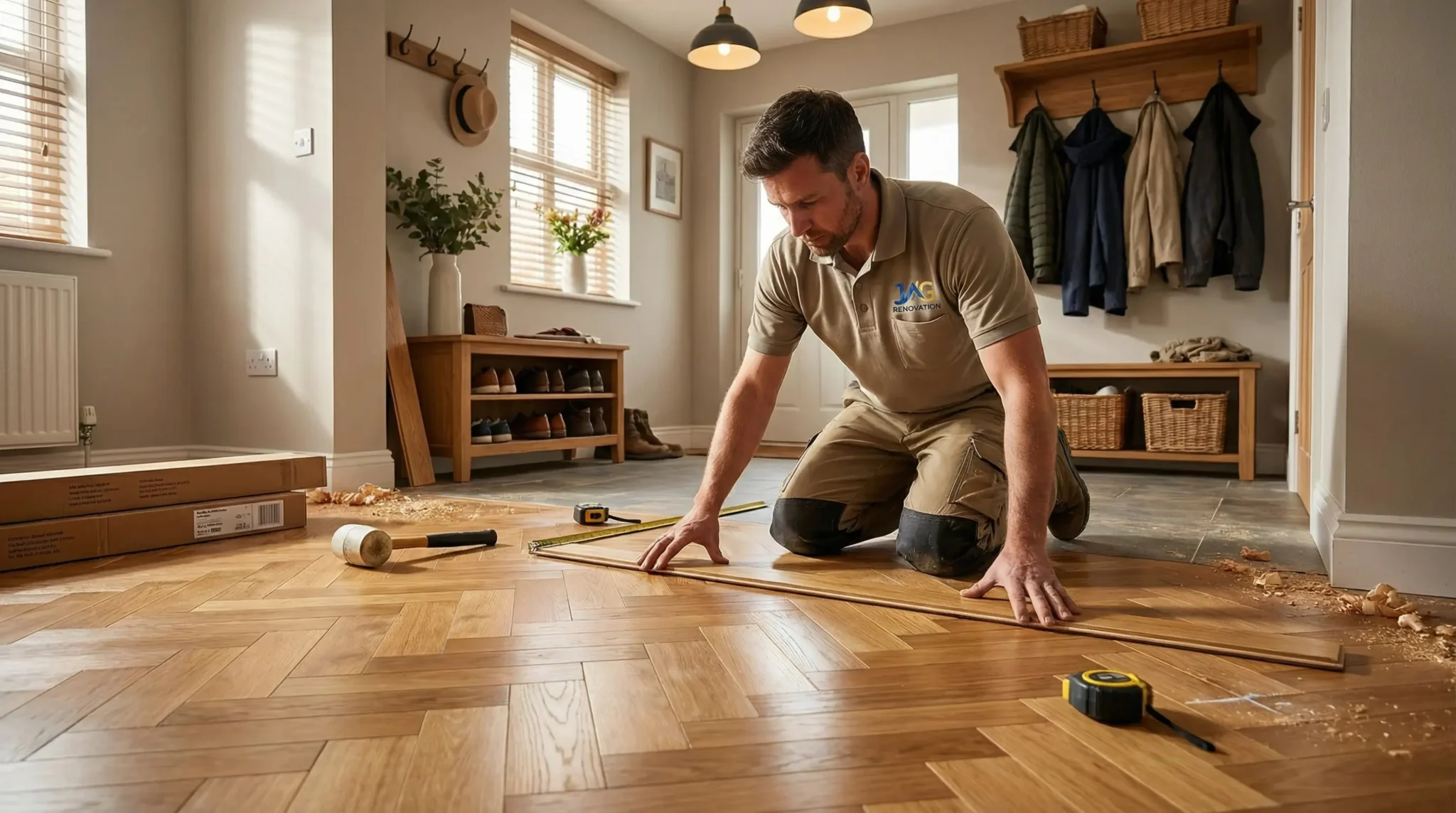
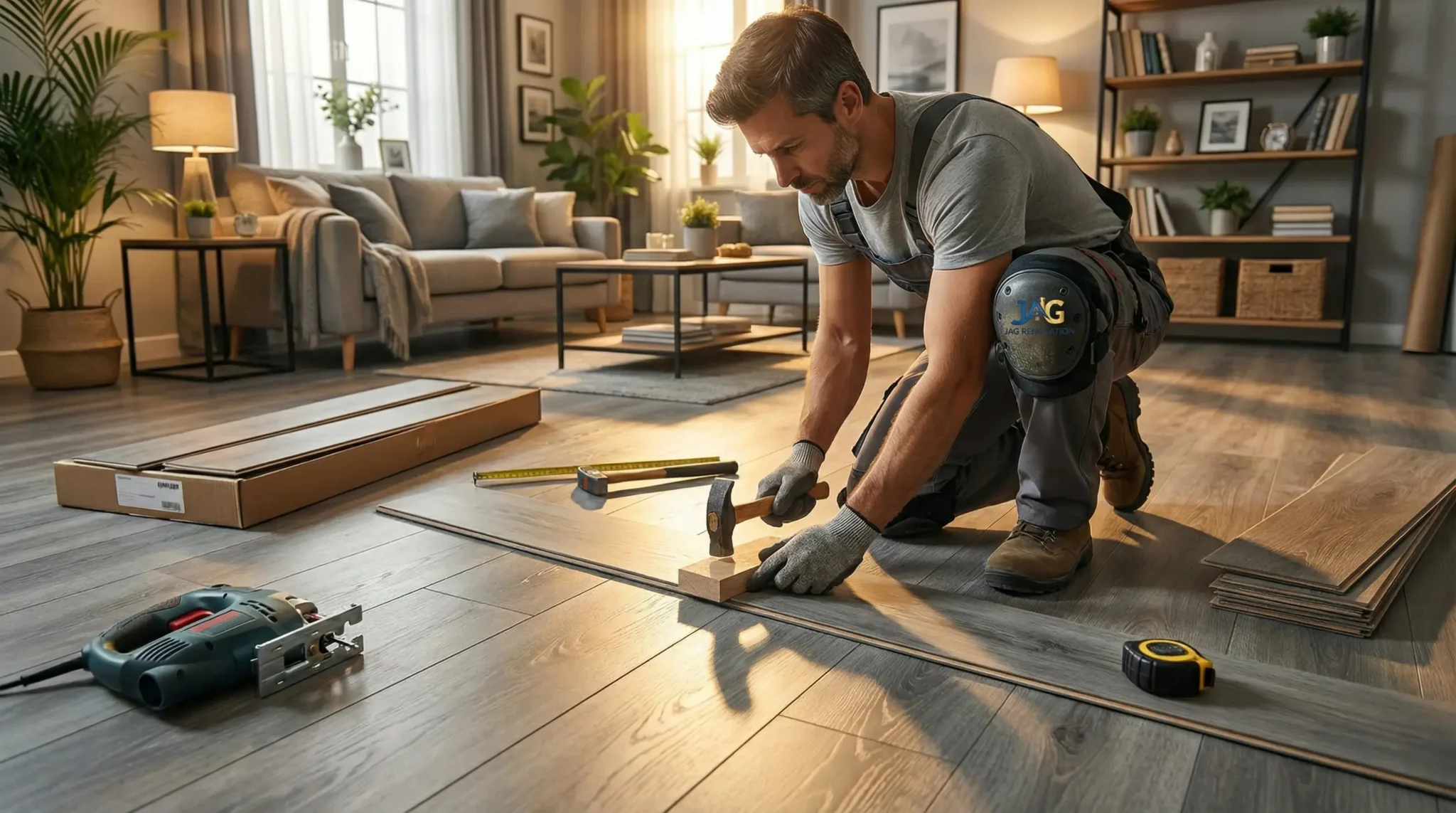
Installation day means proper subfloor prep, precise measurements, and clean cuts. We’re not leaving gaps at transitions or forcing pieces that don’t fit. Baseboards get reinstalled correctly. Thresholds get sealed. You’re not cleaning up our mess for days afterward.
Final walkthrough happens with you. We make sure every detail meets your expectations before we consider the job complete.
Ready to get started?
Hardwood flooring remains the top choice for Stony Brook homeowners focused on resale value. Oak, maple, and hickory hold up well in Long Island’s climate, and they can be refinished multiple times over their lifespan. Engineered hardwood works better in basements or areas with moisture concerns—it’s more stable than solid wood but still gives you that authentic look.
Tile flooring makes sense for bathrooms, kitchens, and entryways. Porcelain and ceramic tile handle moisture, resist stains, and last decades when installed on a properly prepared surface. The key is in the underlayment and grout work. Cheap installations skip steps. We don’t.
Vinyl flooring has come a long way. Luxury vinyl plank (LVP) offers durability and water resistance at a lower price point than hardwood. It works well for busy households, pet owners, and anyone who wants the wood look without the maintenance. The catch? Installation quality matters even more with vinyl. Poor subfloor prep shows through immediately.
Laminate flooring installation gives you another budget-friendly option that holds up to wear. It’s not as water-resistant as vinyl, but it’s tougher than most people expect. Good for bedrooms, living rooms, and dining areas where spills aren’t a daily occurrence.
Carpet still has a place—bedrooms, especially. But we’re honest about its limitations. It stains, it wears, and it needs replacement more often than hard surfaces. If that works for your situation, we’ll install it correctly with proper padding and seam placement.

Most flooring projects in Stony Brook run between $1,500 and $4,500, depending on the size of the area, the material you choose, and the condition of your existing subfloor. That’s for a typical room or two—not a whole house.
Hardwood costs more upfront but lasts longer and adds more resale value. You’re looking at higher material and labor costs, but you’re also getting a floor that can be refinished multiple times. Vinyl and laminate come in cheaper, and installation is usually faster.
The real cost variables are subfloor condition and prep work. If we need to level your subfloor, address moisture issues, or remove multiple layers of old flooring, that adds time and materials. We’ll tell you what’s needed during the assessment—not halfway through the job.
It depends on the room and how you live. Hardwood works great for main living areas if you’re thinking about resale value and long-term durability. It handles Long Island’s seasonal humidity changes well, especially engineered hardwood.
For kitchens and bathrooms, tile flooring makes more sense. Porcelain or ceramic tile won’t warp from moisture, and it’s easy to clean. Vinyl plank is another solid option for these areas—it’s waterproof, durable, and costs less than tile.
Basements need moisture-resistant materials. Vinyl or engineered hardwood are your best bets. Solid hardwood in a basement is asking for problems. Laminate can work if your basement stays dry, but vinyl is the safer choice.
If you have kids or pets, durability matters more than aesthetics. Luxury vinyl plank takes a beating and still looks good. Hardwood shows scratches and dents more easily, though it can be refinished. Carpet in high-traffic areas is a losing battle.
A single room usually takes one to two days, depending on the material and the prep work required. Hardwood takes longer than vinyl or laminate because of acclimation time and finishing work. Tile installation moves slower because of setting time for mortar and grout.
Larger projects—multiple rooms or a whole floor of your house—can take a week or more. That includes subfloor prep, material acclimation, installation, and finishing details like baseboards and transitions.
The timeline also depends on what we’re working with. If your subfloor needs significant leveling or repairs, that adds time upfront. If we’re removing old flooring, especially tile or glued-down carpet, that’s another day or two.
We’ll give you a realistic timeline during the estimate. We don’t overpromise and underdeliver. If we say three days, it’s three days—not a week later because we’re juggling other jobs.
Yes, rooms need to be cleared before we start. We’re not moving your furniture—that’s on you or a moving service you hire. Flooring contractors aren’t insured to move your belongings, and we’re not responsible for damage to furniture during a move.
Most homeowners either move items themselves or hire a moving company for larger pieces. It’s worth the cost to avoid the hassle and risk of damaging your stuff. Plus, it lets us work faster without navigating around furniture.
If you have items that are too heavy or awkward to move, let us know during the estimate. We can discuss options, but generally, the room needs to be empty before installation day. That includes clearing out closets if we’re doing flooring in there too.
Plan for your furniture to stay out of the room for the full duration of the project. You can’t move everything back in until the floor is completely finished and cured—especially with hardwood that needs finishing or tile that needs grout curing time.
Quality flooring can return up to 70% of your investment when you sell, especially hardwood. Buyers notice floors immediately, and updated flooring makes your home show better than homes with worn carpet or damaged laminate.
Hardwood is the strongest value-add. It’s durable, it appeals to most buyers, and it signals that the home has been maintained. Tile in kitchens and bathrooms also adds value because it’s practical and long-lasting. Vinyl and laminate are neutral—they won’t hurt your value, but they won’t boost it as much as hardwood.
The return depends on installation quality. Poorly installed floors—uneven tiles, gaps in hardwood, peeling vinyl—actually hurt your home’s value. Buyers see that as deferred maintenance and a reason to negotiate down.
If you’re planning to sell within a few years, focus on main living areas and spaces buyers care about most: living room, kitchen, master bedroom. If you’re staying long-term, choose flooring based on what works for your lifestyle. The value increase is a bonus, not the main reason.
Start with the room and how it gets used. Hardwood makes sense for living rooms, dining rooms, and bedrooms where you want a high-end look and long-term value. It’s not ideal for bathrooms, basements, or anywhere moisture is a constant issue.
Tile works best in wet areas—bathrooms, kitchens, mudrooms, laundry rooms. It’s waterproof, easy to clean, and tough enough to handle dropped pots and pans. The downside is it’s cold underfoot and harder on your joints if you’re standing for long periods.
Vinyl flooring is the most versatile. It’s waterproof, durable, budget-friendly, and available in styles that mimic hardwood or tile. It works in almost any room, including basements. The trade-off is it doesn’t add as much resale value as real hardwood, and it can’t be refinished.
Laminate flooring sits between vinyl and hardwood. It’s more affordable than hardwood, tougher than most people expect, and works well in bedrooms and living areas. It’s not waterproof, so avoid it in bathrooms and basements unless you’re confident moisture won’t be an issue.
Your budget matters too. Hardwood costs the most upfront. Tile is mid-range but requires skilled installation. Vinyl and laminate are the most affordable and fastest to install. We’ll walk you through the pros and cons based on your specific situation—not just push the most expensive option.
Other Services we provide in Stony Brook