
Hear from Our Customers
You’re dealing with floors that look tired, feel outdated, or just don’t hold up anymore. Maybe it’s worn hardwood that’s lost its finish, laminate that’s peeling at the edges, or tile with grout lines you can’t get clean. Whatever it is, you know it’s time—but finding someone who’ll actually do the work right without jerking you around is harder than it should be.
Here’s what changes when the job’s done properly. Your floors look clean and consistent across every room. No gaps, no uneven transitions, no corners cut. The material you picked holds up to daily traffic without showing wear in the first six months. And you’re not calling someone back to fix what should’ve been done correctly from the start.
That’s what professional flooring installation gets you. Not just new floors—floors that function the way they’re supposed to and look good doing it. Whether it’s hardwood, tile, laminate, or vinyl, the difference is in how it’s laid, how it’s finished, and whether the person doing it knows what they’re looking at.
We’ve been installing floors in Yaphank and throughout Suffolk County for almost ten years. We’re not a crew that showed up last month with a truck and a business card. We’ve worked in these homes, we know the older construction you’re dealing with, and we understand what it takes to get floors level and lasting in houses that weren’t built yesterday.
We don’t do sales pitches or bait-and-switch pricing. You get a clear quote, quality materials, and installation that’s done by people who’ve been doing this long enough to know the difference between fast and correct. Yaphank homeowners hire us because we show up when we say we will, we finish on schedule, and the work holds up after we leave.

It starts with a walkthrough at your place. We look at the existing floor, check the subfloor condition, measure the space, and talk through what you’re trying to accomplish. You tell us what you want—hardwood, tile, laminate, vinyl—and we’ll tell you what makes sense for that room, your budget, and how much wear it’ll see.
Once you approve the quote, we schedule the work and order materials. Demo and prep come first if your old flooring needs to come up. That’s where most problems show up—uneven subfloors, moisture issues, or framing that needs attention before anything gets laid down. We handle that before installation starts, not after.
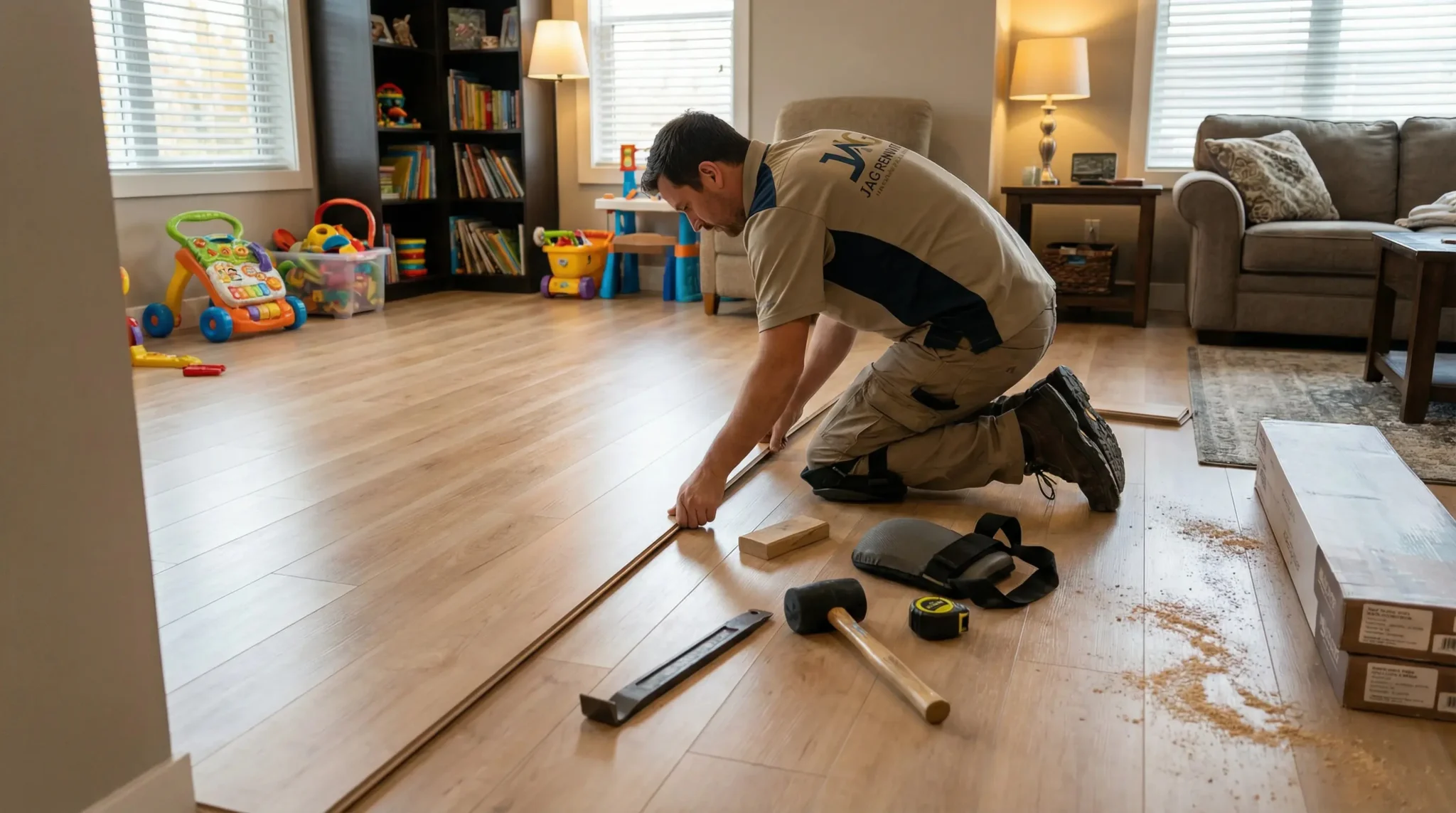
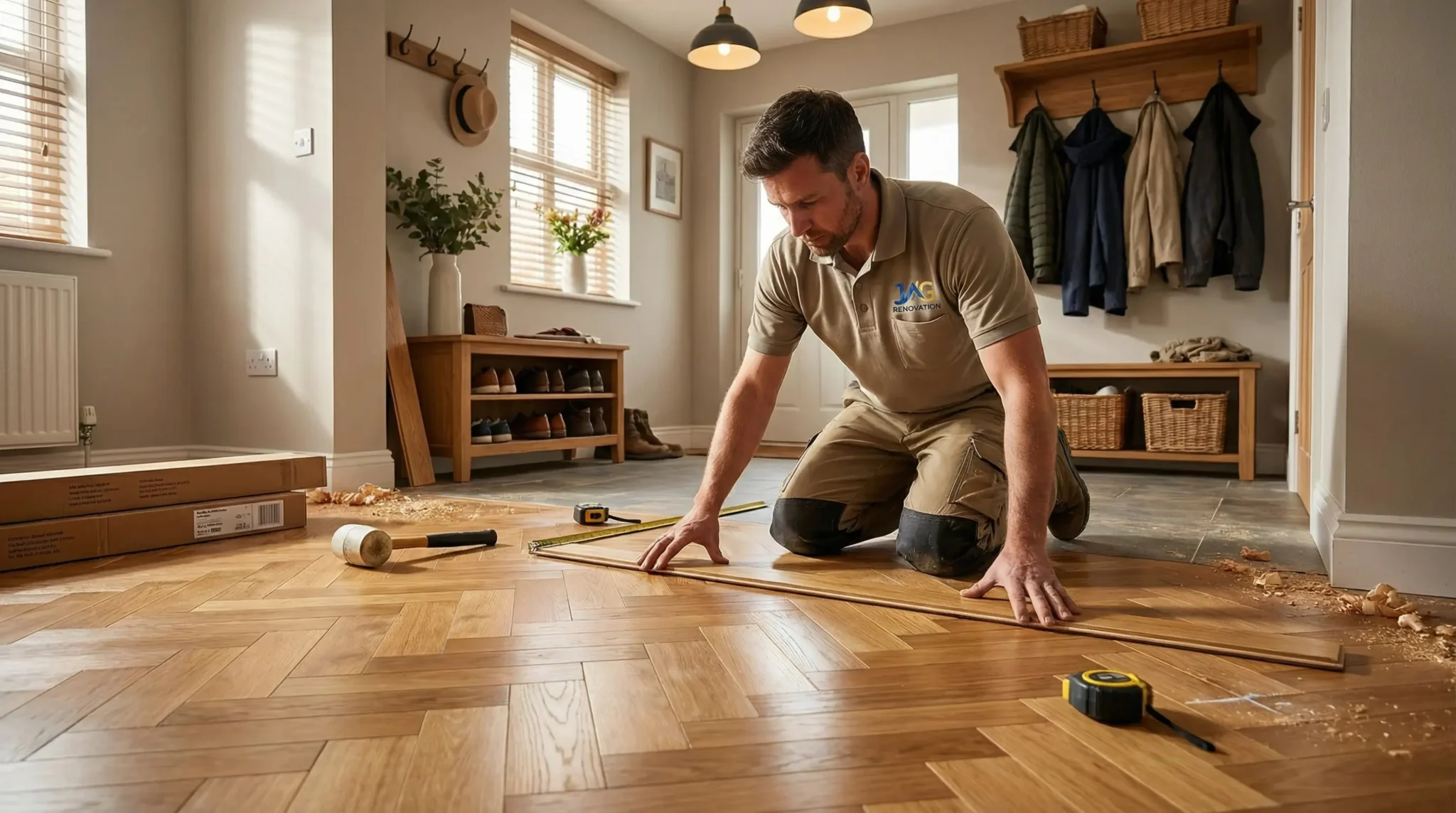
Then we install. Depending on the material and square footage, most residential flooring projects take one to three days. We keep the work area contained, clean up daily, and don’t leave until the floor is finished and walkable. For certain installs like hardwood or tile, there’s curing time before you can move furniture back—we’ll walk you through that timeline upfront so there’s no confusion.

Ready to get started?
When we handle your flooring project, you’re getting full-service work—not just installation. That means removing old flooring if needed, repairing or leveling the subfloor, installing underlayment where required, and laying your new floor with proper expansion gaps, transitions, and finishing. We’re not skipping steps to save time.
In Yaphank, a lot of homes have older hardwood that’s worth refinishing instead of replacing. We’ll tell you if that’s the smarter move. For kitchens and bathrooms, tile and luxury vinyl are the most common requests—tile for the look, vinyl for the durability and water resistance. Both work well in Suffolk County homes as long as the subfloor is prepped correctly and the install is done right.
Basements are a different animal. Concrete slabs, moisture concerns, and temperature swings mean you need flooring that can handle those conditions. We typically recommend vinyl plank or tile for below-grade spaces, and we’ll test for moisture before we start so you’re not dealing with buckling or mold growth six months later. Every material has a right place to go—our job is making sure it ends up there.

For a single room, plan on one to two days depending on the material and whether the subfloor needs work. Tile takes longer because of mortar and grout cure times. Laminate and vinyl plank can often be walked on the same day.
If you’re doing multiple rooms or a whole floor of the house, it usually takes three to five days. That includes demo, subfloor prep, installation, and finishing work like baseboards and transitions. We don’t rush it—floors that are installed too fast end up with gaps, squeaks, or uneven seams.
The timeline also depends on what we find when the old floor comes up. If there’s subfloor damage, sagging joists, or moisture issues, we fix that first. It adds time, but it’s not optional—you can’t put a good floor over a bad base and expect it to last.
Luxury vinyl plank is the most durable option for high-traffic spaces like hallways, kitchens, and entryways. It handles moisture, resists scratches, and doesn’t dent under furniture or foot traffic. It’s also easy to clean and doesn’t need refinishing.
Tile is another solid choice, especially ceramic or porcelain. It won’t wear down, but grout lines need sealing and maintenance. If something heavy drops, tile can crack—vinyl won’t. For homes with kids or pets, vinyl usually makes more sense.
Hardwood looks great but it will show wear in heavy-use areas over time. You’ll see scratches, dents, and finish wear—especially near doorways and in front of sinks. If you want the look of wood without the maintenance, engineered hardwood or wood-look vinyl are better bets for those spots.
Installation costs depend on the material, square footage, and condition of your subfloor. For laminate or vinyl plank, expect to pay between $3 and $8 per square foot installed. Tile runs $5 to $15 per square foot depending on the tile type and layout. Hardwood installation typically ranges from $6 to $12 per square foot.
Those prices include labor, underlayment, and basic prep work. If your subfloor needs leveling, repairs, or moisture barrier installation, that’s additional. Same goes for removing old flooring, moving furniture, or intricate patterns and borders. We give you a full breakdown in the quote so there’s no guessing.
Material costs vary widely depending on what you choose. Builder-grade vinyl might run $2 per square foot. High-end porcelain tile or solid hardwood can hit $10+ per square foot just for the material. We’ll work with your budget and show you options that make sense without pushing you toward the most expensive product on the shelf.
Sometimes, but not always. Vinyl plank and laminate can often go over existing vinyl, linoleum, or thin tile if the surface is smooth, level, and in good shape. If the old floor is uneven, damaged, or has moisture issues, it needs to come up first.
You can’t install over carpet—it has to be removed along with the padding and tack strips. Hardwood installation requires a clean subfloor, so old flooring comes up in those cases too. Tile can sometimes be installed over existing tile if it’s well-adhered and level, but adding another layer raises the floor height and can create transition issues with adjacent rooms.
The safest approach is removing the old flooring so we can inspect the subfloor. That’s where problems hide—water damage, rot, unlevel sections, or squeaky spots. Covering those up with new flooring doesn’t fix them, it just delays the problem. We’d rather pull it up, address what’s underneath, and install over a solid base.
Laminate is made from compressed wood fibers with a photographic layer on top and a protective coating. It looks like wood, feels harder underfoot, and costs less than real hardwood. The downside is it can’t handle moisture—if water sits on it or gets between the planks, it swells and warps. It’s fine for living rooms and bedrooms, not great for kitchens or bathrooms.
Vinyl plank is fully waterproof. It’s made from PVC with a printed design layer and a wear layer on top. It’s softer underfoot than laminate, more forgiving on dropped dishes, and it won’t swell if it gets wet. Luxury vinyl plank (LVP) has gotten good enough that it’s hard to tell from real wood unless you’re on your hands and knees looking at it.
If moisture is a concern—kitchen, bathroom, basement, or entryway—go with vinyl. If you want a harder surface that feels closer to real wood and the room stays dry, laminate works. Both are DIY-friendly if installed correctly, but most people hire it out because getting the transitions, cuts, and underlayment right makes a big difference in how the floor performs long-term.
Yes. We install flooring for commercial spaces including offices, retail locations, and rental properties throughout Suffolk County. Commercial flooring needs to handle heavier traffic, meet building codes, and often needs to be installed outside of business hours to avoid disrupting operations.
The materials are usually different than residential jobs. Commercial-grade vinyl, porcelain tile, and polished concrete are common because they’re durable and easy to maintain. We also work with property managers on multi-unit flooring replacements where consistency and speed matter.
Timelines are tighter on commercial projects and the prep work is often more involved—leveling large floor areas, coordinating with other trades, and working around existing fixtures or equipment. We’ve handled everything from small office suites to full retail build-outs. If you need flooring for a commercial property in Yaphank or nearby, we’ll walk the space and give you a realistic timeline and quote based on your schedule and requirements.