
Hear from Our Customers
You’re not looking for the cheapest quote. You’re looking for someone who shows up when they say they will, does the work correctly, and doesn’t leave you guessing about costs or timelines.
That’s what matters when you’re dealing with sheetrock installation or drywall repair. You want smooth walls, clean seams, and a finished surface that’s ready for paint without needing a second round of fixes. You don’t want to deal with contractors who ghost you after the deposit or add mystery charges halfway through.
We handle residential sheetrock installation and commercial drywall projects across Blue Point and Suffolk County. We’ve been doing this for nearly a decade, and we’ve seen what happens when corners get cut. Uneven taping. Visible seams. Walls that crack within months because someone rushed the mud work or used subpar materials.
You get transparent pricing up front. You get updates throughout the project. And you get walls that actually look professional when we’re done.
We’ve been working in Blue Point and across Suffolk County since 2016. That’s long enough to know which materials hold up in Long Island’s humidity, which building inspectors care about what, and which shortcuts lead to callbacks six months later.
Jaguar Renovations is licensed and insured. We don’t subcontract your job to unlicensed crews, and we don’t play games with pricing. If you’re getting a quote for sheetrock repair or full drywall installation, you’ll know exactly what you’re paying for before we start.
Blue Point homeowners deal with the same frustrations everywhere else on Long Island: contractors who don’t return calls, crews who show up late or not at all, and bills that somehow grow between estimate and invoice. We built our business by doing the opposite. Show up on time. Do the work right. Charge what we said we’d charge.
First, we walk through your space and assess what you need. If it’s a repair, we check for underlying issues like water damage or structural problems that need addressing before new drywall goes up. If it’s new installation, we measure everything and discuss your timeline.
You get a detailed estimate that breaks down materials, labor, and timeline. No vague line items. No “we’ll figure it out as we go.” You’ll know what sheetrock sheets we’re using, what taping compound we’re applying, and how long each phase takes.
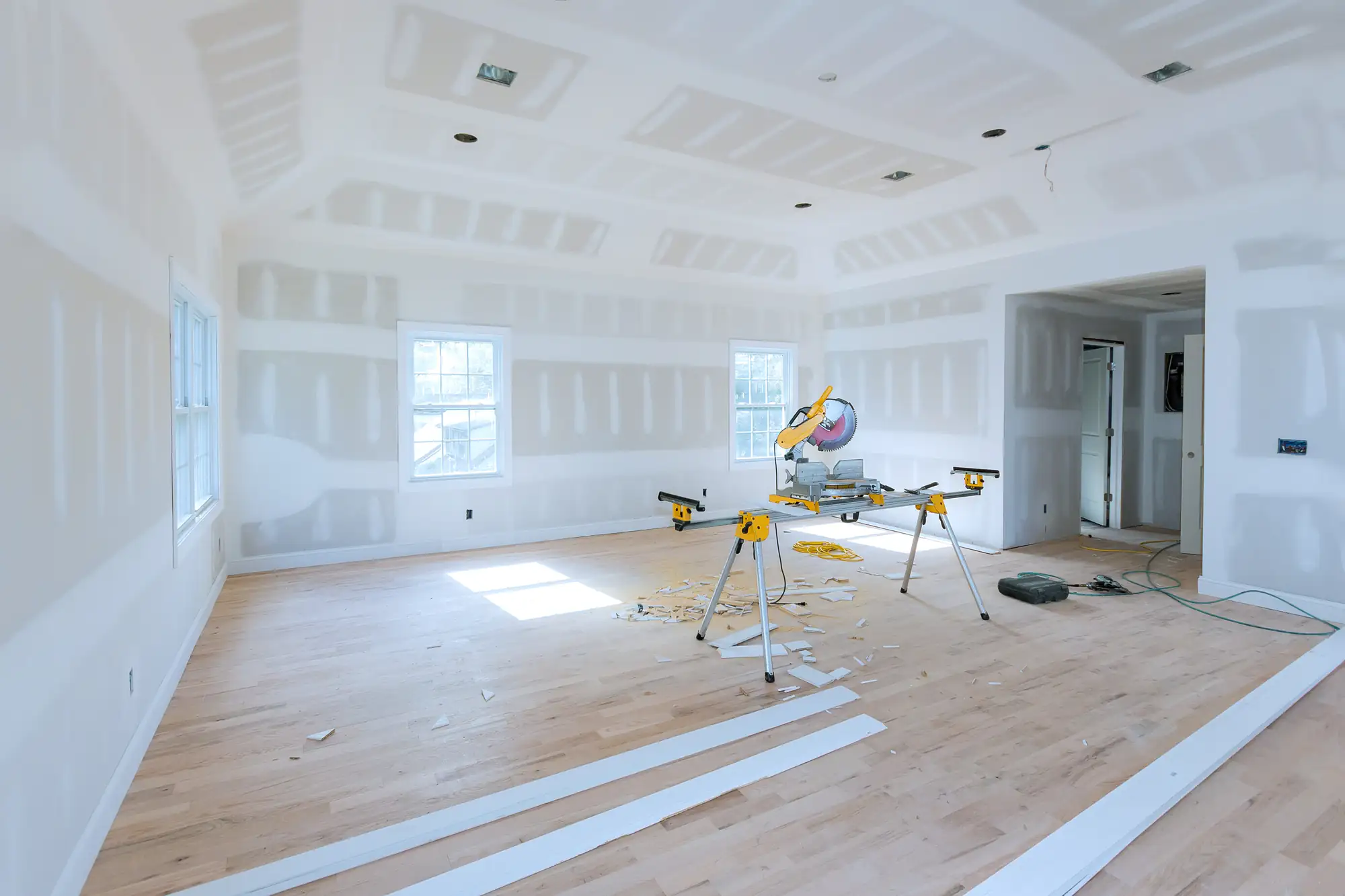
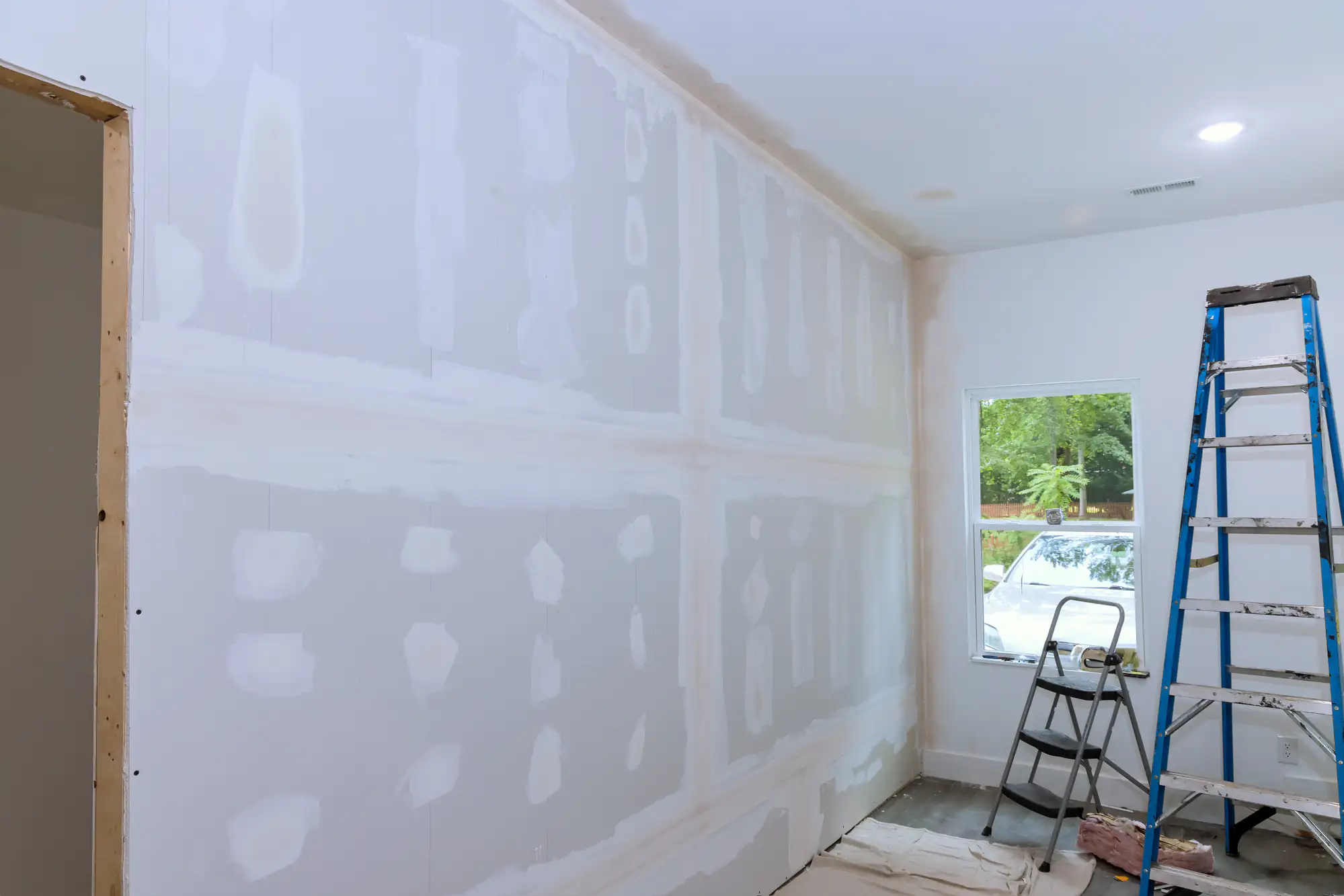
Once you approve, we schedule the work. Installation starts with hanging the sheets, then comes taping, mudding, and sanding. Each layer of joint compound needs time to dry properly—rushing this step is where most bad drywall jobs fall apart. We don’t rush it.
After sanding, you get smooth walls ready for primer and paint. We clean up the dust, remove the scraps, and walk you through the finished work. If something doesn’t look right to you, we address it before we consider the job complete.
That’s the process. No drama, no disappearing acts, no surprise fees at the end.
Ready to get started?
Whether you need full residential sheetrock installation for a basement remodel or drywall repair for damaged walls, the work includes proper surface prep, quality materials, and finishing that’s actually ready for paint.
For installation projects, that means hanging sheetrock sheets with correct spacing and screw placement, taping all seams with fiberglass mesh or paper tape depending on the application, applying multiple coats of joint compound, and sanding everything smooth. Corners get metal or paper beading for clean lines. Edges get finished properly so your painter isn’t stuck trying to fix our mistakes.
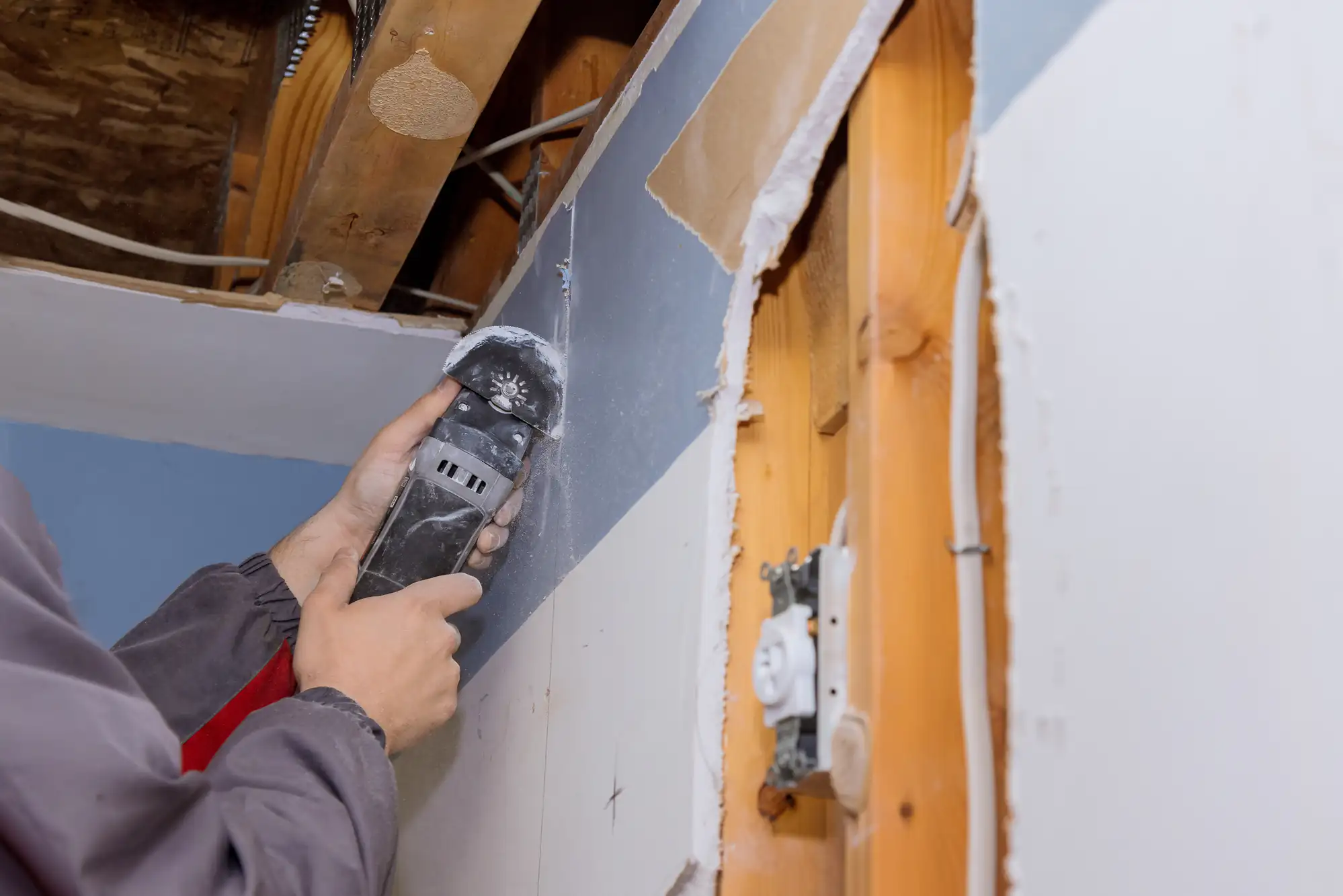
For repair work, we cut out damaged sections, address any moisture or structural issues behind the wall, patch with matching drywall, and blend the repair into the existing surface. You shouldn’t be able to tell where the damage was once we’re done.
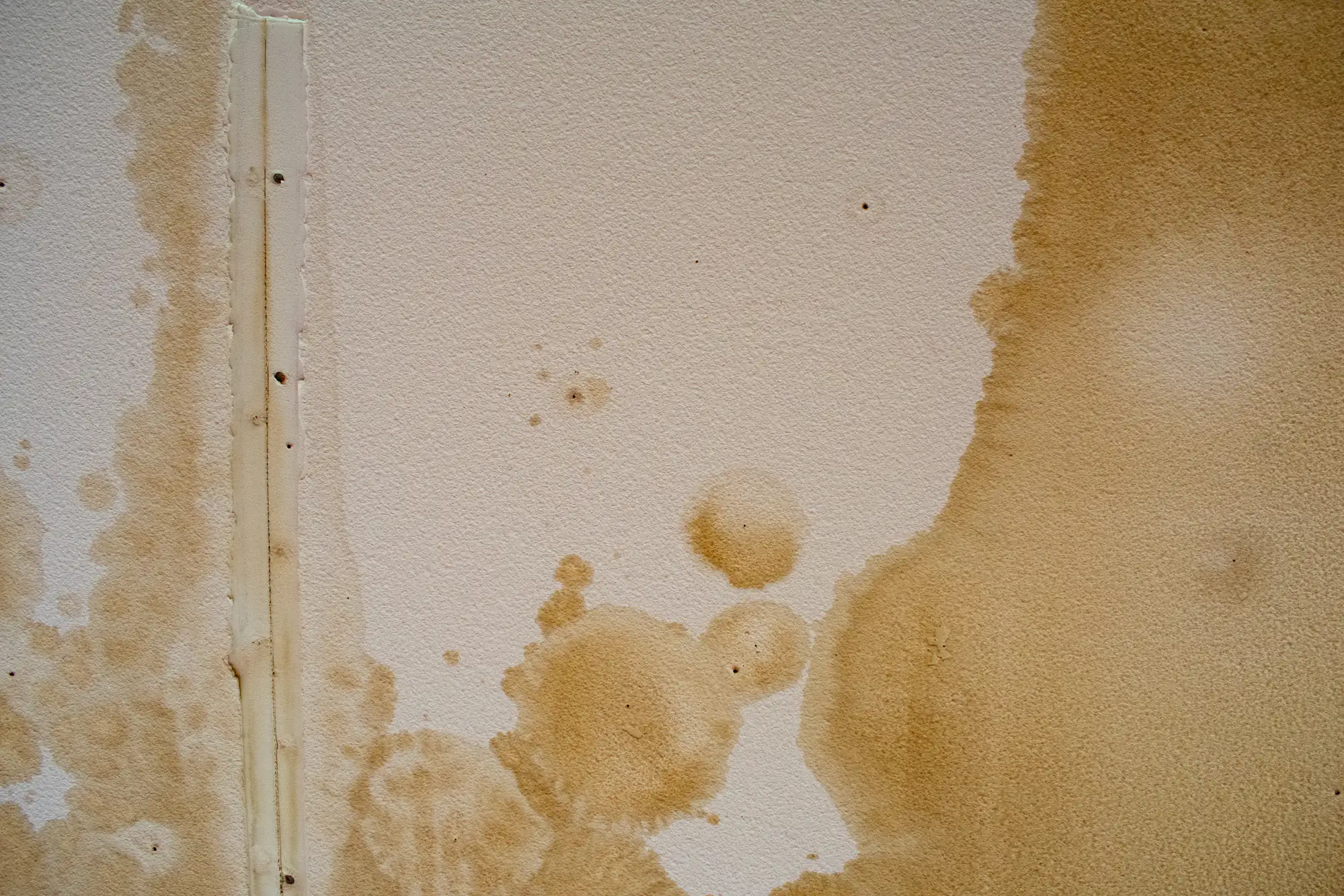
Blue Point homes—especially older ones near the water—deal with humidity, settling, and the occasional plumbing leak. That means drywall repair isn’t always just about patching a hole. Sometimes it’s about fixing what caused the damage in the first place, then making sure the repair lasts.
We also handle commercial drywall installation for office renovations, retail spaces, and mixed-use properties across Suffolk County. Same standards, same transparency, whether it’s your home or your business.
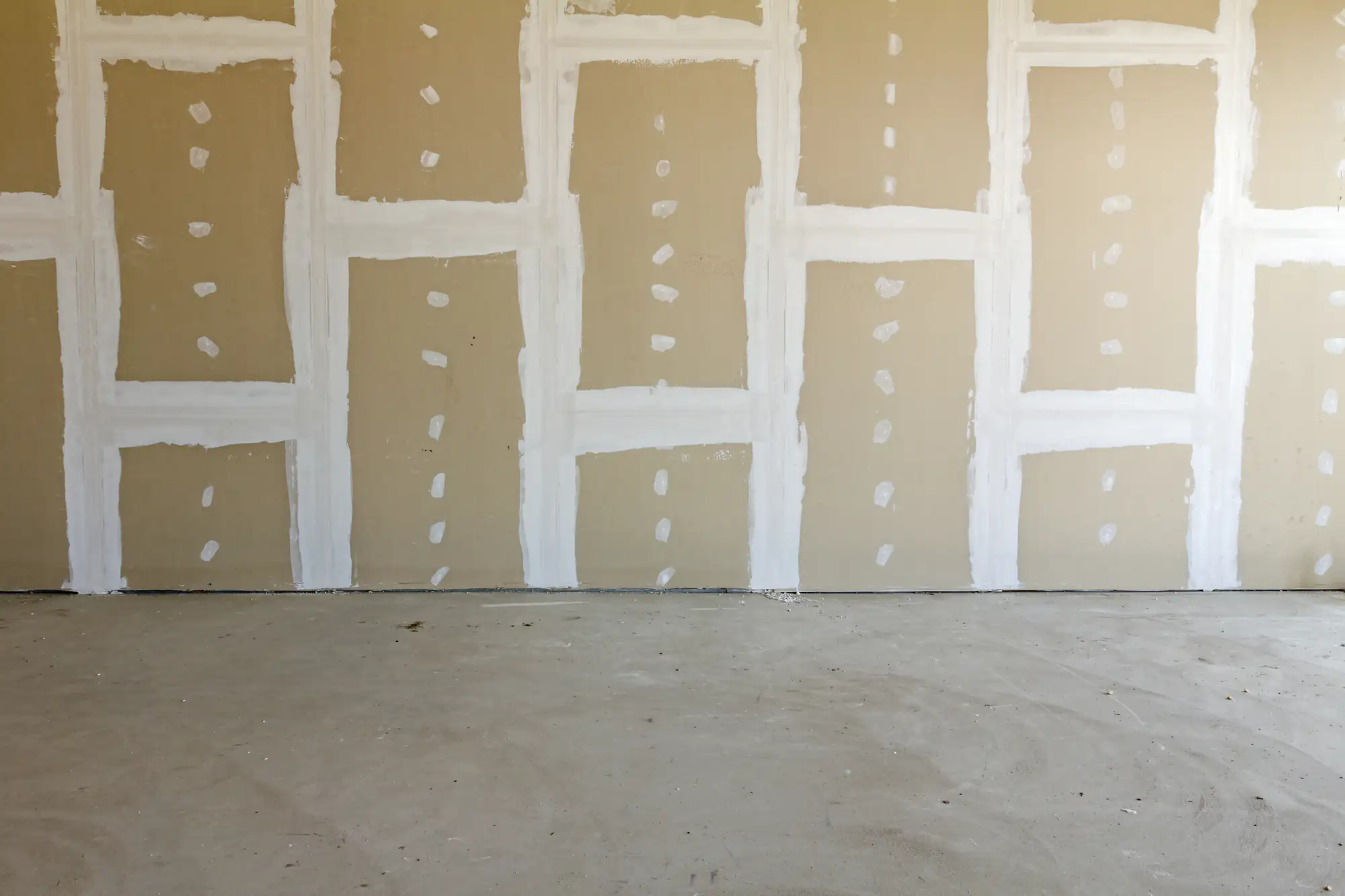
A standard bedroom or living room usually takes two to four days from start to finish. That includes hanging the drywall, taping and mudding the seams, letting each coat dry properly, sanding, and final touch-ups.
The timeline depends on room size, ceiling height, and how many coats of joint compound the walls need. Rushing the drying time between coats leads to cracking and visible seams later, so we don’t cut corners there even if it adds a day to the schedule.
If you’re doing multiple rooms or a whole-floor renovation, we’ll map out a timeline that keeps the project moving without leaving half-finished walls sitting for weeks. You’ll know the schedule before we start, and we’ll update you if anything changes.
Repair makes sense when the damage is localized—a hole from a doorknob, a crack from settling, water damage in one section. We cut out the damaged area, patch it with new drywall, and finish it to match the surrounding wall. It’s faster and cheaper than replacing entire sheets.
Full replacement makes sense when the damage is widespread, the existing drywall is outdated or deteriorating, or you’re doing a renovation that requires moving walls or adding insulation. If more than 30% of a wall is damaged, replacement usually makes more sense than trying to patch everything.
During the estimate, we’ll tell you which approach makes sense for your situation. If a repair will work, we’re not going to sell you a full replacement. If the existing drywall is in bad shape and a patch job won’t hold up, we’ll explain why replacement is the better investment.
Yes. Residential sheetrock installation covers everything from single-room repairs to whole-house renovations—basements, kitchens, bathrooms, additions, wherever you need new or replacement drywall. Most of our residential work in Blue Point involves remodeling projects where homeowners are updating older spaces.
Commercial drywall installation includes office build-outs, retail renovations, and mixed-use properties. The materials and techniques are similar, but commercial projects often have tighter timelines and require coordination with other trades like electricians and HVAC contractors.
Whether it’s your home or your business, the standards are the same. Proper installation, quality materials, clean finishing work, and clear communication throughout the project. We’re licensed and insured for both residential and commercial work across Suffolk County.
Small repairs—patching a hole or fixing a crack—usually run a few hundred dollars depending on size and location. Full room installation typically ranges from $1,500 to $4,000 depending on room size, ceiling height, and finish level.
Larger projects like finishing a basement or renovating multiple rooms depend on square footage, whether you need insulation or moisture barriers, and how much prep work is involved. We provide detailed estimates that break down materials and labor so you know exactly what you’re paying for.
The estimate includes everything: sheetrock sheets, taping compound, corner beading, fasteners, labor, and cleanup. No hidden fees for “unexpected complications” or vague line items that mysteriously increase the final bill. What we quote is what you pay unless you change the scope of work.
First, make sure they’re licensed and insured. That protects you if something goes wrong during the project. Ask for proof—any legitimate contractor will provide it without hesitation.
Second, get a detailed written estimate that breaks down materials, labor, and timeline. If someone gives you a vague number or says “we’ll figure it out as we go,” that’s a red flag. You should know what you’re paying for before any work starts.
Third, ask about their process. How many coats of joint compound do they apply? Do they sand between coats? What type of taping compound do they use? A professional sheetrock contractor should be able to explain their process clearly and tell you why they do things a certain way. If they can’t answer basic questions about technique, they probably don’t have the experience you need.
Yes, matching existing texture is part of the repair process. Whether your walls have a smooth finish, light orange peel, knockdown texture, or something else, we replicate it so the repair blends in with the surrounding surface.
This matters more than most people realize. A perfectly patched hole still looks obvious if the texture doesn’t match. We take the time to match the finish properly using the right tools and techniques for your specific wall texture.
For older Blue Point homes with plaster walls, we can also blend drywall repairs into existing plaster so you don’t have mismatched surfaces. It requires different materials and techniques than standard drywall-to-drywall repairs, but it’s absolutely doable when done correctly.