Thinking about a kitchen remodel in Suffolk County? This guide walks you through costs, timelines, design options, and what to expect when working with licensed contractors who understand Long Island homes.
The short answer: it depends on what you’re changing. But that’s not helpful when you’re trying to plan a budget.
Here’s what actually happens in Suffolk County. Most full kitchen remodels fall somewhere between $35,000 and $85,000. Smaller updates—like replacing countertops, updating cabinets, or swapping out appliances—can start closer to $20,000 to $25,000. High-end custom kitchens with layout changes, premium materials, and top-tier appliances can push past $100,000.
Those numbers are higher than national averages, and there are real reasons for that. Labor costs on Long Island run closer to New York City rates. Permits are handled town by town, which adds time and expense. And if your home was built in the 1950s or 60s—like many in Suffolk County—you’re probably looking at electrical or plumbing upgrades just to bring things up to code. That’s not optional. It’s part of doing the job correctly so your kitchen is safe and functional for the long term.
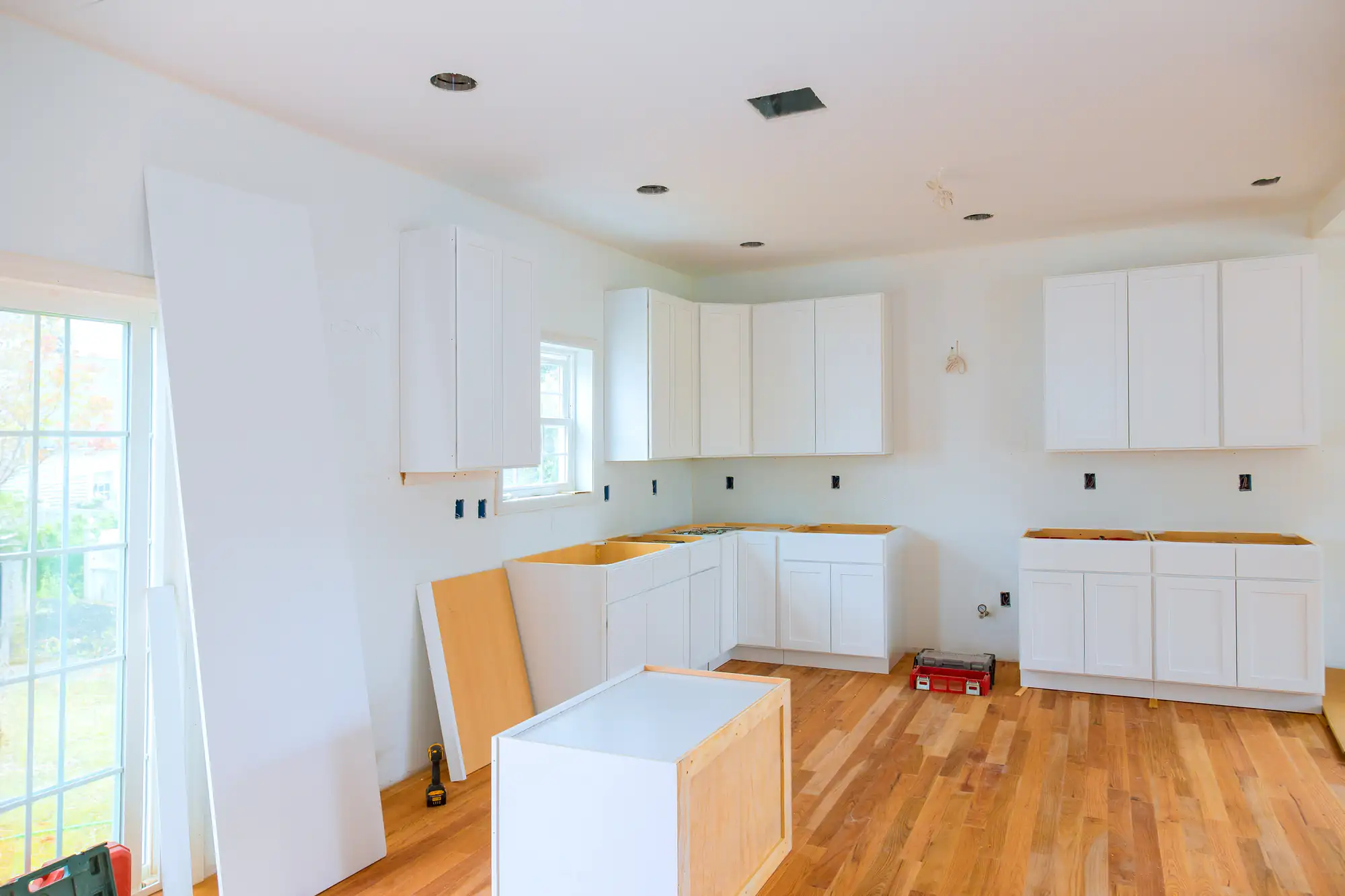
Cabinets are usually the biggest expense. They take up 25% to 35% of most budgets, and for good reason—they set the tone for the entire space and handle the bulk of your storage needs. Stock cabinets are the most affordable option. Semi-custom gives you more flexibility in sizing and finishes. Custom cabinetry costs more but lets you maximize every inch, especially in kitchens with odd layouts or specific storage challenges.
Countertops come next. Quartz is still the most popular choice in Suffolk County because it’s durable, low-maintenance, and comes in a range of styles. Granite and natural quartzite are also common, especially for homeowners who want the look of natural stone. Butcher block is gaining traction for islands because it adds warmth and works well as a prep surface.
Appliances matter more than you think. You don’t need to go full luxury, but investing in energy-efficient models that fit your cooking style makes a difference. Most homeowners spend 10% to 20% of their budget here, and modern appliances are one of the first things buyers notice if you sell down the line.
Labor is the wildcard. Suffolk County has some of the highest labor costs in the country, and that’s because skilled tradespeople who understand local codes and older home construction are in demand. Electrical work, plumbing, flooring, tile—it all adds up. The good news? Hiring licensed professionals who know what they’re doing means fewer mistakes, fewer delays, and a finished kitchen that actually works.
Don’t forget permits. Depending on your scope of work, Suffolk County charges anywhere from $300 to $1,000 in permit fees. If you’re moving plumbing, electrical, or gas lines, or if you’re taking down walls, you’ll need permits. A good contractor handles this for you and builds it into the timeline so you’re not surprised.
The biggest budget killer isn’t materials or labor—it’s scope creep. That’s when you start with a plan to replace countertops and cabinets, but halfway through, you decide to move a wall, upgrade the lighting, and add an island. Suddenly your $40,000 project is $65,000. Set your budget upfront. Build in a 15% to 20% contingency for surprises (because older homes always have them), and stick to the plan.
There’s an old rule that says you should spend about 10% to 15% of your home’s value on a kitchen remodel. It’s a decent guideline, but it’s not gospel. If your home is worth $400,000, that puts you in the $40,000 to $60,000 range—which lines up with what most Suffolk County homeowners spend on a mid-range remodel.
But here’s what matters more than percentages: what do you need the kitchen to do? If you’re planning to stay in your home for the next 10 to 15 years, it makes sense to invest in the features you’ll use every day—better storage, a layout that actually flows, appliances that make cooking easier. If you’re planning to sell in the next few years, focus on updates that appeal to buyers: neutral finishes, quality materials, and a layout that works for most families.
The return on investment varies depending on the scope. Minor remodels—things like cabinet refacing, new countertops, updated hardware, and fresh paint—can recoup 70% to 80% of the cost when you sell. Major remodels with layout changes and high-end finishes typically recoup 50% to 60%. That doesn’t mean a major remodel isn’t worth it. It just means you’re investing in your own quality of life, not just resale value.
One more thing: avoid over-improving for your neighborhood. If most homes in your area are selling for $350,000 to $450,000, a $120,000 kitchen remodel doesn’t make financial sense. You won’t get that money back. Aim for the middle of the market—quality materials, smart design, and finishes that feel current but not trendy.
The sweet spot for most Suffolk County homeowners? Mid-range renovations that balance quality with cost. You get the functionality improvements you need, the aesthetics you want, and a budget that doesn’t require a second mortgage. Focus your money on the elements you use most—countertops, faucets, cabinet hardware, lighting—and save on items like flooring or backsplashes where attractive options exist at lower price points.
Want live answers?
Connect with a Jaguar Renovation expert for fast, friendly support.
Most kitchen remodels in Suffolk County take 6 to 12 weeks from start to finish. That includes everything—demo, rough-in work, installation, and final touches. The timeline depends on the scope of your project, whether you’re changing the layout, and how quickly permits get approved.
A basic remodel—new cabinets, countertops, backsplash, and appliances with no layout changes—usually takes 6 to 8 weeks. A full renovation with layout changes, new electrical and plumbing, custom cabinetry, and high-end finishes can stretch to 10 to 12 weeks or longer. If you’re working with an older home that needs structural updates or code compliance work, add a few more weeks.
Permits can slow things down. Suffolk County handles permits town by town, and approval times vary. Some towns move quickly. Others take longer. A good contractor builds permit wait time into the schedule so you’re not caught off guard.
Material lead times also matter. Custom cabinets can take 6 to 8 weeks to fabricate. Stone countertops need to be templated after cabinets are installed, then fabricated and installed a week or two later. Appliances are usually in stock, but if you’re ordering something specific, plan for a few weeks of lead time.
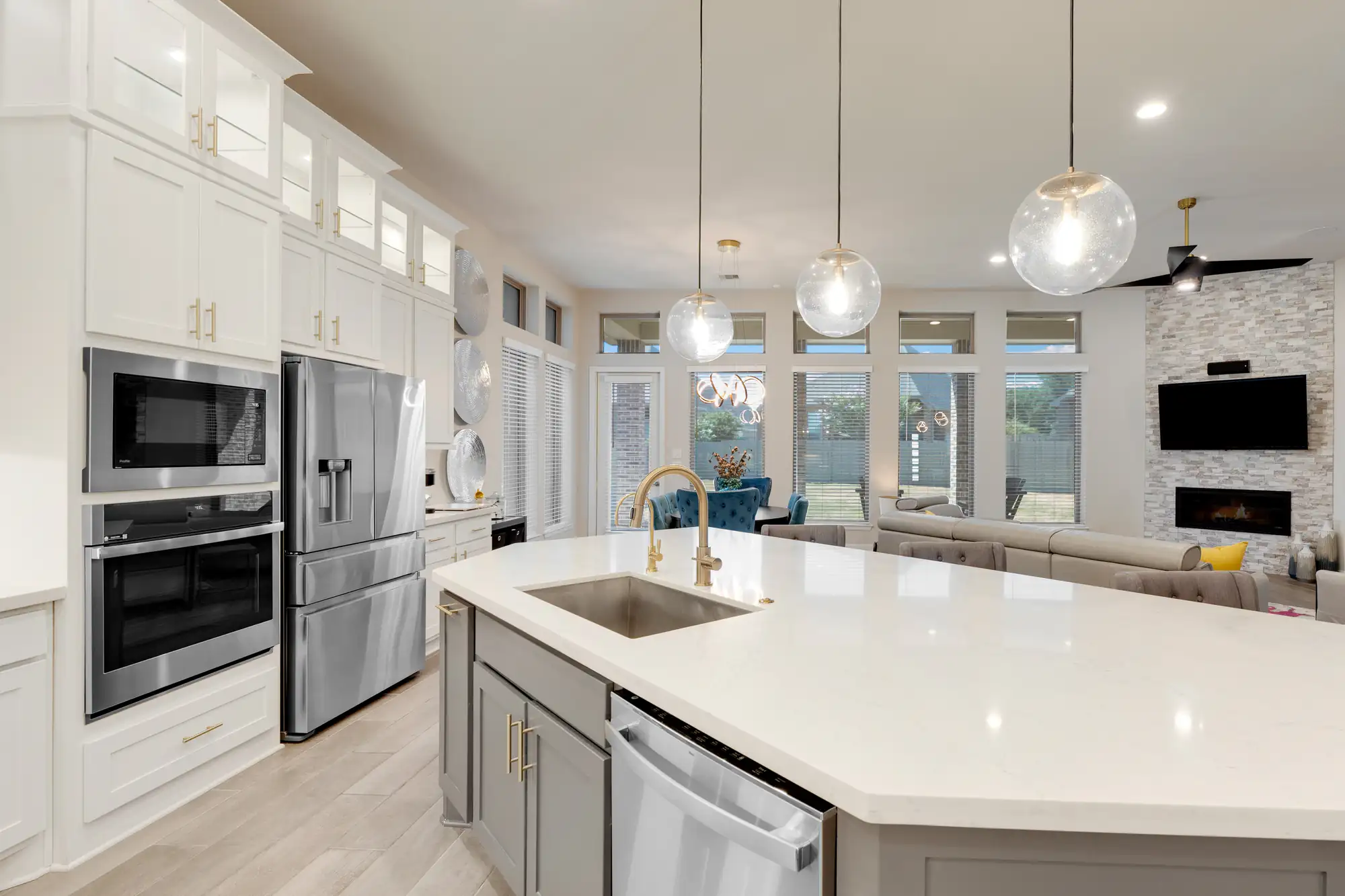
Here’s how the process usually unfolds. It starts with a consultation where you talk through your goals, your budget, and how you actually use your kitchen. We ask questions—how many people cook at once, where do you run out of storage, what frustrates you about the current layout. This is where you figure out what’s realistic and what’s worth spending money on.
Next comes design and planning. You’ll pick out materials—cabinets, countertops, flooring, backsplash, hardware, lighting, appliances. If you’re changing the layout, this is when you finalize the floor plan. We walk you through the timeline, explain what happens when, and give you a detailed estimate that breaks down costs so you know exactly where your money is going.
Once you sign off, the real work begins. Demo usually takes a day or two. Then comes rough-in work—electrical, plumbing, HVAC if needed. This is when you find out if your walls are hiding any surprises (they usually are). After rough-in comes inspection, then drywall, then painting.
Cabinets go in next, followed by countertops. Once countertops are templated, there’s usually a week or two wait for fabrication and installation. Backsplash, flooring, and trim work happen after that. Appliances and fixtures go in last, then final touch-ups and a walkthrough to make sure everything works the way it should.
You’ll be without a kitchen for most of this time. For a simple cabinet and countertop replacement, you’re looking at about a week of no kitchen access. For a full remodel, plan on 2 to 4 weeks. Set up a temporary kitchen in another room—microwave, mini fridge, coffee maker, paper plates. It’s not fun, but it’s temporary.
The key to a smooth process? Communication. We give you weekly updates, let you know when inspections are happening, and flag any issues before they become problems. If something changes—a material is backordered, a permit takes longer than expected, you find old wiring that needs to be replaced—you hear about it right away, not three weeks later.
Suffolk County homes run the gamut—ranch-style houses from the 50s and 60s, colonials, split-levels, newer construction. The kitchen design that works depends on your home’s style, your personal taste, and how you actually live.
Transitional kitchens are the most popular choice right now, and for good reason. They blend modern and traditional elements—clean lines with a bit of detail, neutral colors with natural materials, function without feeling cold. Think shaker-style cabinets in a warm wood tone, quartz countertops with subtle veining, simple hardware, and a mix of task and ambient lighting. It’s a style that ages well because it’s not trying too hard.
If you lean more traditional, you’re looking at raised-panel cabinets, decorative molding, classic hardware, and finishes that feel warm and lived-in. Granite or marble countertops, subway tile backsplash, a farmhouse sink, pendant lights over the island. Traditional kitchens work especially well in older Long Island homes where the rest of the house has that same character.
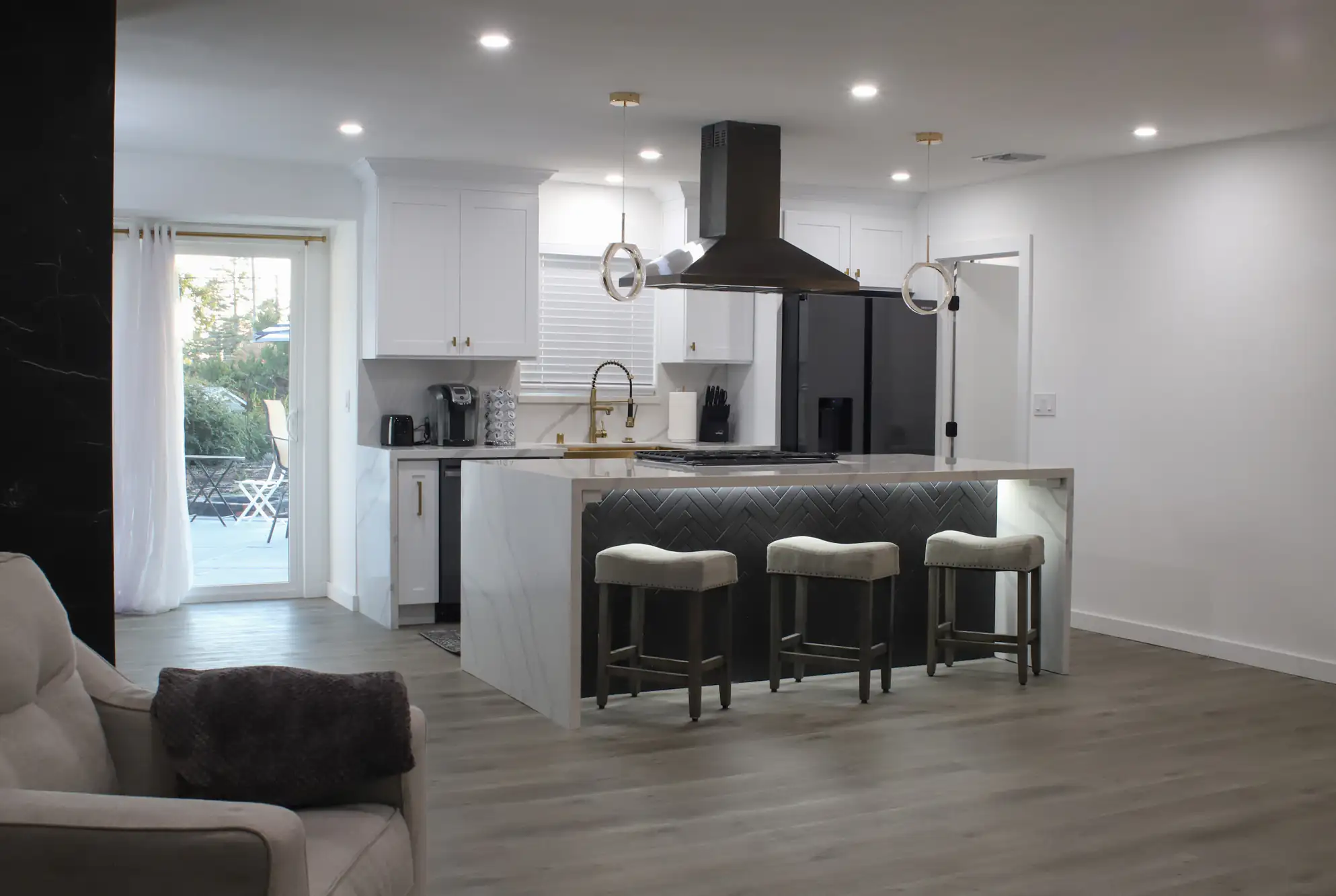
Modern kitchens are sleeker—flat-panel cabinets, minimal hardware, bold materials, integrated appliances. Think high-gloss finishes, waterfall countertops, geometric tile, statement lighting. Modern works best in open-concept homes or newer construction where the rest of the space supports that aesthetic.
Wood cabinets are making a comeback. After years of white kitchens dominating, homeowners are choosing wood—especially white oak and walnut—because it adds warmth and texture. Natural materials in general are trending: stone countertops with visible veining, wood floors, textured tile, brass or bronze hardware that develops a patina over time.
Storage is non-negotiable. Homeowners want floor-to-ceiling cabinetry, deep drawers instead of lower cabinets, pull-out organizers for pots and pans, dedicated spaces for trash and recycling, pantry cabinets for dry goods. Islands are getting bigger and more functional—extra seating, built-in storage, outlets for charging phones or plugging in small appliances.
Open-concept layouts are still popular, but not everyone wants them. Some homeowners are adding back kitchens or butler’s pantries—a second prep area where you can stash the mess when guests come over. It’s a practical solution that also helps with sound and sightlines if your kitchen opens directly into the living room.
Lighting matters more than most people realize. Natural light is ideal, but not every kitchen has great windows. Layer your lighting—recessed lights for general illumination, under-cabinet lights for task lighting, pendants or a chandelier for ambiance. Dimmer switches give you control depending on the time of day and what you’re doing.
Don’t forget about aging in place. If you’re planning to stay in your home long-term, think about accessibility now. Lever-style faucets and cabinet handles, pull-out shelves, a wall oven instead of a range, slip-resistant flooring, good lighting. These aren’t just for older homeowners—they make kitchens easier to use for everyone.
A kitchen remodel is a big decision, but it doesn’t have to be overwhelming. When you know what to expect—realistic costs, honest timelines, what actually matters in the design—you can move forward with confidence instead of second-guessing every choice.
The best kitchen remodels aren’t the ones with the fanciest finishes or the biggest budgets. They’re the ones that work for how you live. More counter space where you actually prep food. Storage that makes sense. A layout that doesn’t have you walking in circles. Appliances that do what you need them to do. And a contractor who shows up, communicates clearly, and delivers what they promised.
If you’re ready to stop living with a kitchen that doesn’t work and start planning one that does, we’re here to help. With nearly a decade of experience in Suffolk County, licensed crews who understand local codes, and a commitment to transparent communication and honest pricing, we make the process straightforward. No hidden costs. No pressure. Just quality work, fair value, and a finished kitchen you’ll actually want to use every day.
Summary:
Share: