Not all flooring works in every room—or every climate. This guide walks you through choosing materials that actually hold up in Suffolk County homes.
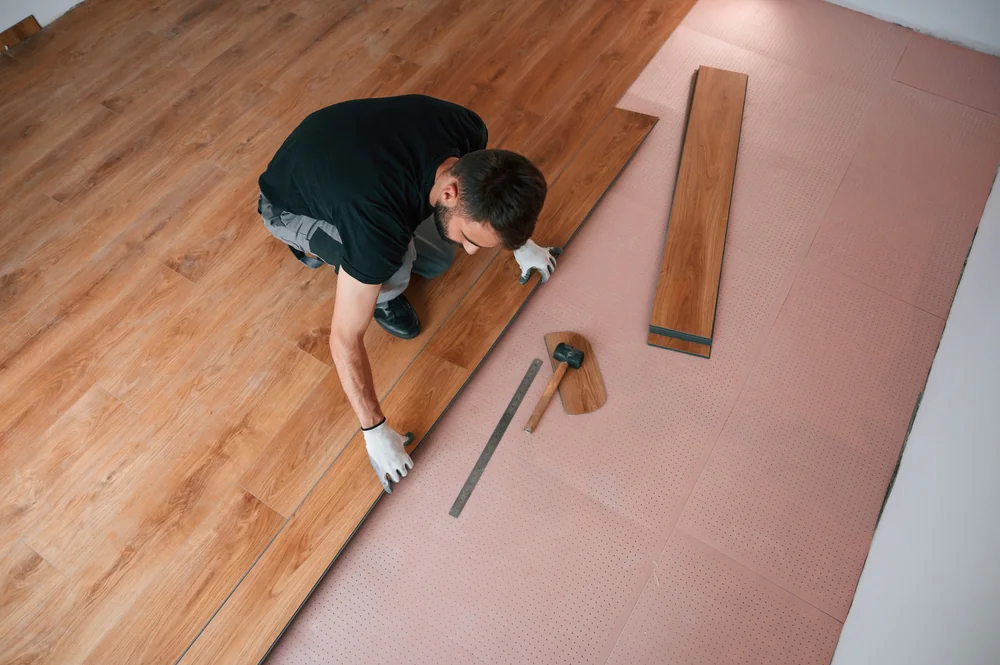
You’ve been staring at those scratched floors for months. Or maybe you’re mid-remodel and suddenly drowning in flooring samples that all look the same under showroom lights. Hardwood or LVP? Tile or laminate? And what about the basement—can you even use regular flooring down there?
Here’s the thing: picking flooring isn’t complicated because the options are endless. It’s complicated because one wrong choice—or one installation shortcut—can cost you thousands down the road. This guide cuts through the noise and gives you what actually matters: which materials work in Suffolk County homes, how to match flooring to the room, and what mistakes to avoid so your investment lasts.
Walk into any flooring showroom and you’ll see hundreds of samples. But most of them fall into a few main categories, each with strengths and limitations you need to know about before you commit.
Hardwood still tops the list for resale value and timeless appeal. It works beautifully in living rooms, dining areas, and bedrooms. But it’s not waterproof, and Suffolk County’s humidity can cause issues if it’s not installed correctly. Luxury vinyl plank has become the go-to for homeowners who want the wood look without the moisture sensitivity. It’s fully waterproof, holds up to pets and kids, and costs less than hardwood.
Tile is your best bet for kitchens, bathrooms, and entryways where water and traffic are constant. Porcelain is denser and more durable than ceramic. Laminate gives you a budget-friendly wood appearance, though it’s not truly waterproof—just water-resistant. And engineered wood sits somewhere between solid hardwood and laminate, offering more moisture stability than solid wood but a real wood veneer on top.
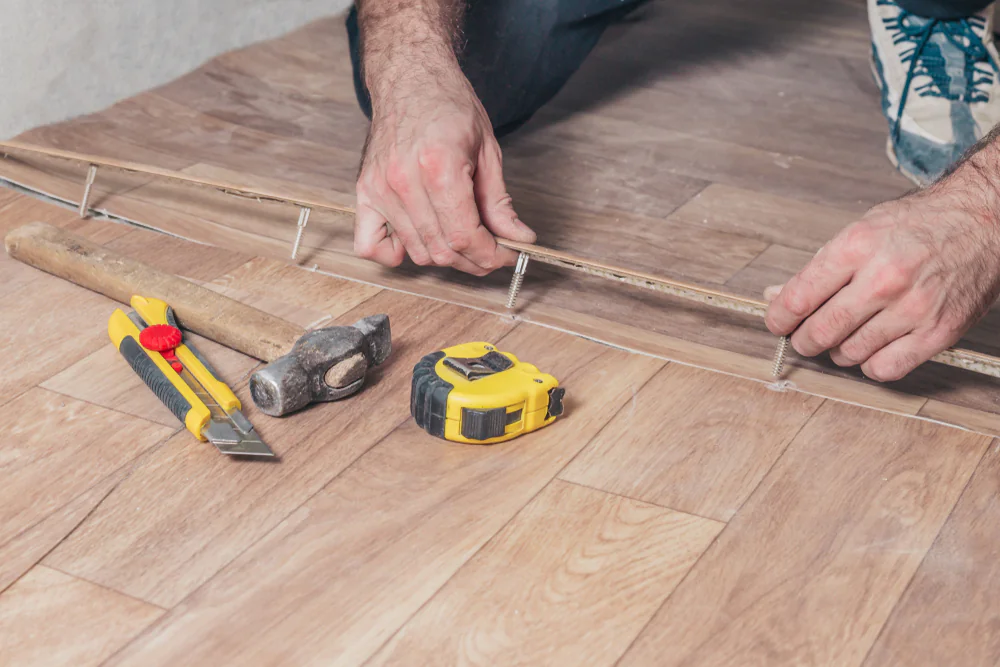
The flooring that works in your living room won’t necessarily work in your basement. And what holds up in a quiet home office might buckle under the chaos of a mudroom.
Start with moisture. Bathrooms, basements, laundry rooms, and kitchens all need flooring that can handle water exposure without warping or growing mold. That means tile, luxury vinyl, or specially rated waterproof options. Hardwood and standard laminate don’t belong in these spaces, no matter how good they look in the showroom.
Next, think about traffic. Entryways, hallways, and kitchens see constant foot traffic, dirt, and impact. You need something durable—tile, LVP, or engineered wood with a strong wear layer. Softer options like carpet or standard laminate will show wear faster. For bedrooms and low-traffic spaces, you have more flexibility. Carpet adds warmth and sound absorption. Hardwood or engineered wood brings a polished, elevated feel.
Then there’s your household reality. Do you have kids dragging toys across the floor? Pets with claws? A dog that tracks in mud after every walk? If so, you need scratch-resistant, easy-to-clean flooring. Textured or matte finishes hide scuffs better than high-gloss. Darker and lighter extremes show every speck of dust and dirt. Mid-tones and varied patterns are your friend.
Suffolk County adds another layer. Coastal humidity, basement moisture from groundwater, and temperature swings all affect how flooring performs. Materials that work fine in drier climates can warp, gap, or buckle here. That’s why waterproof and moisture-resistant options have become so popular on Long Island. Homeowners have learned the hard way that not every floor can handle what this area throws at it.
Don’t just pick what looks good. Pick what works. The floor that survives your life—and your location—is the one you won’t regret three years from now.
Flooring trends shift, but the ones gaining traction in 2026 aren’t just about aesthetics. They’re about performance, ease of maintenance, and long-term value.
Warm wood tones are making a comeback. After years of gray dominating the market, homeowners are gravitating toward honey oak, natural maple, and light European oak. These tones feel inviting, pair well with almost any decor, and don’t show dirt as aggressively as stark whites or deep espressos. If you’re choosing hardwood or LVP, warm mid-tones are a safe, timeless bet.
Matte and textured finishes are overtaking glossy options. Wire-brushed hardwood, hand-scraped looks, and embossed luxury vinyl all add depth and realism while hiding the inevitable scratches and scuffs that come with daily life. High-gloss finishes might photograph well, but they show every footprint and surface imperfection. Matte finishes are easier to live with.
Wider planks continue to grow in popularity. They make rooms feel larger, showcase natural wood grain, and create a more modern, open look. This works especially well in Suffolk County homes with open-concept layouts or smaller spaces that benefit from visual flow.
Patterns are back—but in a refined way. Herringbone and chevron layouts are showing up in entryways, dining rooms, and kitchens. They add character and craftsmanship without feeling too formal or fussy. Mixed-width installations offer a similar effect with less complexity.
Waterproof everything. Thanks to Suffolk County’s climate and the growing popularity of basement remodeling, waterproof flooring has moved from “nice to have” to “non-negotiable” for many homeowners. Luxury vinyl plank with enhanced cores and sealing systems now rivals the look of hardwood and stone while offering complete moisture protection. Manufacturers have responded to Long Island’s unique challenges, and the products available today outperform what was on the market even five years ago.
Sustainability is also influencing choices. Homeowners are asking about responsibly sourced hardwoods, bamboo, cork, and low-emission products. Flooring that lasts longer and can be refinished multiple times is seen as a smarter investment than cheaper options that need replacing every decade.
Trends matter, but they’re not the whole story. What works in your home depends on your specific space, your budget, and how you actually live. A trend that looks great on Instagram might be a nightmare to maintain in real life. Choose flooring that fits your world, not just the current design moment.
Want live answers?
Connect with a Jaguar Renovation expert for fast, friendly support.
You can buy the best flooring on the market, but if it’s not installed correctly, it won’t perform the way it should. Installation isn’t just about laying planks or setting tile. It’s about prep work, timing, and technique—things most homeowners don’t think about until something goes wrong.
Subfloor preparation is the foundation of everything. If the subfloor is uneven, damp, or dirty, your new flooring will shift, squeak, or fail entirely. Gaps between planks, tiles that crack, or floors that feel bouncy all trace back to subfloor issues. We check for level, moisture, and structural integrity before a single piece of flooring goes down. Skipping this step is one of the most common—and expensive—mistakes.
Acclimation time matters more than you think. Flooring materials need to adjust to the temperature and humidity of the room where they’ll be installed. If you skip this and install right away, the materials can expand or contract after installation, causing buckling, gaps, or warping. Most manufacturers recommend at least 48 to 72 hours of acclimation. It’s not optional.
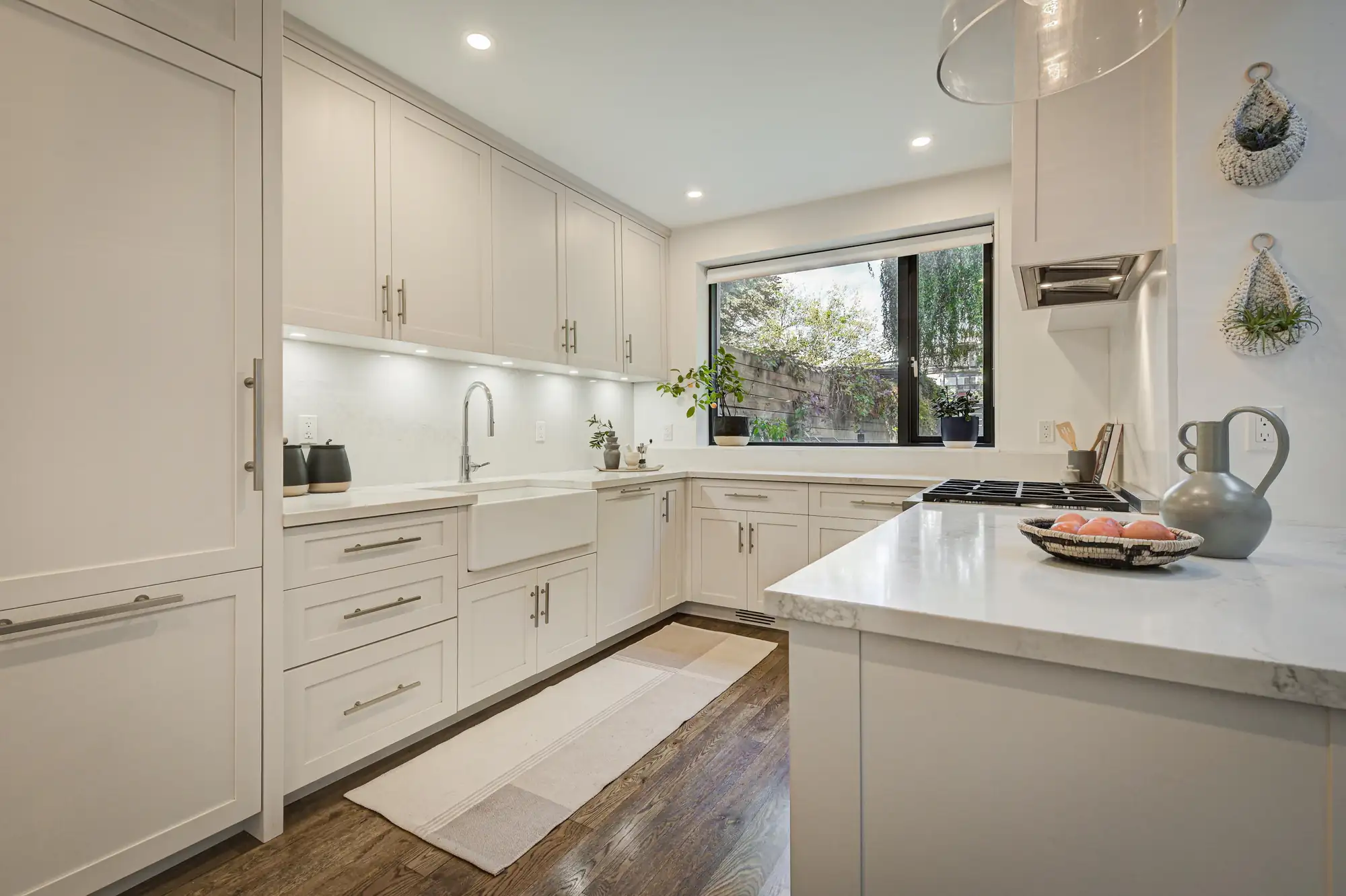
Even experienced DIYers make flooring installation mistakes. And when those mistakes happen, they’re not easy—or cheap—to fix.
Skipping the expansion gap is a classic error. Hardwood, laminate, and vinyl all need room to expand and contract with temperature and humidity changes. If you install the flooring too tightly against the walls, it has nowhere to go. The result? Buckling, warping, or planks that pop up. A quarter-inch gap around the perimeter (covered by baseboards and trim) prevents this.
Ignoring moisture levels is another big one. Wood floors installed during a humid summer are already expanded. When winter arrives and the air dries out, the boards contract and gaps appear. Floors installed in dry winter conditions do the opposite—they expand when humidity returns, causing pressure and cracking. Suffolk County’s seasonal swings make this especially relevant. We measure moisture levels and time installations accordingly.
Poor layout planning leaves you with awkward cuts, mismatched seams, or a floor that just looks off. Starting in the wrong spot—like the easiest wall instead of the most visible area—can box you into difficult finishing work. Staggering plank joints incorrectly creates weak points where the floor can separate over time. Mixing planks from different boxes prevents repetitive color patterns that make the floor look fake.
Rushing the process leads to sloppy results. Cutting corners on prep, skipping manufacturer instructions, or trying to finish too fast all compromise the final product. Curing time for adhesives, grout, and sealants isn’t a suggestion. If you walk on tile before the mortar sets or move furniture onto LVP before the adhesive cures, you’re asking for problems.
Using the wrong materials for the space is surprisingly common. Installing standard laminate in a basement, putting hardwood in a bathroom, or choosing carpet for a high-traffic mudroom—all of these set you up for premature failure. Each material has ideal applications and environments. Ignoring that costs you in repairs and replacements.
Homeowners often underestimate the complexity of flooring installation. What looks straightforward on a YouTube video becomes overwhelming in person, especially without the right tools or experience. And mistakes made during installation can void manufacturer warranties, leaving you with no recourse if something goes wrong.
That’s where working with experienced contractors makes a difference. We’ve seen the mistakes, know the workarounds, and understand how Suffolk County’s climate affects different materials. We handle subfloor prep, moisture testing, acclimation, and proper installation techniques so you don’t have to gamble with a major investment.
If you’re hiring a contractor for your flooring project, knowing what to expect helps the process go smoothly and keeps surprises to a minimum.
It starts with an assessment. We visit your home, measure the space, inspect the subfloor, and ask about your lifestyle and priorities. We’ll discuss which flooring types make sense for your rooms, your budget, and Suffolk County’s specific challenges. This isn’t a sales pitch—it’s a consultation to make sure you’re choosing materials that will actually work.
Next comes material selection and ordering. Once you’ve decided on a flooring type, we order the materials and schedule acclimation time. This is when the flooring sits in your home, adjusting to the environment before installation begins. Don’t skip this step, even if it feels like a delay.
Prep work happens before installation starts. Old flooring gets removed and hauled away. The subfloor is cleaned, leveled, and repaired as needed. Moisture barriers or underlayment go down if required. This phase isn’t glamorous, but it’s critical. Rushing through prep to get to the “fun part” is how problems start.
Installation itself varies by material. Hardwood might be nailed or glued down. LVP often floats with a click-lock system. Tile requires mortar, precise spacing, and grout work. Each method has its own timeline. We work methodically, checking alignment, stagger patterns, and expansion gaps as we go.
Finishing touches complete the project. Baseboards or trim go back up (or get replaced if needed). Transitions between rooms get installed. The space is cleaned, and any furniture that was moved gets put back. If your flooring project is part of a larger remodel—say, a kitchen or bathroom renovation—this is when complementary work like painting, carpentry, or sheetrock finishing gets coordinated to wrap up the entire space seamlessly.
A final walkthrough verifies everything meets expectations. Throughout the process, communication matters. You should know what’s happening each day, how long each phase will take, and what to expect next. Contractors who disappear for days or leave you guessing aren’t doing their job. Transparency and responsiveness separate professionals from problems.
Flooring installation done right takes time, skill, and attention to detail. It’s not a weekend DIY project for most people. And when it’s finished, you should have a floor that looks great, feels solid, and lasts for years without issues. That’s the difference between cutting corners and doing it right.
Choosing and installing new flooring is one of the biggest investments you’ll make in your home. It affects how your space looks, how comfortable it feels, and how well it holds up to daily life. Getting it right means understanding your options, matching materials to your rooms and lifestyle, and making sure the installation is done correctly.
You don’t need to be a flooring expert. You just need to ask the right questions, work with people who know Suffolk County’s unique challenges, and avoid the common mistakes that cost homeowners time and money. Regardless of if you’re updating a kitchen, finishing a basement, or replacing worn floors throughout your home, the right approach makes all the difference.
If you’re ready to move forward with a flooring project and want honest guidance without the sales pressure, we bring nearly a decade of experience helping Suffolk County homeowners navigate these decisions. From flooring to full-scale kitchen, bathroom, and basement remodeling, our focus stays the same: quality work, transparent communication, and results you can count on.
Summary:
Share: