Before you hire a contractor in Miller Place, NY, there are a few things Suffolk County homeowners wish they'd known sooner. Here's what actually matters.
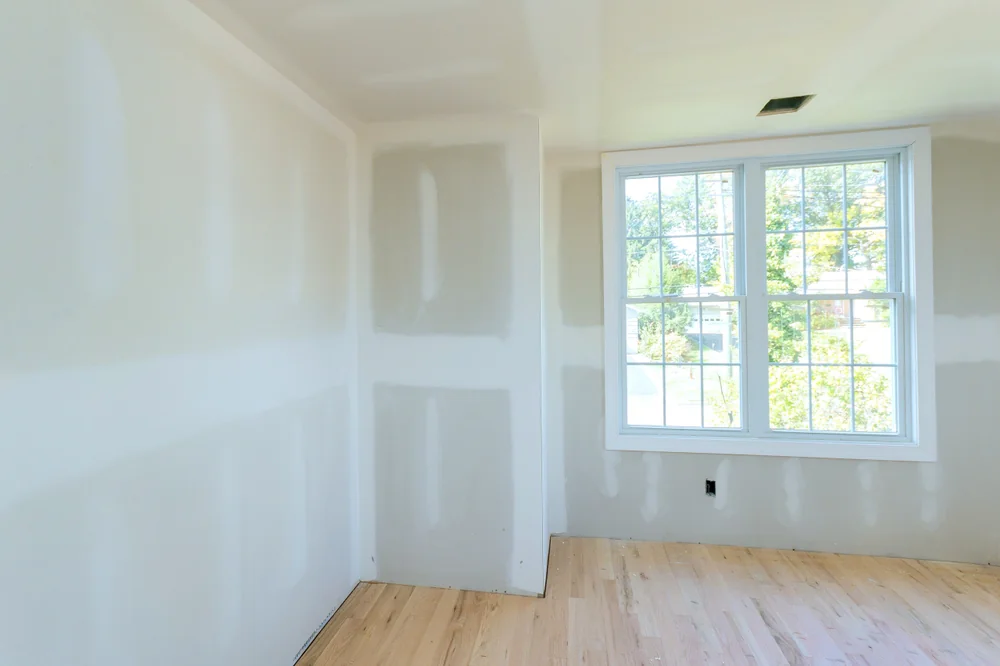
Most homeowners in Miller Place start the same way — a kitchen that’s overdue for an update, a basement that’s been sitting unfinished for years, a bathroom that just doesn’t work anymore. You know what you want done. What you’re less sure about is who to trust with it.
That’s a reasonable place to be. Contractor horror stories are common enough on Long Island that skepticism isn’t paranoia — it’s experience. This page is here to give you a clear, honest picture of what hiring a contractor in Suffolk County actually involves, what you’re legally entitled to expect, and how to tell the difference between a contractor who’ll protect your home and one who’ll create problems you haven’t thought of yet.
Miller Place sits within the Town of Brookhaven, and that matters more than most homeowners realize when they’re planning a renovation. The Town of Brookhaven Building Division oversees permits, inspections, and Certificates of Occupancy for all residential work in the area — and it’s known locally for having some of the more rigorous requirements on Long Island.
That’s not a complaint. It’s just the reality of working in this jurisdiction, and it’s something any legitimate contractor you hire should already know. If the person you’re talking to seems unfamiliar with Brookhaven’s process, that’s worth noting.

Here’s something that catches a lot of homeowners off guard: a significant portion of common renovation work requires a permit in the Town of Brookhaven. Kitchen remodels that involve plumbing or electrical, bathroom renovations, basement finishing, structural changes — these aren’t projects you can quietly complete and move on from. A permit is legally required, and skipping it creates a problem that doesn’t go away.
The permit application process in Brookhaven requires detailed construction plans, proof of contractor licensing, insurance documentation, and in many cases an original survey signed and stamped by a licensed surveyor dated within one year of the application. That’s not a quick form you fill out online. It takes coordination, and it takes a contractor who’s done it before.
The reason this matters so much isn’t just compliance. It’s your home’s value. A missing Certificate of Occupancy — the document issued after a permitted project passes final inspection — can block a future home sale. Buyers’ attorneys flag it. Title companies flag it. And fixing it after the fact often means opening walls, redoing work, and paying for inspections on a project that was completed years earlier. The contractor who suggested skipping the permit to save time is long gone by then. You’re the one left with the problem.
A contractor who pulls permits isn’t doing you a favor — they’re doing their job. But in a market where some operators cut corners on exactly this point, it’s worth asking directly: will you be pulling all required permits for this project? The answer should be immediate and unambiguous.
New York State has no single statewide contractor license. Licensing is handled locally. In Suffolk County, that means a Home Improvement Contractor (HIC) license issued by the Suffolk County Office of Consumer Affairs. Operating without one in Suffolk County isn’t a technicality — it’s illegal under county code. You can verify any contractor’s license status directly through Suffolk County Consumer Affairs before you sign anything.
This is a question most homeowners don’t think to ask, and it’s one of the more consequential ones. When you hire a general contractor, you’re not always hiring the people who will physically be in your home. Many contractors — especially larger operations — function primarily as project managers. They sell the job, then hire subcontractors to do it. Those subcontractors may be different from one project to the next, and in many cases the homeowner has no idea who vetted them or what their track record looks like.
That’s not inherently wrong, but it’s worth understanding what you’re agreeing to. The quality of a renovation often comes down to the people doing the work, not just the company whose name is on the estimate. When the crew changes mid-project, or when the people finishing your bathroom have never worked together before, the consistency you were counting on becomes harder to guarantee.
We use in-house crews exclusively, which means every person on your project is a direct employee of Jaguar Renovation. Same standards, same accountability, same point of contact if something needs to be addressed. For a homeowner who’s already nervous about having strangers in their home, that distinction is significant.
It also changes the quality conversation. When we’re directly responsible for the people doing the work — not just managing a chain of vendors — we have a different relationship with the outcome. There’s no one else to point to if the tile work is uneven or the drywall finish isn’t right. That accountability tends to produce better results.
When you’re comparing contractors in Miller Place, it’s a fair and direct question: are the people doing the work your employees, or are you subcontracting? You’re entitled to a straight answer.
Want live answers?
Connect with a Jaguar Renovation expert for fast, friendly support.
Price is usually the first thing homeowners compare, and it’s rarely the most useful comparison. A low estimate that turns into a much higher final bill — through change orders, “unforeseen conditions,” or add-ons that a more experienced contractor would have anticipated upfront — costs more than a higher estimate that holds.
The question isn’t which number is smaller. It’s which number you can actually rely on.

Transparent pricing isn’t a marketing phrase — it’s a specific operational commitment. It means the estimate you receive reflects the full scope of work, and barring something genuinely unforeseeable, the number doesn’t change between signing and final invoice. It means change orders aren’t being used to recover margin on a bid that was intentionally low to win the job.
In practice, this is what it looks like: a detailed written estimate delivered within a defined timeframe — in our case, within 48 hours of consultation — that breaks down the work clearly enough that you understand what you’re paying for. Not a one-line total. Not a verbal commitment. A document that holds.
For context on what renovation work costs in this market: bathroom remodels in Suffolk County typically run in the range of $15,000 to $30,000. A full kitchen renovation can run from $40,000 to $80,000 or more depending on scope, materials, and layout changes. Those aren’t small numbers, and they’re exactly why the estimate you receive matters as much as the work itself.
A contractor who can’t give you a written estimate within a reasonable window, or who gives you a number verbally and tells you they’ll “figure out the details as they go,” is telling you something important. The details are where the budget gets away from you. A legitimate contractor has done enough projects to know what the details cost before work begins.
Home improvement scams consistently rank among the top five consumer complaints filed in New York State, according to the NYS Division of Consumer Protection. Many of those complaints aren’t about contractors who disappeared entirely — they’re about estimates that bore no resemblance to final bills, and homeowners who had no written documentation to stand on. A detailed written contract isn’t just professional. In Suffolk County, it’s your primary protection.
There’s a short list of things worth confirming before you commit to any contractor in this area, and none of them require special knowledge — just a few direct questions and a few minutes of verification.
Start with the license. Ask for the contractor’s Suffolk County Home Improvement Contractor license number and look it up through Suffolk County Consumer Affairs. A legitimate contractor will give you the number without hesitation. Ours is HI-71285, and it’s verifiable.
Ask about insurance — specifically general liability and workers’ compensation. General liability covers damage to your property if something goes wrong during the project. Workers’ compensation matters because if a worker is injured on your property and the contractor doesn’t carry it, you may be exposed to that liability. Both should be current, and a reputable contractor will provide certificates without being asked twice.
Ask whether the work will require permits, and who will be responsible for pulling them. For most substantive renovation work in the Town of Brookhaven — kitchens, bathrooms, basements, anything structural — the answer should be yes, and the contractor should be handling it. If someone suggests you can skip the permit to save time or money, walk away.
Ask about the warranty. A one-year workmanship warranty is a reasonable standard for interior renovation work. It means that if something fails due to how the work was done — not normal wear, but actual workmanship — the contractor comes back and makes it right. Get it in writing.
Finally, ask about timeline. Not just when they can start, but how long the project is expected to take and what happens if it runs long. A contractor who can give you a specific project start window — rather than a vague “a few weeks, maybe” — is a contractor who has their schedule under control. In Miller Place and across the North Shore, the best contractors book out, but they also know their availability. That kind of clarity is a sign of an organized operation.
These aren’t trick questions. They’re the baseline. Any contractor worth hiring will answer all of them without hesitation.
The homeowners who end up frustrated after a renovation usually weren’t careless. They just didn’t know what to ask before the project started. By the time the red flags were obvious, the contract was signed and the work was underway.
You now know what to look for: a verifiable Suffolk County license, proper permits for work in the Town of Brookhaven, a written estimate that reflects the real scope of the project, in-house crews with direct accountability, and a warranty that means something. None of that is complicated — it’s just specific.
If you’re ready to have a straightforward conversation about your project — no pressure, no runaround, just an honest look at what the work involves and what it will cost — Jaguar Renovation is here. We serve Miller Place and the surrounding communities throughout Suffolk County, and we’ll have a detailed estimate in your hands within 48 hours of talking.
Summary:

Article details:
Share: