Your Long Island basement could be your home's biggest untapped asset. Discover remodeling ideas that deliver real ROI while solving moisture challenges unique to Suffolk County.
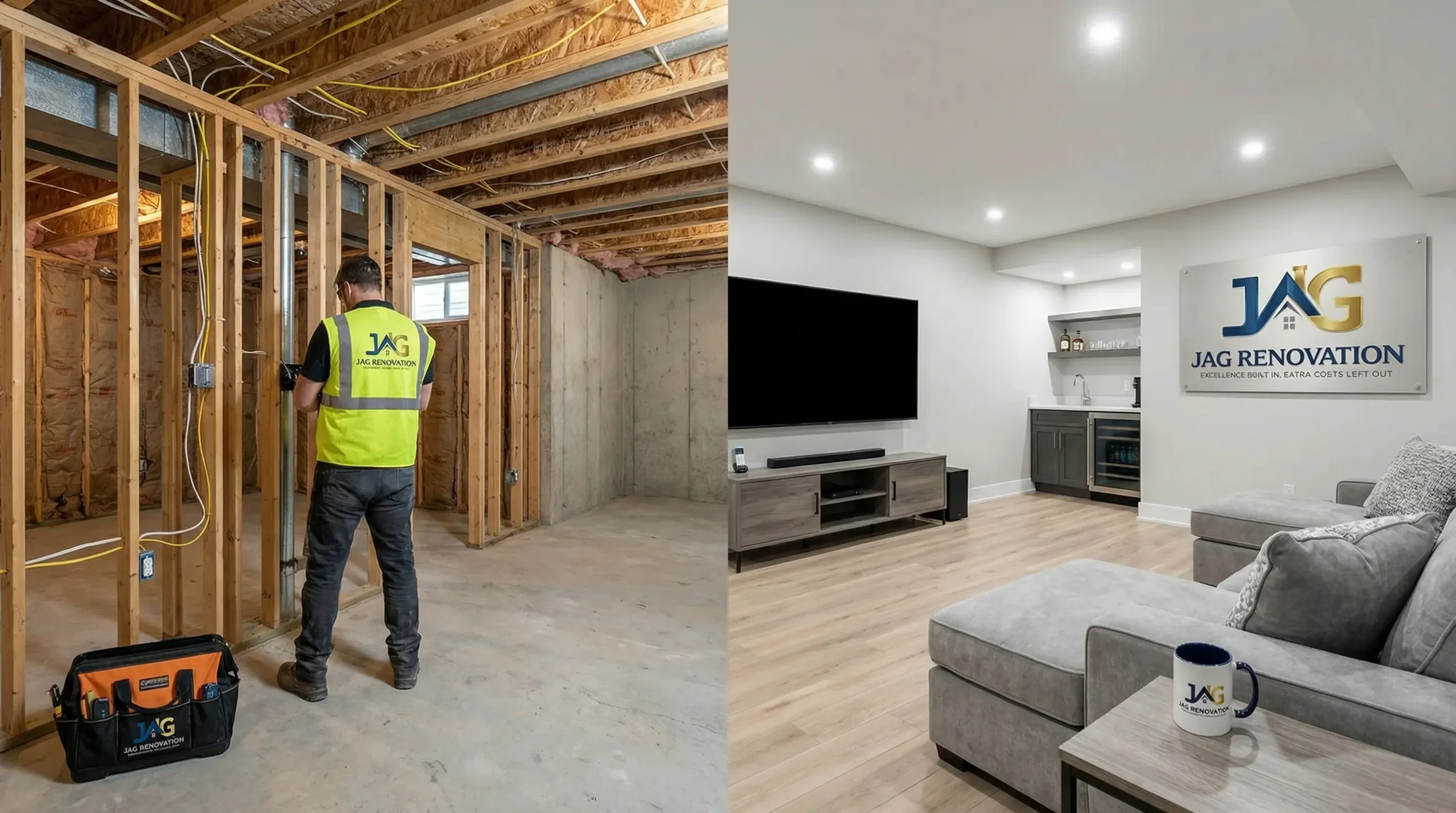
You don’t have to finish every inch of your basement to see value. The question isn’t whether to go all-in or stay out—it’s what level of investment makes sense for your situation and your goals.
A full basement transformation means taking the space from concrete and exposed beams to a completely livable area. Drywall, flooring, lighting, climate control, the works. This is what adds the most value to your home and gives you the most flexibility in how you use the space.
A partial remodel focuses on specific areas or purposes. Maybe you finish one section as a home office and leave the rest for storage and utilities. You spend less upfront, but you also cap how much value you’re adding. The key is being strategic about which parts you finish and making sure what you do finish is done properly—especially when it comes to moisture control and code requirements.

A finished basement isn’t just about making it look nice. It’s about creating actual living space that functions like the rest of your home. That means addressing everything that makes a basement feel like a basement in the first place.
You’re looking at insulation and climate control so the space is comfortable year-round. Proper lighting because basements are naturally dark. Moisture management because this is Long Island and water finds its way into everything below grade. Flooring that can handle humidity without warping or growing mold. And if you’re adding bedrooms, you’ll need egress windows to meet code.
The upfront cost is higher, but so is the return. Homeowners typically recoup 70 to 75 percent of what they spend on basement finishing when they sell. That’s better than most renovations. And while you’re living there, you’re getting usable square footage that expands what your home can do for your family.
The biggest mistake people make is trying to cut corners on the infrastructure—the waterproofing, the insulation, the proper ventilation. Those aren’t the glamorous parts, but they’re what determine whether your basement stays beautiful or becomes a problem three years from now. Get the bones right first. Everything else follows.
Not everyone needs a fully finished basement, and not every basement needs to be one. Sometimes a partial remodel is the smarter play.
If your budget is tight but you need functional space now, finishing one section can give you what you need without the full investment. A home office in one corner. A workout area. A play space for kids. You’re still dealing with moisture properly and doing the work to code, but you’re only finishing what you’ll actually use.
Partial remodels also make sense when your basement serves multiple purposes and you need to keep some of it as utility space. Furnace, water heater, storage for seasonal items—these don’t go away just because you want a rec room. Finishing around them strategically gives you livable space while keeping the functional parts accessible.
The trade-off is value. A partially finished basement adds less to your home’s resale price than a fully finished one. Buyers see potential, but they also see work they’ll have to complete or live with as-is. If you’re planning to sell in the next few years, finishing the whole space usually makes more financial sense. If you’re staying put and just need more room to live, partial can work.
What doesn’t work is doing a partial remodel poorly. Skipping waterproofing because you’re only finishing half the space. Using cheap materials because it’s “just the basement.” Ignoring code requirements because it’s not a full buildout. Those decisions don’t save you money. They create problems that cost more to fix later than they would have cost to do right the first time.
Want live answers?
Connect with a Jaguar Renovation expert for fast, friendly support.
The best basement remodel is the one that actually gets used. Sounds obvious, but plenty of homeowners finish a basement based on what looks good in photos, then realize it doesn’t fit how they actually live.
The three most popular—and most valuable—basement conversions are home offices, entertainment rooms, and guest suites. Not because they’re trendy, but because they solve real problems for homeowners and appeal to buyers when it’s time to sell. Each serves a clear purpose. Each adds functionality your home didn’t have before. And each can be designed to work with Long Island’s basement challenges instead of against them.
Let’s break down what makes each one work.
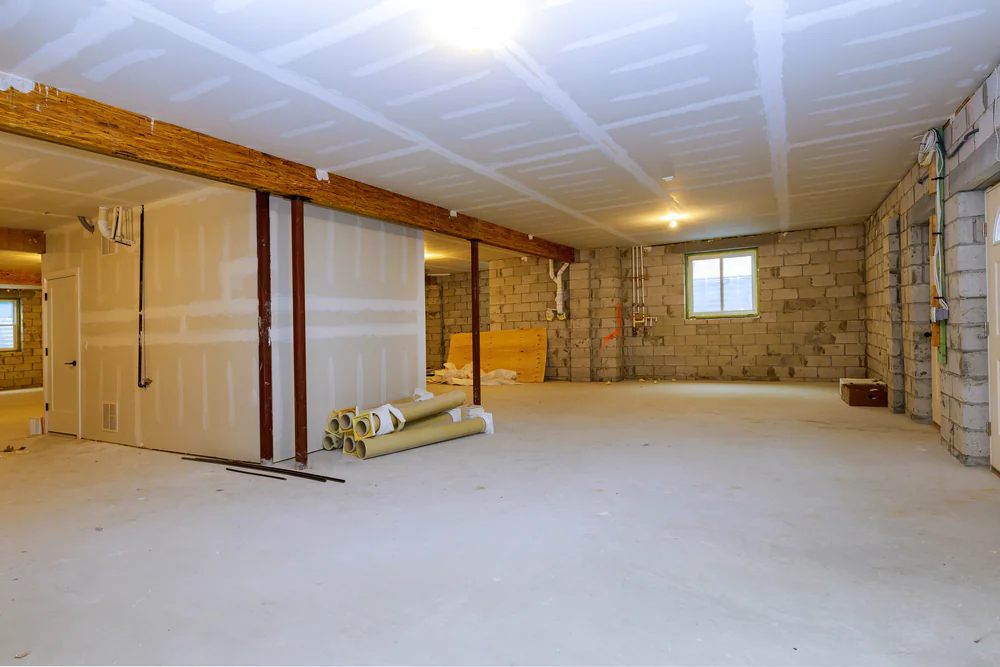
Remote work isn’t going anywhere, and your kitchen table isn’t a long-term solution. A basement home office gives you separation from household noise, dedicated space for equipment and files, and a professional environment for video calls.
The key is treating it like a real office, not just a desk in a corner. That means proper lighting—basements are dark, so you need a combination of overhead fixtures and task lighting that doesn’t create glare on screens. It means climate control so you’re not freezing in winter or sweating in summer. And it means enough power outlets and strong internet connectivity, which often requires running new lines or adding a WiFi extender.
Soundproofing matters more than most people realize. You don’t want to hear every footstep from upstairs during client calls, and your family doesn’t want to hear you on speaker phone during dinner. Adding insulation to the ceiling and using solid-core doors makes a noticeable difference.
Storage is another thing people underestimate. If you’re working from home full-time, you accumulate equipment, files, supplies. Built-in shelving or a closet system keeps everything organized and off your work surface. It’s not exciting, but it’s what makes the space functional long-term.
The other consideration is resale. A home office appeals to buyers, but only if it can easily convert to something else. Keep the layout flexible. Don’t build in so many custom features that the next owner can’t turn it into a guest room or playroom if that’s what they need. Flexibility adds value. Overly specific design limits it.
An entertainment room is where a lot of basement remodels start. Media area, game space, bar setup—whatever fits your version of relaxation. The appeal is obvious: dedicated space for activities that don’t belong in your main living areas.
What makes an entertainment room valuable isn’t the size of the TV or how many gaming consoles you fit in there. It’s the infrastructure. Good acoustics so sound doesn’t bleed into the rest of the house. Comfortable seating that’s actually arranged for conversation or viewing, not just shoved against walls. Lighting that’s adjustable for different activities—bright for game night, dim for movie watching. And enough electrical capacity to handle everything you’re plugging in without tripping breakers.
Moisture control is critical here because entertainment equipment and humidity don’t mix. Electronics fail in damp environments. Upholstered furniture grows mold. Even if your basement doesn’t have standing water, Long Island’s humidity levels are enough to cause problems. Proper dehumidification and moisture-resistant finishes aren’t optional.
Guest suites are the other high-value option, especially if you can include a bathroom. A bedroom, bathroom, and small sitting area in the basement essentially adds a private apartment to your home. That’s valuable for families with aging parents, adult children who need temporary housing, or just frequent visitors.
The challenge with guest suites is code compliance. Bedrooms in basements require egress windows for emergency exit. That means cutting into your foundation, installing a proper window well, and making sure everything meets local building codes. It’s not cheap, but it’s required, and it’s what allows you to legally call the space a bedroom.
The bathroom is where costs add up fast. You’re running plumbing, which in a basement often means installing a sewage ejector pump if the bathroom is below your main sewer line. You’re adding ventilation to prevent moisture buildup. You’re tiling, installing fixtures, making sure everything is waterproofed properly. But the payoff is significant—a basement with a full bathroom is worth substantially more than one without.
The mistake people make with both entertainment rooms and guest suites is overbuilding for their personal taste instead of thinking about broad appeal. Your custom home theater with stadium seating for twelve might be your dream, but it’s a very specific vision that limits how the next owner can use the space. Keep it functional and flexible, and you’ll protect your investment.
Your basement floor takes more abuse than any other surface in the space. It’s in direct contact with concrete that’s constantly wicking moisture from the ground. It needs to handle temperature fluctuations, humidity, and the occasional spill or leak. Choose wrong, and you’re looking at warped boards, mold growth, or a floor that feels cold and unwelcoming.
The good news is that basement flooring technology has come a long way. You have options now that look great, perform well in damp conditions, and don’t cost a fortune. The key is understanding what works in Long Island basements specifically—because what performs fine in a dry Colorado basement will fail here within a year.
Let’s talk about what actually holds up.
Summary:

Share: