Choosing flooring for your Long Island renovation means balancing durability, moisture resistance, budget, and style—without the sales pressure or guesswork.
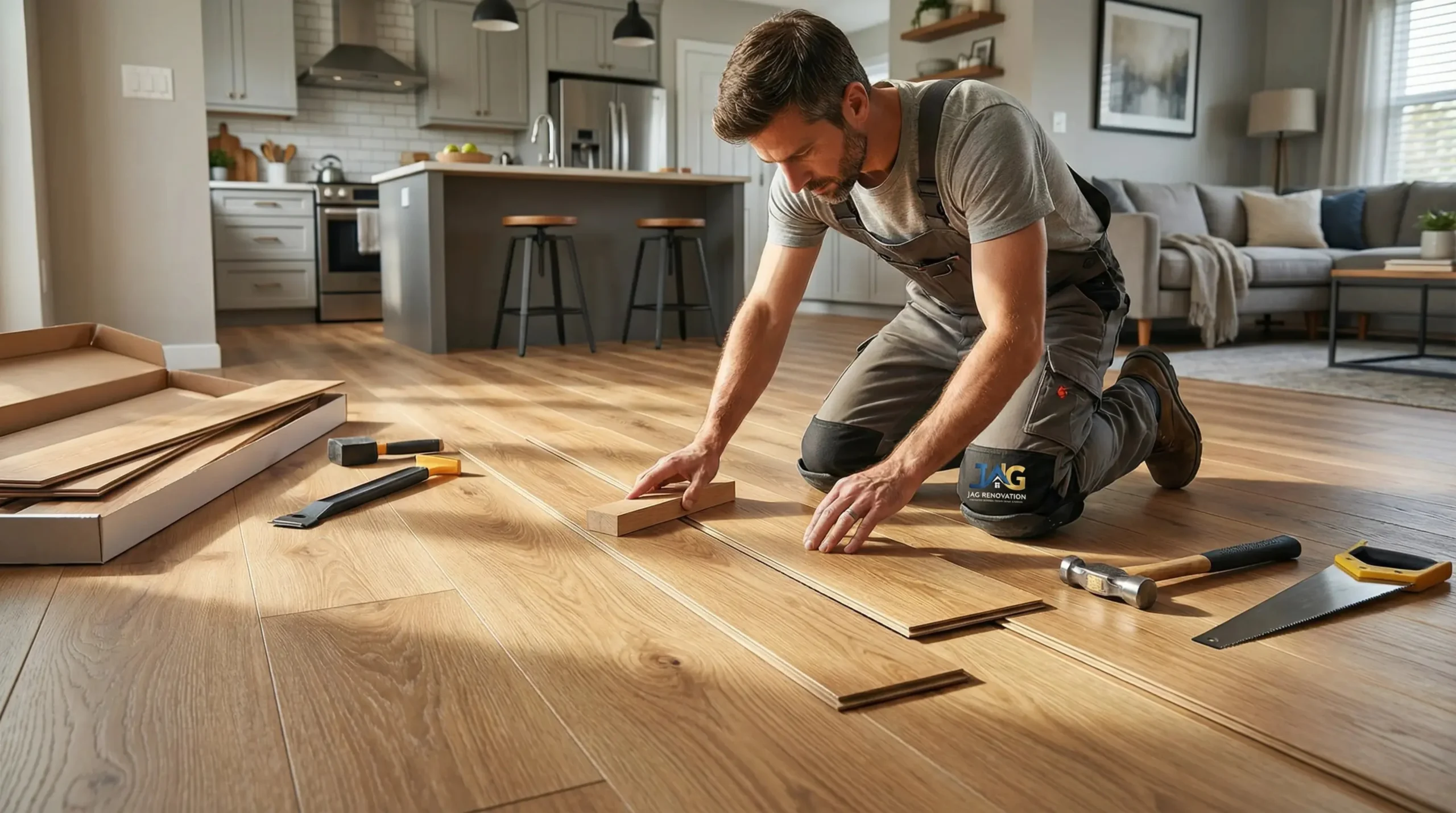
Three main players dominate the professional flooring conversation: solid hardwood, engineered hardwood, and luxury vinyl plank. Each has legitimate strengths, and each works better in different situations.
Solid hardwood is the classic choice. Oak, maple, cherry—real wood milled into planks that can be sanded and refinished multiple times over decades. It adds undeniable warmth and character to a space, and realtors will tell you it’s one of the few home renovation services that consistently increases home value. The catch? It doesn’t love moisture, and Suffolk County’s humidity means you need to think carefully about where it goes.
Engineered hardwood gives you real wood on top with a plywood base underneath. That construction makes it more stable when temperatures and humidity shift—which they do on Long Island. You can often use it in spaces where solid hardwood would be risky, like basements. You’ll get fewer refinishing opportunities than solid wood, but you gain flexibility.
Luxury vinyl plank has come a long way from the stuff your grandparents had. Modern vinyl flooring we install in Suffolk County mimics wood grain convincingly, stands up to water without flinching, and costs significantly less than hardwood. It’s practically bulletproof for busy households. The tradeoff? You can’t refinish it when it wears, and it won’t add the same resale punch as real wood.
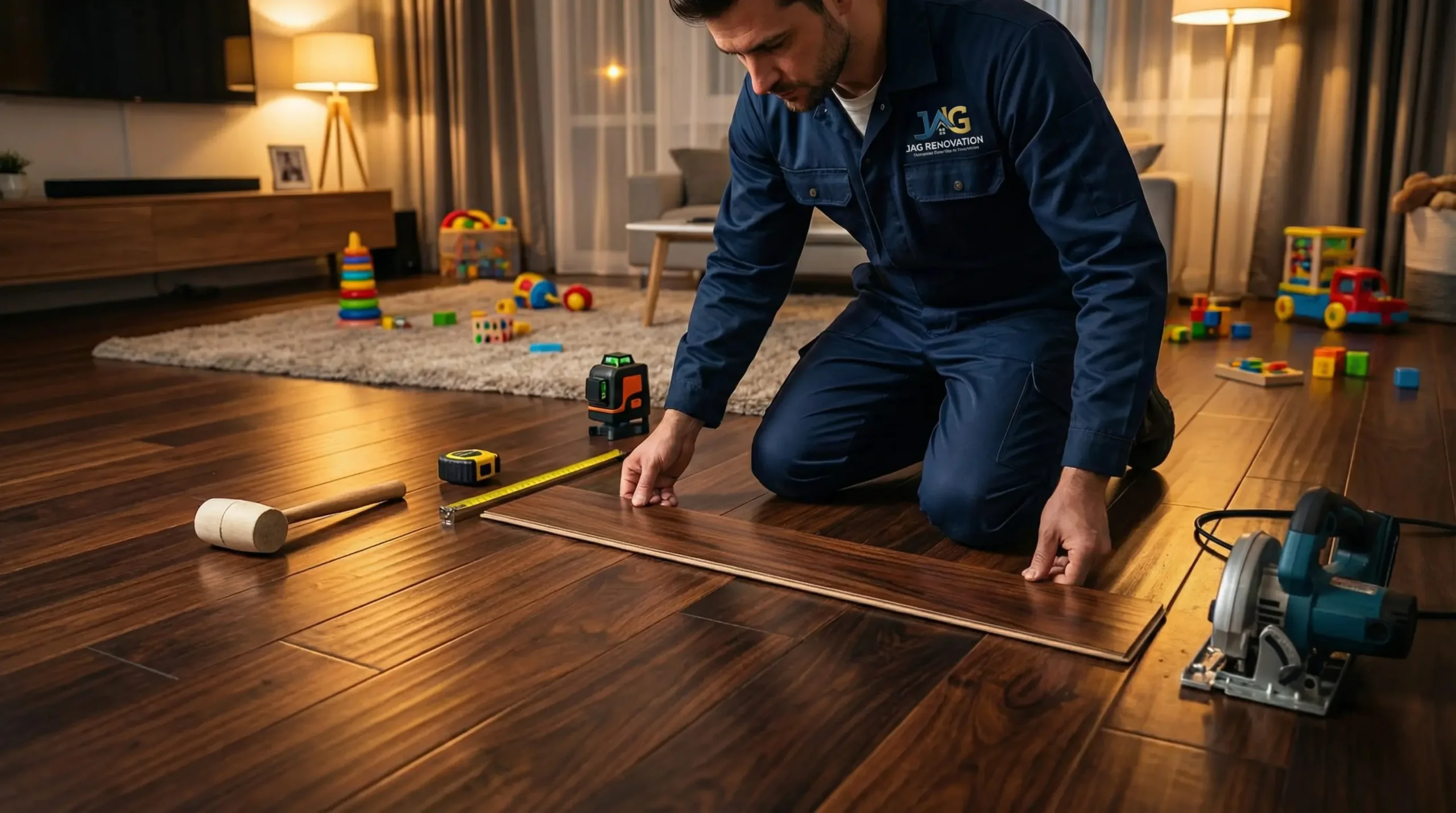
Suffolk County’s weather isn’t doing your hardwood any favors. Humid summers and dry winters create the perfect conditions for wood to expand and contract. That’s not a defect—it’s just how natural materials respond to their environment.
During summer months, moisture in the air causes wood planks to swell slightly. Come winter, when heating systems dry out your indoor air, those same planks contract. This seasonal movement is normal, but it explains why you might notice small gaps appearing between boards in January that weren’t there in July.
Professional flooring installation accounts for this. Proper acclimation—letting the wood sit in your home for several days before installation—helps the material adjust to your specific conditions. Leaving expansion gaps around the room’s perimeter gives the floor somewhere to go when it swells. Skip these steps, and you’re looking at buckling, warping, or cupping down the line.
The finish matters too. Suffolk County homes near the water face additional challenges from salt air and higher humidity levels. A quality polyurethane finish acts as a moisture barrier, but it needs to be applied correctly and maintained over time. Spills should get wiped up quickly—not in a panic, but within a reasonable timeframe. Standing water is hardwood’s enemy.
Certain rooms in your home are automatically higher risk. Bathrooms, laundry rooms, mudrooms, and basements all see more moisture exposure. That doesn’t mean hardwood floor refinishing or new installation is impossible in these spaces, but it does mean you need to be realistic about maintenance and consider whether engineered options or quality flooring materials like LVP might save you headaches.
Light-colored hardwoods like white oak and natural maple have become increasingly popular in Suffolk County homes. They brighten spaces, pair well with both modern and traditional styles, and happen to show less visible wear than darker stains. Wide planks create a sense of openness—particularly valuable in Long Island’s colonial-style homes where rooms can feel compartmentalized.
One often-overlooked factor: UV exposure. Large windows are great for natural light, but direct sunlight fades wood floors over time. You’ll notice the color difference when you move furniture that’s been in the same spot for years. Window treatments help, as does occasionally rearranging rugs and furniture to let the floor age more evenly.
Luxury vinyl plank has earned its place in quality home renovations. It’s not a compromise anymore—it’s a legitimate choice that solves real problems, especially for Suffolk County’s moisture challenges.
Modern LVP is built in layers: a rigid core for stability, a photographic layer that replicates wood grain with surprising accuracy, and a wear layer that resists scratches and dents. The best versions are waterproof, not just water-resistant. That means you can use them in bathrooms, kitchens, basements—anywhere solid hardwood would make you nervous.
Suffolk County flooring installation for vinyl is faster and often less expensive than hardwood. Many LVP products use click-lock systems that float over the subfloor rather than being nailed down. This makes them more forgiving if your subfloor isn’t perfectly level, and it means less labor time. You’re typically looking at affordable flooring solutions ranging from $3 to $7 per square foot installed, compared to $12 to $20 for hardwood in the Long Island market.
The durability is real. Families with kids, pets, or high traffic patterns often find LVP handles daily wear better than hardwood. Scratches that would gouge wood barely mark quality vinyl. Spills don’t require immediate panic. Maintenance is straightforward—sweep regularly, mop occasionally with appropriate cleaner, done.
But let’s be honest about the limitations. LVP can’t be refinished. Once the wear layer is compromised, your only option is replacement. The lifespan tops out around 15 to 25 years depending on quality and use. And while it looks good, there’s still a subtle difference in feel and sound compared to real wood. Walk across a hardwood floor and then across LVP—you’ll notice.
Engineered hardwood splits the difference. You get a real wood veneer on top, so the look and feel are authentic. The layered construction underneath provides stability that solid hardwood can’t match. It handles humidity fluctuations better, resists warping in basements, and can often be installed in places where solid wood would be risky.
The veneer thickness matters significantly. Thicker veneers (3mm or more) can be refinished once or twice. Thinner veneers look great initially but can’t be sanded down when they eventually wear. This affects long-term value—a refinishable engineered floor can last 30-40 years, while a non-refinishable version might give you 20.
Cost-wise, engineered hardwood typically falls between solid hardwood and LVP. You’re paying for the real wood veneer and the construction quality, but you’re saving on some of the material cost compared to solid planks. Licensed flooring contractors charge similar installation rates for engineered as they do for solid hardwood since the process is nearly identical.
For Suffolk County homeowners, engineered hardwood makes particular sense in finished basements, first-floor installations over concrete slabs, and homes where moisture control isn’t perfect. It gives you the authentic wood aesthetic without quite as much anxiety about humidity swings.
The key question for any flooring material: what problem are you solving? If water resistance tops your priority list, vinyl flooring wins. If you want authentic wood that can be refinished multiple times, solid hardwood is the answer. If you need stability in challenging environments while keeping real wood in the picture, engineered hardwood bridges the gap.
Want live answers?
Connect with a Jaguar Renovation expert for fast, friendly support.
The sticker shock on flooring projects usually comes from underestimating everything beyond the material itself. The planks or tiles you pick out? That’s often less than half your total cost.
Labor typically accounts for 25 to 40 percent of your project budget. Professional flooring installation in Suffolk County runs $2 to $8 per square foot depending on material complexity. Simple vinyl installations land on the lower end. Intricate hardwood patterns with custom borders push toward the higher range. Finding licensed flooring contractors with transparent pricing makes budgeting significantly easier.
Material costs vary wildly. Domestic oak hardwood might run $6 to $10 per square foot for materials alone. Exotic species like Brazilian cherry can hit $15 to $25. Luxury vinyl plank ranges from $2 to $7 per square foot. Engineered hardwood falls somewhere in the middle, typically $5 to $12 per square foot depending on veneer quality and construction.
But here’s where budgets go sideways: the extras nobody mentions upfront. Removing your existing flooring adds $1 to $4 per square foot. Subfloor repairs—and trust us, they’re often needed—can cost another $2 to $5 per square foot. Underlayment runs $0.50 to $1 per square foot. Trim and molding, stairs, furniture moving, disposal fees—it all adds up fast.
Always budget 10 to 15 percent extra material for waste. Cuts don’t always go perfectly. Planks get damaged. Patterns require specific alignments. And you want matching material on hand for future repairs. That “waste factor” isn’t waste—it’s insurance against needing repairs later with discontinued products.
The biggest money trap? Choosing flooring before you’ve thought through the full renovation sequence. Install your cabinets first, and you’ve just limited your flooring options based on height clearances. Paint before selecting flooring, and you might end up with colors that clash or require a second paint job.
The right order for home renovation services: finalize your flooring choice early, but install it toward the end of your renovation. This protects your new floors from construction damage and gives you the flexibility to adjust cabinet heights, door clearances, and transitions between rooms.
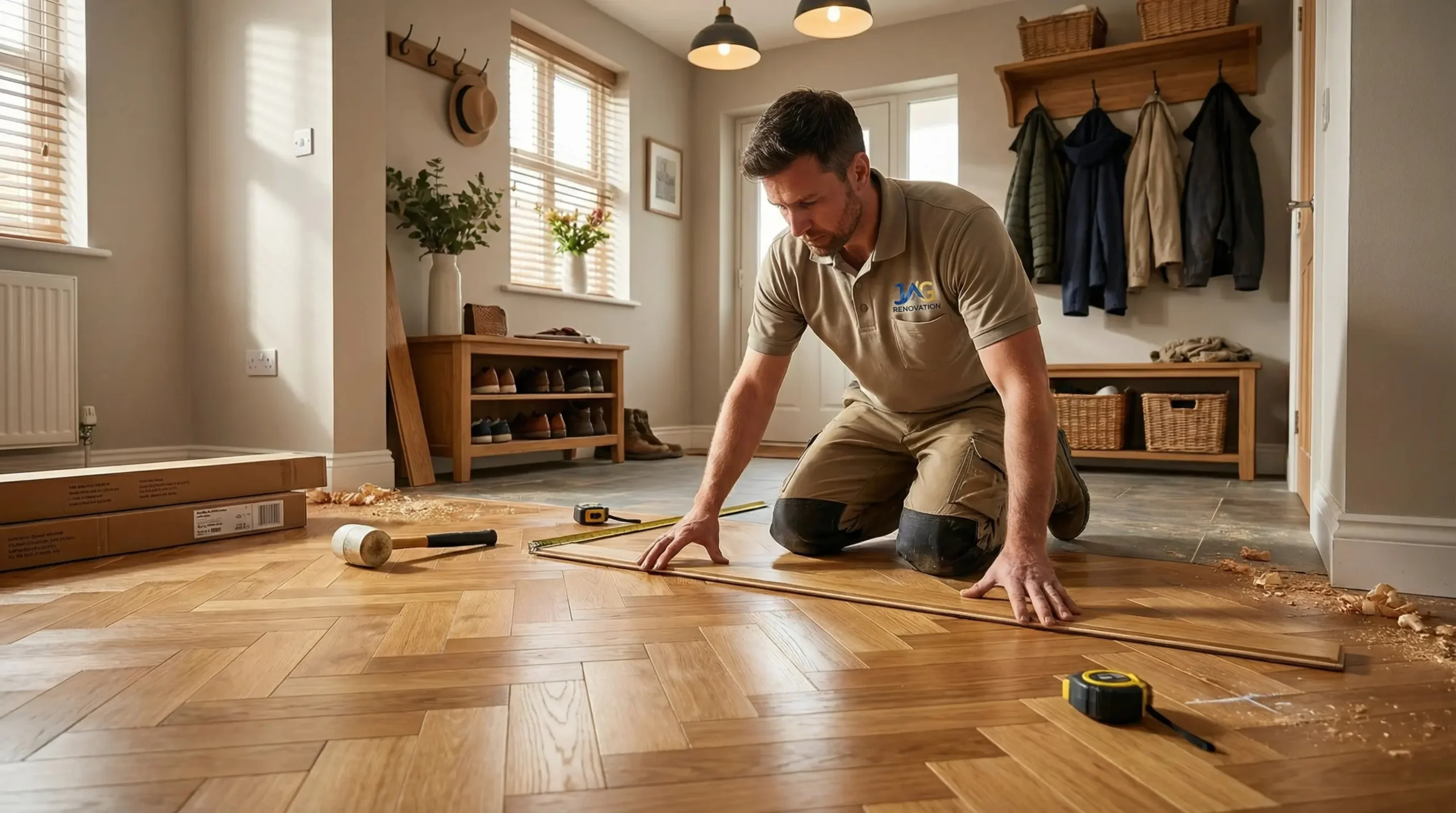
Skipping professional flooring installation to save money often backfires. DIY flooring looks doable on YouTube, but the reality involves specialty tools, precise measurements, and experience knowing how materials behave. Improper subfloor prep, inadequate acclimation, or rushed installation leads to squeaks, gaps, buckling, and premature wear. Fixing botched DIY installation costs more than hiring licensed flooring contractors from the start.
Cheap materials rarely deliver value. That bargain-basement flooring might save you $3 per square foot initially, but if it shows wear in three years instead of fifteen, you’ve just signed up to do this project again. Quality flooring materials from reputable manufacturers come with better warranties, more consistent manufacturing, and performance that actually matches the marketing claims.
Ignoring your home’s specific conditions wastes money too. Installing solid hardwood in a humid basement or a room prone to water exposure sets you up for replacement costs down the line. Using delicate materials in high-traffic areas means faster wear and earlier refinishing or replacement. Match the material to the space—it’s not exciting advice, but it saves thousands in Long Island homes.
Underlayment seems like an easy place to cut costs. It’s not. Quality underlayment provides moisture protection, sound dampening, and cushioning that extends your floor’s life. It prevents cracks in tile, reduces impact noise between floors, and adds thermal insulation. Cutting this corner means your flooring wears out faster and performs worse throughout its life.
Another common mistake: not planning for future repairs. Buying exactly the square footage you need means you’re out of luck when a pipe leaks or something heavy gouges the floor. Having extra material from the same manufacturing batch ensures perfect color matching for repairs years later. Flooring products get discontinued, dye lots change—what’s available today might not be available when you need it.
Finally, overlooking the importance of proper finishing and sealing on hardwood floors costs money long-term. A quality polyurethane finish protects the wood and makes maintenance easier. Cheap finishes wear through quickly, exposing the wood to damage and requiring expensive hardwood floor refinishing much sooner. The difference in material cost between adequate and excellent finishing is minimal compared to the difference in performance.
Suffolk County’s competitive contractor market means you have options, but the cheapest bid usually comes with compromises. Contractors who undercut everyone else often do so by rushing jobs, using less experienced crews, or cutting corners on prep work. The middle-range quotes from established, licensed flooring contractors typically deliver better value than either the lowest or highest bids.
Start with realistic square footage. Measure each room carefully, then add 10 to 15 percent for waste and future repairs. For a 500-square-foot project, budget for 550 to 575 square feet of material. This accounts for cutting waste, installation errors, and having matching material on hand later.
Get multiple quotes from licensed flooring contractors, but look beyond the bottom line number. A detailed quote breaks down material costs, labor, subfloor prep, removal, disposal, underlayment, and trim work separately. Vague quotes that lump everything into one number often hide surprises that appear later as “unforeseen” additional costs.
Ask what’s included and what’s not. Does the quote cover moving furniture? Removing and disposing of old flooring? Repairing damaged subfloors? Installing new baseboards or quarter-round trim? These details matter significantly to your final cost when planning home renovation services.
Timing affects costs too. Contractors often have slower periods where they’re more flexible on pricing. Late fall through early spring tends to be less busy than summer months when everyone wants renovation work done. You might find better rates and more scheduling flexibility during off-peak times for Suffolk County flooring installation.
For a typical Suffolk County living room (around 300-400 square feet), here’s what realistic budgets look like. Budget option using quality LVP: $2,000 to $3,500 total. Mid-range using prefinished domestic hardwood: $4,500 to $7,000. Premium option with exotic hardwood or complex patterns: $7,500 to $12,000 or more.
Financing makes sense for larger projects. Many homeowners prefer spreading the cost over time rather than depleting savings. Some contractors offer payment plans. Home equity lines of credit often provide lower interest rates than personal loans. Just factor the financing costs into your overall budget for affordable flooring solutions.
Don’t forget the hidden costs that aren’t technically part of flooring but affect your project. Temporary living arrangements if you need to move out during installation. Eating out more because your kitchen is torn apart. Storage for furniture that needs to be moved. These lifestyle costs add up during renovations.
Budget for contingencies. Set aside 10 to 20 percent of your total budget for unexpected issues. Maybe the subfloor has water damage that wasn’t visible until the old flooring came up. Maybe you decide mid-project that the original material choice doesn’t work and you need to pivot. Having contingency money prevents panic and poor decisions when surprises arise.
Consider the long-term cost picture, not just upfront expense. Hardwood might cost $15 per square foot installed while LVP costs $6, but hardwood can be refinished multiple times and lasts 50-plus years. LVP gives you 15 to 25 years before replacement. Over a 30-year timeline, the “expensive” hardwood might actually cost less per year of use.
The return on investment matters if you plan to sell eventually. Professional flooring installations using quality materials can return up to 118 percent of their cost in added home value. That $10,000 hardwood project might add $12,000 to your home’s sale price. Vinyl flooring typically doesn’t provide the same resale boost, though it does appeal to buyers looking for low-maintenance options.
Get everything in writing. Verbal agreements and handshake deals cause problems when expectations don’t match reality. A detailed contract should specify materials (brand, style, color, grade), timeline, payment schedule, what’s included, warranty information, and how changes or issues will be handled. Licensed flooring contractors should have no problem providing comprehensive written agreements.
Choosing flooring for your Suffolk County renovation doesn’t have to feel like gambling. You now know the real differences between hardwood, engineered, and vinyl options. You understand how Long Island’s climate affects different materials. You’ve seen where costs actually come from and where homeowners typically waste money.
The right flooring choice depends on your specific situation—your budget, your home’s conditions, how you actually live in the space, and what you’re trying to accomplish with the renovation. There’s no universally “best” option, just the option that best fits your needs when you’re selecting quality flooring materials for your home.
What matters most is working with contractors who explain your options honestly, respect your budget, and deliver professional flooring without the pressure tactics or hidden fees that make renovation projects stressful. When you’re ready to move forward with flooring that’s chosen right and installed right, we bring nearly a decade of Suffolk County experience to help you get it done.
Summary:
Article details:
Share: