The wrong materials in a Suffolk County home don't fail all at once — they fail quietly, over two or three summers, until the damage is impossible to ignore.
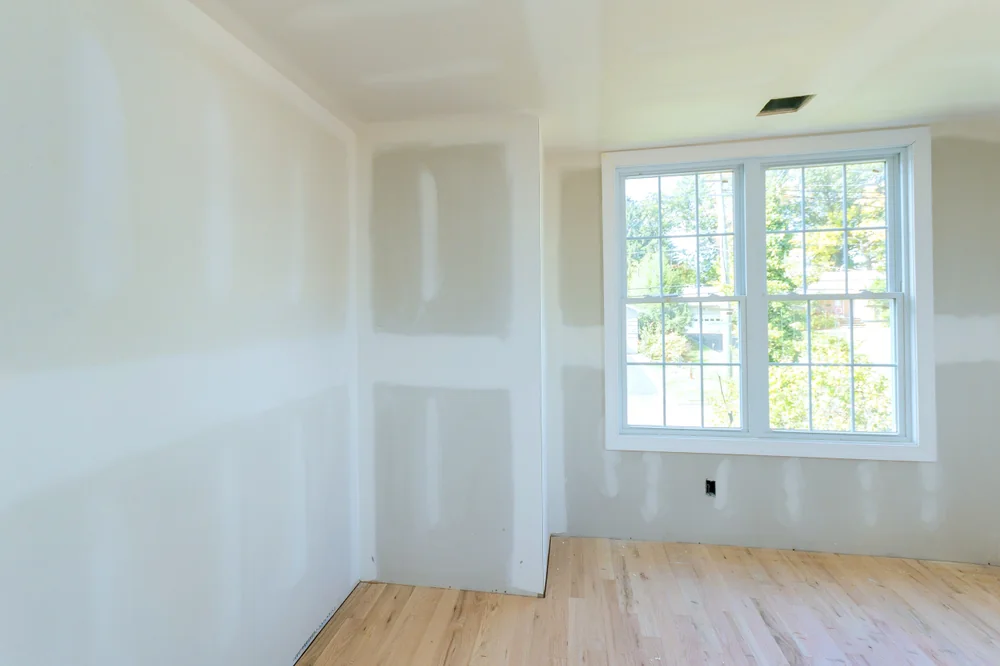
Here’s a pattern we see more often than we’d like. A homeowner puts real money into a renovation — new floors, fresh drywall, updated cabinets — and it looks great. Then two summers pass. The cabinet doors start to bow. There’s a faint mildew smell coming from somewhere. A section of flooring has started to lift at the edges. Nothing catastrophic, but nothing right either.
Most of the time, the craftsmanship wasn’t the problem. The materials were. Suffolk County’s coastal climate is genuinely different from what standard building materials are designed to handle, and that gap is where renovations quietly fall apart. Here’s what’s actually going on — and what to do about it.
Suffolk County sits between Long Island Sound to the north and the Atlantic Ocean and Great South Bay to the south. That geography means virtually every home in the county — whether you’re in Bay Shore, Smithtown, or Coram — is within 10 to 15 miles of salt water. The humidity doesn’t stay at the beach. It travels, it settles into wall cavities, and it stays there longer than you’d expect.
Outdoor summer humidity on Long Island regularly hits 70 to 85 percent. The EPA recommends keeping indoor humidity below 60 percent to prevent mold growth. That gap between what’s outside and what’s safe inside puts constant pressure on your building materials, especially in spaces with limited airflow like basements, bathrooms, and interior walls.
What makes Suffolk County specifically challenging is the combination of factors — humid summers, cold winters that average around 32°F, and October precipitation that averages over five and a half inches. Materials that dry out and recover in a drier climate never fully dry out here. Over time, that adds up.
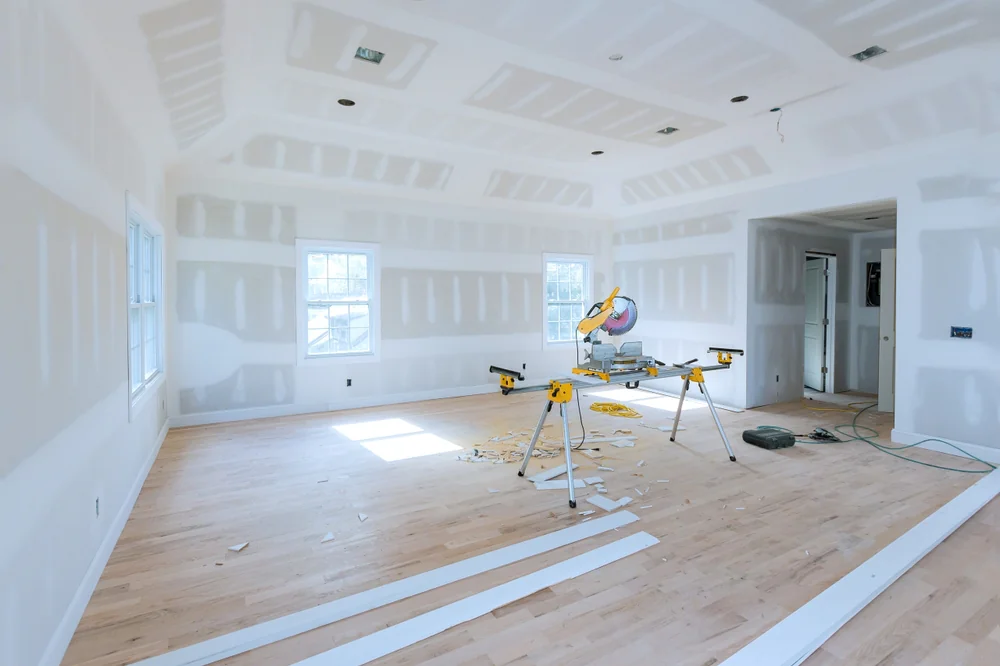
Regular drywall is made with a gypsum core that absorbs moisture. In a dry inland climate, that’s manageable. In a Suffolk County bathroom or basement, it’s a slow-motion problem. Once moisture gets into the core, it doesn’t leave easily — and that damp environment is exactly where mold takes hold. By the time you smell it or see it, it’s already been growing for a while.
The fix isn’t complicated, but it requires knowing to ask for it. Moisture-resistant drywall — often called greenboard — uses a water-resistant facing that significantly slows moisture absorption in wall cavities. For shower surrounds and wet areas with direct water exposure, cement backer board is the right call. It won’t absorb water at all, which is why it’s the standard in properly built coastal bathrooms.
Here’s the misconception worth clearing up: a lot of homeowners assume that if you paint over standard drywall with a quality paint, you’ve solved the moisture problem. You haven’t. The paint seals the surface, but humidity still works through seams, corners, and any small breach in the finish. The core of the drywall is still vulnerable. The only real solution is starting with the right material.
This matters especially in older homes, which make up a large portion of Suffolk County’s housing stock. Much of the county was built out in the 1950s through 1970s, before moisture-resistant materials were standard practice. When you renovate a home from that era, you’re not just updating the look — you’re correcting the original construction’s vulnerabilities. Using the same standard materials the original builders used is a missed opportunity to do it right.
For basements specifically, the stakes are higher. A basic basement finishing project in Suffolk County can run anywhere from $15,000 to $25,000. A full renovation with a bathroom and higher-end finishes can reach $50,000 to $75,000. That’s not a budget you want to revisit in five years because the wrong drywall was installed behind the walls.
Most homeowners think about humidity in terms of mold and moisture. Fewer think about salt air — and that’s where some of the most frustrating renovation failures come from.
Salt air doesn’t just affect homes on the water. It travels further inland than most people expect, and it’s particularly aggressive on metal surfaces. Chrome fixtures, standard cabinet hinges, exposed fasteners — these are the things that start showing rust and corrosion within a year or two in a coastal environment, even inside the home. You open a cabinet door and the hinge has started to pit. You look under the sink and the hardware has a reddish film on it. It’s not poor quality — it’s the wrong specification for where you live.
The material swap here is straightforward once you know about it. Marine-grade stainless steel and brass fixtures are designed to resist salt air corrosion in ways that standard chrome hardware simply isn’t. For bathroom and kitchen renovations in Suffolk County, specifying corrosion-resistant fixtures isn’t an upgrade — it’s the baseline. Quartz countertops over natural stone are worth considering for similar reasons: quartz is non-porous and won’t absorb moisture or harbor bacteria the way some natural stones can in high-humidity environments.
The broader point is that coastal construction requires a different material mindset than interior or drier-climate renovation work. The questions aren’t just “does it look good” and “is it durable” — they’re “is it durable here, in this specific climate, with this specific combination of humidity and salt air.” That’s a distinction that matters a great deal in a home renovation on Long Island, and it’s one that contractors without direct coastal experience often miss entirely.
Want live answers?
Connect with a Jaguar Renovation expert for fast, friendly support.
Flooring is where material choices become most visible — and where the wrong choice becomes most expensive to fix. In a humid coastal environment like Suffolk County, the failure modes are predictable: warping, cupping, edge-lifting, and mold growth underneath the surface layer. These don’t happen overnight, but they happen reliably when the wrong flooring is installed in a Long Island home.
The good news is that the right options have gotten significantly better in recent years. You don’t have to choose between a floor that looks good and one that holds up. The key is understanding what each material actually does when it’s exposed to sustained humidity — not just what it looks like in a showroom.
Solid hardwood floors carry a premium reputation, and for good reason — they look beautiful and can last decades in the right environment. Suffolk County is not always that environment. Solid wood expands and contracts with humidity changes. In a home that swings between dry winter air and humid summer conditions, that movement is constant. Over time, boards gap, cup, or warp. In a basement with any ground moisture, the risk is even higher.
Engineered hardwood is a meaningful step forward for Long Island homes. Unlike solid wood, it’s constructed from multiple layers of plywood or high-density fiberboard bonded together under heat and pressure. That layered construction resists the expansion and contraction that causes solid wood to fail in humid environments. It still looks like hardwood, takes stain well, and feels like a quality floor underfoot — it just handles moisture stress far better than its solid counterpart.
Luxury vinyl plank, or LVP, goes further. A quality LVP product with a rigid stone polymer composite core is 100 percent waterproof, dimensionally stable, and completely indifferent to humidity fluctuations. It won’t warp, it won’t cup, and it won’t provide a surface for mold to grow beneath it the way some organic materials can. For basements, bathrooms, kitchens, and any space in a Suffolk County home that sees regular moisture exposure, LVP is genuinely hard to argue against on a practical basis.
Ceramic and porcelain tile remain strong choices for wet rooms specifically. Porcelain is denser and less porous than ceramic, which makes it the better pick for areas with direct water exposure. Both are dimensionally stable and won’t be affected by humidity in the way wood-based products are, provided the grout lines are properly sealed and maintained.
The pattern to avoid is choosing flooring based on what looks best in a dry showroom environment without accounting for how it will behave through a few Long Island summers and winters. A floor that costs slightly more upfront but lasts 20 years is a better value than one that needs to be replaced in seven.
Kitchens concentrate a lot of the renovation decisions that matter most in a coastal climate — cabinetry, countertops, flooring, fixtures, and wall finishes all come together in a space that generates steam, handles spills, and sits adjacent to a sink that runs every day. Getting the material mix right here pays dividends for years.
Cabinet material is one of the most commonly overlooked decisions. Solid wood cabinet boxes look and feel premium, but in a humid environment, they’re vulnerable. Without proper humidity stabilization — sealed backs, moisture-resistant finishes, and adequate kitchen ventilation — solid wood cabinet doors can begin to twist and bow within two summers in a Suffolk County home. Plywood-box cabinets with moisture-resistant finishes perform significantly better in coastal conditions. They hold their shape, they don’t delaminate, and they don’t telegraph every humidity swing through warped door gaps.
Countertop selection follows similar logic. Quartz is non-porous, doesn’t require sealing, and won’t absorb moisture or harbor bacteria. Natural stone like marble and some granites are beautiful but porous — they need regular sealing to stay protected in a humid environment, and even with sealing, they require more maintenance than quartz in coastal conditions. For homeowners who want the look of stone without the upkeep demands, quartz is the practical answer.
Ventilation is the piece most homeowners underestimate during the planning phase. A properly sized range hood that vents to the exterior — not just recirculates air — removes steam and cooking moisture before it can settle into wall cavities and cabinet interiors. In a Suffolk County kitchen, that’s not optional. It’s the difference between a kitchen renovation that looks great in year ten and one that starts showing moisture stress in year three.
The through-line across all of these decisions is the same: what works fine in a drier climate requires a more deliberate material specification here. That’s not a reason to spend more than necessary — it’s a reason to spend on the right things.
The homes in Suffolk County deal with conditions that most standard renovation materials weren’t designed to handle indefinitely. Salt air, persistent humidity, and hard winters are just the reality of living on Long Island — and the renovations that hold up are the ones where someone accounted for that reality before the first panel went up.
Choosing moisture-resistant drywall, the right flooring for a humid climate, corrosion-resistant fixtures, and properly ventilated spaces isn’t about spending more. It’s about not spending twice. A renovation done right for this climate should last — not look great for a year and then quietly start failing.
If you’re planning a kitchen, bathroom, or basement renovation in Suffolk County and want to talk through the material decisions that actually matter for where you live, we at Jaguar Renovation are ready to help. We’ve been doing this work in this climate for nearly a decade, and we’re happy to walk you through it before you commit to anything.
Summary:
Article details:
Share: