Your Suffolk County basement could be a home office, guest suite, or entertainment room. Here's how to plan a basement remodel that actually adds value.
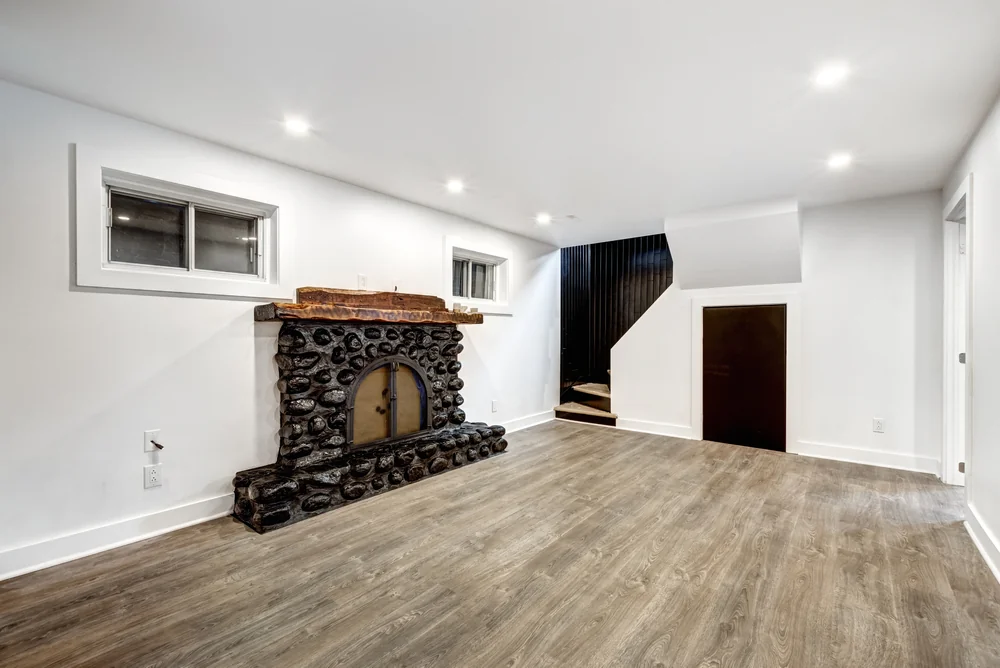
Good basement remodeling starts with a specific problem. What’s your home missing right now?
You might need quiet workspace away from kitchen table chaos. Your kids might need a hangout spot that isn’t your living room. Aging parents could need a private suite on the main level. Or you just want somewhere to watch movies without headphones.
A 600-square-foot basement becomes a guest suite with bathroom and sitting area. Or a home office, small gym, and kids’ play zone with the right layout. Maybe an entertainment room with bar space where you’d choose to spend Friday night. Focus on what you’ll actually use, not what sounds impressive when you describe it to friends.

A basement home office gives you separation. Close the door—work stays downstairs. You’re not answering emails from the couch or staring at your laptop during dinner.
Layout beats size every time. You need solid lighting—natural light from egress windows plus layered artificial lighting to avoid eye strain. Put your desk near the window when possible. Built-in storage or floating shelves keep things organized without eating floor space. Regular video calls? Think about your background and whether you need soundproofing to block upstairs noise.
Guest suites require more thought because they function as complete living spaces. Bedroom area, small sitting space, bathroom if possible. Suffolk County codes require egress windows for basement bedrooms—windows large enough for emergency exit. Minimum seven-foot ceilings. These aren’t optional.
Smart guest suite layouts create privacy without the cave feeling. Warm paint colors help. So does plenty of lighting. Add closet space or a wardrobe. Murphy beds or sleeper sofas work when the room pulls double duty. Include a beverage station with mini-fridge so guests don’t trek upstairs for water at 2 AM. Would you be comfortable staying there a week? That’s your test.
One layout that works: bedroom area in the corner with egress window, small sitting space with loveseat and side table, three-quarter bathroom along one wall. Guests get everything they need without massive square footage. Adding a bathroom? Plan early—plumbing affects permits and budget.
Entertainment rooms work in basements because they’re separated from the rest of your house. Full volume movies without waking kids. Game night without taking over the kitchen. The space becomes its own destination.
How do you actually entertain? Ten people for football games need seating and sightlines to a big TV. Family movie nights need comfortable seating and good sound more than size. Bar areas add function—even small ones with beverage fridge, counter space, and glassware storage. Full wet bars with sinks only make sense if you’re really committed.
Lighting makes or breaks the space. Dimmable overhead lights, accent lighting behind the TV or bar, maybe LED strips for mood. Skip harsh fluorescent lighting that screams “office.” Soundproofing matters if you’re under bedrooms—acoustic panels, insulated walls, or drop ceilings with sound-dampening tiles all help.
Playrooms need durability and easy cleaning. Flooring that handles spills—luxury vinyl plank looks good, resists moisture, wipes clean. Carpet gets replaced. Storage is everything. Built-in shelving, cubbies, cabinets keep toys from exploding everywhere.
Playroom layouts work when you create zones. Reading corner with soft seating and good light. Arts and crafts area with table and washable surfaces. Open space for active play. Kids get options. The room feels organized even during use. Add plenty of outlets for devices and gaming systems. Include parent seating for supervision that doesn’t require sitting on the floor.
Entertainment rooms and playrooms both benefit from bathroom access. Can’t add one now? Rough in the plumbing so you can add it later without destroying the floor. Future you will thank current you.
Want live answers?
Connect with a Jaguar Renovation expert for fast, friendly support.
Basement remodeling in Suffolk County runs $50 to $150 per square foot. Wide range because scope varies dramatically. Basic finish with drywall, flooring, lighting costs less than full buildout with bathroom, bar, high-end finishes.
A 600-square-foot basement? Roughly $30,000 to $90,000. Larger 1,000-square-foot space? $50,000 to $150,000. These numbers include labor, materials, permits, and surprises that show up when you open walls or find moisture issues you didn’t know existed.
Biggest cost drivers: bathrooms, wet bars, structural work. Adding one bathroom adds $10,000 to $20,000. Foundation issues, lowering floors for ceiling height, installing egress windows all push costs higher. Controlling expenses: luxury vinyl plank instead of tile, stock cabinets instead of custom, simple layouts.

Suffolk County has specific factors affecting basement renovation costs. High water table and ocean proximity make moisture control mandatory, not optional. Waterproofing adds $2,000 to $8,000 to your budget. Skip it? Mold, damaged finishes, repair bills that make the initial investment look tiny.
Permits add cost but protect you legally. Suffolk County requires building permits for basement finishing with electrical, plumbing, or structural changes. Permit fees typically run $250 to $500 depending on scope, plus architectural or engineering drawings if required. Finishing without permits? Fines, forced demolition, problems selling your home later.
Long Island labor costs run higher than national averages. Carpenters and electricians average $72 to $85 hourly. Plumbing work for basement bathrooms costs $4.50 to $6 per square foot. General contractors charge 10 to 20 percent of total project cost to coordinate subs and manage work.
Material choices significantly impact final numbers. Moisture-resistant drywall costs more than standard but makes sense in basement environments. Luxury vinyl plank flooring costs $3 to $8 per square foot installed—resists moisture better than carpet or hardwood. Tile runs $8 to $12 per square foot but adds durability and high-end look. Ceiling options range from basic drywall to drop ceilings providing utility access—different price points and benefits for each.
Your existing basement condition matters. Starting with unfinished space that’s dry with adequate ceiling height keeps costs lower. Need to address water intrusion, repair foundation cracks, or dig down for headroom? Expect significant additional expense. Pre-construction inspection identifies these issues before you commit to a budget.
Smart planning keeps costs reasonable. Phase the project if budget’s tight—finish main space now, add bathroom next year. Do some work yourself if you have skills—painting, trim installation, simple storage can save labor costs. Leave electrical, plumbing, structural work to licensed professionals. Mistakes in those areas cost more to fix than you’d save.
Suffolk County doesn’t let you finish basements without oversight. That’s actually good. Building permits ensure your basement remodeling project meets safety standards for electrical, plumbing, egress, structural integrity. Skip permits to save money upfront? Creates liability when something goes wrong or when you sell.
You need a building permit for basement finishing work in Suffolk County. No exceptions. The permit process involves submitting construction plans—often prepared by licensed architect or engineer—paying fees, scheduling inspections at various stages. Inspectors verify framing, electrical rough-in, plumbing, final finishes before issuing certificate of occupancy or compliance.
New York State building codes set specific requirements for basement habitable space. Seven-foot minimum ceiling height. Any bedroom requires egress window—window large enough for emergency exit with minimum opening dimensions. Proper ventilation and lighting required. Electrical and plumbing must meet code. Smoke detectors mandatory.
Egress windows aren’t negotiable for bedrooms. Window must have minimum net clear opening of 5.7 square feet, minimum 24-inch height, minimum 20-inch width. Bottom of opening can’t exceed 44 inches from floor. Basement below grade? You need window well with proper drainage. Installation typically costs $2,500 to $5,000 per window including well and excavation.
Permit timeline adds weeks to your project. Plan two to four weeks between application and approval, depending on plan complexity and current department workload. Some Suffolk County towns have specific additional requirements—check with your local building department early. Contractors experienced in Suffolk County permits streamline this process. They know what inspectors want and help avoid delays.
Waterproofing requirements vary by situation but are critical in Suffolk County. Interior waterproofing includes crack sealants, vapor barriers on walls, proper drainage. Exterior waterproofing might involve membrane installation, French drains, sump pump systems. High water table areas may need perimeter drainage adding $8 to $12 per square foot. We assess moisture risk before finishing any surfaces.
A finished basement adds real value—both in how you live and what your home’s worth. But it only works when you plan for your specific situation. Suffolk County’s moisture challenges, permit requirements, higher labor costs all factor into successful projects.
Start with what you need, not what sounds impressive. Be realistic about budget and timeline. Address moisture issues before finishing a single wall. Work with contractors who know Suffolk County codes and have experience with local permit processes.
Your basement represents space you already own. When you’re ready to explore what’s possible for your home, we handle basement transformations from concept to completion in Suffolk County.
Summary:
Share: