Not every kitchen upgrade deserves the same budget. Learn which investments pay off and which ones you can skip without sacrificing style or function.
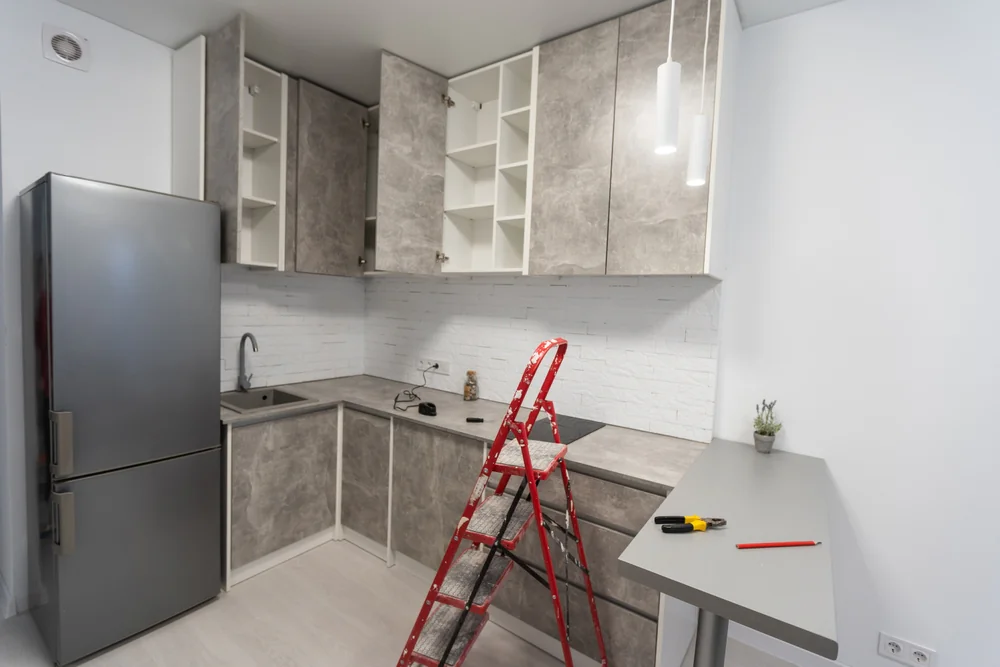
Let’s start with what things actually cost, not what some calculator on the internet says they should. In Suffolk County, NY, a mid-range kitchen renovation typically runs between $25,000 and $50,000, depending on the size of your space and what you’re changing. That’s not a small number, and it’s why so many people freeze up before they even get started.
Here’s what most people don’t realize until they’re knee-deep in the process: the biggest chunk of your budget won’t go to one dramatic thing. It gets divided across cabinets, countertops, labor, appliances, and about a dozen other line items that add up faster than you’d expect. Cabinets alone can eat up 30% or more of your total spend. Labor takes another 20-35%. And if you’re moving plumbing or electrical, those costs climb even higher.
The good news? You have more control than you think. Once you know where the money goes, you can make smarter calls about where to push and where to pull back.
Here’s the part nobody warns you about: most people underestimate their kitchen remodeling costs by at least 20%. It’s not because they’re bad at math. It’s because there are so many small expenses that don’t show up on the initial quote but become very real once the work starts.
Think about it. You budget for cabinets, countertops, and appliances. But what about the new outlets you’ll need for that island? The extra drywall repair when the old backsplash comes down? The upgraded hinges that make your cabinet doors actually close the way they’re supposed to? Those little things stack up, and before you know it, you’re looking at an invoice that’s a few thousand dollars higher than you planned.
That’s why smart homeowners build in a contingency—usually 15-20% of the total budget. It’s not pessimistic. It’s realistic. Because even in the smoothest projects, something unexpected shows up. Maybe it’s outdated wiring that needs updating to meet code. Maybe it’s water damage behind the sink that nobody knew was there. Whatever it is, having that buffer means you can handle it without panic or compromise.
And here’s the other thing: not all surprises are bad. Sometimes that buffer gives you room to say yes to an upgrade you didn’t think you could afford. A better faucet. Soft-close drawer glides. An extra cabinet for storage. When you plan for flexibility, you’re not just protecting yourself from problems—you’re creating space for better decisions.
If you want to control your budget, you need to understand what makes it climb. And the answer isn’t always what you’d expect.
The single biggest cost driver in any kitchen remodel? Changing the layout. Moving a sink means rerouting plumbing. Relocating your stove means dealing with gas lines or electrical work. Knocking down a wall to open up the space means structural work, permits, and inspections. Every one of those changes requires licensed professionals, and their time isn’t cheap. That’s why one of the smartest ways to save money is to work with what you’ve got. If your current layout is functional, keep it. You’ll cut thousands of dollars off your project without sacrificing a single bit of style.
Next up: cabinets. They’re the backbone of your kitchen, and they take up the most visual space. That’s why they’re also the most expensive part of most remodels, often accounting for 30% or more of your budget. But here’s where you have options. Full custom cabinets? Beautiful, but pricey. Semi-custom? A solid middle ground. Stock cabinets? Affordable and available fast. And then there’s cabinet refacing, which can give you a completely new look for 50-70% less than replacement. If your cabinet boxes are still solid, refacing is one of the smartest budget moves you can make.
Countertops are another major line item, but the range is huge. Laminate can run as low as $10-$30 per square foot. Quartz typically lands between $50-$100. Natural stone like marble or granite? You’re looking at $75-$150 or more, depending on the slab. The key is deciding what matters most to you. If countertops are your showpiece—the thing you see and use every single day—then that’s where you invest. If not, there are great-looking options at every price point.
Labor is the other big one, and it’s not negotiable. You need skilled people to do the work right. But you can control labor costs by keeping your project straightforward. The more you change, the more hours it takes. The more hours it takes, the more you pay. It’s that simple.
Want live answers?
Connect with a Jaguar Renovation expert for fast, friendly support.
Saving money on a kitchen remodel doesn’t mean settling for less. It means being strategic about where you spend and where you don’t. Some things just don’t need to be expensive to work well or look great.
Start with your layout. If your current setup is functional, leave it alone. You don’t need to move the sink to the other side of the room or flip your entire floor plan to get a kitchen that feels new. Keeping plumbing, gas lines, and electrical in place saves you thousands, and it frees up budget for the things people actually see and use.
Cabinet refacing is another smart move if your existing boxes are in good shape. You’re not replacing the structure—just the doors, drawer fronts, and finish. The result? A completely updated look at a fraction of the cost of new cabinets. And because the work is less invasive, it’s faster too. Most refacing projects wrap up in less than a week, compared to the weeks it takes to demo and install new cabinets.
You don’t have to buy the most expensive version of everything to get a kitchen that looks expensive. You just have to know where to mix and match.
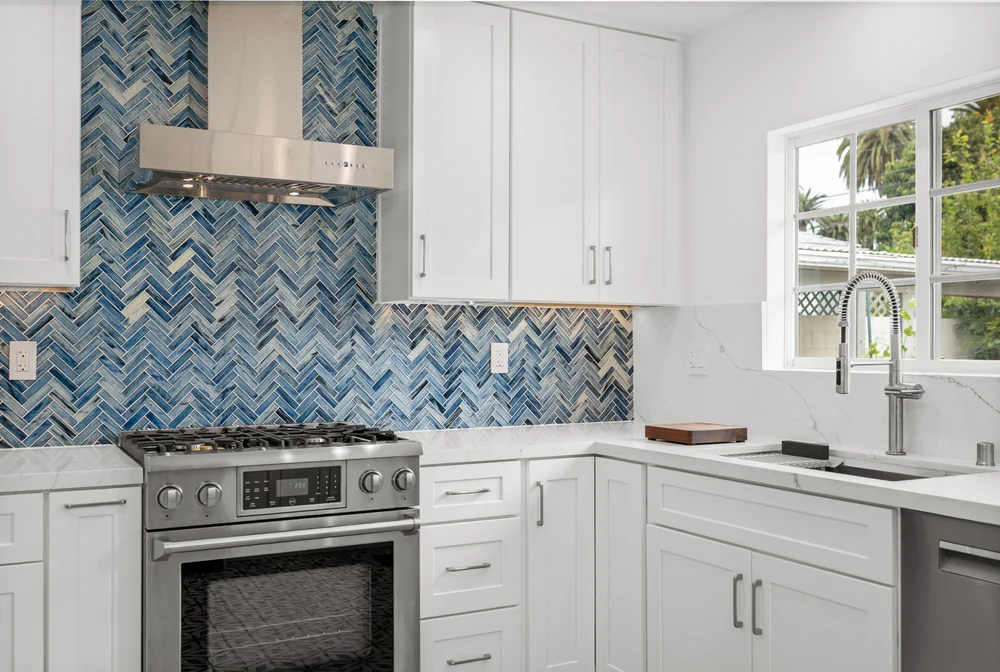
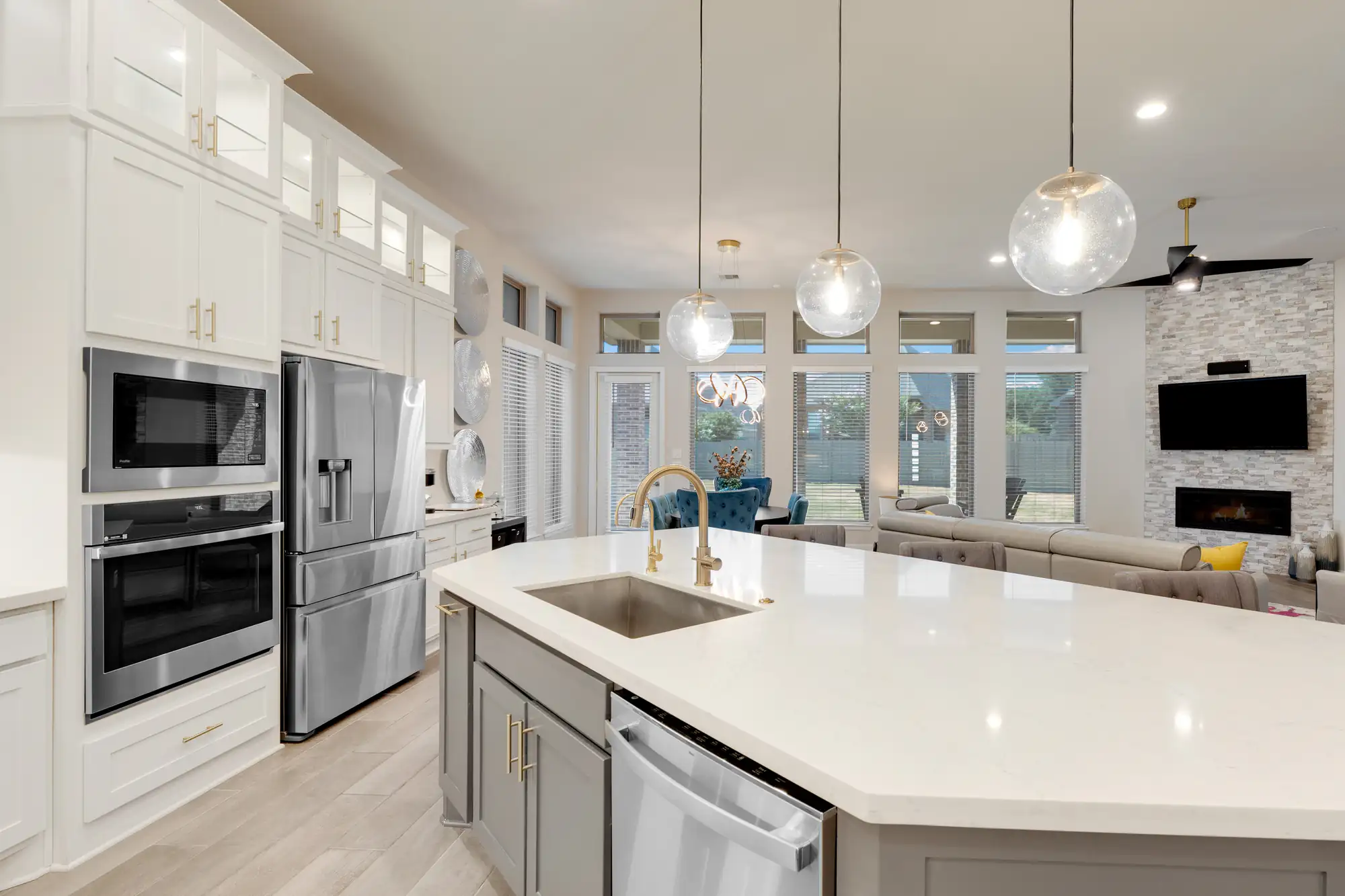
Take tile, for example. Instead of covering your entire backsplash in $40-per-square-foot designer tile, use it as an accent. Pair it with simple, affordable subway tile at $3 per square foot, and suddenly you’ve got a backsplash that looks custom without the custom price tag. Same goes for countertops. If you love the look of natural stone but can’t swing it for the whole kitchen, use quartz on the perimeter and save the statement material for the island. It’s the focal point anyway.
Flooring is another place where you can save without anyone noticing. Luxury vinyl plank has come a long way. It looks like hardwood, holds up to traffic and spills, and costs a fraction of what real wood or tile would run. If your existing floor is in decent shape, you might not even need to replace it. Refinishing hardwood or just giving it a deep clean can buy you time and budget for other upgrades.
Hardware is one of those small details that makes a big impact, but you don’t need to spend $15 per pull to get something that looks great. There are plenty of stylish, affordable options out there if you’re willing to shop around. And if you’re handy, installing hardware yourself is one of the easiest DIY tasks in a kitchen remodel. It’ll save you labor costs and give you a little more control over the process.
The trick is knowing where the eye goes first. Countertops, cabinets, and backsplash are the big visual players. That’s where you want to focus your energy and budget. Everything else? Find the best value you can and move on.
Not every appliance needs to be replaced during a kitchen renovation. If your dishwasher works fine and your microwave isn’t giving you problems, leave them. You can always upgrade later when they actually need replacing.
But if you’re going to invest in new appliances, be strategic about it. Some last longer than others, and some get used more than others. A cooktop, for example, tends to have a longer lifespan than a refrigerator. If you cook a lot, that’s where you put your money. A quality range or cooktop will serve you well for years. Refrigerators, on the other hand, typically need replacing every 10-15 years, so spending top dollar on one doesn’t always make sense unless you’re planning to stay in the house long-term.
Dishwashers are worth the investment if you’ve got a busy household. A good one saves time, water, and frustration. But you don’t need the fanciest model with every bell and whistle. Look for energy efficiency, solid reviews, and a warranty. That’s what actually matters.
And here’s a pro tip: shop for appliances early in the process. Not only does it give you time to compare prices and wait for sales, but it also ensures your cabinets and countertops are designed to fit them properly. Nothing’s worse than falling in love with a range only to realize it won’t fit in the space you’ve already built.
One more thing—don’t assume you have to replace everything at once. If your budget’s tight, phase it in. Start with the essentials, and add the rest as you go. Your kitchen will still function, and you’ll spread out the expense over time.
At the end of the day, a smart kitchen remodel isn’t about spending the most or the least. It’s about spending right. It’s about knowing where your money makes a real difference and where it doesn’t. It’s about walking into your finished kitchen and feeling like you made good decisions—not perfect ones, but good ones.
The homeowners who end up happiest with their remodels are the ones who take time upfront to think through their priorities. They don’t just follow trends or pick the cheapest option. They figure out what matters most to them—whether that’s countertops, storage, layout, or appliances—and they build their budget around that.
If you’re ready to start planning a kitchen remodel in Suffolk County, NY that actually fits your budget and your life, we can help. We bring nearly a decade of experience, transparent pricing, and a commitment to honest work without the hidden costs or pressure tactics you’ll find elsewhere. When you’re ready to move forward with a team you can trust, reach out to us at Jaguar Renovations.
Summary:
Share: