Need hardwood floor installation in Suffolk County? Get transparent pricing from licensed contractors with nearly a decade of experience. No sales pressure, no hidden fees, just quality work.
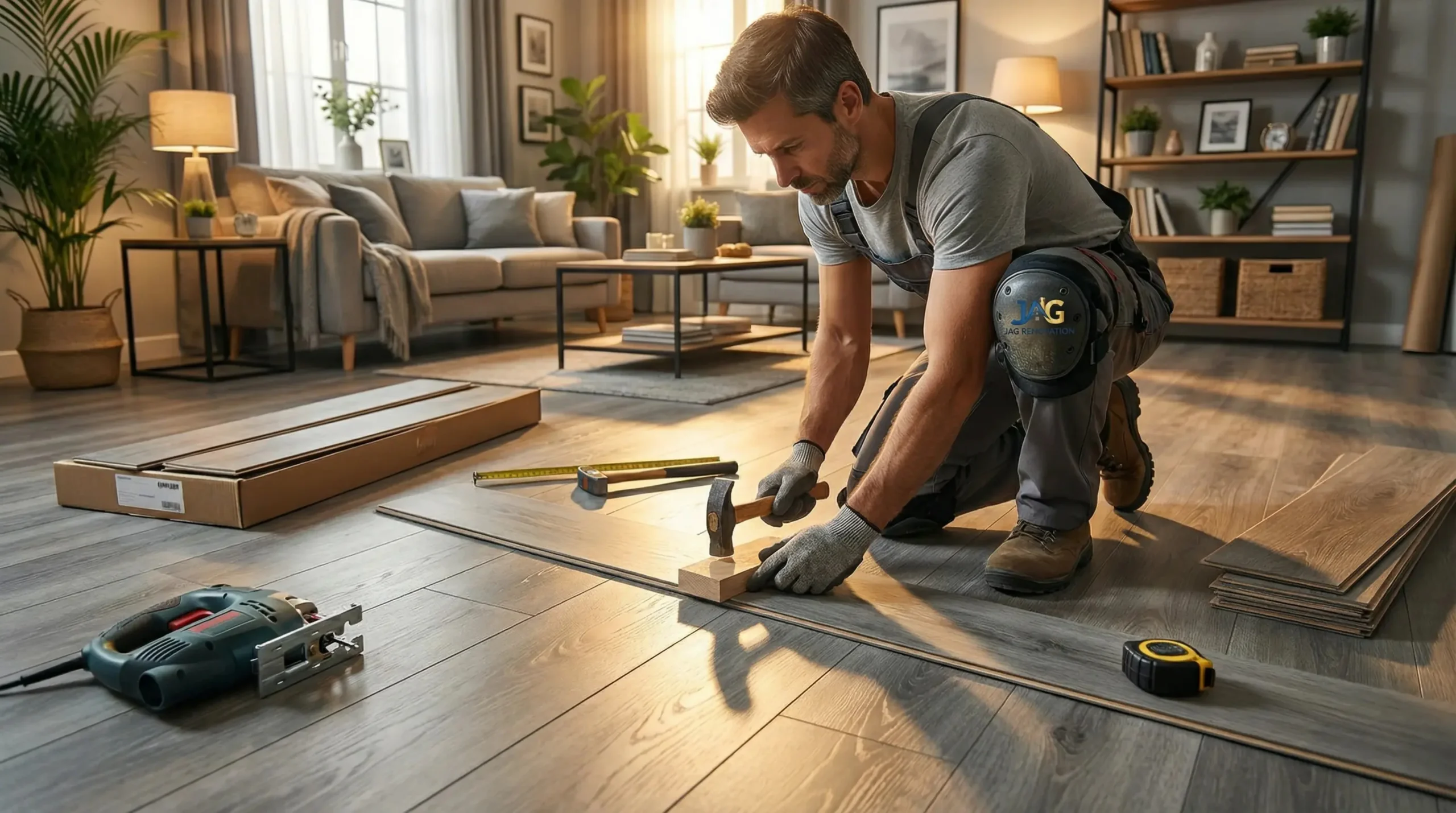
That worn carpet isn’t getting any better. The scratched hardwood in your living room tells the story of years gone by. Your garage floor looks like a workshop that’s seen too many oil changes.
You know it’s time for an upgrade. What you don’t know is who to trust. One in three homeowners has been burned by a renovation contractor. Quotes that seemed reasonable turn into invoices double the original estimate. Contractors who promise the world disappear mid-project. Subcontractors who show up aren’t the crew you met during the sales pitch.
Here’s what actually matters: finding licensed Suffolk County contractors who give you straight answers, fixed pricing, and quality work backed by real warranties. No sales pressure. No hidden fees. Just professional flooring installation done right the first time.
Let’s start with the number that matters most: what’s this actually going to cost?
Hardwood floor installation in Suffolk County, NY runs $12 to $25 per square foot installed. For a 500-square-foot living room, that’s $6,000 to $12,500. The range exists because materials vary, subfloor conditions differ, and labor requirements change based on your specific situation.
The material itself costs $6 to $18 per square foot depending on wood species. Oak is affordable. Exotic woods push the higher end. The rest of that per-square-foot price? Labor, subfloor preparation, removal of existing flooring, and finishing work. Some contractors quote material costs and let the rest surprise you later. That’s not how we operate.

Replacing carpet with hardwood starts with removal. And what’s underneath determines your real project cost.
Carpet removal runs $1 to $2 per square foot. That’s the easy part. The hard part? Subfloor assessment. In older Suffolk County homes—especially those in Huntington, Smithtown, or Babylon—decades of carpet often hide subfloor damage from moisture, pets, or simple wear.
Subfloor repairs add $1.20 to $1.40 per square foot. Leveling an uneven subfloor costs extra. Replacing sections with water damage costs more. We assess this before quoting, not after ripping up your carpet.
Disposal matters too. Some quotes include haul-away. Others charge separately. Furniture moving is another variable. Ask what’s included before signing anything.
Once carpet’s gone, we examine the subfloor. Level? Damaged? Squeaky? We explain what we find and what needs fixing. Poor contractors cover problems and hope you don’t notice until it’s too late. That’s the difference between floors that last 20 years and floors that fail in two.
Proper subfloor prep isn’t optional. If your subfloor isn’t solid and level, your new hardwood or luxury vinyl won’t perform. You’ll get gaps, squeaks, and premature wear. Fixing it right costs less than replacing failed flooring later.
Total project cost—the real number you need for budgeting—includes everything from demolition to final cleanup.
Most Suffolk County homeowners spend $2,000 to $7,500 for a complete 500-square-foot flooring project. That covers old flooring removal, subfloor prep, new materials, professional installation, and finishing. The range is wide because variables are real.
Hardwood sits at the higher end. You’re paying for premium materials, skilled installation, and protective finishing. Luxury vinyl plank and laminate come in lower at $4 to $16 per square foot installed because they’re faster to work with and don’t require finishing.
Here’s what catches homeowners off guard: the extras. Old flooring removal adds $1 to $4 per square foot depending on material. Tile and hardwood take longer to remove than carpet. Subfloor repairs add more. Custom patterns like herringbone or chevron nearly double labor costs because of precision and time required.
Trim work adds up. Baseboards, room transitions, threshold pieces. Some contractors include these. Others don’t. Same with furniture moving, debris haul-away, and cleanup. Small line items that add up fast.
Suffolk County contractors who earn trust break everything down upfront. We walk your space, check subfloors, identify moisture issues, and provide detailed estimates covering real scope. No surprises. No “by the way” conversations halfway through.
If a quote seems too good to be true, it is. Either they’re cutting corners on prep, using lower-grade materials than discussed, or planning change orders once work starts. Fixed pricing with everything included—that’s what you should demand.
Want live answers?
Connect with a Jaguar Renovation expert for fast, friendly support.
Modern laminate isn’t what you remember from the 90s. Technology has transformed it into a legitimate hardwood alternative that most people can’t distinguish without close inspection.
For Suffolk County, NY homeowners, laminate offers smart economics. You get hardwood’s appearance at $2.50 to $8 per square foot installed—significantly less than real wood. It handles high-traffic areas, resists scratches better than softer woods, and requires minimal maintenance. No refinishing. No special cleaners. Sweep and mop.
Installation is faster. Most laminate uses click-lock systems that float over subfloors rather than being nailed or glued. Less labor time means lower installation costs. For 500 square feet, expect $1,500 to $4,700 total.
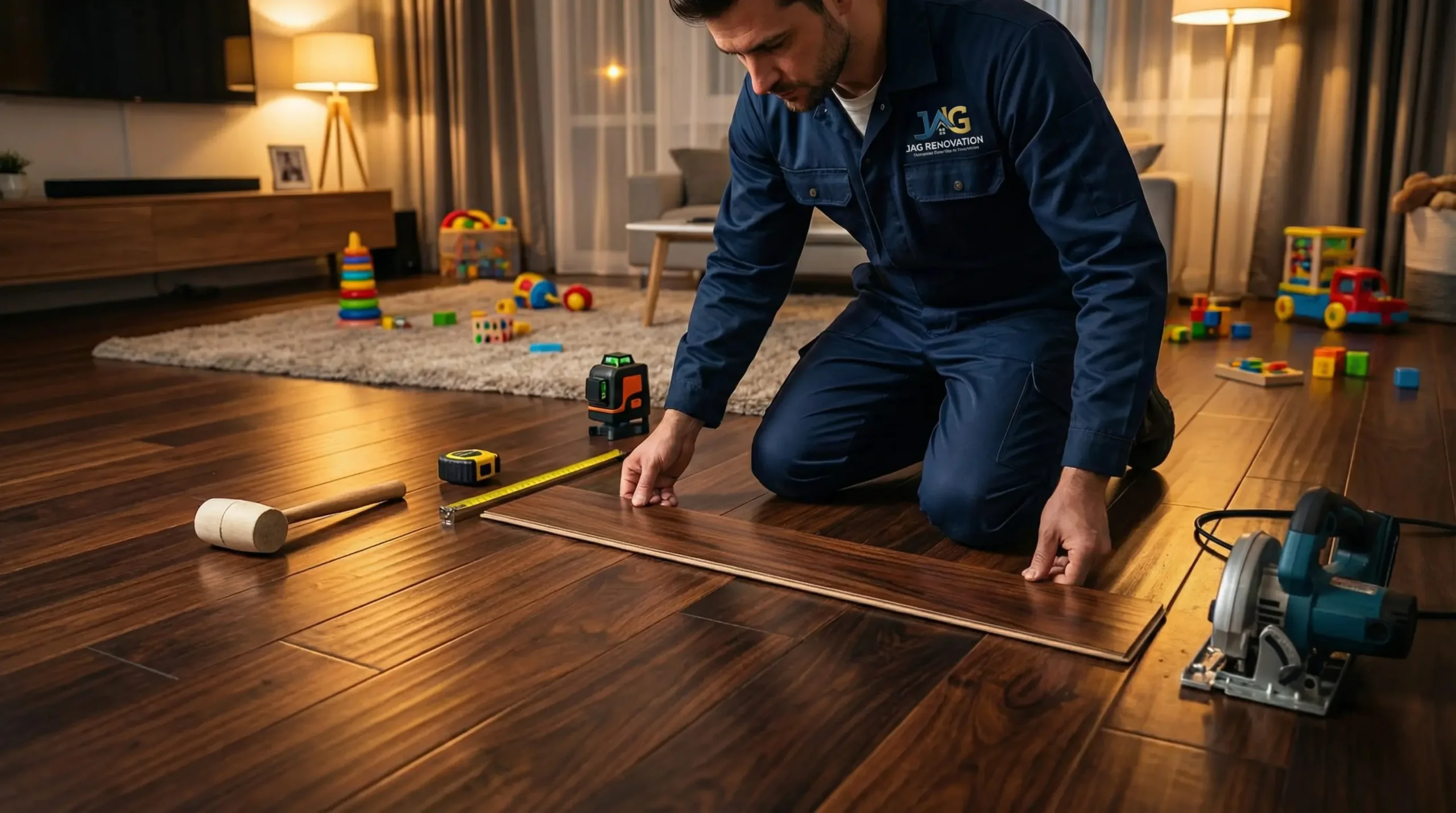
Luxury vinyl plank—LVP—is dominating flooring installations across Suffolk County. The reasons are practical, not trendy.
It’s 100% waterproof. Not resistant. Waterproof. Perfect for basements in Islip, bathrooms in Riverhead, kitchens in Patchogue—anywhere moisture exists. Spills don’t matter. Humidity doesn’t matter. Minor flooding won’t ruin it.
The realism is impressive. High-end LVP uses embossed-in-register technology that aligns surface texture with printed wood grain. It feels like wood when you walk on it. Looks like wood when you see it. Costs $4 to $16 per square foot installed—less than hardwood without the maintenance.
Installation is straightforward. Most LVP clicks together and floats over existing subfloors. Some types use glue for permanent installation, adding labor costs but providing extra stability. Professional installation runs $1.50 to $4.50 per square foot depending on method.
Durability is where LVP excels. Kids, pets, heavy furniture, daily wear—it handles everything without showing scratches like hardwood. Quality LVP features wear layers 12 to 20 mils thick, holding up in high-traffic areas for 15 to 25 years with basic care.
For Suffolk County homeowners wanting hardwood’s look without cost or upkeep, LVP makes sense. It works in every room. Handles temperature changes and humidity better than wood. If a plank gets damaged, replace individual pieces without redoing the entire floor.
The catch? Not all LVP is equal. Cheaper options use thin wear layers that scratch easily and don’t last. Core construction matters—rigid cores like stone plastic composite outperform flexible cores. We explain these differences and help you choose based on actual needs, not just budget.
Beyond planks, vinyl sheet flooring serves specific needs—especially for large spaces and tight budgets.
Vinyl sheet costs $2 to $7 per square foot installed. It comes in large rolls with minimal seams, making it naturally waterproof and easy to clean. Works well for large basements, commercial spaces, or rental properties where cost matters more than aesthetics.
The downside? Replacement. If one area gets damaged, you typically replace the entire sheet rather than individual planks. That makes long-term maintenance more expensive if problems arise.
Standard vinyl planks sit between sheet vinyl and LVP. They look like wood, install relatively easily, and cost $2 to $7 per square foot for materials plus $1.50 to $3 per square foot for installation. They’re thinner than LVP—less durable and realistic—but still outperform laminate in moisture-prone areas.
Vinyl tile mimics ceramic or stone at similar costs. The advantage is easier repairs—replace individual tiles when damaged. The disadvantage is more seams, meaning slightly more maintenance.
Installation method affects cost. Click-lock vinyl is DIY-friendly and faster to install, keeping labor costs down. Glue-down creates permanent, stable floors but takes longer at $2.50 to $4.50 per square foot for professional installation. Loose-lay vinyl uses weight and friction—easiest to install but limited applications.
For most Suffolk County homes, luxury vinyl plank offers the best balance. But if budget is tight or you’re covering large basements or rental properties, standard vinyl or sheet vinyl gets the job done at lower price points.
We explain which type makes sense for your specific situation. Kitchen? LVP handles moisture and traffic. Basement? Sheet vinyl or LVP depending on aesthetic preferences. Bathroom? Definitely waterproof, ruling out laminate and favoring vinyl.
Let’s get specific about vinyl plank costs since it’s among the most common questions Suffolk County homeowners ask.
Materials alone run $2 to $7 per square foot for standard vinyl planks and $3 to $10 per square foot for luxury vinyl plank. Premium brands and intricate designs push to $15 per square foot, but most homeowners land in the middle.
Installation adds $1.50 to $3 per square foot for floating click-lock systems and $2.50 to $4.50 per square foot for glue-down installations. For a typical 200-square-foot room, expect $1,000 to $3,400 total including labor. Scale to 1,000 square feet and the range is $5,000 to $17,000 depending on product quality and installation method.
Those numbers cover basic installation. They don’t always include old flooring removal, subfloor repairs, or intricate patterns. Carpet removal adds $1 to $2 per square foot. Tile or wood removal costs more—$3 to $4 per square foot due to labor intensity.
Summary:
Share: