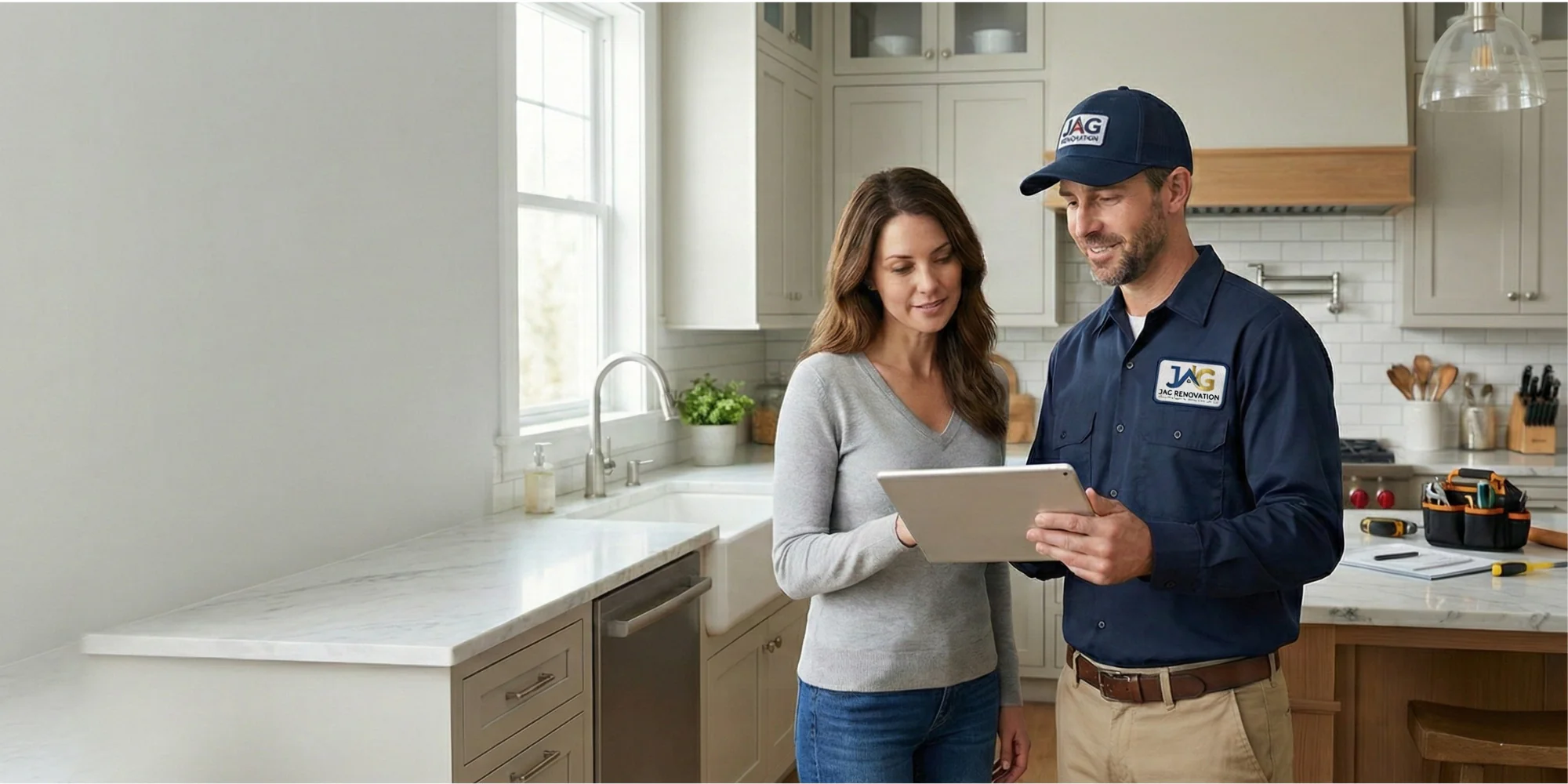
Before you hire anyone, know what to ask. This checklist covers the questions Suffolk County homeowners should bring to every contractor conversation.
You’ve decided it’s time. The kitchen needs updating, the basement has been sitting unfinished for years, or the bathroom is finally past the point of no return. So now you’re in that uncomfortable position most Suffolk County, NY homeowners know well — trying to figure out who to trust before you’ve had any real reason to trust them.
The problem isn’t a shortage of contractors. It’s knowing which questions cut through the pitch and get you real answers. This guide gives you exactly that — not a generic checklist, but the specific questions that matter most in this market, and what the right answers actually look like.
Here’s something most homeowners don’t know until it’s too late: New York State does not issue a statewide contractor license. Licensing happens at the county level, which means a contractor who’s fully licensed to work in Nassau County or New York City is not automatically licensed to work in Suffolk County.
In Suffolk County, home improvement contractors are licensed through the Suffolk County Department of Labor, Licensing & Consumer Affairs. It is illegal to operate a home improvement business here without that license. You can verify any contractor’s status — and check their complaint history — by calling the Suffolk County Office of Consumer Affairs directly at 631-853-4600.
When you ask a contractor for their license number, you want a Suffolk County HI license. Ours is HI-71285. Look it up.

Insurance is one of those things where the answer “yes, we’re insured” tells you almost nothing. What you actually want to know is what kind of coverage they carry, how much, and whether it extends to everyone working on your project.
Suffolk County requires licensed home improvement contractors to carry a minimum of $500,000 in general liability insurance. That coverage protects you if something goes wrong on your property — a worker gets hurt, a wall gets damaged, a pipe gets nicked. Workers’ compensation insurance is also required, or the contractor must hold a valid exemption. Ask to see a certificate of insurance before any work begins. A legitimate contractor will hand it over without hesitation.
The part most homeowners forget to ask: does that coverage extend to the people actually doing the work? If a contractor uses subcontractors — and many do without disclosing it upfront — those workers may not be covered under the general contractor’s policy. That gap in coverage becomes your problem if something goes wrong. Ask directly: “Are all workers on my project covered under your insurance, or do you use subcontractors with separate policies?”
We don’t use subcontractors. Every person working on a Jaguar Renovation project is part of our in-house crew, covered under our insurance, and accountable to us. That’s not the industry standard — it’s a deliberate choice we made because we’ve seen what happens when accountability gets diluted across three different companies on one job site.
The other thing worth asking about is a workmanship warranty. This isn’t a given. Many contractors offer nothing in writing once the job is done and the final check clears. We back every project with a one-year workmanship warranty. If something we built or installed fails due to our work, we come back and fix it. Ask any contractor you’re considering whether they offer the same — and ask to see it in writing.
Bonding comes up in contractor conversations often enough that it’s worth understanding clearly, because it gets confused with insurance more than almost any other topic.
A contractor’s bond is a separate financial guarantee — distinct from liability insurance — that protects you if a contractor fails to complete the work, abandons the project, or causes damage that isn’t covered by their insurance policy. In New York City, home improvement contractors are required to carry a $20,000 bond. Suffolk County does not have the same blanket state-level bonding requirement, but the county’s own consumer protection structure includes something worth knowing about: the Suffolk County Restoration Fund.
When a contractor applies for their Suffolk County home improvement license, part of the approval process includes a fee that contributes to a restoration fund specifically designed to protect homeowners who are defrauded by licensed contractors. This is a layer of protection that simply does not exist when you hire someone unlicensed. It’s one of several reasons why the licensing question isn’t just a formality — it has real financial consequences for you if something goes wrong.
So when a contractor says they’re bonded, ask what that actually means in the context of Suffolk County work. Ask whether they’re licensed through the county, which activates the restoration fund protections. And if they’re vague about any of it, that vagueness is itself useful information.
The broader point here is that the questions you ask before hiring a contractor aren’t just due diligence — they’re a filter. A contractor who can answer every one of these questions clearly, specifically, and without getting defensive is a contractor who has nothing to hide. That’s exactly the kind of contractor you want working in your home.
Want live answers?
Connect with a Jaguar Renovation expert for fast, friendly support.
Reliability sounds like a soft quality — the kind of thing everyone claims and no one can prove until it’s too late. But there are specific, concrete things you can ask that reveal whether a contractor is actually reliable before you’ve committed to anything.
The first is response time. How long did it take them to return your call or reply to your inquiry? A contractor who takes two weeks to respond to an estimate request will take two weeks to respond to a problem mid-project. We deliver detailed, fixed-price written estimates within 48 hours of a consultation. That’s a standard we hold ourselves to because we think your time matters.
The second is scheduling. Ask when they can start. Most projects begin within one to two weeks of approval on our end. If a contractor can’t give you a realistic start window, that’s worth pressing on.
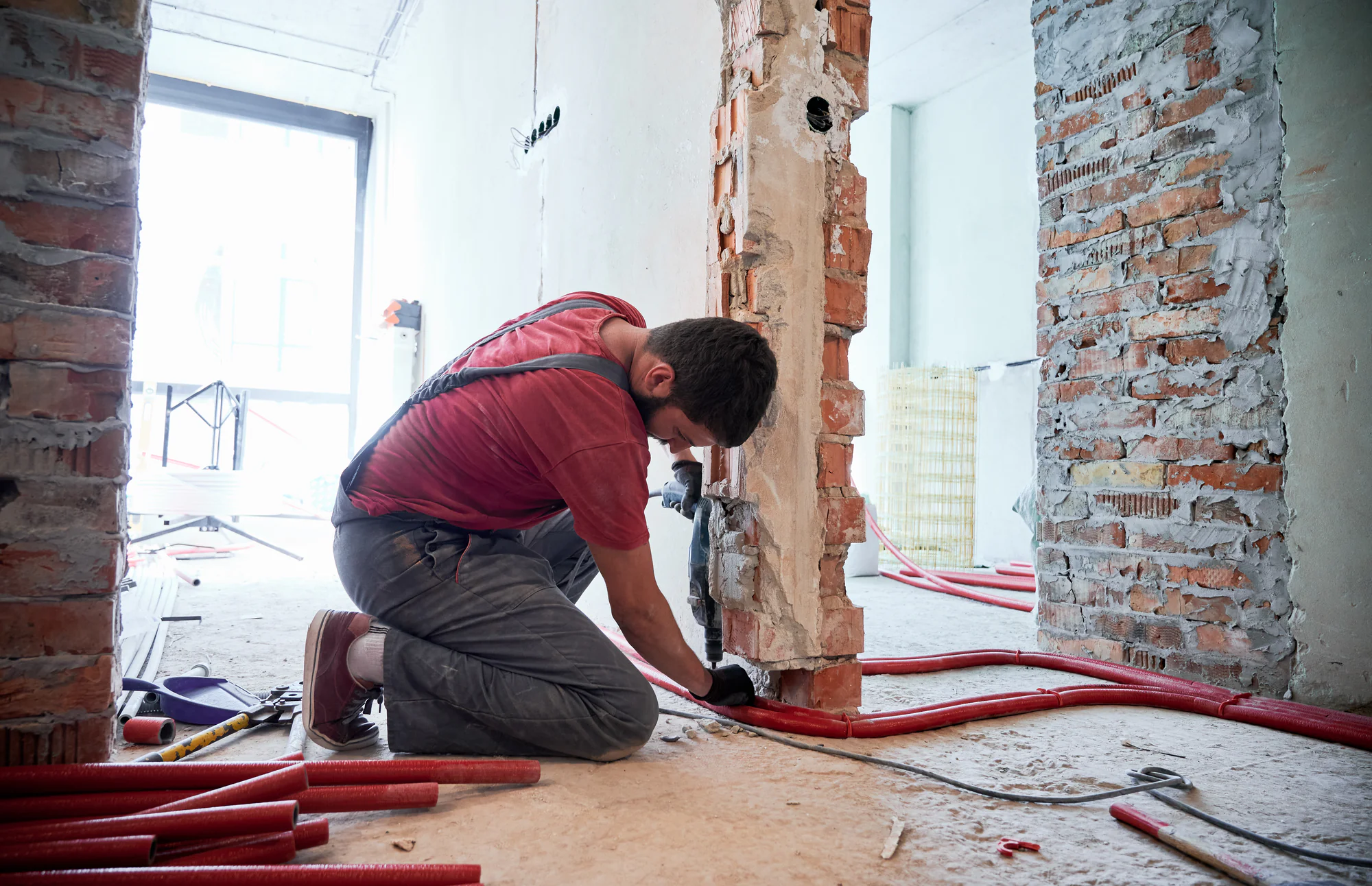
Permits are where a lot of homeowners get tripped up, and where some contractors quietly take advantage of that uncertainty. The rule is simple: a licensed contractor handles the permits. They apply for them, they coordinate the inspections, and they make sure the work is done to code. If a contractor suggests that you pull your own permits, treat that as a red flag.
When a homeowner pulls their own permits, the accountability shifts to them. If the work fails inspection, if there’s a code violation, if the project creates problems down the road — you’re on the hook. Contractors who push this arrangement are often doing so because they can’t pull permits themselves, which typically means they’re unlicensed or operating outside their scope.
In Suffolk County, NY, building permit fees start at $250 for projects up to $50,000 and $500 for projects up to $100,000. Different townships — Huntington, Smithtown, Islip, Babylon, Brookhaven — each have their own building departments that process permits. A contractor who works regularly in this county knows those departments, knows the inspectors, and knows how to move a project through the process without unnecessary delays. That local familiarity matters more than most homeowners realize.
We handle permits as part of every project. From the initial application through final inspection and cleanup, we manage the process so you don’t have to navigate it alone. Suffolk County’s permit requirements aren’t complicated if you know them — but they’re easy to get wrong if you don’t.
One more thing to ask: what happens if inspections uncover something unexpected? A good contractor explains the process upfront, doesn’t pad estimates with phantom contingencies, and communicates clearly if something changes. Ask them to walk you through how they handle surprises. The answer will tell you a lot.
This is one of the most important questions on the list, and one of the most overlooked. The down payment conversation is where a lot of contractor scams begin — and Suffolk County’s own consumer affairs office has clear guidance on it.
According to the Suffolk County Home Improvement Fact Sheet, a fair down payment is under 15% of the total project cost. That’s the county’s own standard, not something we invented. Homeowners are also advised to withhold final payment until all work is complete and all required inspections and certificates of occupancy have been obtained. If a contractor asks for 40%, 50%, or full payment upfront — especially in cash — that’s not a sign they’re serious. It’s a documented warning sign.
A legitimate payment schedule looks like this: a reasonable deposit to secure your spot and cover initial materials, progress payments tied to specific milestones, and a final payment held until the job is done to your satisfaction and all inspections are signed off. That structure protects both parties. Any contractor worth hiring will agree to it without pushback.
We also want to address something that comes up in Suffolk County specifically after major storms. Nor’easters and the occasional tropical system that clips Long Island tend to bring out-of-area contractors into the market quickly, looking for storm-related repair work. Some of them are excellent. Some are not licensed to work here, carry no insurance, and disappear after the deposit clears. The vetting process doesn’t change just because there’s urgency — if anything, it matters more. The same questions apply: license number, insurance certificate, references from recent local projects, written contract, and a payment schedule that doesn’t require you to hand over most of the money before a nail is driven.
Suffolk County homes — particularly the postwar housing stock that makes up most of Huntington, Babylon, Islip, and Smithtown — are aging in ways that create real, recurring renovation needs. Kitchens last updated in the 1980s. Basements with moisture problems that have been accumulating for decades. Flooring that’s finally given out. The demand is real, and so is the risk of hiring the wrong person to address it. Taking thirty minutes to ask the right questions before signing anything is the most valuable thirty minutes you’ll spend on any renovation project.
The right contractor doesn’t dodge these questions. They’ve already answered them before you ask — because they’ve built their business around being able to answer them honestly.
Verify the license. Confirm the insurance. Ask about subcontractors. Get the warranty in writing. Make sure the payment schedule is reasonable and tied to milestones. And if anything about the conversation makes you feel rushed, pressured, or unclear, slow down. There’s no renovation so urgent that it’s worth skipping the vetting process.
If you’re looking for a contractor in Suffolk County, NY who can answer every question on this list — specifically, not vaguely — Jaguar Renovation is ready to talk. Call us, ask us everything, and we’ll give you straight answers. That’s the whole point.
Summary:
Share: