Suffolk County basements are getting a grown-up makeover. The speakeasy trend is replacing traditional playrooms with sophisticated bars and lounges built for adults who want their space back.
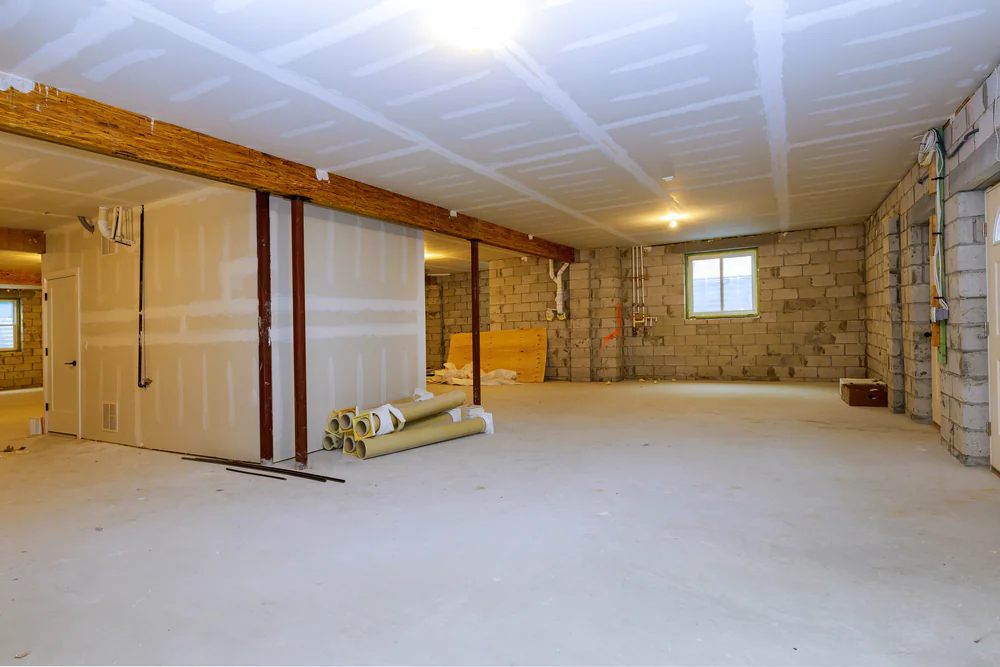
Walk through most Suffolk County homes built in the last 20 years and you’ll find the same setup. The basement was finished as a playroom—bright colors, foam mats, toy bins everywhere. It made sense when the kids were young.
But kids grow up. The toys get donated. The space sits empty or becomes a dumping ground for things that don’t have a home upstairs. You’re left with a basement that cost money to finish but doesn’t serve anyone anymore.
That’s where the shift is happening. Homeowners are realizing basements don’t need to be one-dimensional. They’re rethinking the space entirely and designing for what they actually want now: a sophisticated area for entertaining, unwinding, or just having a drink without tripping over Legos. The speakeasy aesthetic fits that need perfectly—it’s intentional, grown-up, and timeless in a way that primary-colored playrooms never were.
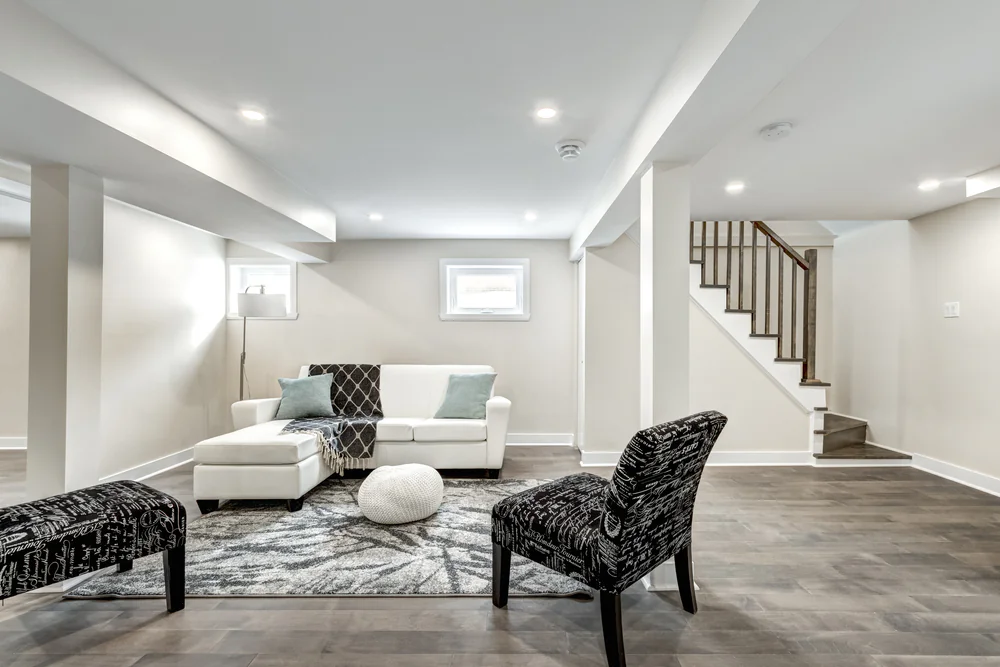
Speakeasy design isn’t about recreating a 1920s history lesson. It’s about borrowing the mood—intimate, a little moody, and built for conversation and relaxation. The look is rooted in rich materials and warm tones, not the stark whites and grays that dominated basement trends a decade ago.
Think dark-stained wood, textured brick accent walls, brass or copper fixtures, and lighting that’s deliberately dim and layered. Mahogany and walnut were the go-to materials during Prohibition, and they still work today because they age well and add warmth to a space that can otherwise feel cold and industrial. You’re not trying to replicate a museum piece. You’re using those elements to create a space that feels curated, comfortable, and separate from the rest of the house.
The bar is usually the focal point. It doesn’t have to be massive, but it should feel intentional—custom cabinetry for glassware, a solid countertop that can handle spills, and enough room for a few stools. Some homeowners go further and add wet bar functionality with a sink and small fridge. Others keep it simple with a dry bar and focus the budget on finishes and lighting instead.
Lighting is what sells the vibe. Overhead recessed lights won’t cut it here. You want Edison bulbs, vintage-style sconces, pendant lights over the bar, and dimmers everywhere. The goal is to control the mood. Bright enough to see your drink, dim enough to feel like you’ve left the rest of the house behind.
Seating matters too. Leather club chairs, a sectional that’s built for lounging, or even bar stools that don’t feel like an afterthought. Comfort keeps people in the space. If your basement feels like a showroom, nobody’s going to use it.
Flooring is often overlooked but it’s critical in Suffolk County basements. Concrete releases moisture constantly, so you need materials that can handle it—luxury vinyl plank, tile, or engineered wood on a properly installed subfloor with moisture barriers. Carpet might feel cozy upstairs, but down here it’s a mold risk if you’re not careful.
The speakeasy trend also leans into hidden or dramatic entries when space allows. Some homeowners install bookcase doors or use heavy drapes to section off the bar area from the rest of the basement. It’s not necessary, but it adds to the experience and makes the space feel more exclusive.
There’s a practical reason this trend is taking off. Basements are expensive to finish, and a space that only works for one phase of life—early childhood—doesn’t make financial sense anymore. Families are looking for spaces that evolve, and a speakeasy-style entertainment area does that in ways a playroom can’t.
When kids are young, you need them close. A basement playroom sounds great in theory, but most parents don’t want their toddlers out of sight two floors down. By the time kids are old enough to use a basement independently, their needs have changed. They want a gaming setup, a place to hang out with friends, or a media room—not a space filled with primary colors and storage bins.
Adults, on the other hand, need a place that’s theirs. Somewhere to decompress after work, host friends without crowding the kitchen, or just sit with a book and a drink in a space that doesn’t feel like the rest of the house. The speakeasy aesthetic delivers that. It’s sophisticated without being stuffy, functional without feeling like a utilitarian afterthought.
There’s also the resale angle. A finished basement adds value, but the type of finish matters. A dated playroom with cartoon murals and foam flooring won’t impress buyers. A well-executed entertainment space with a custom bar, quality finishes, and flexible layout appeals to a much wider audience. Buyers can see themselves using it immediately, whether that’s for entertaining, a home theater setup, or even a future guest suite.
The shift also reflects changing attitudes about how homes should function. Open-concept living dominated for years, but people are starting to crave separation again—spaces with defined purposes that offer privacy and quiet. A basement speakeasy delivers that. It’s far enough from the main living areas that you can have people over without disturbing the rest of the household, and it’s insulated enough that sound doesn’t travel the way it does in open floor plans.
Suffolk County homeowners are also dealing with limited lot sizes and high property taxes. Adding square footage through an extension or addition is expensive and increases your tax bill. Finishing your existing basement maximizes the space you already own without those extra costs. If you’re going to invest in that space, it makes sense to design it for how you’ll actually use it now—not how you used it ten years ago.
The speakeasy trend isn’t about being trendy for the sake of it. It’s about creating a space that works for adults, adapts over time, and adds real value to your home. That’s why it’s replacing playrooms across Suffolk County.
Want live answers?
Connect with a Jaguar Renovation expert for fast, friendly support.
Designing a speakeasy basement is one thing. Building it properly in Suffolk County is another. Long Island has specific challenges that you can’t ignore—moisture, building codes, egress requirements, and contractors who may or may not know what they’re doing.
Let’s start with moisture. Suffolk County sits on a coastal water table, and basements here deal with humidity and water infiltration year-round. Concrete slabs and foundation walls release moisture constantly. If we don’t address that upfront, you’re going to have problems—warped floors, mold growth, and finishes that fail within a few years.
Proper moisture control means vapor barriers, waterproof or moisture-resistant flooring, and materials that can handle the environment. Drywall needs to be mold-resistant or replaced with alternatives like moisture-resistant panels. Insulation has to be closed-cell foam, not the standard fiberglass that absorbs water and becomes a breeding ground for mold. These aren’t optional upgrades. They’re requirements if you want the space to last.
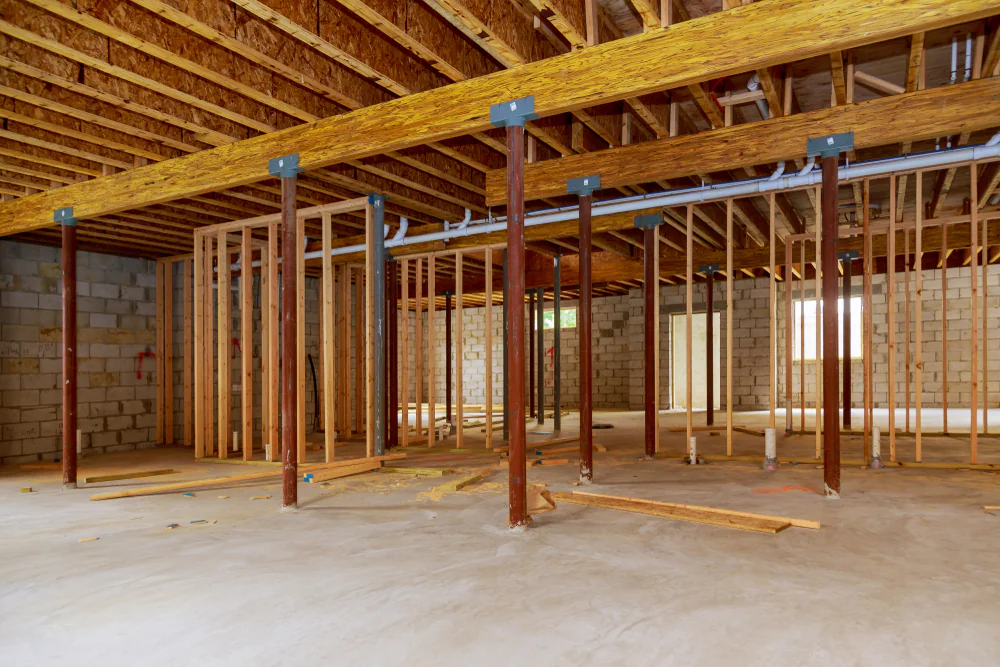
If you’re finishing a basement in Suffolk County, you need permits. That’s not a suggestion. It’s the law, and ignoring it creates serious problems—failed inspections, fines, and issues when you try to sell the house down the road.
New York State building codes are strict about what qualifies as habitable space in a basement. You need minimum ceiling height, proper egress, smoke and carbon monoxide detectors, and adequate light and ventilation. Egress is the big one. If you’re creating a living space—whether that’s a bedroom, office, or entertainment area—you need a safe way to exit in an emergency. That usually means an egress window or a compliant door leading directly outside.
Egress windows aren’t cheap. Installation typically runs between $6,000 and $12,000 depending on your foundation and site conditions. But they’re non-negotiable if you want the space to be code-compliant and safe. They also bring in natural light, which helps a basement feel less like a basement.
Permits in Suffolk County vary by project scope. For renovations up to $50,000, you’re looking at a $250 permit fee. Projects between $50,000 and $100,000 cost $500. Larger projects scale from there. Electrical, plumbing, and HVAC work all require separate permits. We handle this as part of our process, and we make sure everything is pulled and inspected properly.
Some contractors will try to skip permits to save time or money. Don’t let them. If the work isn’t permitted and inspected, you’re liable. That means you could be forced to tear out finished work, pay fines, or disclose unpermitted renovations when you sell—which kills deals and tanks your home value.
We know Suffolk County’s requirements and build them into the timeline and budget from the start. We’ll walk you through what’s required, handle the permit process, and schedule inspections without you having to chase us. If a contractor tells you permits aren’t necessary or tries to talk you out of them, walk away. That’s a red flag you can’t ignore.
Beyond egress and permits, there are practical code requirements around electrical work, plumbing if you’re adding a bathroom or wet bar, and HVAC to ensure the space is properly heated and cooled. Basements can get cold in winter and humid in summer, and a space that’s uncomfortable won’t get used. Proper HVAC isn’t just about comfort—it’s about controlling moisture and preventing mold.
Let’s talk money. Basement renovations in Suffolk County aren’t cheap, and anyone who tells you otherwise is either lying or about to surprise you with change orders halfway through the project.
The average cost to finish a basement on Long Island runs around $117 per square foot. For a standard 800-square-foot basement, that’s roughly $93,600. Smaller projects might come in around $45,000. Larger or more complex builds—especially those involving custom bars, bathrooms, or high-end finishes—can easily exceed $100,000.
Suffolk County costs run higher than the national average for a few reasons. Labor is expensive here. Materials cost more. Permit fees add up. And if your basement has issues—foundation cracks, water damage, low ceilings—you’re paying to fix those before any finish work happens.
A basic speakeasy-style renovation typically includes framing, insulation, moisture barriers, drywall or paneling, flooring, electrical work for lighting and outlets, and finish carpentry for the bar and any built-ins. If you’re adding a bathroom, that’s another $15,000 to $40,000 depending on finishes. A wet bar with plumbing and cabinetry can run $5,000 to $15,000 or more.
Timelines matter too. A straightforward basement finish in Suffolk County takes 8 to 12 weeks on average. That includes time for permits, inspections, and the actual construction. If you’re adding a bathroom or dealing with structural issues, add another few weeks. Projects that require exterior work—like cutting in an egress window—take longer because of weather and site access.
We give you a detailed timeline upfront and stick to it. We also provide a transparent estimate that accounts for permits, materials, labor, and contingency for unexpected issues. If a contractor lowballs the estimate to win the job and then hits you with change orders every week, you’re dealing with someone who either doesn’t know what they’re doing or doesn’t care.
The key is finding a contractor who’s upfront about costs, experienced with Suffolk County basements, and willing to put everything in writing. That’s not always easy, but it’s the difference between a project that stays on budget and one that spirals into a nightmare.
Here’s the reality: the renovation industry has a trust problem. Homeowners get burned by contractors who overpromise, underdeliver, and disappear when problems show up. If you’re investing tens of thousands of dollars into a basement renovation, you need someone who’s transparent, experienced, and accountable.
Start by asking about their experience with Suffolk County basements specifically. Long Island has unique challenges—moisture, building codes, permit processes—and a contractor who’s only worked in other markets won’t know how to navigate them. Ask for examples of similar projects they’ve completed. Ask about their process for handling permits and inspections. If they’re vague or dismissive, move on.
Get everything in writing. That means a detailed contract that outlines scope of work, materials, timeline, payment schedule, and what happens if issues come up. If a contractor won’t put it in writing, they’re not someone you want to work with.
Check references and reviews, but dig deeper than star ratings. Look for patterns. Do past clients mention budget overruns? Missed deadlines? Poor communication? Those are warning signs. Also ask the contractor directly how they handle unexpected issues. Every basement project has surprises—hidden water damage, outdated wiring, structural concerns. A good contractor has a process for addressing those without derailing the entire project.
Transparency around costs is non-negotiable. You should know upfront what permits cost, what materials cost, and what labor costs. If the estimate feels too good to be true, it probably is. Lowball bids are a classic tactic to win the job, and then the change orders start piling up once work begins.
Finally, trust your gut. If a contractor pressures you to sign quickly, dismisses your concerns, or makes promises that sound unrealistic, walk away. The right contractor will take time to understand what you want, explain what’s realistic, and deliver work that matches what they promised.
Your basement renovation is a significant investment. It should increase your home’s value, give you a space you actually want to use, and be completed by someone who respects your time and budget. If you’re ready to move forward with a speakeasy-style basement in Suffolk County, we bring nearly a decade of experience, transparent pricing, and the kind of craftsmanship that doesn’t come with hidden costs or surprises.
Summary:
Share: