Most homeowners know they should hire a licensed and bonded contractor. Far fewer know what that actually means — or how to check if it's real.

You’ve probably been told to hire a licensed and bonded contractor. Maybe a neighbor mentioned it, or you saw it on a checklist somewhere. But when you actually try to figure out what it means — or how to confirm a contractor has it — things get vague fast.
Most articles give you the textbook definition and stop there. What they don’t tell you is what those credentials actually protect you from, what’s missing when a contractor doesn’t have them, and how to verify any of it in Suffolk County, NY specifically. That’s what this covers.
Licensed and bonded are two separate things that get lumped together so often people assume they’re the same. They’re not.
Being licensed means a contractor has met the legal requirements set by Suffolk County to perform home improvement work — passing a written exam, submitting proof of insurance, and demonstrating they understand the financial responsibilities that come with the credential. Being bonded means the contractor has obtained a surety bond, which protects you if they fail to complete the project or don’t hold up their end of the contract.
Neither one replaces the other. Together — along with general liability insurance — they form the complete protection framework that makes hiring a contractor something other than a financial gamble. If even one piece is missing, your exposure as a homeowner goes up significantly.

Here’s the part most homeowners skip, and it’s the most important part: actually checking. A contractor can claim to be licensed without being licensed. It happens more than you’d think.
A sweep by the NYC Department of Consumer Affairs found that one in five home improvement contractors were operating without a license. That’s not a fringe problem — it’s a widespread one, and Suffolk County is not immune.
In Suffolk County, home improvement contractors are required to hold a Home Improvement Contractor (HIC) license issued by the Suffolk County Department of Labor, Licensing & Consumer Affairs. The license number follows an “HI-” format. Our license number, for example, is HI-71285 — a real, searchable number you can confirm directly through the county. That’s the kind of specificity that separates a verifiable credential from a vague claim.
To qualify for that license, a contractor has to submit a certificate of liability insurance covering at least $500,000 in bodily injury and property damage, provide a workers’ compensation certificate, and pass a written exam testing their knowledge of the county’s home improvement contractor requirements. It’s not a rubber stamp. The county sets the bar deliberately because the stakes for homeowners are real.
Why does verification matter so much? Because New York courts have consistently held that an unlicensed contractor may be barred from enforcing their contract, barred from recovering payment, and stripped of lien rights. That sounds like it protects you — and in some ways it does — but it doesn’t undo the damage to your home or get your deposit back if a contractor walks off the job. Prevention is the better play.
Ask for the license number before any work begins, and look it up.
The bond is the piece of this that confuses people most. It’s not insurance. It doesn’t work the same way, and understanding the difference matters when something goes wrong.
A surety bond involves three parties: the contractor (the principal), you as the homeowner (the obligee), and the bonding company (the surety). If the contractor fails to complete the project, abandons the job, or doesn’t fulfill the contract terms, you have a mechanism to make a claim against that bond. It’s a financial guarantee that the contractor will follow through — and if they don’t, the bonding company steps in.
Insurance, by contrast, primarily protects the contractor. Liability insurance covers accidents, property damage, and injuries that occur during the project. Workers’ compensation covers the contractor’s employees if they’re hurt on your property. Both matter to you, but in a different way: if a worker is injured on your job site and the contractor has no workers’ comp, that liability can land on your homeowners policy. Some insurers won’t even compensate you for project-related damage if the contractor you hired wasn’t properly licensed and insured to begin with.
Suffolk County may require a surety bond of up to $100,000 as part of the licensing process, with the amount set by the Director of Consumer Affairs. That bond requirement exists specifically because the county has seen what happens when it doesn’t. Homeowners have lost $89,000 or more to contractors who took deposits and walked. The bond is one of the few legal tools available to recover from that kind of situation — but only if the contractor was bonded in the first place.
Want live answers?
Connect with a Jaguar Renovation expert for fast, friendly support.
Cost is almost always part of the conversation when homeowners are comparing contractors, and it should be. But the framing matters. The question isn’t just what the contractor charges — it’s what you’re actually getting for that number, and what happens if something goes wrong.
Long Island consistently runs 15 to 25 percent above national renovation benchmarks due to local labor and material costs. That’s not a surprise to anyone who’s gotten a quote in Suffolk County. What is a surprise to many homeowners is that 39 percent of them exceeded their renovation budget in 2024, according to the U.S. Houzz & Home Study. The gap between the estimate and the final bill is where a lot of trust gets broken.

The estimate stage is your best opportunity to evaluate a contractor before any money changes hands. Most homeowners focus on the total number. The sharper move is to focus on what’s behind it.
Start with credentials. Ask for the license number and look it up. Ask to see the certificate of liability insurance and the workers’ compensation certificate — not just a verbal confirmation, but the actual documents. In Suffolk County, a business license alone isn’t enough. The county requires a specific HIC license, and individual towns and villages within Suffolk County may have their own registration requirements on top of that. A contractor who’s navigated that system knows it. One who hasn’t may not be able to pull permits for your project legally.
Then ask about the crew. This one matters more than most homeowners realize. A licensed general contractor‘s license covers the contract — but if the work is being done by subcontractors that contractor doesn’t directly manage, accountability gets murky fast. When something goes wrong, the GC points at the sub, the sub points back, and you’re stuck in the middle. We use in-house crews only. No subcontractors. The people doing the work on your home are our employees, and we’re directly accountable for everything they do.
Ask about permits. Any significant renovation in Suffolk County — structural work, electrical, plumbing, major additions — requires a permit. A licensed contractor pulls permits. An unlicensed one can’t, legally. Unpermitted work creates real problems when you sell: it can fail inspection, trigger code violation proceedings, and reduce your home’s appraised value. With Suffolk County median home prices at $675,000, that’s not a small risk.
Finally, ask about change orders. A detailed written estimate should reflect everything a competent contractor would anticipate. If something genuinely changes mid-project, that conversation should happen before the work happens — not as a line item surprise at the end. The estimate you receive from us is what you pay. That’s not a sales line; it’s a structural commitment.
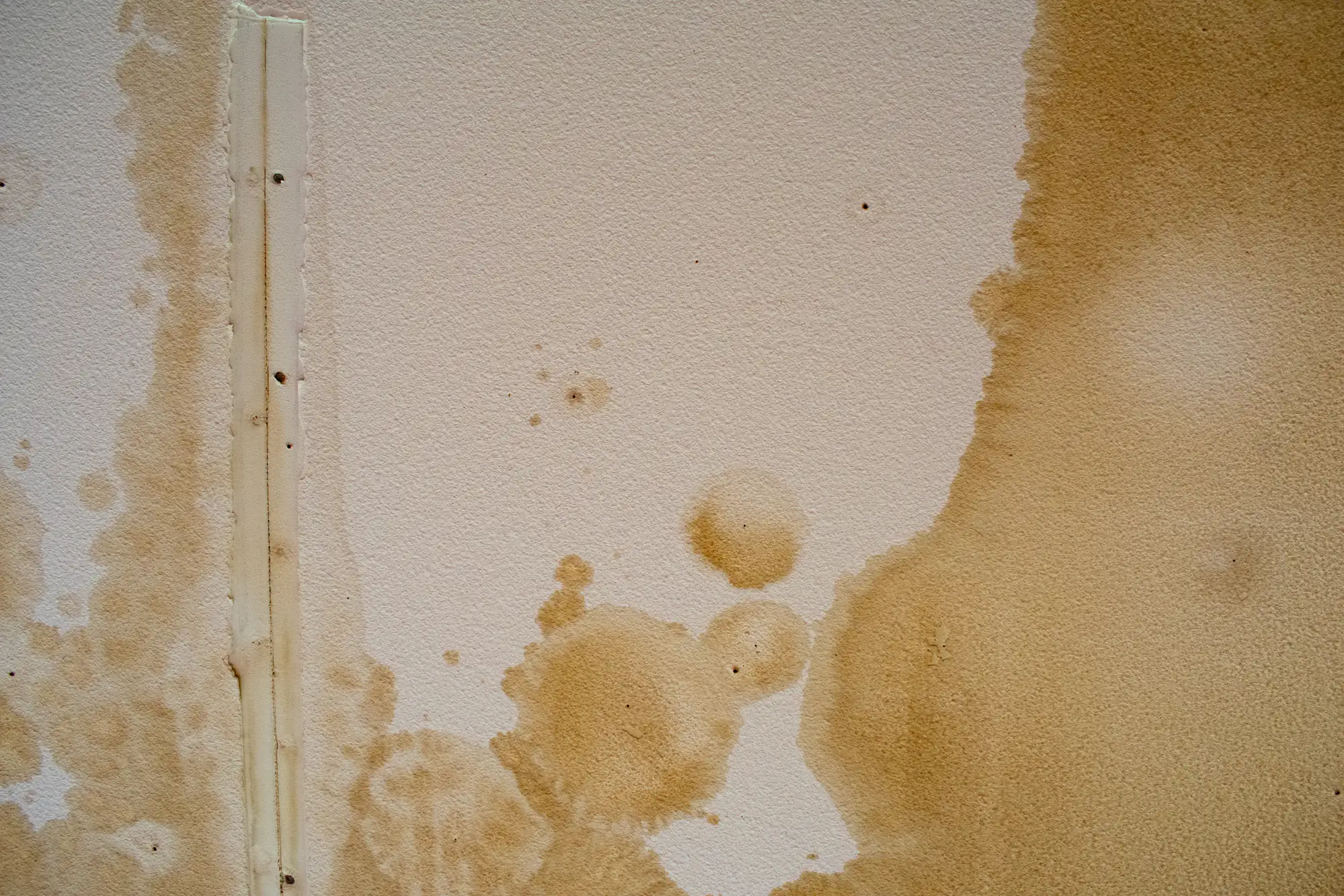
This comes up constantly in Suffolk County, and for good reason. The county’s coastal position — bordered by Long Island Sound to the north, the Atlantic to the south, and Great South Bay in between — means nor’easters, storm surge, and humidity-driven water intrusion are recurring facts of life. A hard February storm can push water through a roof line, behind siding, or into a basement in ways that don’t become visible until weeks later.
So yes — if the water damage repair involves structural work, drywall replacement, or anything that requires a building permit, you need a licensed contractor. That’s not optional. It’s the law in Suffolk County, and it’s also the practical reality: an unlicensed contractor can’t pull the permits required for that work, which means the repairs either don’t get inspected or they get done in a way that doesn’t meet code.
Mold is the other piece of this that homeowners often underestimate. Under New York State Article 32, any mold remediation project covering 10 square feet or more requires a licensed NYS Mold Assessor to write a remediation plan and a separate licensed Mold Remediator to perform the work. The same contractor cannot legally assess and remediate the same project. If you’re dealing with water damage in an older home — and much of Suffolk County’s housing stock was built between the 1950s and 1980s, putting those homes at 40 to 70 years old — mold is a realistic possibility that needs to be handled correctly, not just painted over.
The insurance angle matters here too. If your homeowners insurance is involved in a water damage claim, the insurer will want documentation that the repairs were done by a licensed contractor. Hiring someone without that credential can complicate or void the claim entirely, leaving you holding the cost of repairs on a home that may already have taken significant damage.
At the end of the process, the credential check is straightforward: ask for the license number, verify it through the Suffolk County Department of Labor, Licensing & Consumer Affairs, confirm the insurance certificates are current, and make sure the bond is in place. Those three things — license, bond, insurance — are the baseline. Everything else builds from there.
What separates a contractor worth hiring from one who just checks the boxes is how they operate once the paperwork is done. Written estimates that hold. In-house crews you can actually hold accountable. Permits pulled correctly. Work that holds up in a coastal environment where salt air, humidity, and seasonal weather don’t forgive shortcuts.
If you’re in Suffolk County and you want to know exactly where we stand on any of this before committing to anything, reach out to Jaguar Renovation. We’ll give you a detailed written estimate within 48 hours and can typically start within one to two weeks of approval. No pressure, no runaround — just straight answers and work you can verify.
Summary:
Article details:
Share: