
Hear from Our Customers
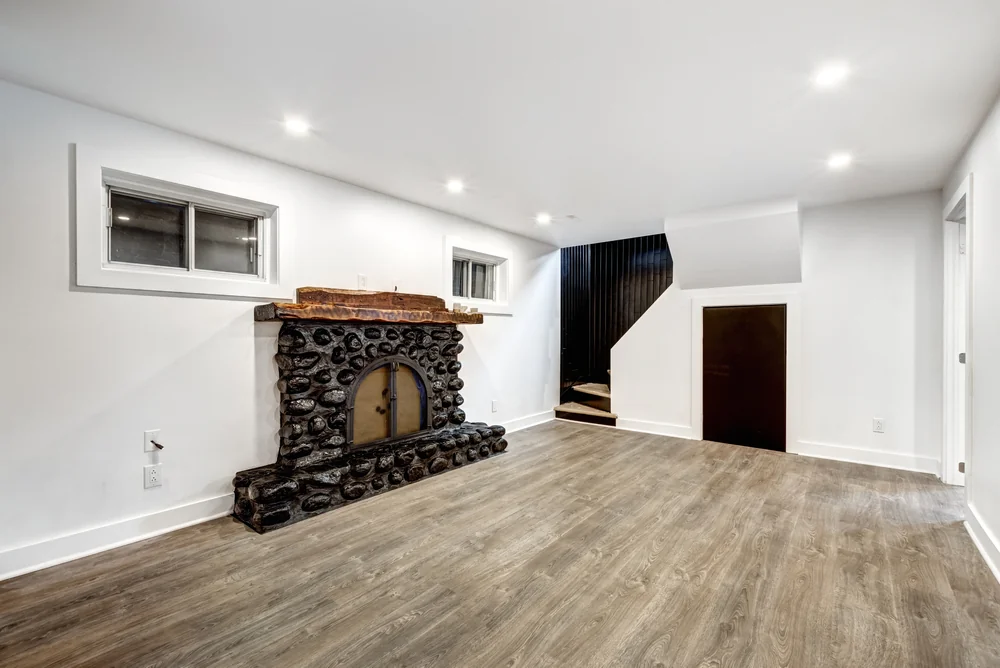
You’re not finishing your basement just to check a box. You need space that works—a place your family actually uses, not another project that sits half-done or falls apart in two years.
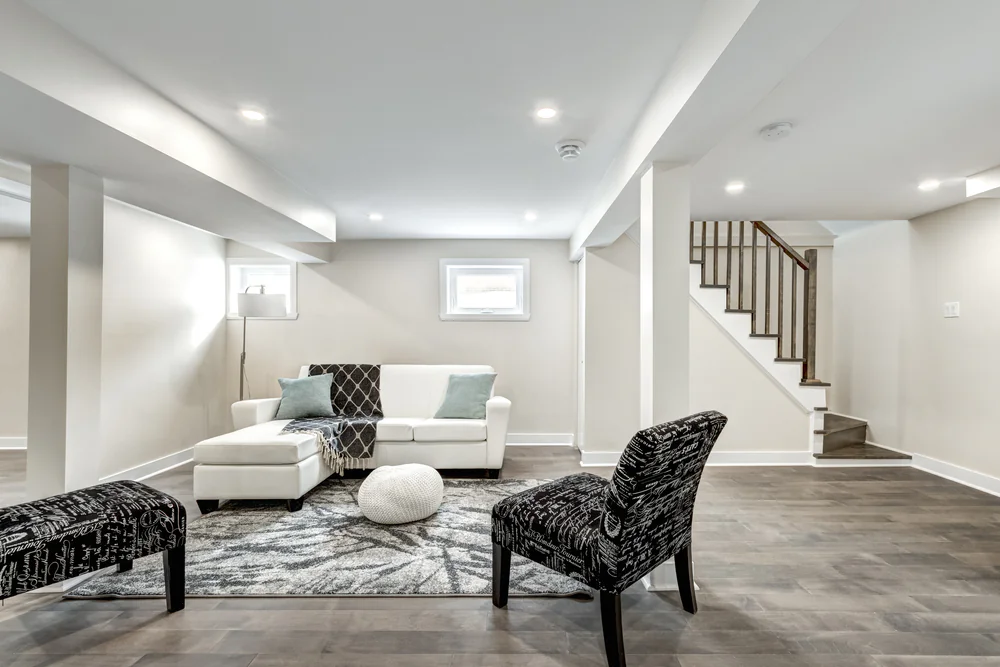
When basement remodeling is done right, you get rooms you can count on. Entertainment areas that don’t feel like an afterthought. Home offices with proper lighting and ventilation. Guest suites with legal egress windows that meet Suffolk County code. Extra square footage that adds real value when it’s time to sell.
Most Brentwood homeowners see a 70-75% return on basement finishing projects. But that only happens when the work is permitted, properly waterproofed, and built to last. Shortcuts cost more in the long run—either in repairs, failed inspections, or buyers walking away during closing.
You’re looking at $50,000 to $150,000 in added home value for a well-finished 1,000 square foot basement. That’s not just extra space. That’s equity you can actually use.
We’ve spent close to ten years finishing basements across Brentwood, West Babylon, Coram, and the rest of Suffolk County. We’re licensed, insured, and we only use in-house crews—no subcontractors bouncing between jobs or disappearing mid-project.
We know what Suffolk County inspectors look for. We know the permit process in every town from Bay Shore to Huntington Station. And we know how to price a job so you’re not hit with surprise costs halfway through.
Brentwood homeowners deal with unique challenges—older foundations, varying water table levels, and strict egress requirements that can add $6,000 to $12,000 if you’re not prepared. We factor all of that into our fixed pricing upfront. You know what you’re paying before we start, and that number doesn’t change unless you do.
First, we walk your basement and talk through what you actually need. Not what sounds good in a brochure—what works for your family, your budget, and your home’s structure. We measure everything, check for moisture issues, and map out egress window placement if you’re adding bedrooms.
Then we pull permits. Suffolk County requires permits for any major basement renovation, and each town has its own quirks. We handle the paperwork, the fees (usually $100 to $500 depending on scope), and the inspections. You don’t have to call the building department or figure out code requirements.
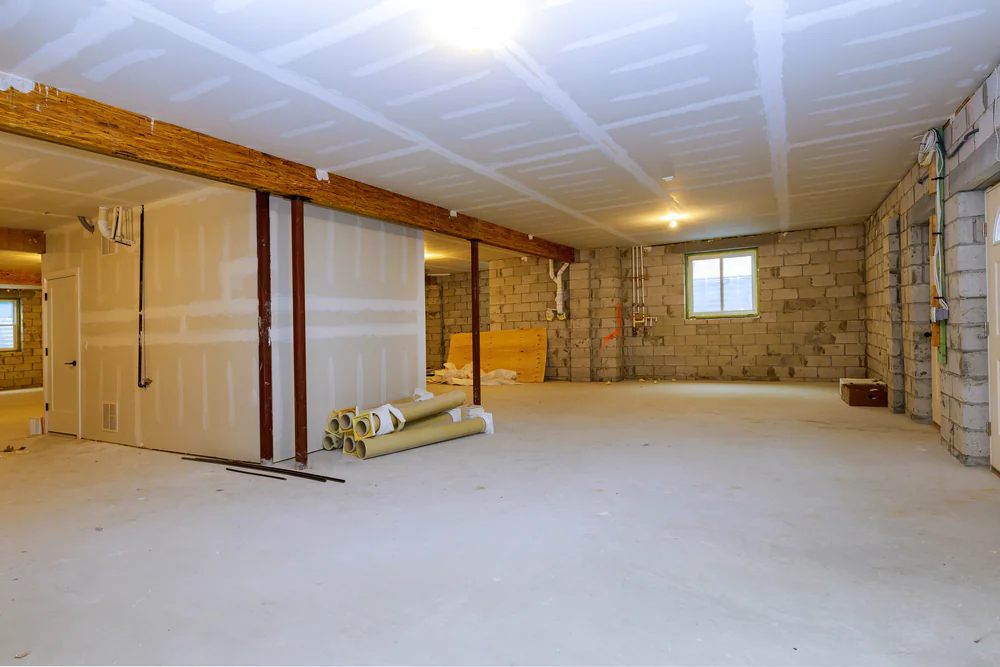
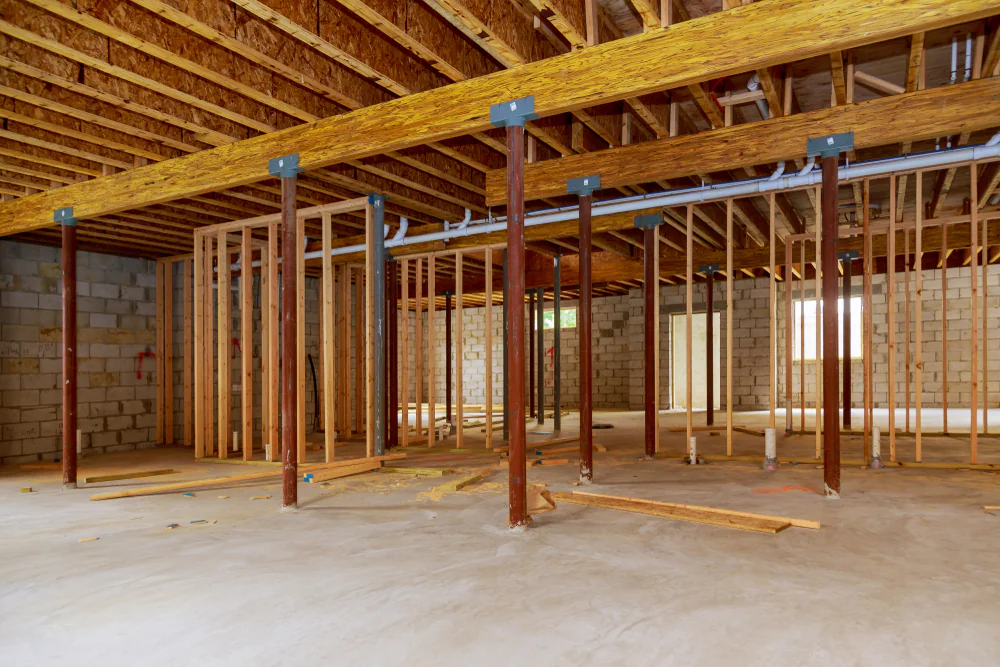
Once permits are approved, our crew starts demo and framing. We install proper moisture barriers, run electrical and plumbing to code, and frame out walls with the required 7-foot minimum ceiling height. Insulation, drywall, flooring, trim—it all happens in sequence with our team on-site daily.
Final inspection happens after everything’s finished. The town signs off, you get your certificate of occupancy if needed, and we do a final walkthrough to make sure every detail is right. Then you move in.
Ready to get started?
Every basement finishing project includes framing, insulation, drywall, electrical, and flooring. If you’re adding a bedroom, bathroom, or wet bar, we handle the plumbing and HVAC extensions too. Egress windows get installed to code with proper wells and drainage.
In Brentwood and across Long Island, labor costs run 20-35% higher than national averages. Carpenters and electricians here charge $72 to $85 per hour. That’s factored into our pricing, so you’re not comparing our quote to some national average that doesn’t apply in Suffolk County.
We use waterproof, inorganic materials that won’t grow mold or get damaged by moisture. Basements on Long Island deal with humidity, occasional seepage, and temperature swings. The materials we install are built for that. Cheap drywall and standard insulation don’t hold up—we’ve ripped out enough failed basements to know what works and what doesn’t.
You also get a one-year warranty on all workmanship. If something’s not right, we come back and fix it. No runaround, no excuses.

Most basement finishing projects in Brentwood run between $50,000 and $150,000, depending on size and scope. The average cost is around $117 per square foot, but that can swing lower or higher based on what you’re adding.
A basic 1,000 square foot basement with one open room, basic electrical, and standard finishes might land closer to $50 per square foot. Add a bathroom, wet bar, or multiple bedrooms with egress windows, and you’re looking at $100 to $150 per square foot.
Egress windows alone cost $6,000 to $12,000 each in Suffolk County because of hurricane-rated requirements and excavation work. Extending HVAC, adding plumbing, and upgrading your electrical panel can add another $10,000 to $20,000. Permits and inspections run $100 to $500 depending on the town, plus building department fees of about $0.23 per square foot.
We give you fixed pricing upfront so there’s no guessing. You know what you’re paying before we start, and that number doesn’t change unless you change the scope.
Yes. Suffolk County requires permits for any major basement renovation, and every town has its own process. Skipping permits might save you a few hundred dollars upfront, but it costs you thousands later—either in fines, failed home inspections during a sale, or having to rip out unpermitted work.
Permits ensure your basement meets code for ceiling height (minimum 7 feet for habitable space), egress windows (required for bedrooms), electrical load, and fire safety. Inspectors check framing, insulation, wiring, and plumbing at different stages of the project.
If you try to sell a home with unpermitted basement work, buyers’ inspectors will flag it. You’ll either have to open walls for re-inspection, reduce your sale price, or lose the buyer entirely. It’s not worth the risk.
We handle all permit applications, fees, and inspections as part of our process. You don’t have to deal with the building department or figure out what forms to file. We’ve done it hundreds of times across Brentwood, Commack, Bay Shore, and every other Suffolk County town.
Most basement finishing projects take 6 to 12 weeks from permit approval to final inspection. The timeline depends on the size of your basement, how much plumbing and electrical work is involved, and how quickly inspections get scheduled.
Permit approval usually takes 2 to 4 weeks in Suffolk County, depending on the town and time of year. Once we start work, framing and rough-ins (electrical, plumbing, HVAC) take about 2 weeks. Insulation, drywall, and taping add another 2 to 3 weeks. Flooring, trim, and finish work take the final 1 to 2 weeks.
If you’re adding a bathroom or wet bar, plumbing rough-ins and inspections can add a week or two. Egress window installation depends on weather and excavation conditions, but it’s usually done within the first few weeks of the project.
We give you a detailed timeline before we start so you know what to expect. Our crews work on your project daily—no disappearing for days at a time or juggling three other jobs. You get consistent progress and a finish date you can actually count on.
You can expect a 70-75% return on investment when you finish your basement, based on national averages and local market data. A well-finished 1,000 square foot basement typically adds $50,000 to $75,000 in home value in Suffolk County.
That return depends on the quality of the work and whether it’s permitted. Unpermitted basements don’t add value—they subtract it because buyers either walk away or demand price reductions to cover the cost of bringing the work up to code.
Suffolk County reassesses finished basements at about $30 to $40 per square foot of added value for tax purposes. That means your property taxes will go up slightly, but the increase in home value far outweighs the extra tax cost.
Finished basements also make your home more marketable. In Brentwood and across Long Island, where property taxes are high and buyers are selective, extra usable square footage is a major selling point. Families want space for home offices, playrooms, and guest suites—finished basements check all those boxes.
The key is doing it right the first time. Cheap materials, unpermitted work, or moisture problems kill your ROI. Buyers see through shortcuts, and inspectors flag them during closing.
Moisture management starts before we frame a single wall. We inspect your basement for active water issues, check sump pump function, and look for signs of past flooding or seepage. If there’s a moisture problem, we address it before finishing work begins.
We use waterproof, inorganic materials that won’t grow mold or get damaged by humidity. Standard drywall and fiberglass insulation don’t belong in Long Island basements—they absorb moisture and create mold problems within a few years. We install moisture-resistant drywall, closed-cell insulation, and vapor barriers that actually work.
Egress windows get installed with proper drainage and window wells that channel water away from the foundation. We also make sure your basement has adequate ventilation and dehumidification, especially if you’re adding bedrooms or bathrooms.
Long Island basements deal with high water tables, humidity, and occasional heavy rain. The materials and methods we use are designed for those conditions. We’ve seen too many finished basements ruined by water damage because the original contractor cut corners on waterproofing. We don’t do that.
In-house crews mean one team, one schedule, and one point of accountability. When contractors use subcontractors, you’re dealing with multiple companies, conflicting schedules, and finger-pointing when something goes wrong.
Subcontractors work for themselves, not the general contractor. They show up when it fits their schedule, not yours. If they’re juggling three other jobs, your project gets pushed. If there’s a problem with their work, the general contractor has limited control over getting it fixed.
With in-house crews, we control the schedule, the quality, and the communication. Our team is on your project daily until it’s done. If something needs to be corrected, we handle it immediately—no waiting for a subcontractor to come back or arguing about who’s responsible.
You also get consistency. The same crew that starts your project finishes it. They know your basement, they know the plan, and they know our standards. That consistency shows in the final result—tighter joints, cleaner finishes, and fewer callbacks after the job is done.