
Hear from Our Customers
You’re not just getting new floors. You’re getting a home that feels updated, looks cleaner, and holds its value better when it matters most.
If you’re planning to sell within the next few years, updated flooring can return up to 70% of what you spend. That’s not a small number when the median home in Commack is sitting around $800,000. But even if selling isn’t on your radar, new flooring changes how your home feels every single day—less maintenance, fewer worries about spills or scratches, and a space that actually reflects how you want to live.
The difference between a flooring job that lasts and one that starts showing problems in six months comes down to prep work, material selection, and installation precision. You shouldn’t have gaps appearing between planks or soft spots developing under foot traffic. That’s what happens when corners get cut. When the subfloor is properly assessed, moisture levels are checked, and the right underlayment goes down before anything else, your floors stay level, quiet, and stable for years.
We’ve been handling residential flooring projects across Commack and Suffolk County for almost ten years. We’re a family-owned operation, which means when you call, you’re talking directly to the people who’ll be accountable for your project from start to finish.
We don’t work off commission. We don’t upsell you on things you don’t need. Our pricing is transparent before we start, and it doesn’t change halfway through unless you change the scope. That’s not standard in this industry, but it should be.
Commack homeowners deal with specific challenges—humidity from being on Long Island, older homes with subfloor issues, and a housing market where every improvement matters. We’ve seen it all, and we know how to handle it without dragging out timelines or inflating costs.

First, we come out to look at your space. Not to sell you—to assess what you’re actually working with. We check the subfloor, measure moisture levels, talk through your options based on how you use the space, and give you a clear price that includes labor, materials, and prep work.
Once you’re ready to move forward, we schedule the work around your life, not ours. Most residential flooring jobs take one to three days depending on square footage and what needs to be removed first. If you’ve got old flooring that needs to come up, that’s factored into the timeline upfront. We’ll also let you know when you’ll need to stay out of the space—usually while finishes cure or adhesive sets.
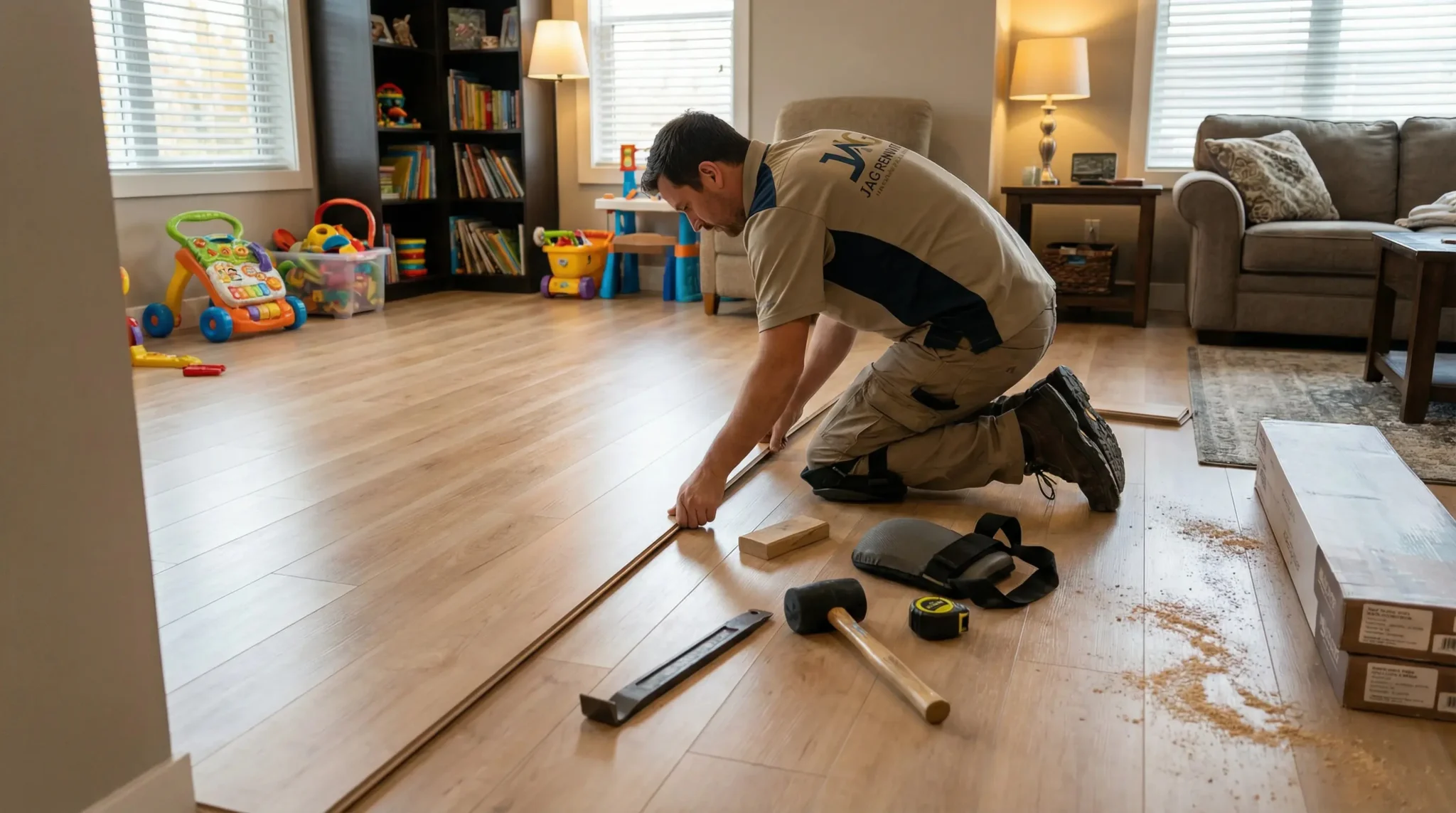
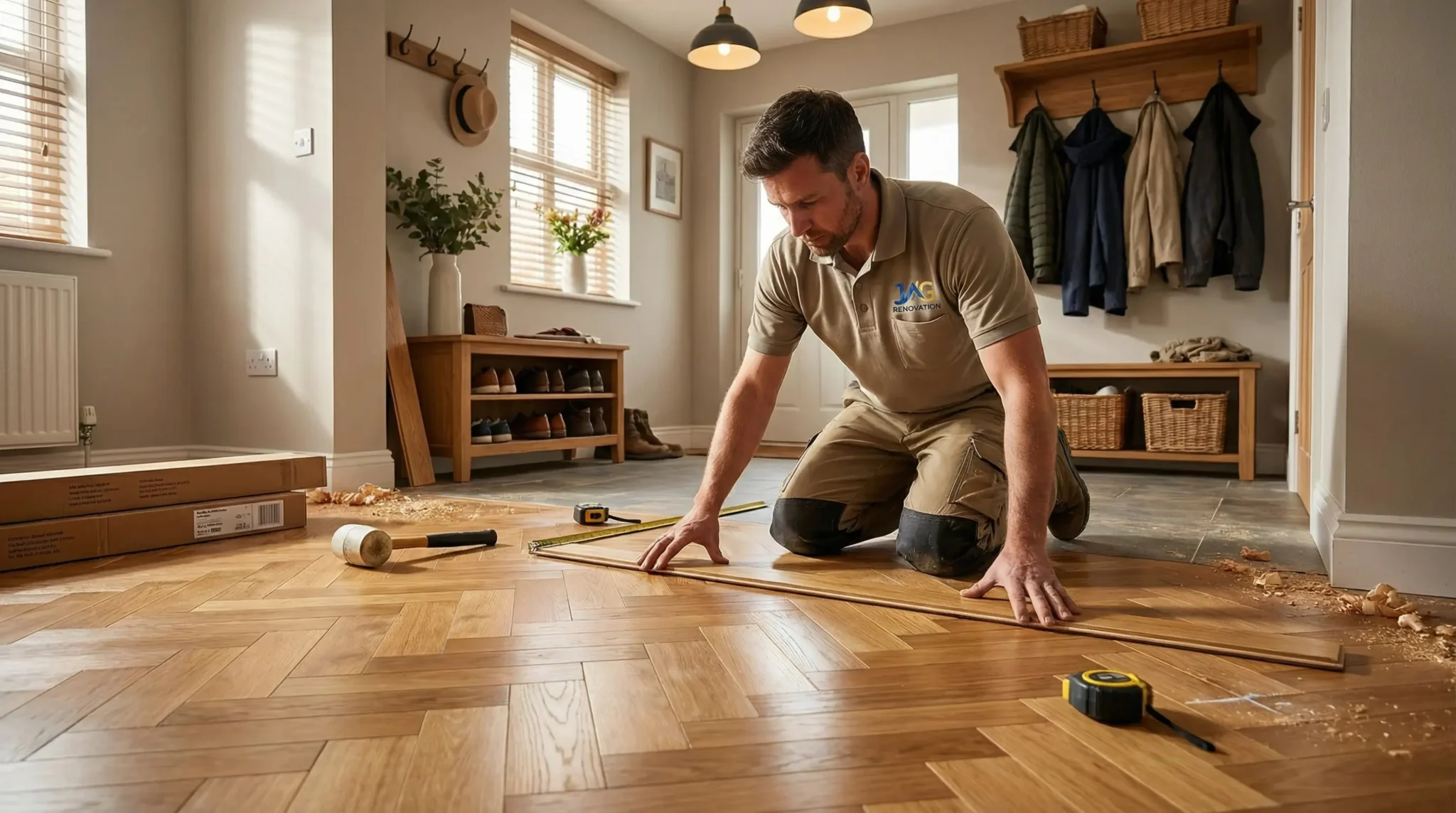
During installation, we handle subfloor repairs if needed, install proper underlayment for sound and moisture control, and make sure every plank or tile is level and secure. You won’t have transition strips that stick up or corners that don’t sit flush. When we’re done, we walk the job with you, clean up completely, and make sure you’re clear on how to maintain what we just installed.

Ready to get started?
We handle vinyl flooring, laminate flooring installation, tile floor installation, and hardwood—both new and refinishing. The material you choose should match how you live, not just how it looks in a showroom.
Luxury vinyl plank is the most requested option right now in Commack, and for good reason. It holds up to moisture better than hardwood, it’s comfortable underfoot, and it comes in styles that actually look like real wood. If you’ve got kids, pets, or a kitchen that sees heavy use, vinyl makes sense. Laminate is another solid choice if you want the wood look without the wood price, though it’s less forgiving with water exposure.
Tile works best in bathrooms, entryways, and mudrooms—anywhere moisture is a given. Ceramic tile floor installation is straightforward and durable, but the grout lines need to be sealed properly or you’ll end up with staining and cracking. We handle that as part of the install.
For homeowners who want traditional hardwood, we’re upfront about the maintenance. Long Island’s humidity will cause cupping or crowning if the wood isn’t acclimated properly before install. We take that step seriously because it’s the difference between floors that last and floors that warp in the first year. The market’s also leaning toward lighter, natural tones—white oak, soft gray, blonde finishes—which pair well with the modern farmhouse and minimalist styles that are popular in updated Commack homes right now.

It depends on the material, square footage, and what condition your subfloor is in. Vinyl and laminate typically run lower than hardwood or tile when you factor in both material and labor. But the bigger cost variable is prep work—if your subfloor has damage, moisture issues, or isn’t level, that needs to be addressed before anything gets installed.
Labor costs for flooring installation in the area generally fall between $2 and $5 per square foot, though that can go higher depending on the complexity of the layout or if you’re working with specialty tile. We give you a full breakdown before starting so there’s no confusion about where your money is going.
One thing to keep in mind: cheaper quotes usually mean something’s getting skipped. That’s often subfloor prep, underlayment, or proper acclimation of materials. Those shortcuts show up later as squeaks, gaps, or uneven surfaces. You’re better off paying for it to be done right once than paying twice to fix it.
Luxury vinyl plank is the most practical choice for Long Island homeowners, especially in Commack where humidity and temperature swings are part of the deal. It’s waterproof, durable, and it doesn’t expand or contract the way hardwood does when moisture levels change. That makes it a smart pick for kitchens, basements, and bathrooms.
If you’re set on hardwood, it can work—but only if it’s installed correctly. That means letting the wood acclimate to your home’s humidity levels for at least a week before installation, using the right underlayment for moisture control, and making sure your subfloor is bone dry. Skip any of those steps and you’ll see cupping, crowning, or gaps within the first year.
Tile is another solid option for high-moisture areas, but the grout needs to be sealed and maintained. Laminate works well in bedrooms and living areas, but it’s not waterproof, so spills need to be wiped up quickly. The right choice depends on where the flooring is going and how much wear it’ll see. We talk through all of that during the estimate so you’re making a decision based on your actual needs, not just aesthetics.
Most residential flooring projects take one to three days depending on the size of the space and what’s involved. If we’re just installing new flooring over a solid subfloor, it moves quickly. If we need to remove old flooring, address subfloor damage, or work around tricky layouts, it takes longer.
For reference, a two-person crew can typically install 800 to 1,000 square feet per day once prep is done. But prep is where the time really goes—pulling up old carpet or tile, fixing squeaky or uneven subfloors, and making sure everything is clean and dry before the new material goes down. Rushing that part leads to problems later.
We’ll give you a clear timeline during the estimate and let you know when you’ll need to stay out of the space. For most projects, you’re looking at limited access during installation and another day or two for finishes to cure if we’re working with adhesive or sealant. We don’t stretch jobs out unnecessarily, but we also don’t cut corners to finish faster.
Yes, furniture needs to be out of the space before we start. Some flooring contractors include furniture moving in their pricing, but it usually adds $20 to $50 per room and increases the risk of damage to your belongings. We recommend clearing the space yourself or hiring a moving service if you’ve got heavy or valuable pieces.
If that’s not realistic for your situation, let us know during the estimate and we can talk through options. But keep in mind that the clearer the space is when we arrive, the faster and cleaner the job goes. We’re focused on installing your floors correctly, and working around furniture slows that down.
You’ll also want to plan for where furniture will go during the project. If we’re doing multiple rooms, we can usually stage things so you’re not completely displaced. For whole-home flooring jobs, some homeowners temporarily move essentials into a garage or basement. If finishes need time to cure—like with refinished hardwood—you may need to stay out of the space for a few days. We’ll walk through all of that upfront so you’re not caught off guard.
Sometimes, but not always. It depends on what’s currently down and what condition it’s in. Vinyl plank and laminate can often go over existing vinyl or tile if the surface is level, clean, and in good shape. But if the old flooring is damaged, uneven, or showing signs of moisture issues, it needs to come up first.
Installing over a compromised surface just transfers those problems to your new floor. You’ll end up with the same squeaks, dips, or soft spots you were trying to get rid of. We check the existing floor during the estimate and let you know whether it can stay or needs to be removed.
Carpet always comes up. Tile usually comes up unless it’s completely flat and well-adhered. Hardwood can sometimes be refinished instead of replaced if the boards are still in good condition and haven’t been sanded down too many times already. The goal is a stable, level base for your new flooring—whatever it takes to get there is what we recommend. We’re not looking to add demo work if it’s not necessary, but we’re also not going to install over a subfloor that’s going to cause problems six months from now.
Moisture issues show up in a few ways. If you’ve got hardwood that’s cupping or crowning—where the edges of the boards are higher or lower than the center—that’s a moisture problem. Discoloration, musty smells, or soft spots when you walk across the floor are also red flags. Gaps between planks that weren’t there before can indicate the wood is drying out after swelling from moisture exposure.
We check moisture levels with a meter during the estimate. Subfloors need to be below a certain moisture threshold before any flooring goes down, especially wood or laminate. If levels are too high, we’ll identify the source—whether it’s a leak, poor ventilation, or groundwater coming up through a concrete slab—and recommend fixing that before we install anything new.
Long Island homes, especially older ones in Commack, deal with humidity and occasional water intrusion more than people realize. Basements and crawl spaces are common culprits. Installing flooring over a moisture issue doesn’t make it go away—it just hides it until the new floor starts failing too. We’d rather address it upfront than have you call us back in a year with buckling floors.