
Hear from Our Customers
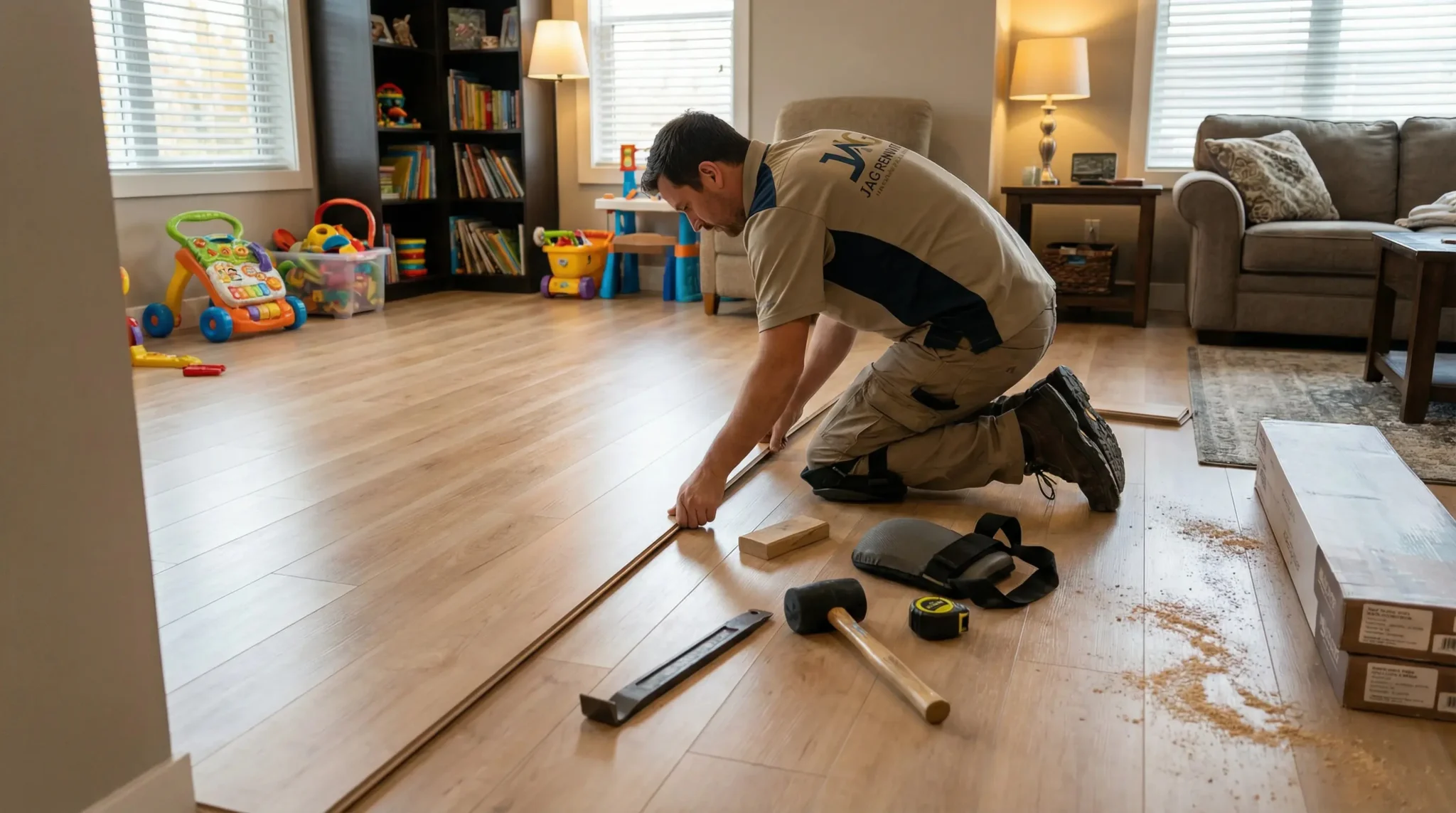
Your floors should handle real life. Kids running through. Furniture getting moved. Daily wear that doesn’t show up as scratches and gaps six months later.
When you replace flooring in your house, you’re making a decision that affects every room, every day. That’s why the installation matters as much as the material. Subfloor prep that actually gets done. Transitions that sit flush. Seams you can’t see unless you’re looking for them.
You’ll know the difference when you walk across a room and nothing creaks, shifts, or feels uneven. When your tile flooring stays level and your laminate doesn’t separate at the edges. That’s what happens when the work gets done without shortcuts.
We’ve been handling interior renovations across East Shoreham and the surrounding Suffolk County area since 2016. We’re licensed, insured, and we’ve worked in enough homes here to know what holds up and what doesn’t.
East Shoreham homeowners deal with humidity from being this close to the water. That affects flooring choices more than most contractors will tell you upfront. Engineered wood handles moisture better than solid hardwood in coastal areas. Vinyl flooring works well in basements that get damp. These aren’t upsells—they’re recommendations based on what actually performs in this climate.
You won’t get pressured into materials that don’t fit your space or your budget. You’ll get straight answers about what works and why.

First, we come out to see the space. We measure, check the subfloor condition, and talk through what you’re trying to accomplish. You’ll get a detailed quote that breaks down materials and labor—no line items that mysteriously appear later.
Once you’re ready to move forward, we schedule the work around your timeline. Demo and subfloor prep happen first. This step matters more than most people realize. An uneven subfloor means your new floors won’t sit right no matter how good the material is.
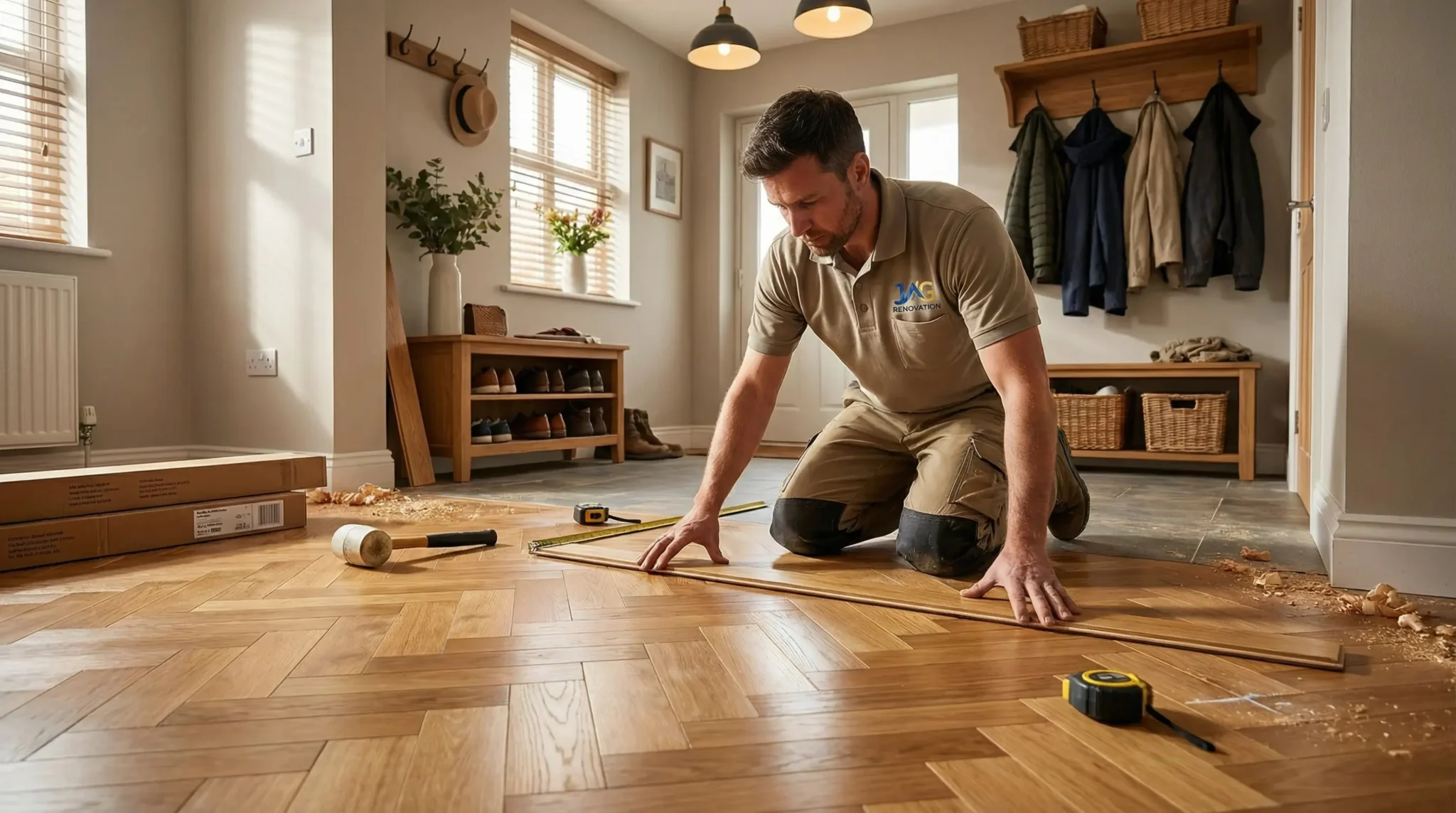
Then comes installation. Tile flooring gets set with proper spacing and leveling. Laminate flooring gets installed with the right underlayment for sound and moisture protection. Vinyl flooring gets cut and fitted so seams are barely visible. Carpet installation includes tack strips, padding, and stretching so it doesn’t bunch or ripple.
We clean up daily and do a final walkthrough with you before calling it done. You’ll see the difference in how everything lines up and feels underfoot.

Ready to get started?
You’re getting full-service flooring work. That means old flooring removal, subfloor inspection and repair, material installation, and cleanup. We handle tile flooring contractor work for kitchens and bathrooms. Laminate flooring installation for living areas and bedrooms. Vinyl flooring for basements and high-moisture spaces. Carpet installation where comfort matters more than durability.
East Shoreham homes built in the 1950s and 60s sometimes have asbestos tile underneath old carpet or vinyl. We don’t remove asbestos ourselves, but we’ll tell you if we find it so you can hire a certified abatement company before we proceed. That’s the kind of transparency that keeps you safe and legal.
Hardwood flooring remains the top choice for resale value in Suffolk County. If that’s your goal, we’ll walk you through solid versus engineered options and explain why engineered often makes more sense in coastal areas like East Shoreham. Pre-finished engineered wood gives you durability without the dust and fumes of on-site finishing.

A standard 12×15 bedroom usually takes one to two days depending on the material. Carpet installation is fastest—often done in a day including removal of old flooring. Laminate flooring installation takes about the same if the subfloor is in good shape.
Tile flooring takes longer. You’re looking at two to three days minimum because tile needs to set before grouting, and grout needs to cure before you can walk on it. Rushing tile work leads to cracked tiles and grout that crumbles out within a year.
Vinyl flooring falls somewhere in the middle. Sheet vinyl goes down faster than vinyl plank, but plank looks better and lasts longer. Most rooms take one full day for vinyl plank installation including subfloor prep. The timeline extends if we find subfloor damage that needs repair, but we’ll tell you that upfront during the estimate—not halfway through the job.
Luxury vinyl plank takes the most abuse without showing it. It’s waterproof, scratch-resistant, and you can replace individual planks if one gets damaged. It looks like wood but handles spills and accidents better than any real wood product.
If you want actual wood, engineered hardwood with a strong finish holds up well. The top wear layer protects against scratches better than solid hardwood, and the engineered construction means it won’t warp from moisture like solid wood can in Suffolk County’s humidity.
Tile flooring is indestructible but cold and hard. Great for entryways and mudrooms where you need something that cleans easily. Less ideal for bedrooms where comfort matters. Laminate flooring looks good initially but shows wear faster than vinyl—especially in high-traffic areas. Carpet is the least durable option with pets unless you’re okay replacing it every five to seven years.
Yes, rooms need to be empty before we start. Most flooring contractors don’t move furniture because the liability gets complicated if something breaks. We’re not different on that front.
You can hire movers to handle it, or move smaller items yourself and have movers deal with heavy pieces like beds and dressers. Some moving companies offer “room-to-room” service where they shift everything to one side, we do that half, then they move it back so we can finish the other side.
If you’re replacing flooring throughout your house, you’ll need a plan for where everything goes during the project. Some people rent a storage pod for a week. Others stack everything in the garage or an unaffected room. The more organized this part is, the faster we can work and the sooner you’re back to normal. Poor planning here is what turns a three-day job into a week-long disruption.
Material and labor combined, you’re looking at $3 to $8 per square foot for most residential flooring installation. Vinyl flooring sits at the lower end. Tile flooring and hardwood sit at the higher end. A 1,500 square foot home runs anywhere from $4,500 to $12,000 depending on what you choose.
That range accounts for mid-grade materials. You can spend less with basic laminate or builder-grade carpet. You can spend significantly more with premium hardwood or custom tile work. The installation cost stays relatively consistent—it’s the material cost that swings the total.
Demo and subfloor repair add to the base price. If your subfloor needs leveling compound or plywood replacement, that’s extra. We include those costs in your quote after we see the space, so you’re not getting surprise charges. East Shoreham homes built before 1980 often need more subfloor work than newer construction. We account for that during the estimate.
Big-box stores and flooring showrooms sell materials and subcontract the installation. You’re dealing with a salesperson who’s never installed a floor, and an installer who’s juggling jobs for multiple stores. Communication breaks down and accountability gets murky when something goes wrong.
A flooring contractor handles both material sourcing and installation. You’re talking directly to the people doing the work. If there’s an issue with the material or the installation, you call one number and it gets handled.
The trade-off is selection. Stores have massive showrooms with hundreds of samples. Contractors typically work with a smaller range of suppliers but know those products inside and out. You get better guidance on what actually works versus what just looks good in the showroom. For most homeowners in East Shoreham, that expertise matters more than having 200 tile options to choose from.
Sometimes you can install over existing flooring. Laminate flooring installation can go over old vinyl or tile if the surface is smooth and level. Vinyl flooring can go over old vinyl under the same conditions. This saves time and money on demo.
You cannot install over carpet. It has to come out. You also can’t install over flooring that’s damaged, uneven, or loose. Tile that’s cracked or popping up needs removal. Hardwood that’s cupped or warped needs to come out. Installing over compromised flooring just transfers those problems to your new floor.
Height is another consideration. Every layer you add raises the floor level. That affects door clearances and transitions to other rooms. If you’re already close to your door bottoms, you’ll need to remove the old flooring or trim the doors. We evaluate this during the estimate and tell you what makes sense for your specific situation. The goal is a floor that looks right and lasts—not just the fastest installation.