
Hear from Our Customers
Your floors shouldn’t make you nervous every time someone walks in with wet shoes. Suffolk County’s humidity swings and coastal moisture wreak havoc on traditional hardwood and laminate—buckling seams, warped boards, and that spongy feeling underfoot that tells you water got where it shouldn’t.
Modern waterproof flooring solves that. Enhanced composite cores and breakthrough sealing systems mean you can handle what life throws down—literally. Kids, pets, beach sand tracked through the mudroom, summer storms. The floor holds up, looks sharp, and doesn’t punish you for living in your own home.
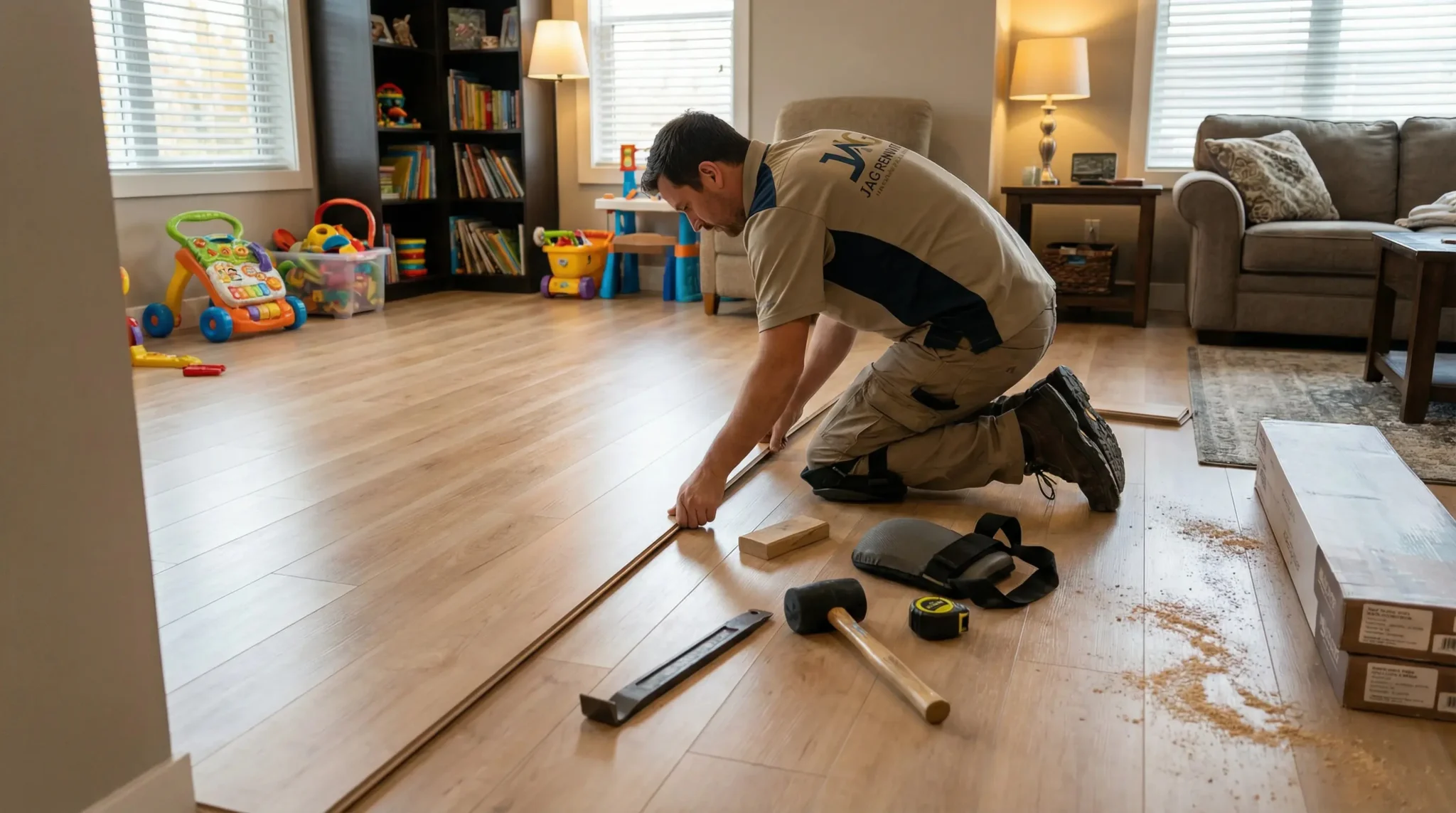
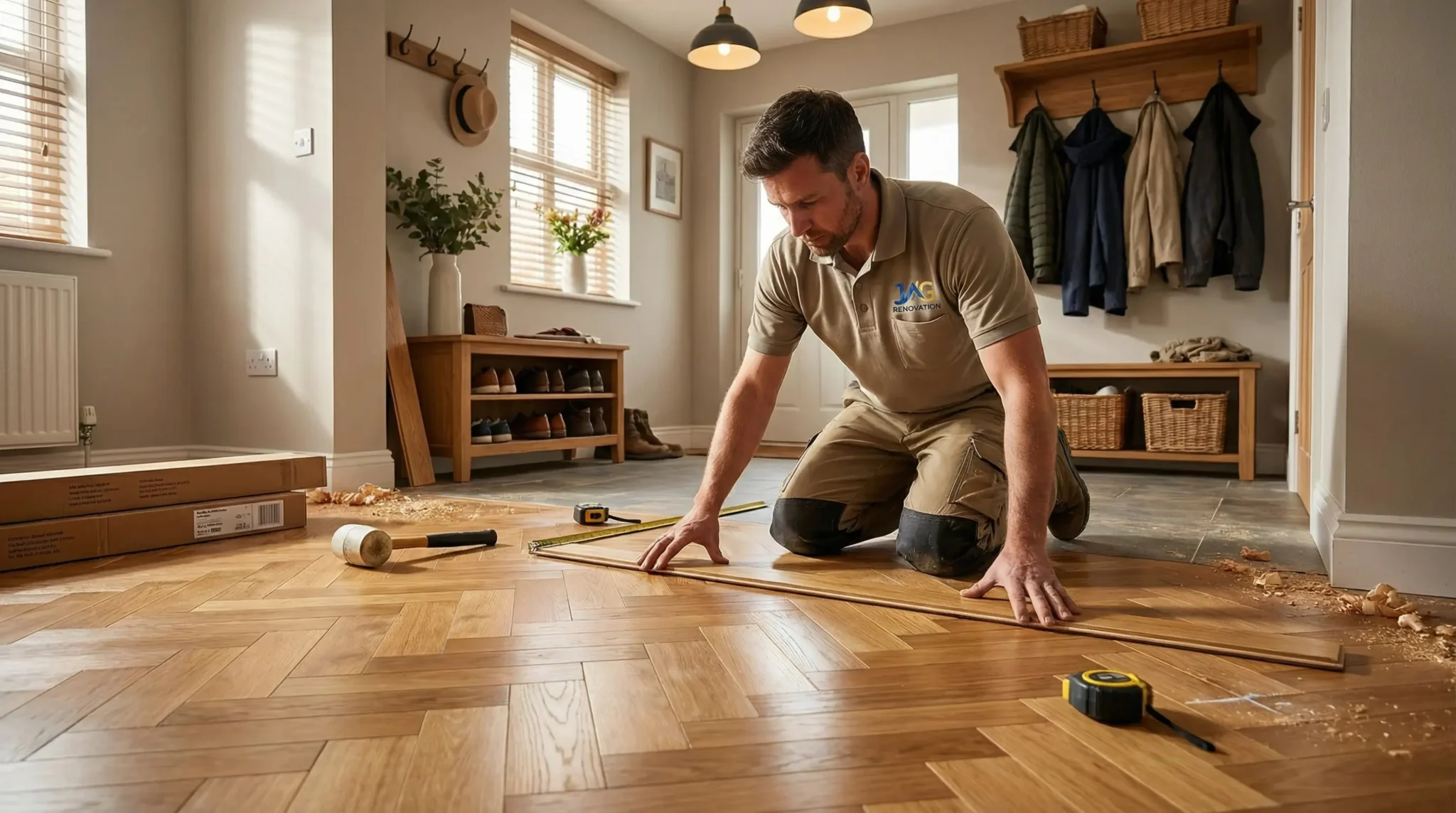
Installation matters just as much as materials. A two-person crew typically lays 800 to 1,000 square feet daily, but rushing through prep work or cutting corners on subfloor prep creates problems you’ll pay for later. We remove existing flooring, check for moisture issues, level the subfloor, and install it right—usually one to three days for most homes, depending on square footage and layout.
We’ve been handling flooring installations across Greenlawn and Suffolk County since 2016. That’s long enough to know which materials hold up to Long Island’s climate and which ones fail within two years. It’s also long enough to see what happens when installation gets rushed or when contractors disappear after deposit checks clear.
We’re licensed and insured for carpentry and renovation work throughout Suffolk County. That’s not just paperwork—it means you’re protected if something goes wrong, and it means we follow local building codes that exist for good reason.
You’ll talk to the same people from estimate to cleanup. No bait-and-switch with subcontractors who don’t return calls. No yelling when you ask questions. Just straightforward communication about timeline, cost, and what to expect during installation.

First, we walk through your space and talk about how you actually use the rooms. High traffic from kids and dogs? Basement moisture concerns? That determines which flooring type makes sense—vinyl plank, ceramic tile, laminate, or hardwood. We measure square footage, check subfloor conditions, and give you a transparent estimate. No pressure to decide on the spot.
Once you’re ready to move forward, we schedule installation around your life. We remove existing flooring, haul away debris, and prep the subfloor—checking for level issues or moisture problems that could cause trouble later. Then we install your new floor, room by room, keeping work areas as contained as possible.
Yes, there’s noise. Yes, you’ll need to route around certain rooms for a day or two. But we keep the workspace clean, protect your walls and doorways, and don’t leave a mess for you to deal with at the end of each day. When we’re done, we walk through everything with you to make sure it’s right.

Ready to get started?
Vinyl flooring has become the go-to for Suffolk County homeowners dealing with moisture. It’s waterproof, durable, and available in wide plank styles that look like real hardwood—without the anxiety about humidity damage. Cost runs $3 to $7 per square foot installed, and it handles basements, kitchens, and bathrooms without issue.
Tile floor installation works well for entryways and high-traffic areas. Ceramic tile stands up to wet boots, salt, and sand tracked in from the beach. It’s cold underfoot in winter, but it’s nearly indestructible and easy to clean. Expect $5 to $15 per square foot depending on tile choice and layout complexity.
Laminate flooring installation offers a middle ground—better moisture resistance than traditional hardwood, lower cost than solid wood, and faster installation. It’s not fully waterproof, so we don’t recommend it for basements or bathrooms, but it works well for living rooms and bedrooms. Budget $3 to $8 per square foot installed.
Hardwood flooring still makes sense in the right spaces. Light woods like ash and white oak are trending in 2025 for that airy, spacious feel. Darker tones—charcoal, deep espresso, rich walnut—create drama in modern interiors. Hardwood costs $6 to $22 per square foot installed and adds real resale value. It just needs the right climate control and placement away from moisture-prone areas.

For most Greenlawn homes, figure one to three days for a professional crew to complete installation. That includes removing your existing flooring, prepping the subfloor, and installing new material. A two-person team typically lays 800 to 1,000 square feet per day once prep work is done.
Larger homes or complex layouts take longer. If you’re doing multiple rooms with different flooring types—tile in the bathroom, hardwood in the living room, vinyl in the kitchen—that adds time for transitions and detail work. Subfloor issues like uneven concrete or moisture damage also extend the timeline, but fixing those problems up front prevents bigger headaches later.
You won’t have full access to the rooms being worked on during installation. Plan to route around those spaces for a day or two. There’s noise from cutting and power tools, and dust even with good containment efforts. But most homeowners are surprised how quickly it goes once we start.
Waterproof vinyl plank flooring is your best bet for Suffolk County’s humidity and coastal moisture. It handles spills, wet shoes, and seasonal humidity swings without warping or buckling. Modern vinyl looks remarkably like real hardwood—wide planks, realistic grain patterns, varied tones—but without the maintenance anxiety.
Ceramic tile is the other top performer, especially for entryways, mudrooms, and bathrooms. It’s completely waterproof, stands up to salt and sand, and lasts decades with minimal maintenance. The downside is it’s cold and hard underfoot, so most people don’t want it throughout the whole house.
Traditional hardwood can work in climate-controlled spaces away from moisture sources—living rooms, bedrooms, formal dining rooms. But it’s risky in basements, bathrooms, or anywhere near exterior doors where wet conditions are common. Laminate splits the difference with better moisture resistance than solid wood, though it’s still not fully waterproof like vinyl.
Most Greenlawn homeowners spend between $3,000 and $4,500 for flooring installation, depending on square footage and material choice. That’s the realistic range for quality work—not the cheapest option, not the luxury tier.
Vinyl flooring costs $3 to $7 per square foot installed. It’s the most cost-effective waterproof option and works in any room. Laminate runs $3 to $8 per square foot—slightly more than vinyl but still budget-friendly. Ceramic tile ranges from $5 to $15 per square foot depending on tile quality and installation complexity. Hardwood is the premium choice at $6 to $22 per square foot installed.
Those prices include removal of existing flooring, subfloor prep, materials, and labor. If we find subfloor damage or moisture issues during removal, that’s additional work—but we’ll tell you about it before proceeding, not after. No surprise charges. Adding new flooring typically returns 70% of your investment when you sell, and it’s one of the fastest ways to make your home feel updated.
Sometimes, but it’s rarely the best choice. Installing over existing flooring might save a day of labor, but it creates problems. You’re stacking height that affects door clearances and transitions to other rooms. You’re also hiding potential subfloor issues—moisture damage, uneven spots, loose boards—that will cause your new floor to fail prematurely.
We typically remove existing flooring so we can inspect and prep the subfloor properly. That’s where installation quality really matters. An uneven subfloor causes vinyl planks to separate at the seams. It makes laminate feel spongy underfoot. It leads to cracked tiles and hollow spots that crack under weight.
The exception is installing new vinyl over old vinyl in good condition, or laminate over laminate, if the existing floor is completely level and firmly attached. But even then, we check carefully first. The extra day spent on proper removal and prep prevents years of problems. Most homeowners agree it’s worth doing right.
Yes, rooms need to be empty before we start. We can work around a few small items if needed, but furniture needs to be out of the space for proper installation. Most homeowners move furniture to other rooms themselves or rent a storage unit for a few days if they’re doing a whole-floor renovation.
Some flooring contractors offer furniture moving as an add-on service, but it increases cost and liability. We’re not insured as movers, and we’re not responsible for damage to furniture during relocation. It’s cleaner and safer for everyone if rooms are cleared before we arrive.
Plan ahead for where things will go. If we’re doing your living room on Monday and your bedroom on Wednesday, you’ll need to shuffle furniture between spaces. It’s inconvenient for a few days, but it’s temporary. The faster we can work without obstacles, the sooner you’re back to normal.
Waterproof means the flooring can handle standing water without damage. Vinyl plank flooring and ceramic tile are truly waterproof—you can mop them, spill on them, even have a minor flood without ruining the floor. The core material doesn’t absorb moisture, and seams are sealed to prevent water from reaching the subfloor.
Water-resistant means the flooring can handle some moisture but will eventually fail if exposed to standing water or high humidity over time. Laminate flooring is water-resistant—it has better moisture protection than traditional hardwood, but it’s not waterproof. A spill you wipe up quickly is fine. A leak that sits overnight will cause swelling and damage.
For Suffolk County homes, waterproof makes sense in kitchens, bathrooms, basements, entryways, and laundry rooms. Water-resistant laminate or hardwood works fine in bedrooms, living rooms, and dining rooms where moisture exposure is minimal. The cost difference is small enough that most homeowners choose waterproof vinyl throughout the main floor for peace of mind.