
Hear from Our Customers
Your floor takes more abuse than almost anything else in your home. Kids tracking in sand from the yard. Pets with wet paws after a storm. Humidity that makes cheaper materials buckle or warp within a few years. You need something that looks right and holds up without constant maintenance or an early replacement.
Quality flooring installation means you’re not dealing with gaps, squeaks, or moisture problems down the road. It means choosing materials that make sense for coastal living—vinyl flooring that’s actually waterproof, hardwood that’s been acclimated properly, tile that won’t crack because the subfloor wasn’t prepped right.
You’re also not spending weekends refinishing, resealing, or replacing sections that failed too soon. The right floor, installed correctly the first time, just works. It handles spills, humidity swings, foot traffic, and furniture moves without falling apart or looking worn out in two years.
We’ve been installing floors in Middle Island and across Suffolk County for close to ten years. That means we’ve seen what fails in homes here—what materials can’t handle the humidity, what shortcuts cause callbacks, and what homeowners actually regret six months after installation.
We don’t use high-pressure sales tactics or bury costs in fine print. You get a clear price, a realistic timeline, and work that’s done right. Our crews show up on time, protect your home during the job, and clean up completely when we’re finished.
Middle Island homeowners deal with high water tables, storm surge risks, and coastal moisture. We account for that in every floor remodeling project—from subfloor prep to material selection to ventilation considerations. You’re hiring people who know what works here, not just what’s trendy.

We start with an in-home consultation where we look at your space, talk about how you use it, and go over material options that make sense for your home and budget. If you’ve got moisture concerns, pets, or specific durability needs, we address those up front.
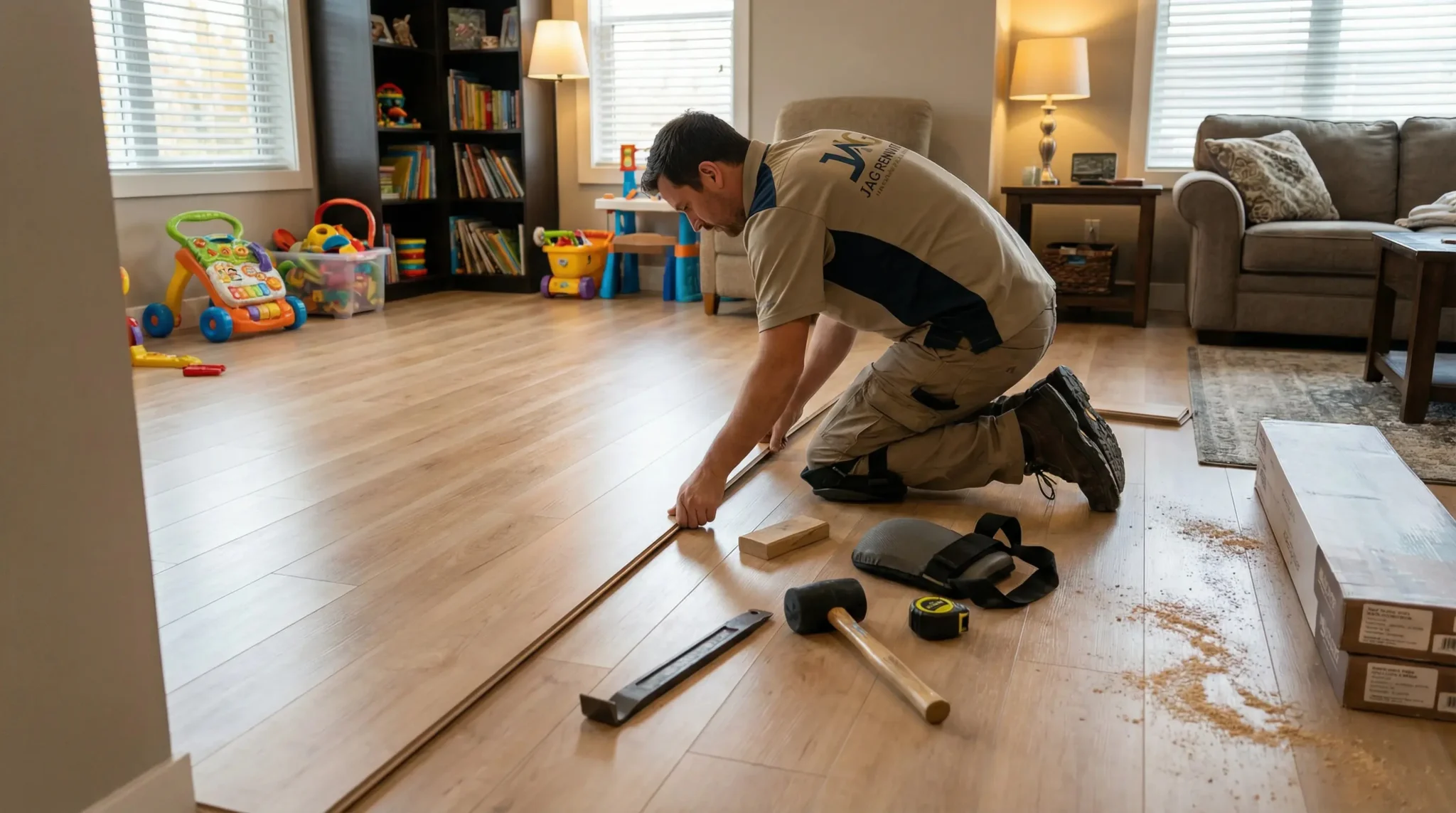
Once you choose your material—whether it’s laminate flooring installation, ceramic tile, vinyl, or hardwood—we give you a detailed estimate with no hidden fees. We schedule the work around your life, not the other way around. Most residential flooring projects take two to five days depending on square footage and material type.
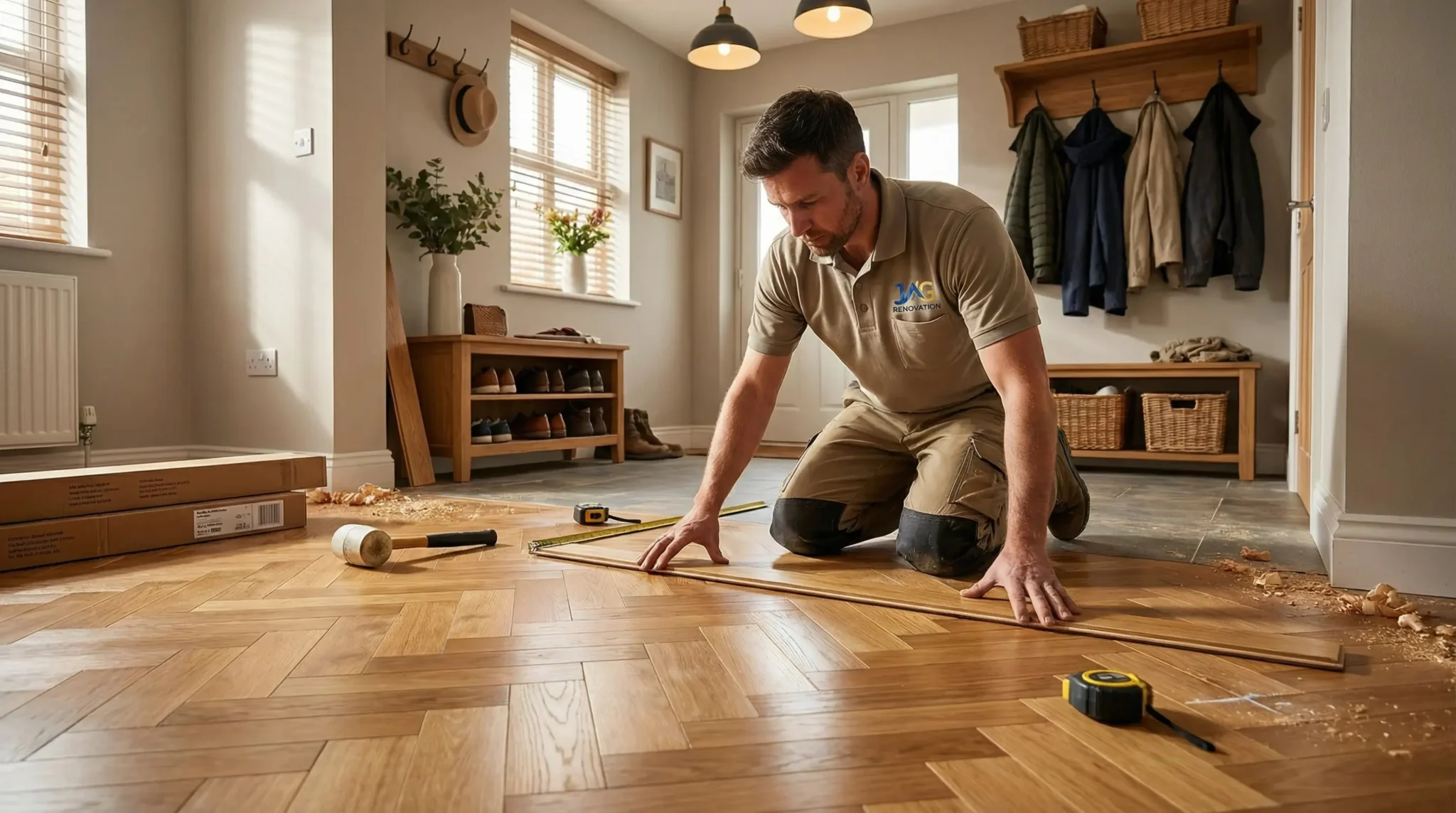
Before installation starts, we prep the subfloor. That’s where most problems happen if it’s skipped or rushed. We check for level, moisture, and structural issues. Then we install your floor using manufacturer specs and best practices, not shortcuts. Hardwood gets time to acclimate. Tile gets proper underlayment. Vinyl gets seams placed where they’re least visible and most protected.
You’ll have access during the job, but we contain dust and noise as much as possible. When we’re done, we walk the space with you, answer any questions about care and maintenance, and make sure you’re completely satisfied before we consider the job finished.

Ready to get started?
We install hardwood, engineered wood, luxury vinyl plank, laminate, ceramic tile, porcelain tile, and natural stone. Each material has trade-offs, and we’ll tell you what they are. Vinyl flooring is waterproof and low-maintenance but won’t add the same resale value as hardwood. Tile is incredibly durable but cold underfoot and harder on joints. Hardwood looks beautiful and lasts decades, but it needs acclimation time and doesn’t belong in high-moisture areas.
Middle Island homes often benefit from waterproof options in basements, mudrooms, laundry areas, and bathrooms. Luxury vinyl plank has become the most requested material here because it handles humidity, looks realistic, and doesn’t require the maintenance of real wood. For main living areas and bedrooms, engineered hardwood or solid hardwood gives you warmth and value without the vulnerability of older wood floors.
We also handle subfloor repair, underlayment installation, baseboard and trim work, and furniture moving if needed. If your existing floor has water damage or structural issues underneath, we’ll catch it during prep and give you options before moving forward. You won’t find out about a problem after the new floor is already down.

Most residential flooring installations take between two and five days depending on the size of the space and the material you choose. A standard living room or bedroom—around 200 to 400 square feet—usually takes one to two days for vinyl or laminate, and three to four days for hardwood because it needs time to acclimate to your home’s humidity levels before installation.
Tile flooring takes longer. Ceramic tile floor installation involves setting the tile, letting it cure, then grouting and sealing. That process typically takes three to five days for a bathroom or kitchen. Larger spaces or intricate patterns add time.
If there’s subfloor damage, moisture issues, or old flooring that needs more than basic demo, that extends the timeline. We’ll tell you up front during the estimate if we see anything that could add days to the job. Most projects stay on schedule as long as materials arrive on time and there are no hidden structural surprises once we pull up the old floor.
Waterproof and water-resistant materials perform best here. Middle Island sits in a high-humidity coastal zone with a high water table, and homes here see moisture intrusion from storms, groundwater, and just regular Suffolk County humidity. That rules out certain materials in certain areas of your home.
Luxury vinyl plank is the most popular choice for basements, kitchens, bathrooms, and mudrooms because it’s completely waterproof, easy to clean, and handles temperature swings without expanding or contracting. It also looks far more realistic than vinyl did ten years ago. Tile—ceramic or porcelain—is another great option for wet areas and high-traffic zones. It’s impervious to moisture and incredibly durable, though it’s harder underfoot and colder in winter.
Engineered hardwood works well in main living areas and bedrooms as long as the space isn’t prone to standing water or constant humidity. It’s more stable than solid hardwood because the layered construction resists expansion and contraction. Solid hardwood is beautiful and adds value, but it doesn’t belong in basements or anywhere moisture is a recurring issue. Laminate is affordable and looks decent, but it’s not waterproof—just water-resistant—so a real flood or leak will ruin it.
Flooring costs in Middle Island typically range from about $3,500 to $5,200 for an average-sized room, though smaller projects start around $1,200 and larger whole-home jobs can reach $9,000 or more. The price depends on material choice, square footage, subfloor condition, and whether you need demo, furniture moving, or trim work.
Vinyl flooring installation usually runs $3 to $7 per square foot installed. Laminate is similar. Tile flooring contractors typically charge $5 to $15 per square foot depending on tile type and pattern complexity. Hardwood installation ranges from $8 to $15 per square foot, and that’s for mid-grade wood—exotic species or wider planks cost more.
The subfloor matters more than most people realize. If we find rot, unevenness, or moisture damage when we pull up your old floor, that repair adds to the cost. It’s not optional—you can’t install a quality floor over a compromised base. We’ll give you a clear estimate after seeing the space in person, and we don’t tack on surprise charges once the job starts. What we quote is what you pay unless you change the scope or we uncover a structural issue that wasn’t visible during the walkthrough.
It depends on what’s currently down and what you want to install. In some cases, installing over existing flooring is fine and saves time and money. In other cases, it creates problems that show up later—uneven surfaces, height issues with doors and transitions, or trapped moisture that damages your new floor from underneath.
Vinyl flooring and laminate can sometimes go over existing vinyl, tile, or wood as long as the surface is smooth, level, and dry. If the old floor is bubbling, cracked, or uneven, it has to come up first. Tile flooring installation almost always requires removing the old floor because tile needs a completely flat, stable surface. Installing tile over vinyl or wood usually leads to cracking.
Hardwood installation requires removing old flooring in most cases. Hardwood needs to be nailed or stapled into the subfloor, and that’s not possible with another layer in the way. Even if you’re installing engineered hardwood with a floating method, stacking floors creates height problems with baseboards, doorways, and appliances.
We’ll assess your existing floor during the consultation and tell you whether removal is necessary. If it needs to come up, we handle the demo and disposal. If it’s in good shape and compatible with your new material, we’ll save you the cost and mess of tearing it out.
No, you don’t need to move out, but your daily routine will be disrupted. Flooring installation is loud, dusty, and blocks access to the rooms we’re working in. Most homeowners stay in the house and just plan around the work.
We’ll need you to clear furniture and belongings out of the installation area before we start. If you need help moving heavy furniture, let us know during scheduling—we can handle that for an additional fee. We contain dust as much as possible using barriers and tarps, but some fine particles will travel, especially during demolition and subfloor prep.
You’ll have limited or no access to the rooms being worked on during the day. If we’re doing your kitchen, plan on eating out or using a microwave in another room. If it’s a bathroom, you’ll need to use a different one. Most jobs wrap up by late afternoon, so you’ll have your space back in the evenings, though you may need to stay off newly installed floors for a few hours depending on the material.
Tile needs 24 to 48 hours to set before you can walk on it. Hardwood is ready for light foot traffic immediately, but we recommend waiting a day before moving furniture back. Vinyl and laminate are ready to use as soon as installation is complete. We’ll give you specific instructions based on what we install.
Vinyl and laminate look similar at a glance, but they’re completely different products with different performance characteristics. The biggest difference is water resistance. Vinyl flooring—especially luxury vinyl plank—is 100% waterproof. You can install it in bathrooms, basements, kitchens, and laundry rooms without worrying about spills, leaks, or humidity damage. It’s made from PVC plastic with a printed design layer and a protective wear layer on top.
Laminate flooring is made from compressed wood fibers with a photographic image on top and a clear protective coating. It’s water-resistant, meaning it can handle minor spills if you clean them up quickly, but it’s not waterproof. If water sits on laminate or seeps into the seams, the core swells and the floor is ruined. That makes it a poor choice for moisture-prone areas.
Vinyl feels slightly softer underfoot and quieter when you walk on it. Laminate is harder and can sound hollow, especially over concrete subfloors, though good underlayment helps. Vinyl is more flexible and easier to cut and install, which can reduce labor costs. Laminate is more rigid and can be slightly more scratch-resistant depending on the wear rating.
Both are affordable compared to hardwood, and both come in styles that mimic wood or stone. If you’re installing in a dry area and want a harder surface, laminate works fine. If moisture is any concern at all—or you just want the peace of mind—vinyl is the better choice for homes in Middle Island.