
Hear from Our Customers
Your floors take a beating. Kids, pets, foot traffic, spills—it all adds up. When you replace flooring in your house, you’re not just updating a surface. You’re investing in something that affects how your home feels, how it shows, and how much it’s worth when it’s time to sell.
Suffolk County homeowners see about an 80% return on investment with professional hardwood flooring installation. That’s not marketing talk—that’s real equity. And if you’re planning to list your home, quality floors help it move faster. Buyers notice.
But here’s what matters before the resale value: you live there. You want floors that look good, hold up under real life, and don’t require constant maintenance. That’s what professional installation gets you—durability, fit, and finish that DIY kits and budget crews can’t match.
We’ve been handling interior renovations across Suffolk County for almost ten years. We’re licensed, insured, and based right here in the community. That means we understand North Amityville homes—the older construction, the moisture issues near the water, the wear patterns that come with Long Island living.
We don’t subcontract flooring jobs to the lowest bidder. Our team handles the work from start to finish. You get transparent communication, upfront pricing, and no pressure to upsell materials you don’t need.
Most flooring contractors either rush the prep work or oversell you on premium materials that don’t fit your budget. We do neither. You’ll know what the job costs before we start, and the work gets done right the first time.

First, we come to your home and assess the space. We’re looking at subfloor condition, moisture levels, room layout, and how you actually use the space. A kitchen floor takes different abuse than a bedroom. Material selection matters, and we’ll walk you through what works and what doesn’t for your situation.
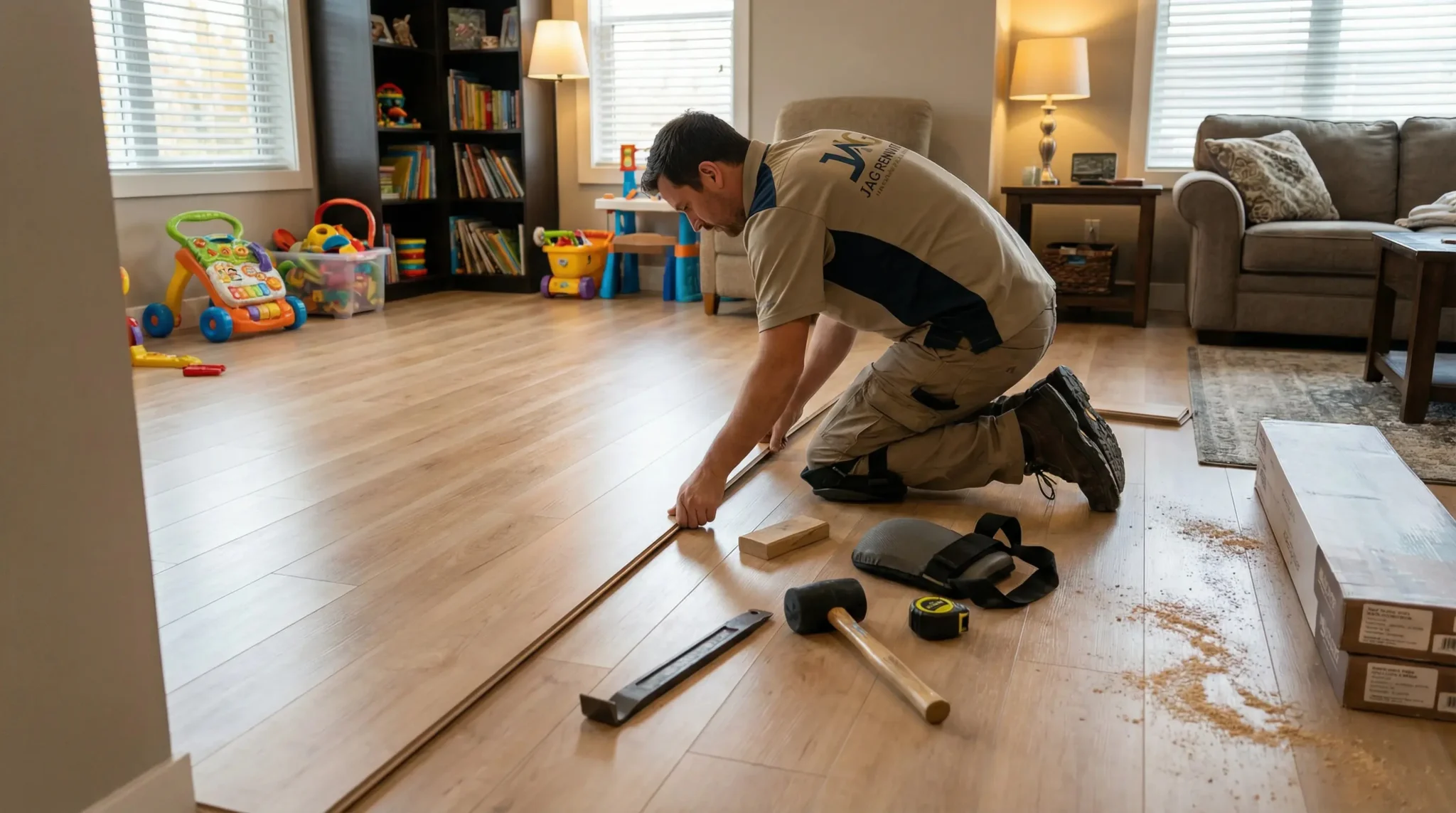
Once you approve the estimate, we schedule the work around your life—not ours. We protect your furniture, contain dust with proper equipment (because sanding jobs get messy if you don’t), and keep the workspace clean at the end of each day.
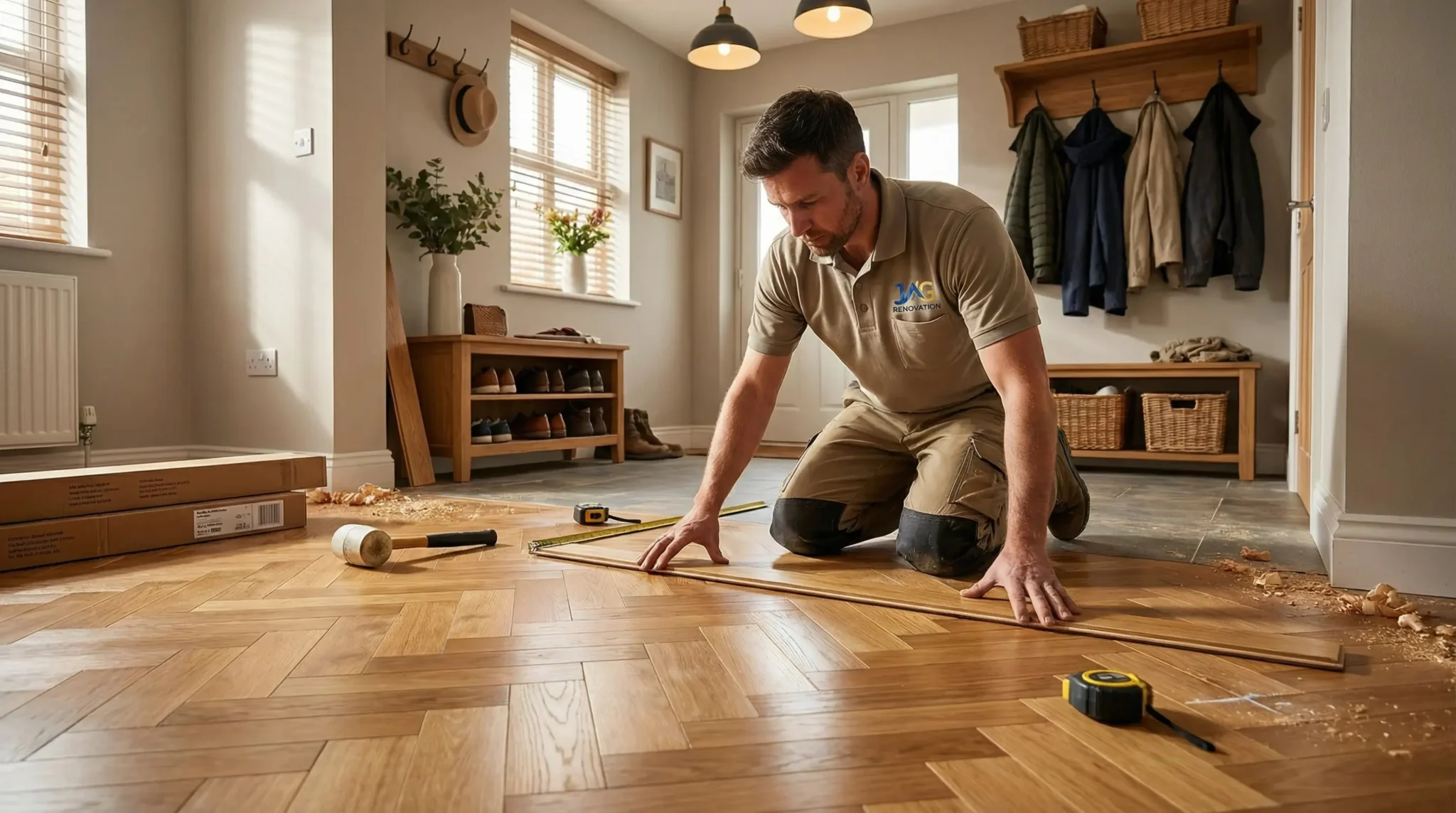
Installation depends on material type. Tile and ceramic floors require proper underlayment and leveling. Hardwood needs acclimation time before install. Vinyl and laminate flooring installation moves faster but still requires precision cuts and moisture barriers in the right spots. We handle all of it, and we don’t cut corners to finish early.
After installation, we walk the job with you. You’ll see the finished work, understand care instructions, and know exactly what’s covered if anything needs adjustment. Then we clean up, haul away debris, and you’ve got new floors.

Ready to get started?
We install hardwood, engineered hardwood, laminate, vinyl plank, luxury vinyl tile, ceramic tile, and porcelain tile. Each material has different prep requirements, and each performs differently depending on where it’s installed. Bathrooms and basements need moisture-resistant options. Living areas and bedrooms can handle more variety.
Subfloor prep is part of every job. If your subfloor isn’t level or has moisture damage, the new floor won’t last. We address that before installation starts, not after you notice problems. This includes leveling compounds, moisture barriers, and underlayment where needed.
In North Amityville, older homes often have uneven subfloors or outdated flooring that needs full removal. We handle demo, disposal, and prep as part of the project scope. You’re not paying separately for five different crews to show up at different times.
Trim work, transitions between rooms, and baseboards get finished correctly. A beautiful floor with sloppy trim work looks unfinished. We don’t leave gaps, uneven transitions, or mismatched molding. The details matter, and they’re included in the scope of work—not billed as extras after the fact.

Timeline depends on square footage, material type, and subfloor condition. A single room with vinyl plank flooring might take one to two days. A whole-house hardwood installation with refinishing can take a week or more.
Tile and ceramic tile floor installation takes longer because of mortar cure times and grouting. You’re looking at several days minimum for a bathroom, longer for kitchens or large spaces. Laminate flooring installation typically moves faster since it’s a floating floor system—no adhesive cure time.
The bigger variable is prep work. If we’re pulling up old flooring, repairing subfloors, or dealing with moisture issues, that adds time. We’ll give you a realistic timeline during the estimate, and we stick to it unless we uncover something unexpected once the old floor comes up. If that happens, we’ll explain what we found and what it takes to fix it before moving forward.
Kitchens and bathrooms need water-resistant materials. Solid hardwood isn’t ideal in these spaces because moisture causes swelling and warping over time. Vinyl flooring, luxury vinyl tile, ceramic tile, and porcelain tile all handle moisture well.
Vinyl plank has become popular because it looks like hardwood but stands up to spills and humidity. It’s comfortable underfoot, easier to install than tile, and costs less than most hardwood options. Luxury vinyl tile offers similar benefits with more design flexibility.
Ceramic and porcelain tile are still the most durable options for wet areas. They’re harder to damage, last decades, and handle standing water better than any other material. The tradeoff is cost and installation time. Tile flooring installation requires more labor, and the material itself runs higher than vinyl. But if you want something that’ll outlast everything else in your home, tile delivers.
Cost depends on material, square footage, subfloor condition, and job complexity. Vinyl and laminate are the most budget-friendly options—usually between $3 and $8 per square foot installed. Hardwood runs higher, typically $8 to $15 per square foot depending on wood species and finish. Tile falls somewhere in the middle but varies widely based on tile quality and pattern complexity.
Those are rough ranges. Your actual cost depends on what we find when we assess your space. If the subfloor needs significant repair, that adds to the total. If you’re removing old flooring, there’s demo and disposal cost. Custom inlays, borders, or intricate tile patterns increase labor time.
We provide upfront estimates that break down material and labor separately. You’ll know what you’re paying before we start, and we don’t tack on surprise charges mid-project. If we encounter something unexpected during the job, we stop and discuss it with you before proceeding. No one likes budget surprises, and we don’t operate that way.
Yes, rooms need to be cleared before we start. We can help move larger furniture pieces if needed, but it’s easier and faster if the space is empty when we arrive. This protects your belongings and gives us full access to work efficiently.
Small items, decor, and anything breakable should be removed completely. Larger furniture like beds, dressers, and couches can often be shifted room to room if you’re doing a whole-house install. We’ll work with you on logistics during the planning stage.
For kitchens, you’ll need to clear out lower cabinets if we’re working around island bases or tight corners. Appliances sometimes need to be disconnected and moved, especially if we’re running flooring underneath. We’ll let you know exactly what needs to happen before installation day so there are no surprises. The clearer the space, the faster and cleaner the job goes.
Some dust is unavoidable, especially with demolition and subfloor prep. But the amount depends on the scope of work and the equipment we use. Modern dust containment systems capture most of the debris during sanding and cutting, but older homes with multiple layers of flooring create more mess during removal.
We use plastic sheeting to isolate work areas from the rest of your home. HVAC vents get covered so dust doesn’t circulate through your system. We clean up at the end of each day, not just when the job’s finished. You shouldn’t be living in a construction zone any longer than necessary.
Tile and vinyl installations generate less dust than hardwood refinishing. If we’re sanding existing hardwood or cutting a lot of material on-site, expect more cleanup involved. We handle it, but you’ll want to plan accordingly if you have respiratory sensitivities or young children at home. We’ll walk through what to expect during your consultation so you can prepare your household.
Sometimes, but not always. It depends on what’s currently installed and what you’re putting down. Vinyl plank and laminate can often go over existing vinyl or tile if the surface is level and in good condition. Hardwood and tile almost always require removing the old floor first.
Stacking new flooring over old creates height issues with doorways, transitions, and appliances. It can also hide underlying problems like subfloor damage or moisture issues that’ll eventually ruin your new floor. In most cases, removing the old material is the smarter move even if it adds a day or two to the timeline.
We assess this during the estimate. If your existing floor is salvageable as a base layer, we’ll tell you. If it needs to come up, we’ll explain why and include removal in the quote. The goal is a finished floor that lasts years, not a quick install that fails early because we skipped necessary prep work.
Other Services we provide in North Amityville