
Hear from Our Customers
You’re not looking for the cheapest option. You’re looking for floors that won’t buckle when humidity spikes in July, that can take whatever your kids and pets throw at them, and that still look good five years from now.
That’s what proper installation gets you. Hardwood that doesn’t cup. Vinyl plank that doesn’t separate at the seams. Tile that stays level. The kind of work that doesn’t need a callback six months later because something wasn’t done right the first time.
We’ve spent nearly ten years working in homes across Northport and Suffolk County. We know what coastal climate does to flooring when corners get cut during installation. We also know how to prevent it—proper acclimation, moisture barriers where they’re actually needed, and subfloor prep that doesn’t get skipped to save an hour.
We’ve been handling interior renovations in Suffolk County since 2015. Flooring is a big part of what we do—hardwood, tile, laminate, vinyl, carpet. We’re licensed, insured, and we don’t operate like the contractors who disappear after the deposit clears.
Northport homes have their quirks. Older foundations. Coastal moisture. Subfloors that weren’t perfectly level to begin with. We’ve seen it all, and we plan for it. That’s the difference between an installation that holds up and one that starts showing problems before the first year is over.
Our approach is simple: show up when we say we will, explain what needs to happen and why, and do the work right. No upselling. No pressure. Just honest communication and craftsmanship you can actually count on.

It starts with an in-home consultation. We look at your existing floors, measure the space, check the subfloor condition, and talk through what you’re hoping to achieve. You’ll get a transparent estimate—no hidden fees, no surprise charges later.
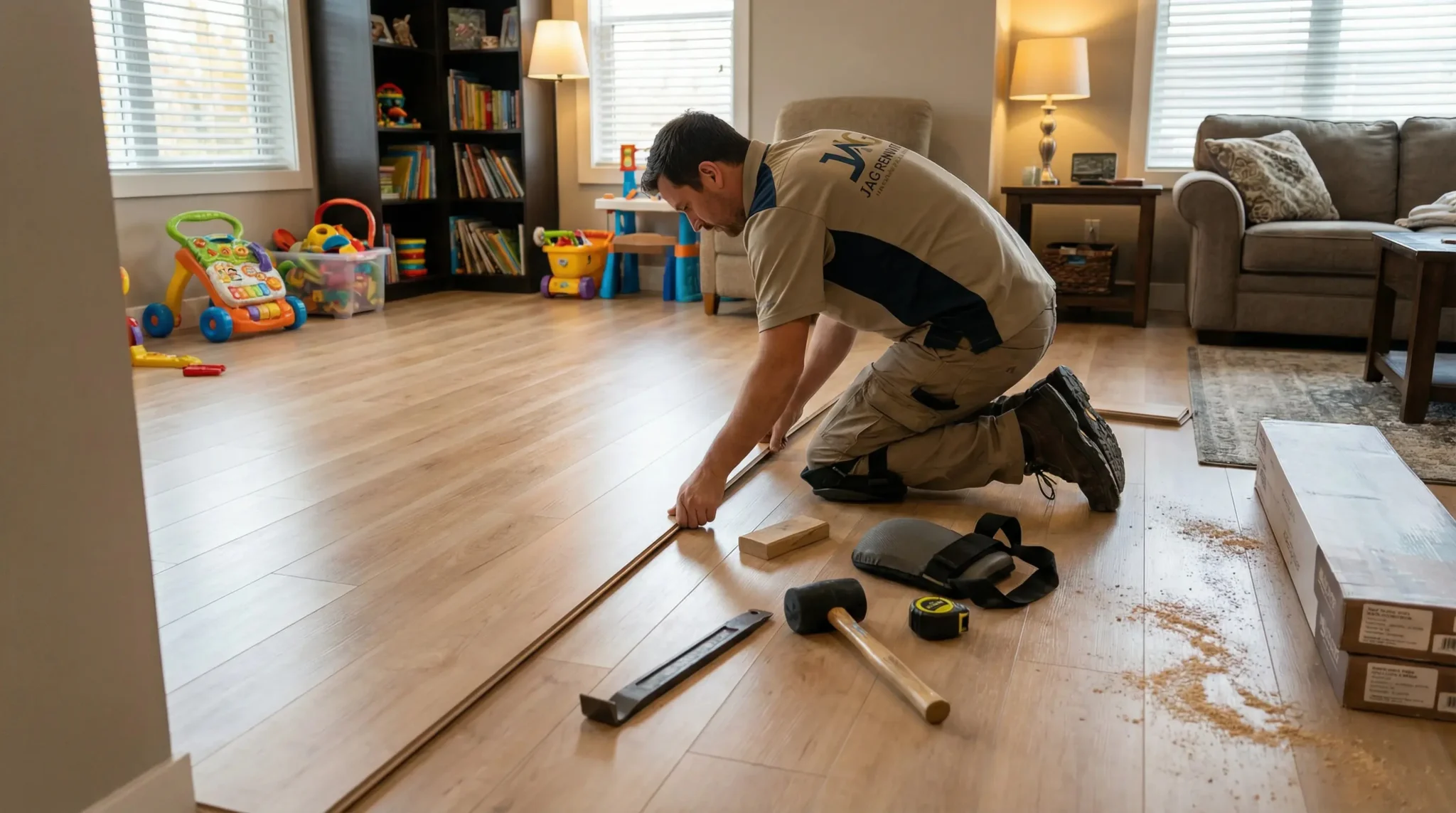
Once you’re ready to move forward, we schedule the work around your life, not ours. Before any new flooring goes down, we handle the prep work: removing old materials, addressing subfloor issues, making sure everything is level and dry. This step gets skipped by contractors in a hurry. We don’t skip it.
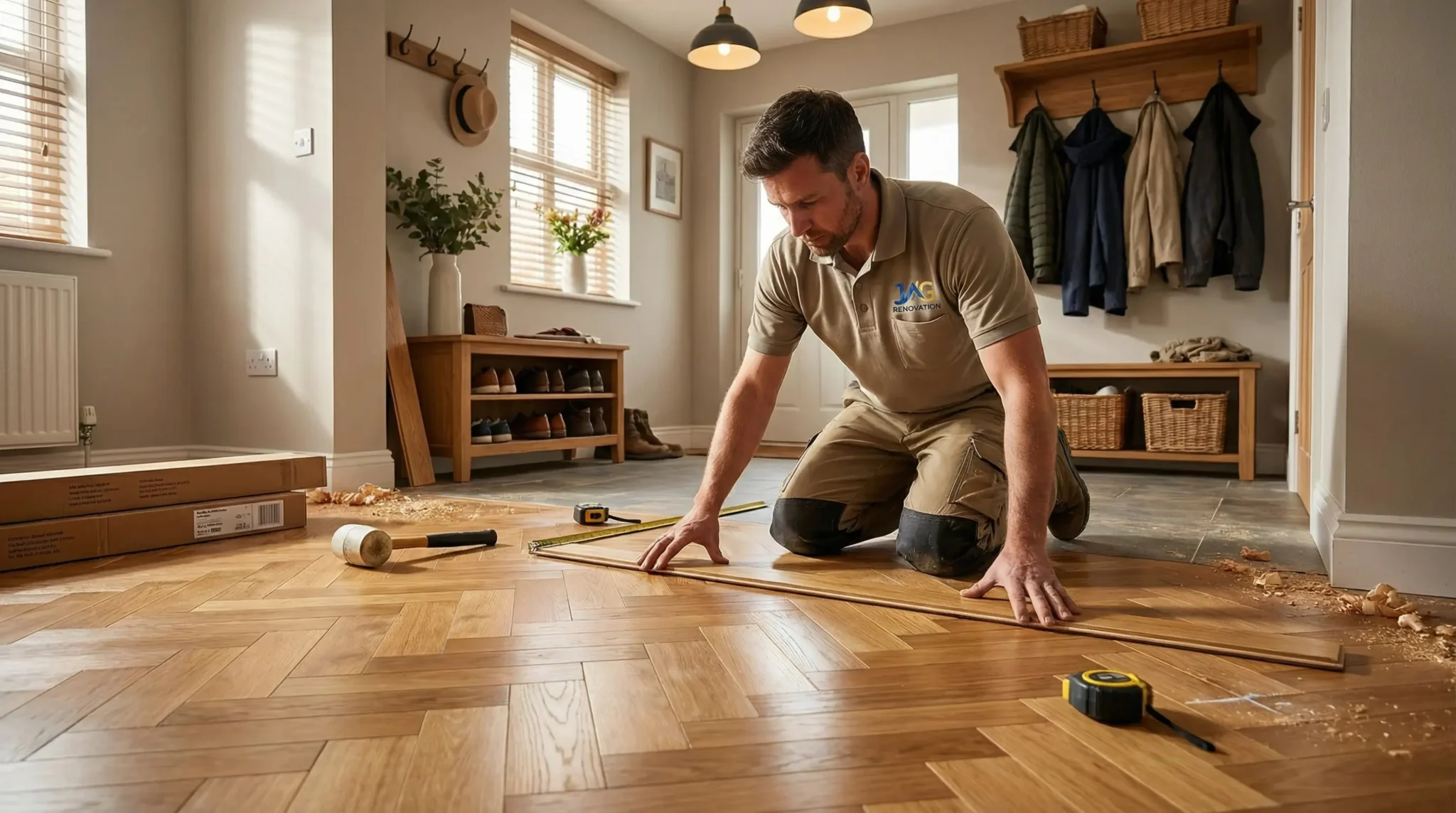
Installation itself depends on the material. Hardwood needs time to acclimate to your home’s humidity—usually 72 hours minimum in Suffolk County. Tile requires proper underlayment and grout sealing. Vinyl plank needs a perfectly smooth surface or you’ll see every imperfection underneath. We handle each material the way it’s supposed to be handled.
After installation, we do a final walkthrough with you. You’ll see the finished result, we’ll answer any questions, and we’ll make sure you’re completely satisfied before we consider the job done.

Ready to get started?
Hardwood flooring adds value and warmth, but it requires proper installation to handle Long Island’s seasonal humidity swings. We install solid and engineered hardwood, and we’ll tell you honestly which makes more sense for your home’s conditions.
Luxury vinyl plank has become the go-to for families with kids and pets. It’s waterproof, scratch-resistant, and looks remarkably close to real wood. Installation is faster than hardwood, and it holds up better in high-moisture areas like kitchens and bathrooms.
Tile flooring works well in entryways, bathrooms, and kitchens where water exposure is a given. Ceramic and porcelain both have their place—we’ll walk you through the differences in durability and cost so you can make an informed decision.
Laminate offers a budget-friendly alternative to hardwood with decent durability, though it doesn’t handle moisture as well as vinyl. It’s a solid choice for bedrooms and living areas where water isn’t a concern.
Carpet still has a role in bedrooms and basements where comfort matters. We install it properly—stretched tight, seams hidden, padding that actually cushions.
Northport homes range from historic to new construction, and each presents different challenges. Older homes often need more subfloor work. Newer builds sometimes have moisture issues that weren’t addressed during construction. We adjust our approach based on what your specific home needs.

It depends on the material and the size of the space, but here’s what’s realistic. A single room with vinyl plank or laminate usually takes one to two days including prep. Hardwood takes longer because the material needs to acclimate in your home for at least three days before installation—this isn’t optional in Suffolk County’s climate. Tile work moves slower because of setting time and grouting, so a kitchen or bathroom can take three to five days.
Whole-home installations obviously take longer. We’ll give you a specific timeline during the estimate based on your square footage and material choice. What we won’t do is rush the job to hit an arbitrary deadline. Proper prep and installation matter more than speed.
If your subfloor needs significant repair—common in older Northport homes—that adds time. We’ll identify those issues upfront so there are no surprises once we start.
Luxury vinyl plank is the most humidity-proof option. It’s completely waterproof, doesn’t expand or contract with moisture changes, and handles temperature swings without issue. If you’ve had problems with hardwood cupping or laminate swelling in the past, vinyl solves that problem.
Tile is also excellent in high-moisture areas—it doesn’t react to humidity at all. Porcelain is denser and more water-resistant than ceramic, which matters in bathrooms and entryways.
Engineered hardwood handles humidity better than solid hardwood because its layered construction resists expansion and contraction. If you want the look of real wood but live close to the water, engineered is the smarter choice. Solid hardwood can work, but it requires proper acclimation, humidity control in your home, and realistic expectations about seasonal movement.
Laminate is the most vulnerable to moisture. It can work in bedrooms and living rooms, but we don’t recommend it in kitchens, bathrooms, or basements.
For a typical Northport home, you’re looking at $3,000 to $8,000 for a main living area, depending on material and square footage. Vinyl plank runs $4 to $8 per square foot installed. Hardwood ranges from $8 to $15 per square foot. Tile falls somewhere in between at $6 to $12 per square foot.
Those numbers include removal of old flooring, subfloor prep, materials, and installation. If your subfloor needs significant repair—rotted sections, major leveling work—that’s additional. Same goes for intricate layouts, custom borders, or specialty materials.
Whole-home projects obviously cost more. A 1,500-square-foot home might run $10,000 to $20,000 depending on material choices and how many rooms you’re doing.
We give you a detailed estimate upfront. No allowances, no “approximately” pricing. You’ll know exactly what you’re paying before we start. If something unexpected comes up during demo—which happens in older homes—we’ll discuss it with you before proceeding.
No, most homeowners stay in the house. We work room by room when possible so you’re not displaced from your entire home. You’ll need to clear furniture from the rooms we’re working in, though we can help move heavier pieces if needed.
There’s dust and noise during demo and installation—that’s unavoidable. We use dust barriers and clean up at the end of each day, but it’s still a construction zone. If you have young kids or work from home, you might want to plan around the noisiest days.
For whole-home installations, some families choose to stay elsewhere for a few days, especially during the finishing stages when you can’t walk on new floors. Hardwood needs 24 hours before light foot traffic. Tile needs at least 24 hours for the thinset to cure before grouting. Vinyl and laminate are usually walkable the same day.
We’ll give you a clear schedule so you know which rooms will be out of commission and when. The goal is to minimize disruption while still doing the job right.
We handle it. If something’s wrong with the installation—a seam that’s not tight, a tile that’s not level, a plank that’s lifting—we come back and fix it. That’s part of doing the job right.
Most issues show up within the first few weeks if they’re going to show up at all. We ask you to reach out immediately if you notice something off. The sooner we know, the easier it is to address.
Material defects are covered by the manufacturer’s warranty, which we’ll provide documentation for. Installation issues are on us. We’ve been doing this long enough that callbacks are rare, but when they happen, we don’t make excuses or disappear.
What’s not covered: damage from flooding, furniture scratches, normal wear and tear, or issues caused by extreme humidity levels that exceed the material’s specifications. We’ll explain the care requirements for your specific flooring so you know how to maintain it properly.
Sometimes, but not always. Vinyl plank and laminate can often go over existing vinyl or tile if the surface is smooth, level, and in good condition. Hardwood and tile almost always require removing the old flooring first—you need a proper substrate for those materials to perform correctly.
The bigger question is whether you should install over existing floors even when it’s possible. Every layer you add raises the floor height, which affects door clearances, transitions to other rooms, and appliance fit. In kitchens, that can create real problems.
Old flooring can also hide issues—water damage, subfloor rot, mold. If we don’t remove it, we can’t inspect what’s underneath. That’s a risk some homeowners are willing to take to save money, but it’s not one we’d recommend.
We’ll assess your situation during the estimate and give you an honest recommendation. If we can install over existing flooring without compromising quality, we’ll tell you. If removal is the smarter move, we’ll explain why.