
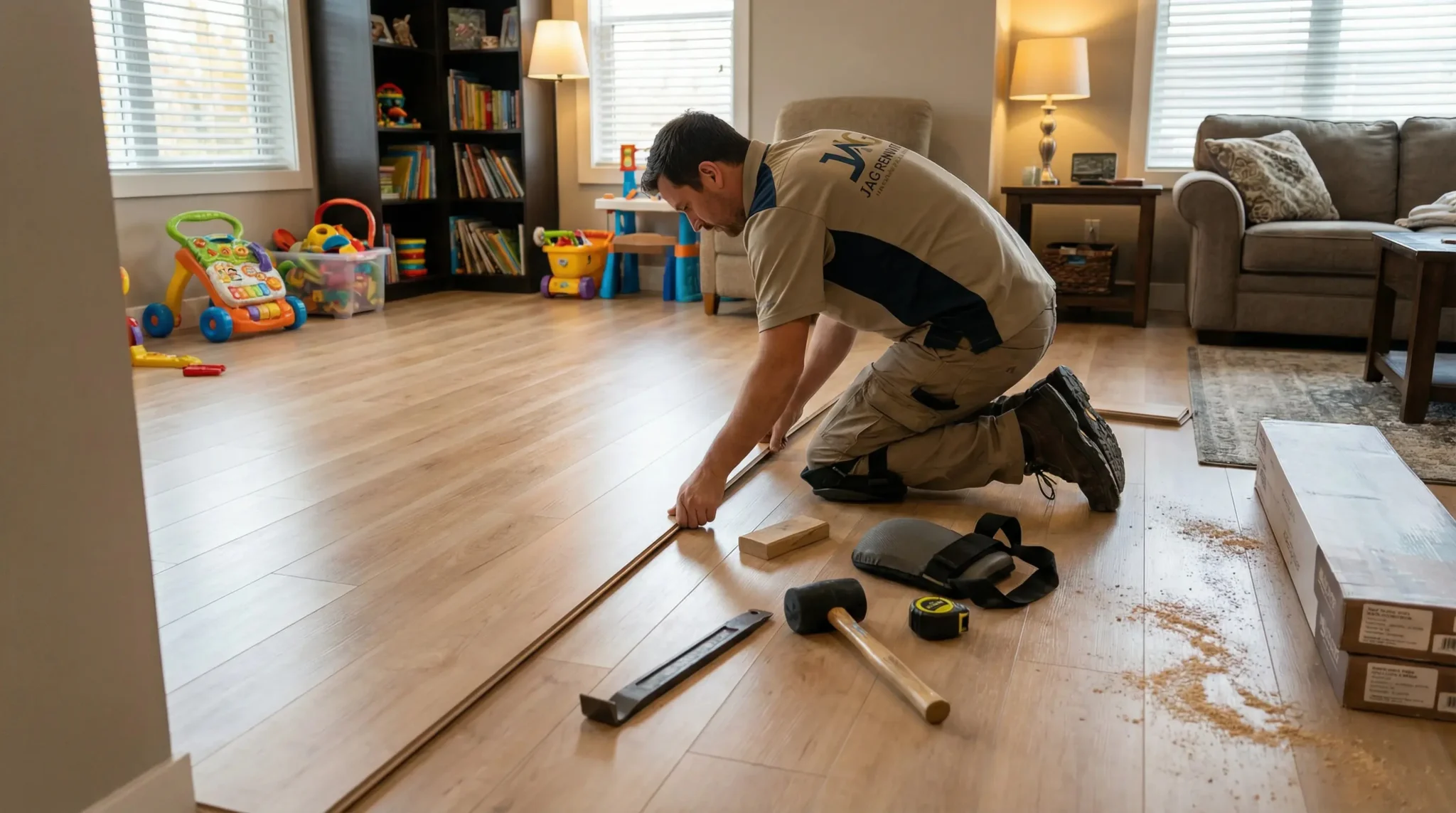
Hear from Our Customers
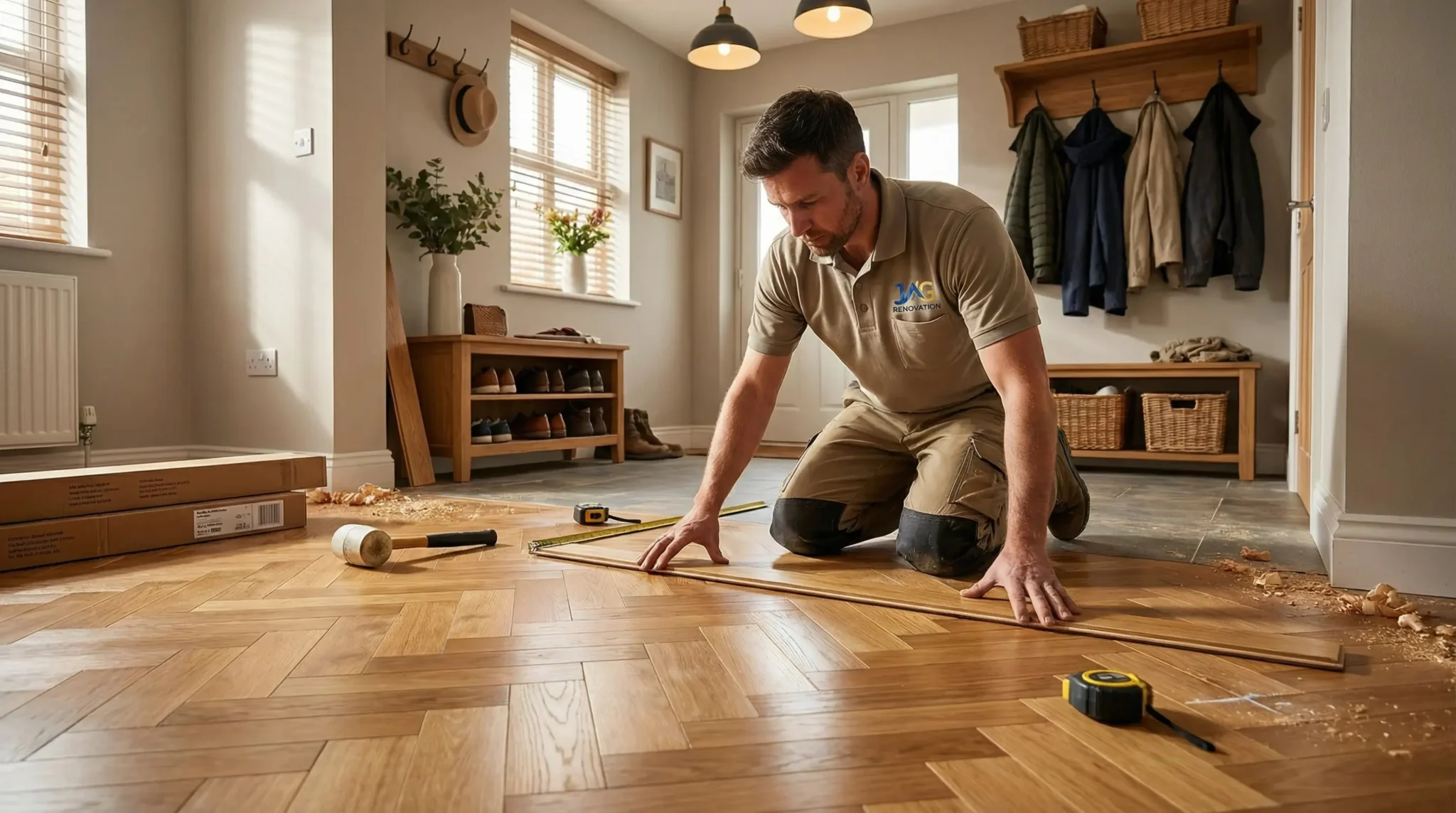
You stop worrying about whether you hired the right contractor. The install looks clean, the transitions are tight, and nothing creaks or shifts when you walk across it. That’s what professional floor installation should feel like.
When you replace flooring in your house, you’re not just changing what’s underfoot. You’re resetting how the whole room feels. Outdated carpet or worn hardwood makes everything look tired, no matter how nice your furniture is. New flooring gives you a fresh start without gutting the entire space.
And if you’re thinking about selling, flooring matters more than most upgrades. It’s one of the first things buyers notice and one of the few renovations that can return up to 70% of what you spend. But only if it’s installed correctly. Rushed work, poor transitions, or cheap materials show up fast and cost you during inspection or negotiation.
You want floors that look good now and hold up later. That means choosing the right material for how you actually use the space, not just what’s on sale. It means hiring someone who knows the difference between laminate flooring installation and vinyl flooring, and when each one makes sense. And it means working with a flooring contractor who shows up when they say they will and doesn’t nickel-and-dime you once the job starts.
We’ve spent nearly a decade working in homes across Oakdale and the surrounding Suffolk County area. We’ve handled everything from hardwood refinishing in century-old homes near the Vanderbilt estate to modern vinyl plank installs in newer developments. We know what works here.
Oakdale has a mix of historic properties and updated homes, and that means flooring needs vary. Some projects require matching existing hardwood in older homes. Others need durable, water-resistant options for basements or kitchens. We’ve done both, many times over.
We don’t operate like the high-pressure contractors who quote low and add costs later. Our pricing is clear from the start. No surprises, no upsells you didn’t ask for. You’ll know what you’re paying for and why, and if something changes, we talk about it before we move forward.

First, we come out to look at the space. We measure, check the subfloor, and talk through what you’re trying to accomplish. If there are moisture issues, uneven areas, or old flooring that needs to come up, we’ll tell you upfront what that means for timeline and cost.
Once you approve the estimate, we schedule the work and order materials. Depending on what you’re installing, lead times vary—custom hardwood takes longer than stock vinyl. We coordinate delivery so materials acclimate properly before install, which matters more than most people realize.
During installation, we prep the subfloor, handle any underlayment, and install your new flooring section by section. We don’t rush transitions or cut corners on edges. Baseboards get reinstalled cleanly, thresholds get placed where they should be, and we clean up daily so you’re not living in a construction zone longer than necessary.
After the install, we walk the job with you. You’ll see how everything fits, how it’s finished, and what you need to know about care and maintenance. If something doesn’t look right, we address it before we call it done.

Ready to get started?
We install hardwood, engineered wood, laminate, luxury vinyl plank, sheet vinyl, tile, and carpet. Each material has different prep requirements, installation methods, and long-term performance. We’ll help you figure out which one fits your space, your budget, and how you actually use the room.
Tile floor installation requires solid subfloor prep and proper waterproofing, especially in bathrooms and entryways. Ceramic tile floor installation is common in Oakdale homes because it holds up well in high-traffic areas and handles moisture better than wood or carpet. If you’re doing a kitchen or bath remodel, tile usually makes sense.
Laminate flooring installation is faster and more affordable than hardwood, and newer products look surprisingly close to real wood. It’s a good option if you want the look without the cost or maintenance. Vinyl flooring has come a long way too—luxury vinyl plank is waterproof, durable, and works in basements or spaces where hardwood won’t hold up.
For residential flooring projects in Oakdale, we also handle subfloor repairs, underlayment, transitions between rooms, and baseboard reinstallation. If you’re doing multiple rooms, we coordinate the install so everything flows and the transitions don’t look like an afterthought. And if you’re a commercial flooring contractor looking for subcontracting support, we handle that too.

Most flooring projects in Oakdale run between $1,500 and $4,500 depending on the size of the space, the material you choose, and what kind of prep work is needed. The average project costs around $3,000. That usually covers a few rooms or one larger open area.
Hardwood costs more than laminate or vinyl—typically between $6 and $22 per square foot installed, depending on the species and finish. Vinyl and laminate run closer to $3 to $7 per square foot. Tile falls somewhere in the middle, depending on the type and pattern.
If your subfloor needs repair, if there’s old flooring that has to be removed, or if you’re working in a space with tricky angles or transitions, that adds to the cost. We’ll walk the space with you and give you a clear estimate that includes everything, so you’re not surprised later.
Hardwood and tile last the longest if they’re installed correctly and maintained. Solid hardwood can last decades and can be refinished multiple times. Tile is nearly indestructible in high-traffic areas and handles moisture better than any other option.
Engineered hardwood is more stable than solid wood in spaces with humidity changes, like basements or homes without central air. It won’t warp as easily, and higher-end engineered products can still be refinished once or twice.
Luxury vinyl plank is newer but holding up well in real-world use. It’s waterproof, scratch-resistant, and doesn’t need refinishing. It won’t last as long as hardwood, but it’s a solid 15-to-20-year floor if installed properly. Laminate is similar but less water-resistant. Carpet has the shortest lifespan—usually 7 to 10 years in high-traffic areas before it starts looking worn.
Most residential flooring installs take two to five days depending on the size of the area and the material. A single room with vinyl or laminate might be done in a day or two. A whole-floor hardwood install with multiple rooms and transitions usually takes closer to a week.
Tile takes longer because of drying time. You’re looking at a day for layout and install, then 24 hours for the mortar to cure before grouting. After grouting, you need another day before you can walk on it and a few more before you put furniture back.
We’ll give you a timeline before we start so you can plan around it. If there are delays—material backorders, subfloor issues we didn’t see until demo, weather affecting delivery—we’ll let you know as soon as we know. We don’t disappear mid-job or leave your house torn up longer than it needs to be.
Yes, rooms need to be cleared before we start. We can help move larger furniture if needed, but smaller items, breakables, and anything in closets or on shelves should be moved ahead of time. The clearer the space, the faster and cleaner the install goes.
If you’re doing a whole-floor project and need help coordinating where to move things, we can talk through a plan. Some customers move furniture into rooms we’re not working on yet, then shift things as we go. Others rent a storage unit or move everything into the garage for the week.
We’ll also need clear access to the work area—no cars blocking the driveway if we’re bringing in materials, and a path from the door to the room we’re working in. It sounds obvious, but it makes a difference when we’re carrying stacks of flooring or tile through your house.
Sometimes, but not always. It depends on what’s there now and what you’re installing. You can usually install laminate or vinyl over old vinyl or linoleum if the surface is smooth and level. You can’t install it over carpet or damaged subfloor.
Hardwood and tile almost always require removing the old flooring first. Tile needs a solid, level base, and hardwood needs to be nailed or glued directly to the subfloor. Installing over old flooring raises the floor height, which creates problems with door clearances, transitions, and appliances.
We’ll check the existing floor during the estimate and let you know what needs to come up. If removal is required, we handle it and haul away the old material. If we can install over what’s there, we’ll make sure the surface is prepped correctly so the new floor doesn’t fail a year later.
Laminate is made from compressed wood fibers with a photographic image layer on top and a protective coating. It looks like wood or tile but it’s not waterproof. If water sits on it or gets between the planks, it swells and warps. It works fine in living rooms, bedrooms, and hallways, but not in bathrooms or basements.
Vinyl is fully waterproof. Luxury vinyl plank is made from PVC with a printed design layer and a wear layer on top. It can handle spills, moisture, and even minor flooding without damage. That makes it better for kitchens, bathrooms, laundry rooms, and basements.
Both are durable and affordable compared to hardwood. Laminate feels a bit more like real wood underfoot because of the wood fiber core. Vinyl is softer and quieter. If you have kids or pets, vinyl handles scratches and accidents better. If you want something that feels closer to hardwood and you’re not worried about water, laminate is a good option.