
Hear from Our Customers
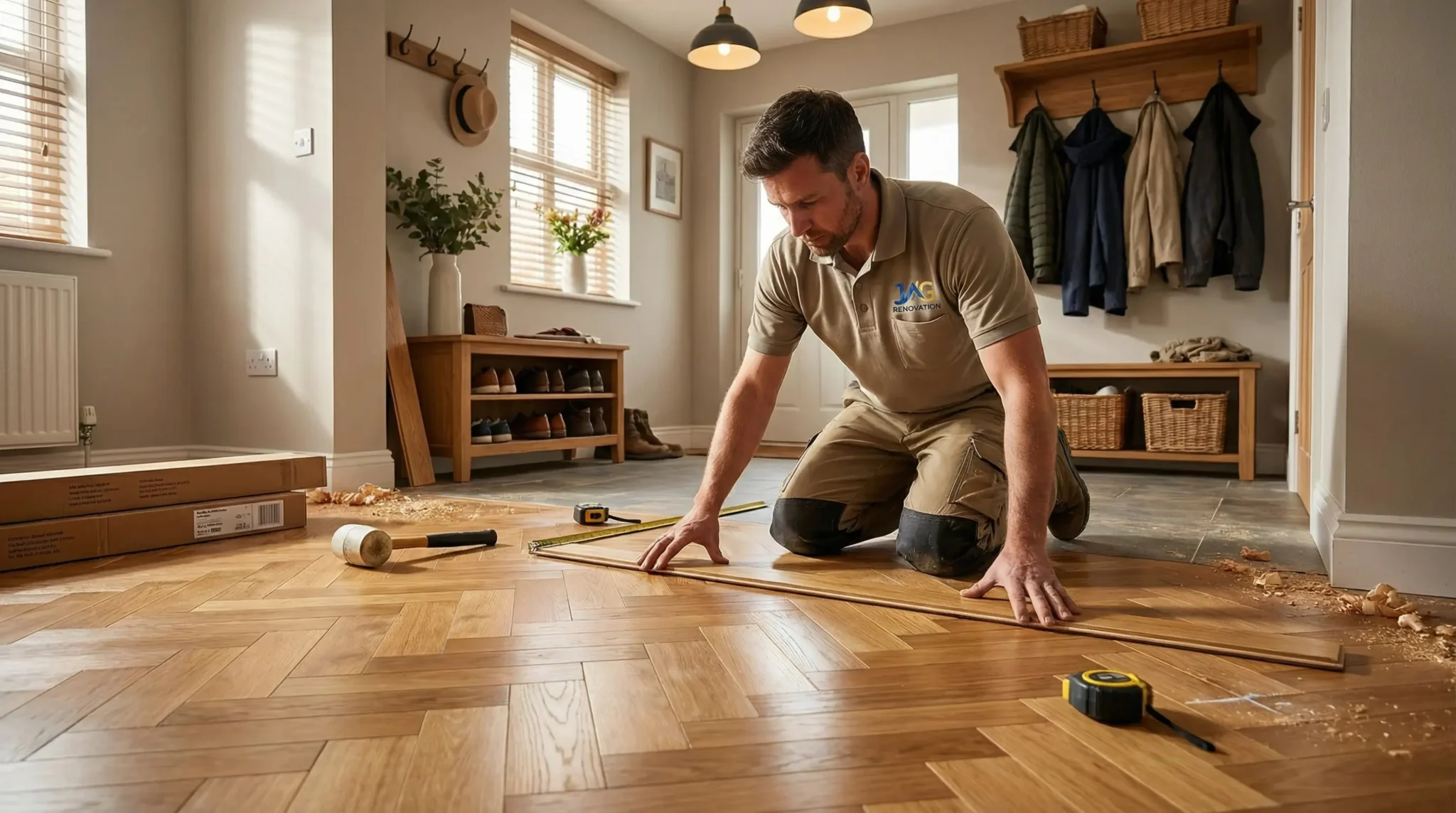
You stop worrying about whether your investment will buckle, warp, or fail when humidity hits. That’s what happens when a flooring contractor understands Suffolk County conditions before they touch your subfloor.
Ridge sits in a moisture zone that standard flooring wasn’t designed for. Coastal humidity in summer. Condensation in winter. Occasional groundwater creep in basements. Your floors need to handle all of it without turning into a warranty claim.
When you replace flooring in your house with materials and installation methods built for Long Island’s environment, you get rooms that look better and stay stable longer. No callbacks for buckling planks. No gaps opening up after the first heating season. Just floors that work the way you expected them to from day one.
Jaguar Renovation has been handling flooring, carpentry, and interior remodels across Ridge and Suffolk County since 2016. We’re licensed, insured, and local—which means we’ve seen what fails here and what doesn’t.
We don’t operate on commission or push products you don’t need. Our pricing is transparent before work starts, and our installations follow the manufacturer specs that actually protect your warranty. That’s not revolutionary—it’s just how the work should be done.
Ridge homeowners deal with sandy soil, salt air, and moisture levels that make cheap installations fail fast. We account for that during subfloor prep, material selection, and acclimation. It’s the difference between floors that last and floors that become your problem in year two.

First, we assess your subfloor and moisture conditions. Not every Ridge home has the same challenges, and your installation method needs to match your specific situation. We check for levelness, moisture content, and structural issues before recommending materials.
Next, we walk through flooring options that fit your space, budget, and how you actually use the room. Vinyl flooring works differently than hardwood. Laminate flooring installation has different moisture tolerances than tile floor installation. We explain what matters and why, without the upsell.
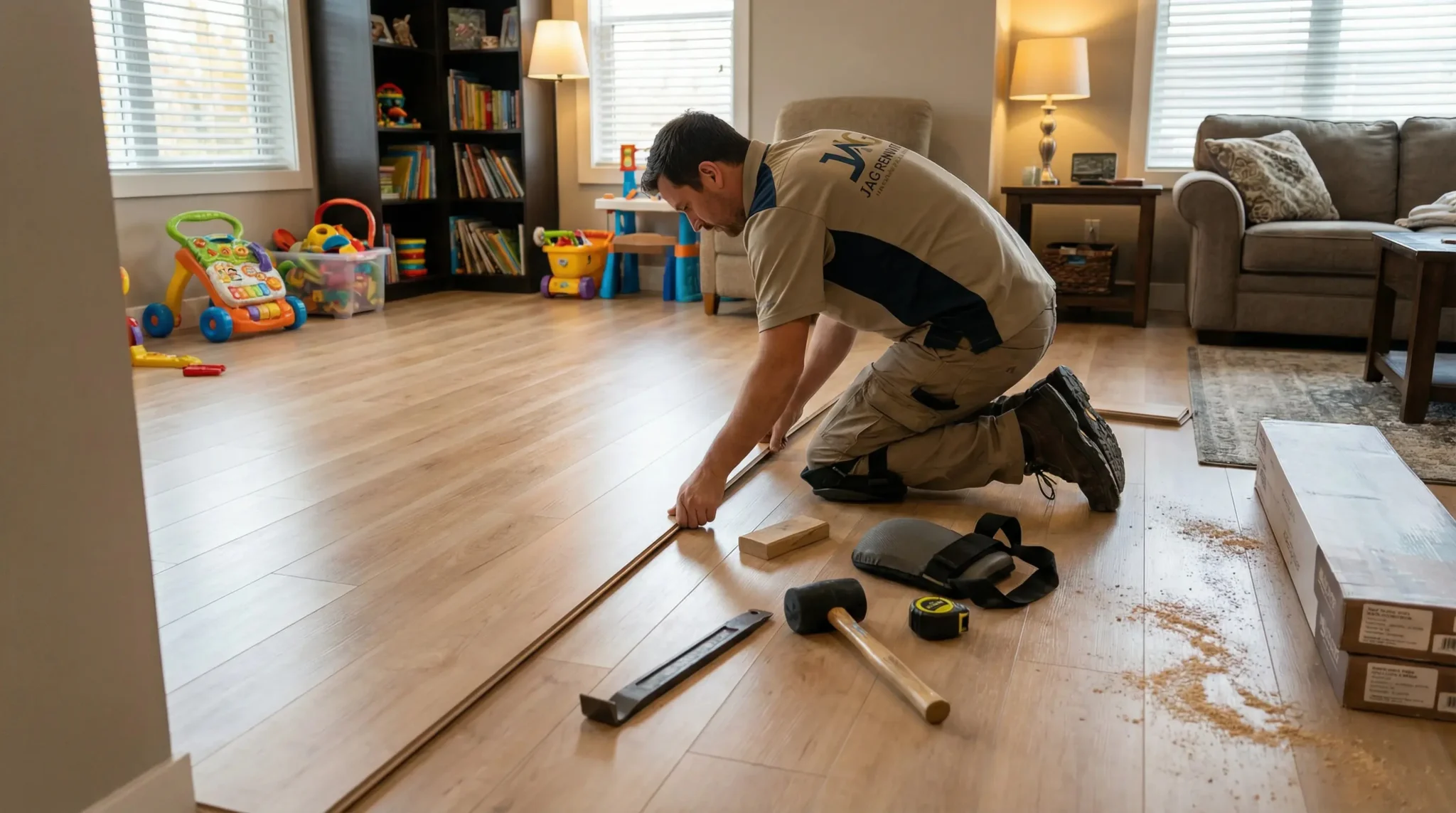
Then we schedule the work around your life—not ours. Materials acclimate in your home for the right amount of time. We protect your furniture and contain dust. Installation follows manufacturer guidelines exactly, because that’s what keeps your warranty valid. Trim and transitions get finished correctly, not rushed.
You get a final walkthrough where we make sure everything meets your expectations. No surprise charges. No pressure to sign off early. Just finished floors and a straightforward invoice.

Ready to get started?
We install hardwood flooring, luxury vinyl plank, laminate, ceramic and porcelain tile, and carpet—but not every material works in every Ridge home. Your choice depends on the room, the subfloor, and how much moisture exposure you’re dealing with.
Vinyl flooring has become the go-to for basements and kitchens in Suffolk County because it handles moisture without failing. The 2025 waterproof cores and sealing systems actually live up to the claims, unlike older laminate products that swelled at the first sign of humidity. If you’re near the coast or have a below-grade space, this is usually the smart move.
Hardwood still works beautifully in main living areas and bedrooms—as long as your subfloor is stable and your HVAC keeps humidity in check. Engineered hardwood gives you the look with better dimensional stability than solid planks. We’ll tell you when it’s the right call and when it’s not.
Tile floor installation makes sense in bathrooms, entryways, and mudrooms where water exposure is guaranteed. Ceramic tile floor installation costs more upfront, but it outlasts everything else in wet zones. We handle proper waterproofing and slope so you don’t end up with standing water or grout failure.

For a typical Ridge home, full flooring replacement runs between $8,000 and $25,000 depending on square footage, material choice, and how much prep work your subfloor needs. Vinyl flooring installation typically costs $4 to $8 per square foot installed. Hardwood runs $8 to $15 per square foot. Tile floor installation ranges from $10 to $20 per square foot when you include proper waterproofing and substrate prep.
Those ranges assume your subfloor is in decent shape. If we find moisture damage, structural issues, or severe unevenness, that gets addressed first—and yes, it adds cost. But skipping that step just means your new floors fail early, and you pay twice.
We give you a written estimate after seeing your space. No ballpark guesses over the phone, no bait-and-switch pricing later. You’ll know what the project costs before we start, and that number doesn’t change unless you change the scope.
Luxury vinyl plank with a waterproof core handles Long Island humidity better than anything else right now. The 2025 versions have enhanced composite cores and perimeter sealing systems that actually block moisture from below and above. They don’t swell, buckle, or gap when humidity spikes in July or drops in January.
Porcelain tile is the other bulletproof option, especially in bathrooms, kitchens, and entryways. It’s completely impervious to moisture and doesn’t care what the humidity does. The grout lines need proper sealing, but the tile itself won’t fail.
Hardwood can work in climate-controlled main living areas if you maintain indoor humidity between 30% and 50% year-round. Engineered hardwood is more stable than solid planks because the cross-ply construction resists expansion and contraction. But if your HVAC doesn’t regulate humidity well, or you’re installing in a basement or coastal home without conditioning, hardwood becomes a gamble. We’ll tell you honestly whether your space can support it.
Most residential flooring projects in Ridge take between three and seven days from start to finish. A single room like a bedroom or bathroom might be done in two days. A whole-home floor remodeling project with multiple materials and subfloor repairs can stretch to two weeks.
The timeline depends on square footage, material type, and how much prep your subfloor needs. Vinyl and laminate flooring installation moves faster than tile because there’s no mortar cure time or grouting. Hardwood installation takes longer because planks need to acclimate in your home for at least 72 hours before we install them—that’s not optional if you want a stable floor.
We give you a realistic schedule upfront and communicate if anything changes. Most delays come from material backorders or discovering subfloor issues we couldn’t see until the old floor came up. When that happens, we explain what we found, what it means for timeline and cost, and let you decide how to proceed. No surprises, no moving forward without your approval.
You don’t have to, but it helps. We can move most furniture as part of the project, but anything extremely heavy, fragile, or valuable should be relocated before we start. That includes china cabinets, pianos, aquariums, and anything you’d be upset about if it got scratched during the move.
We’ll protect furniture that stays in the home with padding and coverings, and we’ll move it room by room as we work. But clearing out smaller items, personal belongings, and anything breakable makes the job faster and reduces risk. The less we’re maneuvering around obstacles, the cleaner the installation goes.
If you’re doing a whole-home flooring project and need everything moved, we can coordinate that—but it adds time and cost. Most Ridge homeowners handle the small stuff themselves and let us deal with beds, dressers, and couches. We’ll walk you through what makes sense during your estimate.
Sometimes, but not always. Installing over existing flooring only works if the current floor is completely flat, stable, and compatible with the new material. Vinyl flooring can sometimes go over old vinyl or linoleum if there’s no cushioning or embossing. Laminate can go over thin, glued-down carpet in rare cases. But most of the time, the old floor needs to come up.
Tile can’t go over carpet, ever. Hardwood shouldn’t go over vinyl because you can’t nail through it into the subfloor. And if your existing floor has any bounce, damage, or moisture issues, layering new material on top just hides a problem that’ll ruin your investment.
We inspect your current floor during the estimate and tell you whether removal is necessary. Ripping out old flooring adds labor cost and disposal fees, but it also lets us inspect and prep the subfloor correctly. That’s what prevents callbacks for squeaks, movement, and premature failure. Doing it right the first time costs less than doing it twice.
Start with where the floor is going and what kind of abuse it’ll take. Vinyl flooring is the best choice for moisture-prone areas like basements, bathrooms, kitchens, and laundry rooms. It’s waterproof, durable, and available in styles that look surprisingly close to real hardwood. If you have kids, pets, or a home near the coast, vinyl makes sense in high-traffic areas too.
Laminate flooring sits in the middle. It’s more affordable than hardwood and tougher against scratches and dents, but it’s not waterproof—just water-resistant. A small spill won’t ruin it, but standing water or high humidity will. Laminate works well in living rooms, dining rooms, and bedrooms where moisture isn’t a constant concern.
Hardwood flooring is the premium option for main living spaces where you want the real thing. It adds resale value, ages well, and can be refinished if it gets worn or damaged. But it costs more upfront, requires humidity control, and doesn’t belong anywhere moisture is an issue. If your Ridge home has stable indoor conditions and you’re willing to maintain it, hardwood delivers a look that vinyl and laminate can’t fully replicate. We’ll walk through samples and explain what works for your specific rooms and budget.