
Hear from Our Customers
Your floors take more abuse than almost anything else in your home. Kids, pets, furniture, spills, foot traffic—it all adds up. When you replace flooring in your house, you’re not just updating the look. You’re investing in something that needs to perform every single day without buckling, cracking, or wearing down in six months.
That’s where most flooring jobs go wrong. Poor prep work. Rushed timelines. Contractors who disappear after the deposit clears. You end up with gaps, uneven transitions, or floors that look great for a month and then start falling apart.
When the job’s done right, your floors feel solid underfoot. Seams line up. Transitions are clean. The finish holds. And you’re not calling someone back three weeks later because something’s already lifting. That’s what proper flooring installation in Shirley, NY should look like—and it’s what you should expect from the start.
We’ve been handling interior projects across Suffolk County for close to ten years. We’ve worked in hundreds of Shirley homes—ranches, colonials, split-levels—and we understand what Long Island properties need when it comes to flooring. The climate here isn’t easy on materials. Humidity swings, temperature changes, and the wear that comes with active households all matter when you’re choosing and installing floors.
We don’t operate like the typical contractor. No high-pressure sales. No vague estimates that balloon once the work starts. You get clear communication, upfront pricing, and a crew that shows up when they say they will. We’re licensed, insured, and we’ve built our reputation on doing the work right the first time.
If you’re tired of chasing down callbacks or dealing with contractors who go silent after they cash your check, you’re in the right place.

First, we come out to see the space. We measure, check the subfloor, talk through what you’re looking for, and answer any questions you have. You’ll know what materials make sense for your home, what the timeline looks like, and what the actual cost is—no surprises later.
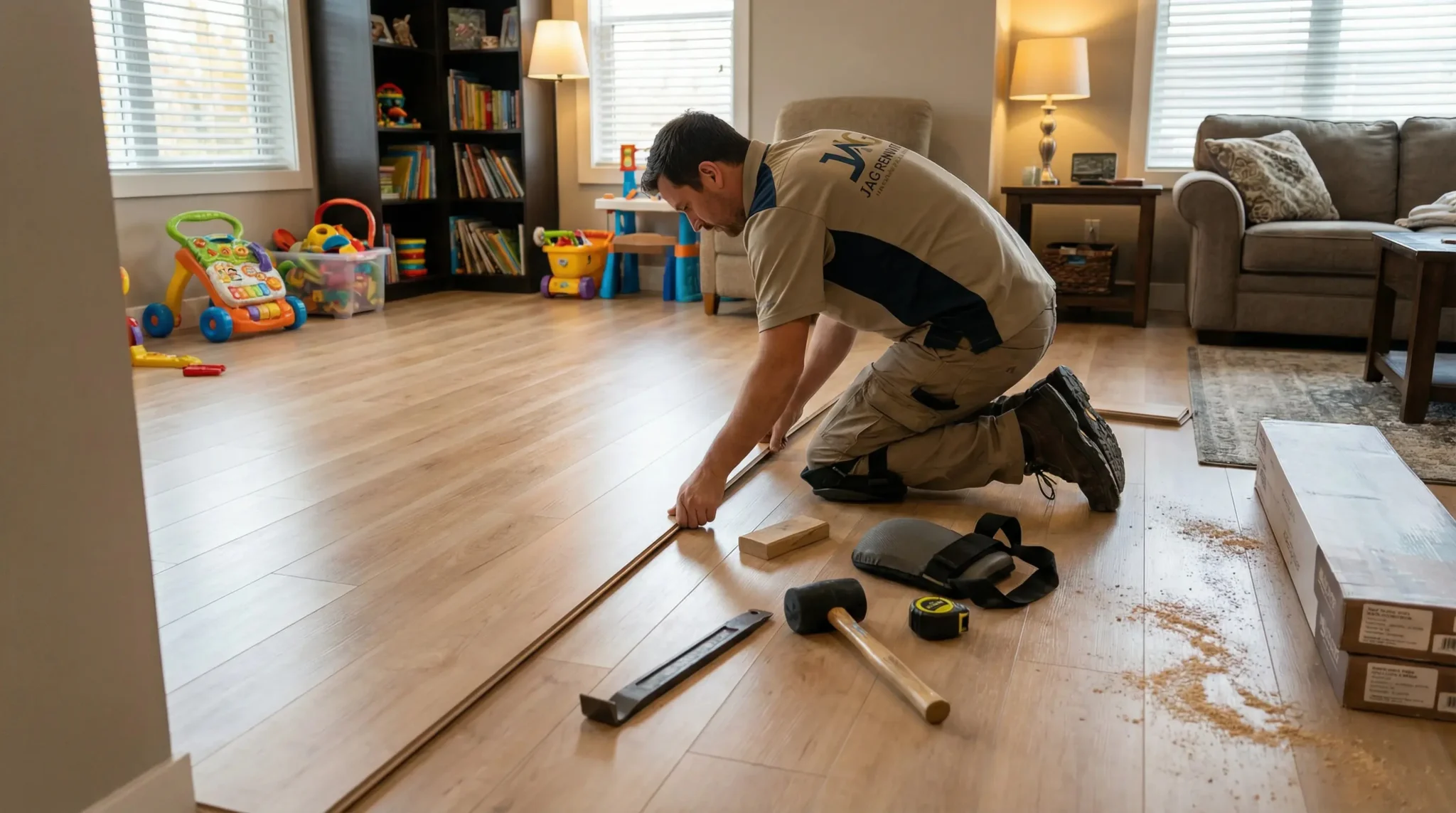
Once you’re ready to move forward, we schedule the work around your life. We prep the subfloor properly, which is where most installation problems start. If it’s not level or stable, nothing on top of it will hold up. We handle that before any new flooring goes down.
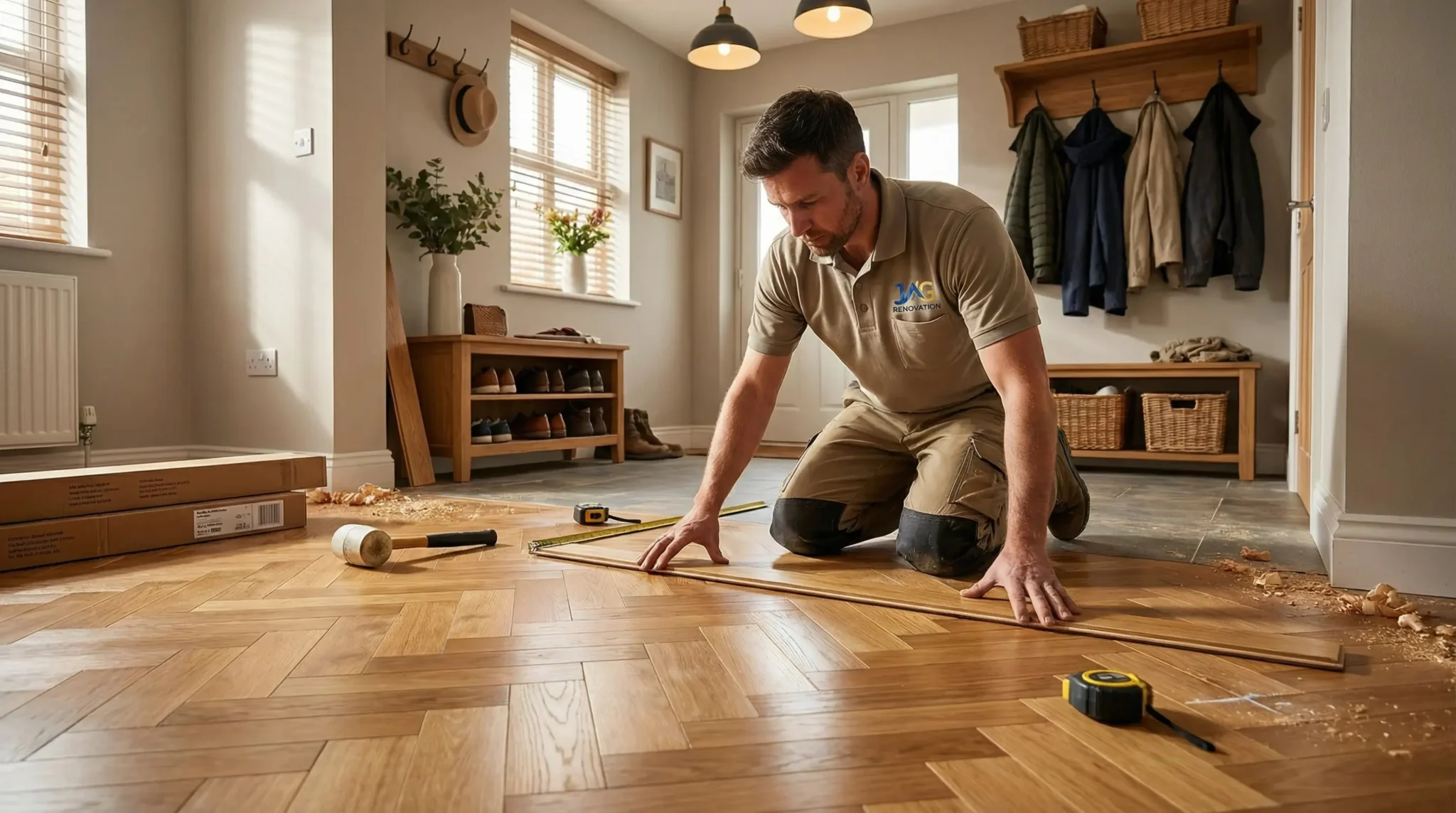
Then we install—whether it’s hardwood floor installation, tile floor installation, laminate flooring installation, or luxury vinyl plank. We take care of transitions, baseboards, and cleanup. When we’re done, the floor’s ready to use, and you’re not left with a mess or a list of things we “forgot” to finish. You get what you were promised, installed the way it should be.

Ready to get started?
We handle all the major flooring types—hardwood, engineered wood, tile, ceramic, porcelain, laminate, and vinyl. Each one has trade-offs depending on where it’s going and how you use the space. Tile flooring works well in kitchens and bathrooms where moisture is a concern. Vinyl flooring offers durability and water resistance at a lower price point, and luxury vinyl plank has become a go-to for homeowners who want the look of wood without the maintenance.
Hardwood is still the most popular choice for living areas and bedrooms in Shirley. It adds value, looks great, and lasts decades when it’s maintained. But it’s not the right fit for every room, and we’ll tell you that upfront. Laminate flooring installation is another solid option if you want the wood look on a tighter budget or in high-traffic areas where scratches are a concern.
In Shirley, where property values average over $400,000 and most homeowners plan to stay long-term, the flooring you choose matters. It affects resale value, daily comfort, and how much maintenance you’re signing up for. We walk you through those decisions based on your actual needs—not what’s easiest for us to install or what we have sitting in a warehouse.

It depends on the material, square footage, and condition of your subfloor. Vinyl and laminate tend to run lower—usually between $3 and $7 per square foot installed. Tile and hardwood cost more, typically $6 to $12 per square foot or higher depending on the product and complexity of the layout.
If your subfloor needs repair or leveling, that adds to the cost. Same goes for removing old flooring, especially if it’s glued-down tile or multiple layers of vinyl. We give you a full breakdown upfront so you know exactly where your money’s going.
For a typical Shirley home—say, 1,200 square feet of living space—you’re usually looking at somewhere between $5,000 and $15,000 depending on materials and prep work. We don’t inflate prices and we don’t lowball you just to get in the door. You get an honest number based on what the job actually requires.
Luxury vinyl plank is hard to beat if durability and easy maintenance are your top priorities. It’s waterproof, scratch-resistant, and holds up well under the kind of abuse that comes with pets and kids. It also costs less than hardwood and doesn’t need refinishing down the road.
If you prefer the real thing, engineered hardwood is a better choice than solid hardwood in active homes. It’s more stable in humid conditions and less prone to warping. You can also refinish it once or twice if it gets beat up over the years.
Tile works well in kitchens, mudrooms, and bathrooms where spills are common. It’s tough and easy to clean, though it’s cold underfoot and harder on dropped dishes. We usually recommend pairing tile in high-moisture areas with vinyl or engineered wood in the rest of the house. That gives you the best balance of performance and comfort across different rooms.
Most residential flooring projects take between two and five days depending on the size of the space and the type of floor going in. A single room—bedroom or office—might only take a day or two. A whole main floor with multiple rooms usually takes closer to a week.
Tile floor installation tends to take longer because of drying time for mortar and grout. Vinyl and laminate go down faster since there’s no curing involved. Hardwood floor installation sits somewhere in the middle, and if you’re doing a custom stain or finish, add a few extra days for that process.
We give you a realistic timeline before we start, and we don’t drag jobs out. We also don’t rush through steps that matter—like letting adhesive cure properly or making sure transitions are clean. You’ll know when we’re starting, when we’ll be working, and when the floor’s ready to use. No guessing, no waiting around for updates.
Yes, rooms need to be cleared before we start. We can help move larger furniture if needed, but the space should be as empty as possible to avoid delays and protect your belongings from dust or damage.
If you’ve got heavy items like dressers, beds, or entertainment centers, let us know ahead of time and we’ll work with you. We’ve moved plenty of furniture over the years. That said, smaller items—lamps, decor, anything breakable—should be cleared out before we arrive.
The clearer the space, the faster and cleaner the job goes. It also reduces the risk of anything getting scratched, chipped, or covered in dust during demo and installation. If you’re replacing flooring in multiple rooms, we can work in stages so you’re not living in total chaos. We’ve done this in occupied homes plenty of times and we know how to keep disruption to a minimum.
Sometimes, but not always. It depends on what’s currently down and what you’re installing. Laminate and vinyl can sometimes go over existing flooring if the surface is smooth, level, and in good shape. But if the old floor is uneven, damaged, or poorly installed, putting new material over it just hides the problem temporarily—and it’ll show up later.
Tile and hardwood almost always require removing the old flooring first. Tile needs a solid, level substrate, and hardwood needs to be nailed or glued directly to the subfloor. Trying to shortcut that process leads to movement, cracking, and premature failure.
We assess the existing floor during the estimate and let you know whether it can stay or needs to come up. If removal is necessary, we handle that too—demo, disposal, subfloor prep, everything. Our goal is a floor that lasts, not a quick install that starts failing in a year. If going over the existing surface makes sense and won’t compromise the result, we’ll tell you. If it doesn’t, we’ll explain why.
Flooring installation looks straightforward until you’re halfway through and realize the subfloor isn’t level, your cuts aren’t lining up, or the material you bought isn’t right for the space. Most DIY flooring jobs either take three times longer than expected or end up needing a professional to fix them anyway.
A licensed residential flooring contractor brings the right tools, experience, and knowledge to handle the variables that come up on every job. We know how to prep subfloors, work around irregular room shapes, handle transitions between different floor types, and choose materials that’ll actually hold up in your home. We also carry insurance, so if something goes wrong, you’re covered.
In Shirley, where most homes are 30+ years old, subfloor issues are common. Floors settle, joists shift, moisture causes damage. If you don’t catch and fix those problems before installing new flooring, you’re setting yourself up for failure. We’ve seen it dozens of times—homeowners who tried to save money on labor and ended up spending more to redo the whole thing. If you want it done right the first time, hire someone who does this every day.