
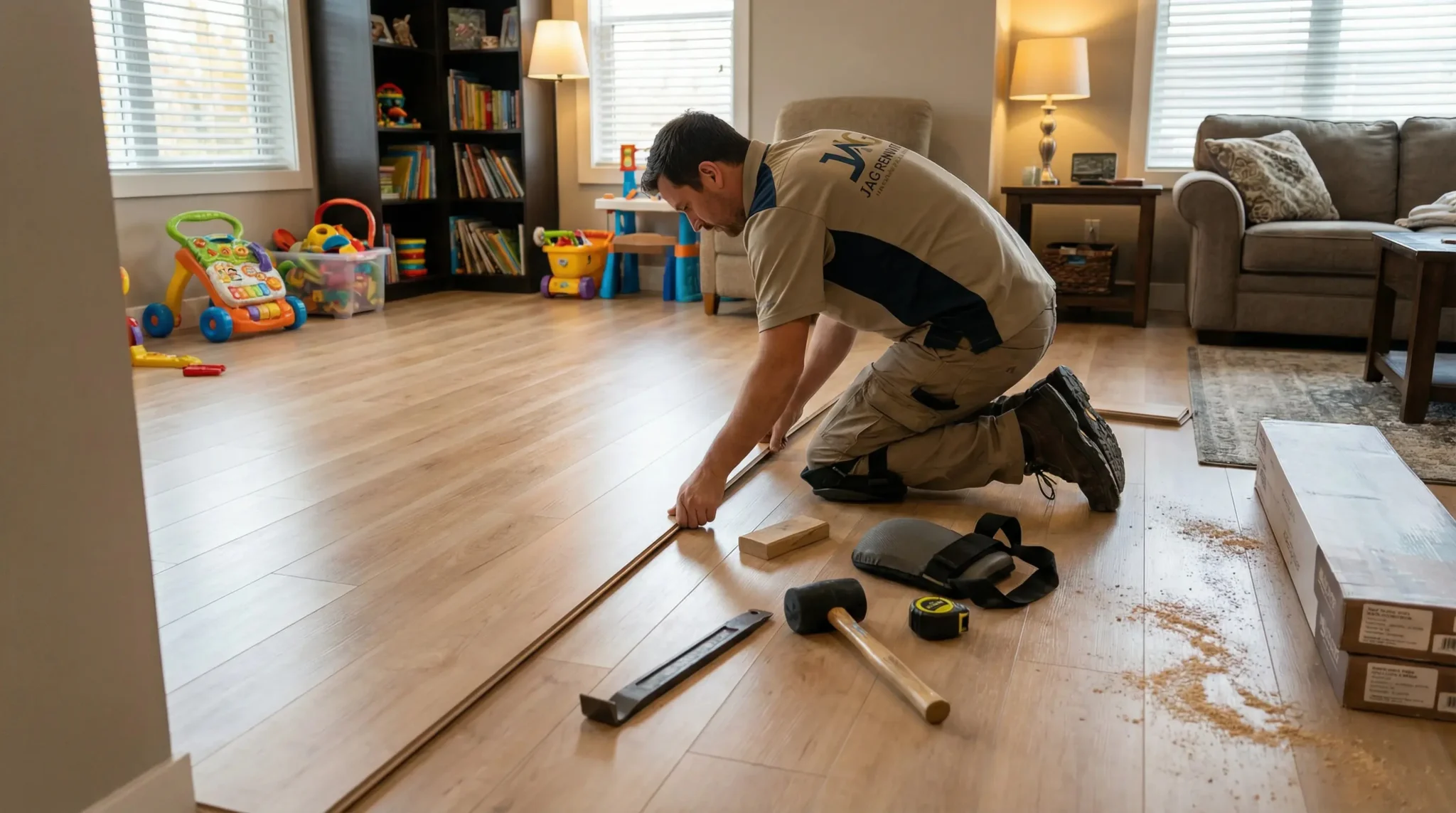
Hear from Our Customers
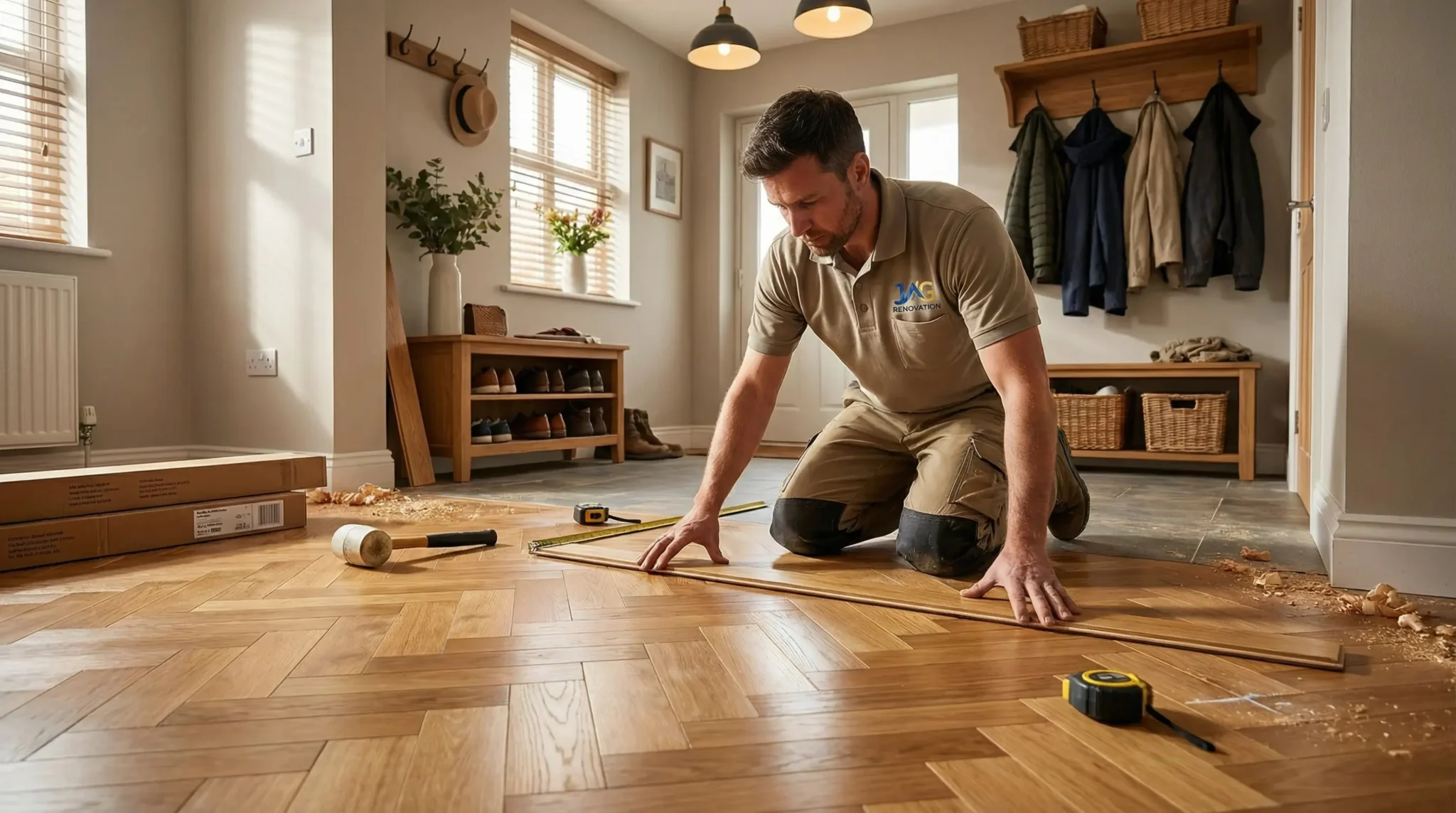
You’re not just buying new floors. You’re buying years without callbacks, without gaps opening up when the humidity shifts, without that nagging feeling that something wasn’t done right.
Proper flooring installation in Springs means understanding how coastal moisture affects different materials. Hardwood needs time to acclimate to your home’s humidity levels before installation. Vinyl flooring requires subfloor prep that accounts for temperature swings. Tile work demands precision so grout lines don’t crack when your house settles.
When it’s done right, you get floors that look better longer. No premature wear patterns. No buckling when summer humidity rolls in. Just solid performance that holds up to whatever your household throws at it—kids, pets, beach sand tracked through the mudroom, all of it.
Jaguar Renovations has spent nearly a decade working on Springs homes, which means we’ve seen what happens when flooring isn’t installed with local conditions in mind. We’ve fixed the gaps, the warping, the tile that cracked because someone rushed the job.
We’re licensed and insured residential flooring contractors who handle the full scope—from helping you pick materials that make sense for your space to the final cleanup. No subcontractors playing telephone with your project details. No finger-pointing when something needs attention.
Springs homeowners deal with specific challenges. Salt air. Humidity that fluctuates. Homes that see heavy seasonal use. Your floors need to account for all of it, and that’s what we build into every installation.

First, we come look at your space. We’re checking subfloor conditions, measuring moisture levels, talking through how you actually use each room. A kitchen needs different flooring than a bedroom, and we’re not selling you the same solution for every space.
Then we talk materials. Laminate flooring installation makes sense for high-traffic areas where you want durability without the hardwood price tag. Vinyl flooring works in bathrooms and basements where water resistance matters. Tile flooring gives you that clean, timeless look in entryways and kitchens. We walk through the real pros and cons based on your lifestyle and budget.
Once you’re clear on the plan and pricing, we schedule the work. Materials acclimate in your home for the right amount of time—this isn’t negotiable, it’s how you prevent problems later. Then we prep the subfloor properly, install with attention to expansion gaps and transitions, and clean up completely. You get a walkthrough at the end so you know exactly what was done and how to maintain it.
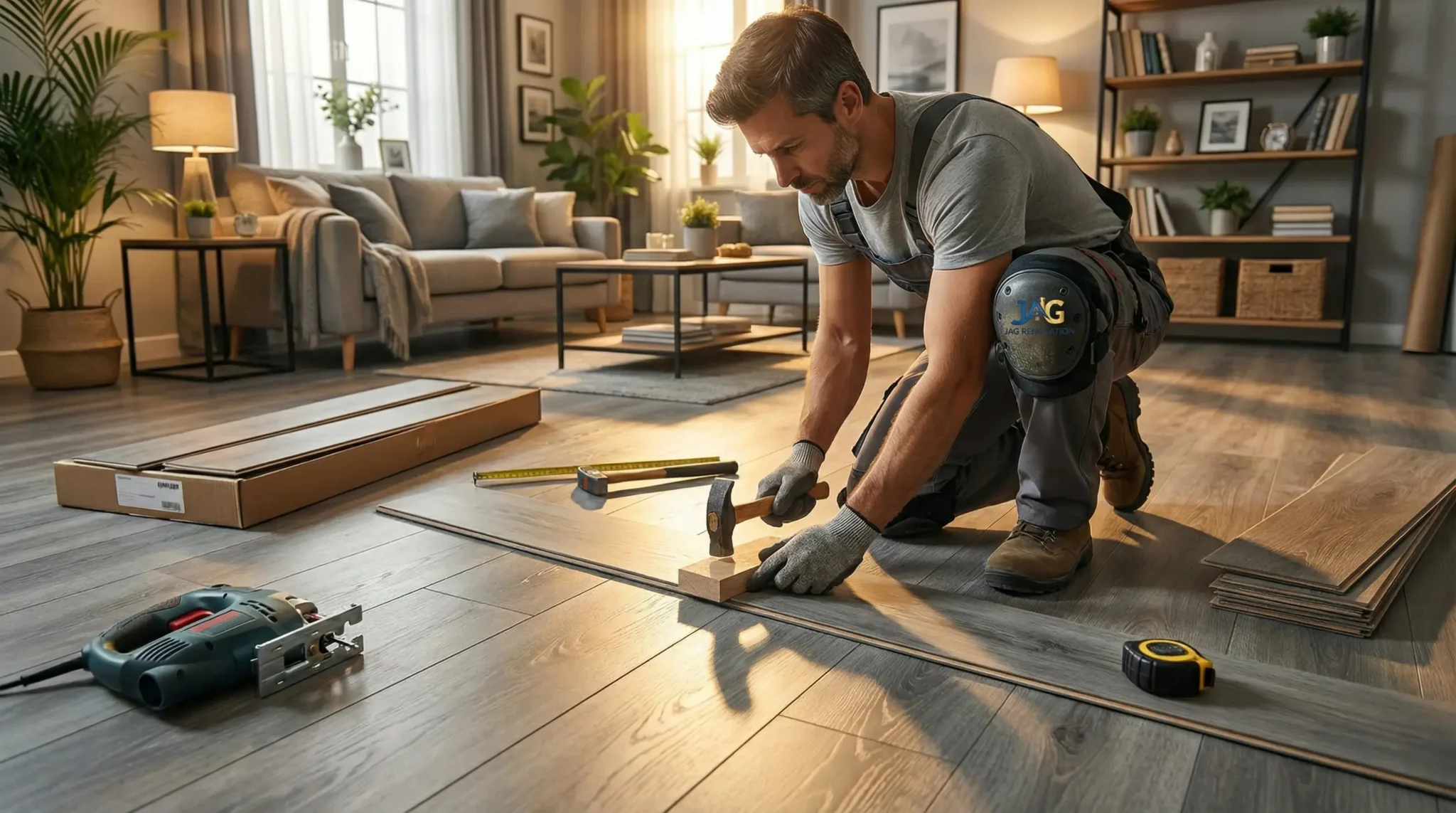
Ready to get started?
When you hire us to replace flooring in your house, you’re getting the full scope. We pull up old flooring and haul it away. We assess and prep the subfloor—fixing squeaks, leveling low spots, addressing moisture issues before they become your problem. Then we install your new floors with proper expansion space, clean transitions between rooms, and attention to how everything sits level with existing thresholds.
Springs homes often need extra moisture mitigation. We’re checking relative humidity and subfloor moisture content before any hardwood or laminate goes down. For tile floor installation, we’re using proper underlayment and setting materials that won’t fail when your house shifts. For ceramic tile floor installation specifically, we’re spacing joints correctly and using flexible grout in areas that see movement.
You also get transparent communication through the whole process. No surprises about timeline or cost. No “we found something” upcharges that weren’t discussed. If we see an issue, we tell you what it is, what it costs to fix, and why it matters. Then you decide.

Engineered hardwood and luxury vinyl plank perform exceptionally well here. Solid hardwood can work, but it’s more sensitive to the humidity swings you get near the coast. Engineered hardwood has a plywood core that stays more stable when moisture levels change, which means less expansion and contraction through the seasons.
Luxury vinyl flooring is completely waterproof, which makes it ideal for bathrooms, basements, mudrooms—anywhere moisture is a concern. It’s also scratch-resistant and holds up well to sand and grit that gets tracked in from the beach. The quality has improved dramatically in recent years, and well-installed vinyl can give you 70-80% return on investment if you sell.
For tile, porcelain is your best bet. It’s denser and less porous than ceramic, so it handles moisture better and won’t absorb salt or humidity over time. Just make sure whoever installs it uses the right setting materials and grout for a coastal environment, or you’ll see cracking and deterioration faster than you should.
For a single room, figure 1-2 days for most flooring types. A whole-house job usually runs 3-5 days depending on square footage and how much prep work the subfloor needs. But here’s what most homeowners don’t account for: acclimation time.
Hardwood and laminate need to sit in your home for at least 48-72 hours before installation. This lets the material adjust to your home’s temperature and humidity levels. Skip this step and you risk gaps or buckling later when the flooring expands or contracts. In Springs, where humidity can swing significantly, this isn’t optional.
Tile work takes longer because of cure times. We can install in a day or two, but you can’t walk on it or grout it immediately. Grout needs 24-48 hours to cure before the floor is ready for furniture and normal use. Rushing any of these timelines is how you end up with problems six months down the road, so we build the proper time into every project from the start.
If your existing floors are in decent shape and you’re only redoing one or two rooms, matching can work—but it’s harder than most people expect. Wood flooring changes color over time from UV exposure and oxidation. Even if you find the same product line, the new boards will look noticeably different next to your existing floors for a year or more until they age to match.
Laminate and vinyl are even trickier because manufacturers discontinue styles regularly. You might find something close, but the texture, sheen, or thickness could be slightly off, and that difference shows at the transition point.
Starting fresh gives you a clean slate and eliminates the matching headache. If budget is tight, consider creating a natural transition point—different flooring in the kitchen versus living areas, or a threshold between the addition and original house. This looks intentional rather than like a failed matching attempt. We can walk through your specific layout and show you what makes sense visually and practically for your home.
Material costs vary widely. Luxury vinyl runs $3-7 per square foot. Laminate flooring is similar, $3-8 per square foot depending on quality. Engineered hardwood jumps to $6-15 per square foot. Solid hardwood can hit $8-22 per square foot for premium species. Tile ranges from $5-15 per square foot for most porcelain and ceramic options.
Installation adds another layer. Vinyl and laminate are faster to install, so labor costs stay reasonable. Hardwood installation is more involved—subfloor prep, acclimation time, precise cuts around transitions. Tile floor installation is the most labor-intensive because of the prep work, setting, grouting, and cure time involved.
For a typical 1,000 square foot project in Springs, you’re looking at $5,000-$12,000 for vinyl or laminate installed, $8,000-$18,000 for engineered hardwood, and $10,000-$25,000 for solid hardwood or custom tile work. The range depends on material grade, subfloor condition, and layout complexity. We give you exact numbers upfront so there’s no guessing about what this actually costs for your specific project.
Squeaks are the obvious sign—they mean your subfloor isn’t properly secured to the joists. Soft spots indicate water damage or rot that needs addressing before any new flooring gets installed. Visible dips or humps mean the subfloor isn’t level, which will cause problems with any flooring type you put over it.
Moisture is the bigger concern in Springs. We test subfloor moisture content with a meter before any installation. Concrete slabs can wick moisture up from the ground, especially in basements or homes without proper vapor barriers. Wood subfloors can hold moisture from old leaks, high humidity, or poor ventilation. If moisture levels are too high, new flooring will fail—hardwood will cup, laminate will swell, adhesives will break down.
Fixing subfloor issues adds cost and time, but it’s not optional. Installing over a bad subfloor is how you end up ripping out brand new floors a year later. We assess everything during the initial visit and tell you exactly what your subfloor needs before we quote the flooring work. No surprises after we’ve already started the job.
We focus primarily on residential flooring in Springs and throughout Suffolk County, but we do take on smaller commercial projects—offices, retail spaces, rental properties. Commercial work has different requirements than residential. You need flooring that handles heavier traffic, meets specific building codes, and often needs to be installed on a tighter timeline to minimize business disruption.
For commercial flooring, we typically recommend luxury vinyl plank or commercial-grade tile. Both offer serious durability and are easier to maintain than carpet or hardwood in a business setting. Vinyl holds up to rolling chairs, foot traffic, and frequent cleaning without showing wear. Tile works well in entryways and high-traffic zones where you need something that looks professional and lasts.
If you’re a property manager or business owner in Springs looking for a commercial flooring contractor, reach out and we’ll talk through what makes sense for your space and timeline. We approach commercial projects the same way we handle residential work—transparent pricing, quality installation, no runaround when you need straight answers about what your project requires.