
Hear from Our Customers
You’re not just picking a color. You’re choosing something that needs to survive wet shoes from the beach, humidity that makes wood swell, and the kind of daily wear that comes with actually using your home.
Most flooring fails because it wasn’t built for Long Island. Traditional hardwood warps. Cheap laminate bubbles. Tile cracks when the subfloor wasn’t prepped right.
The difference is in what happens before installation. We assess your subfloor for moisture issues common in Suffolk County homes. We use self-leveling compounds to create a flat surface. We recommend materials based on your specific room conditions, not what’s trendy. Waterproof luxury vinyl for basements prone to dampness. Porcelain tile for entryways that see salt and sand. Engineered hardwood that adapts to humidity changes without cupping.
You get floors that hold up because they were installed right from the start. No callbacks for buckling. No regrets six months in when you realize the cheaper option wasn’t cheaper at all.
We’ve been doing interior renovations across Suffolk County since 2016. That’s enough time to see what holds up and what doesn’t in homes from Wheatley Heights to the coast.
We’re not a flooring store trying to move inventory. We’re a residential flooring contractor focused on installation quality. That means honest recommendations about what works in your specific home, not sales pressure to upsell you on materials that don’t fit your needs.
Our work is transparent. We walk you through subfloor prep, explain why certain products handle moisture better, and give you realistic timelines. No hidden costs. No surprises halfway through the job. Just straightforward communication and floors installed the way they should be.

We start with an assessment of your existing floors and subfloor condition. This matters more than most homeowners realize. Sandy soil near the coast behaves differently than clay soil inland. Coastal homes deal with salt air. Inland homes face basement moisture from groundwater. We check for rot, levelness, and moisture issues before recommending materials.
Next is subfloor preparation. A new floor is only as good as what’s underneath. We repair any rotted sections, use self-leveling compounds where needed, and ensure you have a perfectly flat surface. This step gets skipped by contractors in a hurry. We don’t skip it.
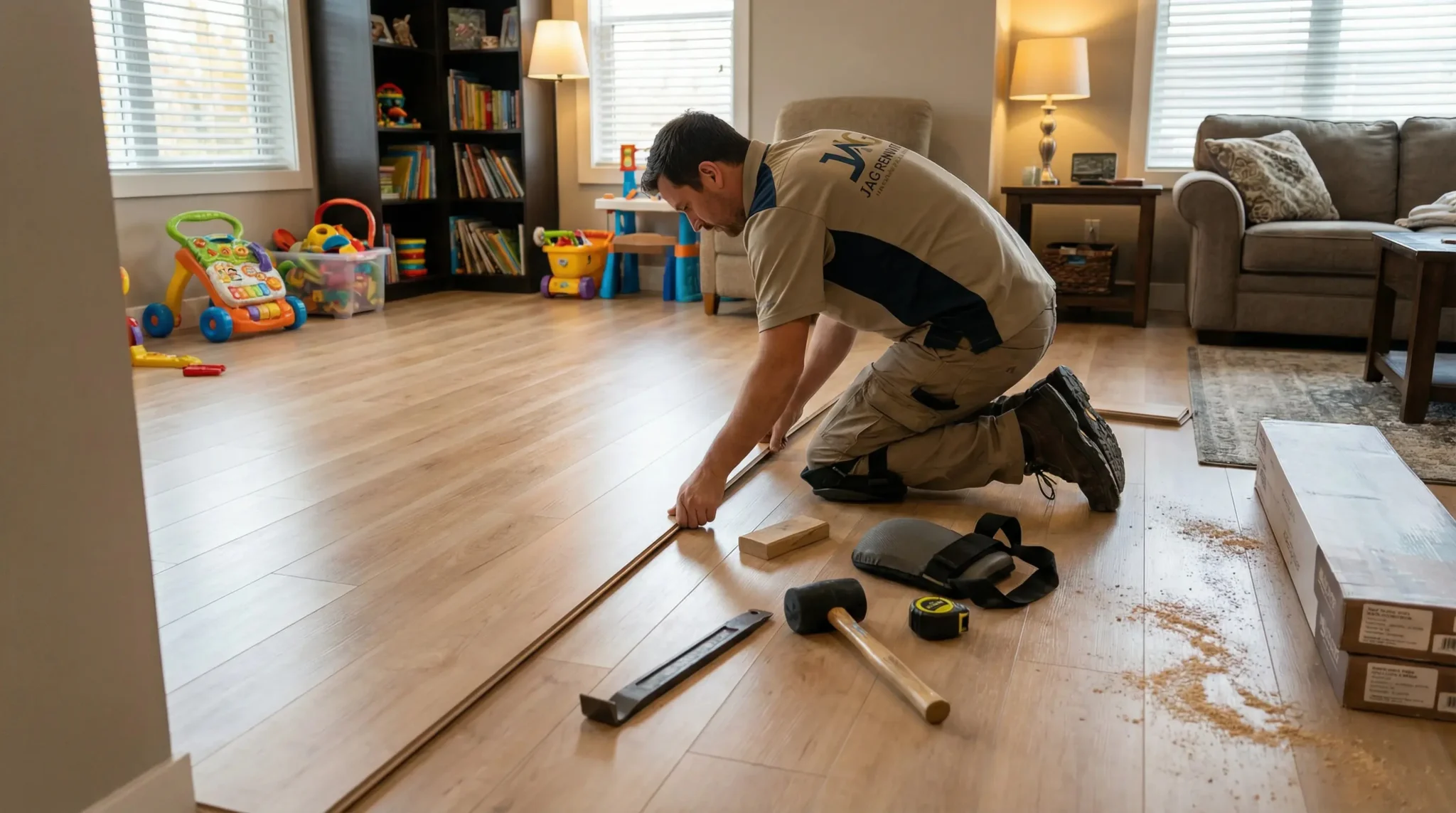
Then comes installation. We use modern equipment that minimizes dust. For hardwood refinishing, our sanders connect to vacuums that capture most debris. For tile flooring work, we protect your home and contain the mess to the work area. You’ll see progress daily, and we clean up thoroughly before we leave each day.
Final walkthrough happens when everything’s done. We show you care instructions specific to your flooring type and answer any questions about maintenance. You should know exactly how to protect your investment.

Ready to get started?
Luxury vinyl plank has become the go-to for Suffolk County homeowners dealing with moisture. It’s fully waterproof, scratch-resistant, and mimics hardwood without the maintenance. Perfect for kitchens, basements, and homes with kids or pets. The durability is unmatched for high-traffic areas.
Tile flooring installation works well for entryways and bathrooms where water exposure is constant. We install ceramic tile and porcelain, both of which handle the salt and sand tracked in from nearby beaches. Proper waterproofing underneath prevents the cracking you see in rushed jobs.
Hardwood flooring still has a place, but it needs to be engineered hardwood in this climate. Solid hardwood expands and contracts too much with our humidity swings. Engineered wood has a plywood base that stays stable while giving you that natural wood look. Current trends favor light, natural finishes over dark stains—they make rooms feel larger and brighter.
Laminate flooring installation offers a budget-friendly option that’s improved significantly. Modern laminate is more moisture-resistant than older versions, though it’s still not fully waterproof. Good for bedrooms and living areas with less water risk.
We also handle carpet installation where it makes sense, though fewer Suffolk County homeowners choose wall-to-wall carpet now. Moisture concerns and allergen buildup make hard surfaces more practical for most rooms.

Waterproof luxury vinyl plank is your safest bet for most rooms in Suffolk County. Traditional hardwood and standard laminate can’t handle the moisture levels here. The humidity from coastal air, combined with the way our sandy and clay soils hold water differently depending on where you are in Wheatley Heights, creates conditions that make solid wood flooring a risk.
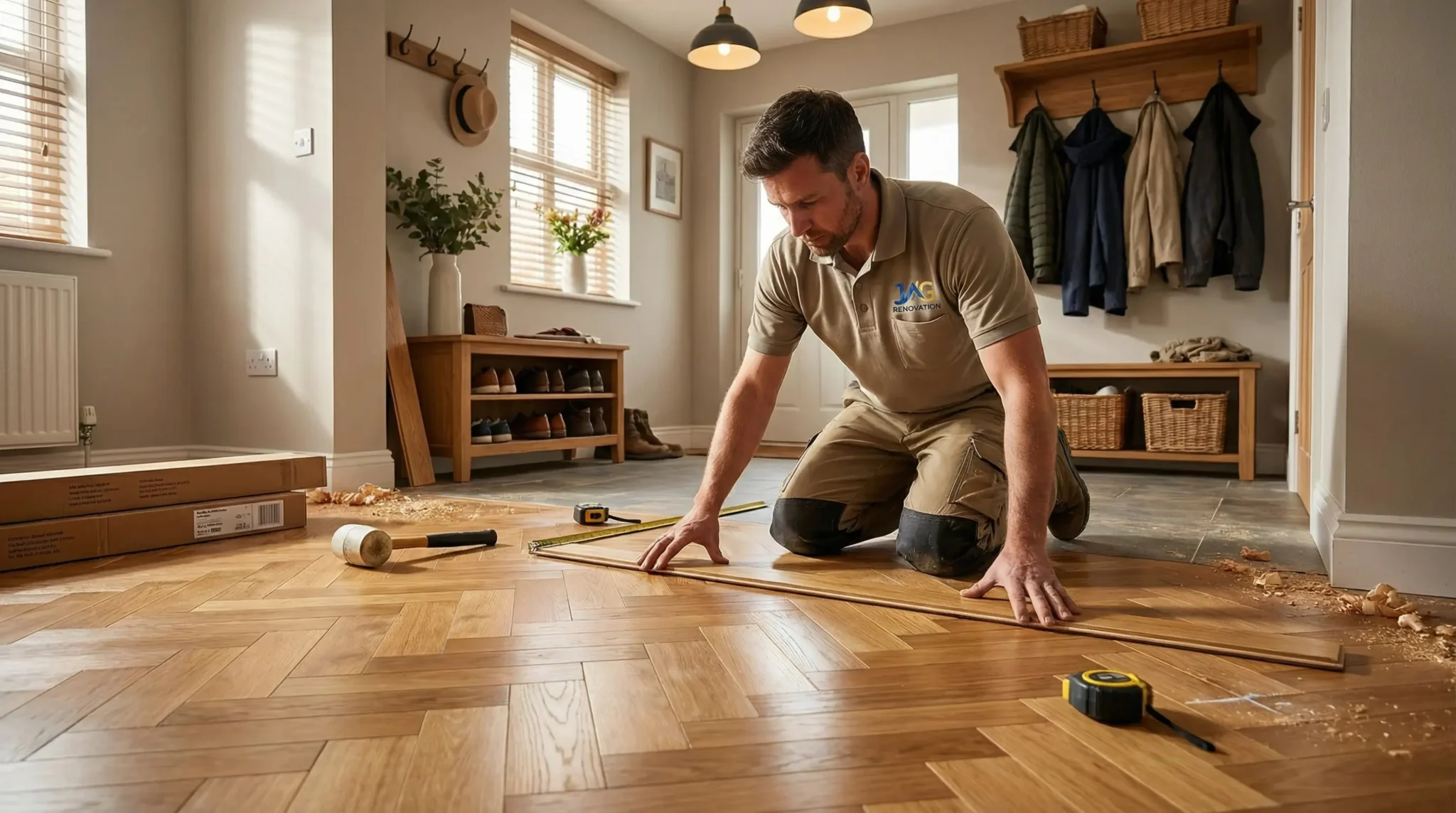
Engineered hardwood works if you want the real wood look. The construction—a thin hardwood layer over plywood—adapts to humidity changes without the cupping and warping you get with solid planks. For wet areas like bathrooms, mudrooms, and basements, porcelain or ceramic tile gives you true waterproofing.
The key is matching the material to the specific room conditions in your home. We assess your subfloor moisture levels and recommend accordingly. What works in a second-floor bedroom won’t work in a below-grade basement.
A single room typically takes two to four days depending on the material and subfloor condition. That includes removing old flooring, prepping the subfloor, and installing new material. Tile takes longer because of mortar and grout curing times. Vinyl plank can often be walked on the same day.
Whole-house projects take one to two weeks for most Wheatley Heights homes. The timeline extends if we find subfloor damage that needs repair—not uncommon in older Suffolk County homes where moisture has been an issue. Hardwood refinishing of existing floors takes three to five days including sanding, staining, and finish coats with proper drying time between.
We give you a realistic schedule upfront. Contractors who promise unusually fast timelines often cut corners on subfloor prep or use inferior materials that install quicker but don’t last. The goal isn’t speed. It’s doing it right so you’re not dealing with problems six months later.
We strongly recommend against DIY hardwood refinishing unless you have professional experience. The equipment is expensive to rent, difficult to control, and easy to misuse in ways that permanently damage your floors. Drum sanders can gouge wood in seconds if you pause in one spot. Edgers require technique to blend properly with the main floor area.
The dust issue alone is significant. Even with vacuum attachments, sanding creates fine particles that infiltrate every room in your house and take weeks to fully clean. Professional equipment and containment methods minimize this, but homeowner-grade rentals don’t have the same capabilities.
Then there’s the finish application. Uneven stain, bubbles in polyurethane, or improper drying conditions create problems that require complete re-sanding to fix. You’ll spend more time and money correcting mistakes than you would have spent hiring us from the start. The labor intensity and skill requirement make this one of those projects that looks simpler than it actually is.
Subfloor prep determines whether your new floor lasts five years or twenty-five years. We start by removing existing flooring down to the subfloor—usually plywood or concrete. Then we inspect for water damage, rot, or structural issues. In Suffolk County homes, we commonly find moisture problems in basements and crawl spaces that need addressing before any new flooring goes down.
Levelness is critical. We use self-leveling compound to fill low spots and grind down high spots. Even small variations cause tile to crack, vinyl to show seams, and hardwood to feel uneven underfoot. The subfloor needs to be flat within industry standards—typically within 3/16 inch over 10 feet.
Moisture testing comes next for concrete subfloors. We check moisture vapor emission rates because excess moisture will destroy most flooring materials from underneath. If levels are too high, we apply moisture barriers or recommend flooring types that can handle it. For wood subfloors, we replace any damaged sections and ensure everything is securely fastened. Squeaks and movement indicate problems that will only get worse under new flooring.
This prep work isn’t glamorous, but it’s the difference between a floor that performs and one that fails prematurely.
Material and labor combined typically runs $8 to $15 per square foot for most residential projects. Luxury vinyl plank installation falls on the lower end at $8 to $12 per square foot installed. Tile flooring work ranges from $10 to $18 depending on tile size and pattern complexity. Hardwood installation starts around $12 and goes up based on wood species and finish.
These ranges include proper subfloor prep, which some contractors exclude to quote lower prices. If a bid seems unusually cheap, ask specifically what’s included. Skipping moisture barriers, using thin underlayment, or rushing subfloor leveling saves the contractor money but costs you in premature floor failure.
Whole-house projects in average Wheatley Heights homes (1,500 to 2,000 square feet) typically range from $12,000 to $25,000 depending on material choices. Higher-end materials like wide-plank engineered oak or large-format porcelain tile push costs up. Budget-friendly options like quality laminate or standard vinyl plank keep costs down without sacrificing durability.
We provide detailed estimates that break down material and labor separately. You’ll know exactly what you’re paying for, with no hidden fees added later.
A flooring store primarily sells materials. Many offer installation services, but it’s often subcontracted to independent installers who may or may not have experience with Suffolk County’s specific challenges. You’re buying from a salesperson whose job is moving product, not necessarily matching the right floor to your home’s conditions.
We focus on the installation itself. We’re not tied to specific product lines or inventory we need to move. Our recommendations are based on what actually works in your home—your subfloor condition, moisture levels, traffic patterns, and how Suffolk County’s climate affects different materials.
The expertise difference shows up in subfloor assessment and prep work. Flooring stores often minimize this step to keep bids competitive. We know that proper prep is non-negotiable for long-term performance. We’ve seen what happens when it gets skipped—callbacks for buckling vinyl, cracked tile, and warped wood that could have been prevented.
You also get continuity. One team handles your project from assessment through final installation. No coordination headaches between the store and a subcontractor who shows up without full context about your specific situation. Just direct communication with the people actually doing the work.