
Hear from Our Customers
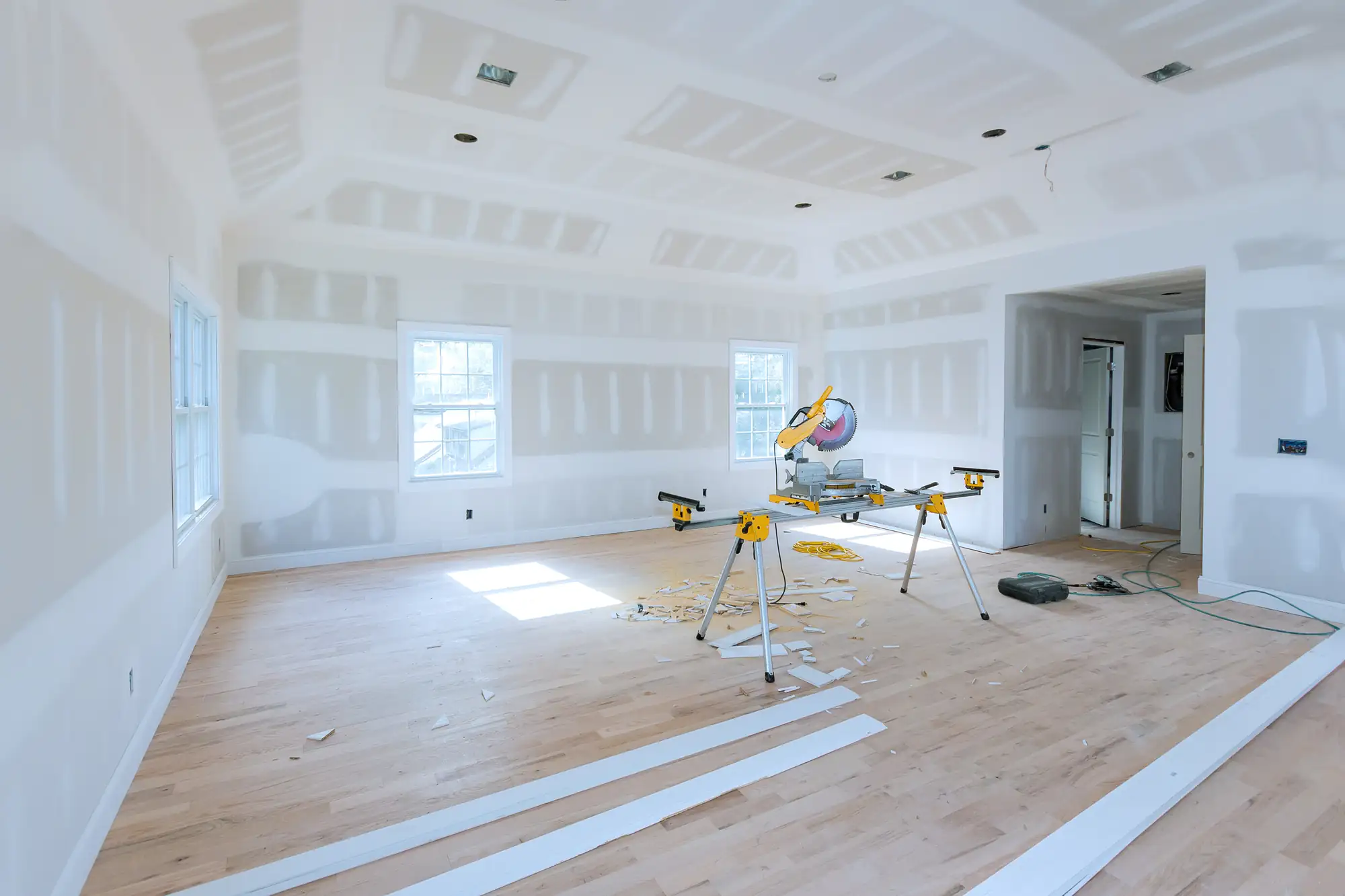
You’re not just paying for panels on studs. You’re paying for walls that don’t crack six months later because someone rushed the taping. Seams that disappear under paint instead of announcing themselves every time the light hits wrong. Corners that are actually square.
Good sheetrock work means your painter doesn’t call you halfway through the job to say the walls aren’t ready. It means you’re not staring at a bulge in your living room ceiling wondering if that’s normal. It means the money you’re spending now doesn’t turn into another bill next year when everything starts separating.
When the installation is done right, you forget about the walls entirely. That’s the point.
We’ve been handling residential sheetrock installation and drywall repair across Manorville and Suffolk County for almost ten years. We’re not a crew that showed up last month with a truck and some tools.
We know how homes in this area are built. We know the difference between a quick cosmetic patch and actual structural repair. And we know that most homeowners have already dealt with at least one contractor who overpromised and underdelivered.
That’s why we don’t do sales pressure or vague estimates. You get clear pricing, realistic timelines, and work that holds up. Manorville homeowners are dealing with a competitive market—median home values in Suffolk County are around $675K and climbing. If you’re investing in your property, the work needs to be done right.
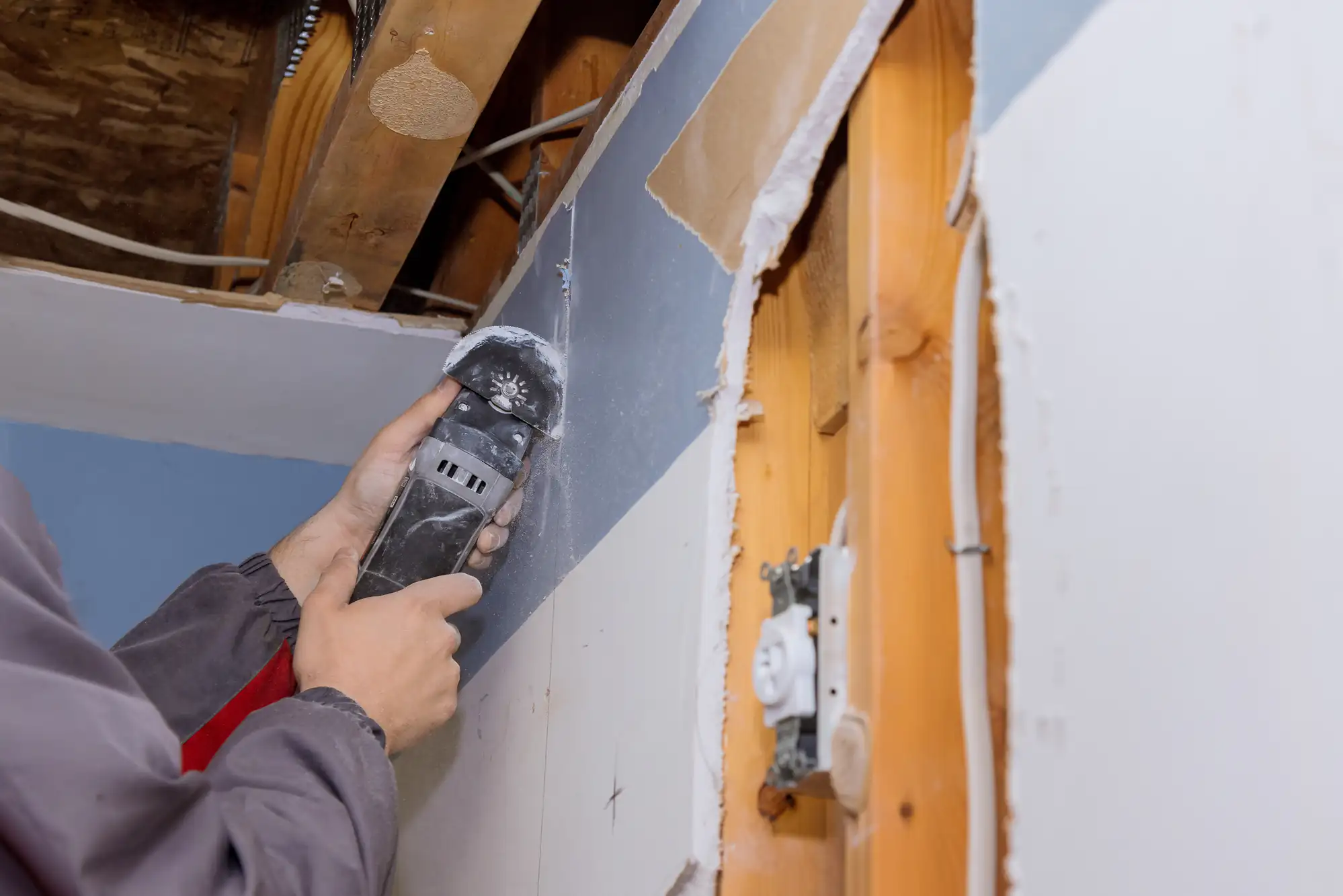
First, we look at the space. If it’s new construction, we’re measuring for panel layout and checking stud spacing. If it’s repair work, we’re identifying what caused the damage so it doesn’t happen again after we patch it.
Then we prep. That means protecting your floors and furniture, cutting panels to fit without forcing them, and making sure everything is level before we screw anything down. Screws go in flush—not popping out, not tearing the paper.
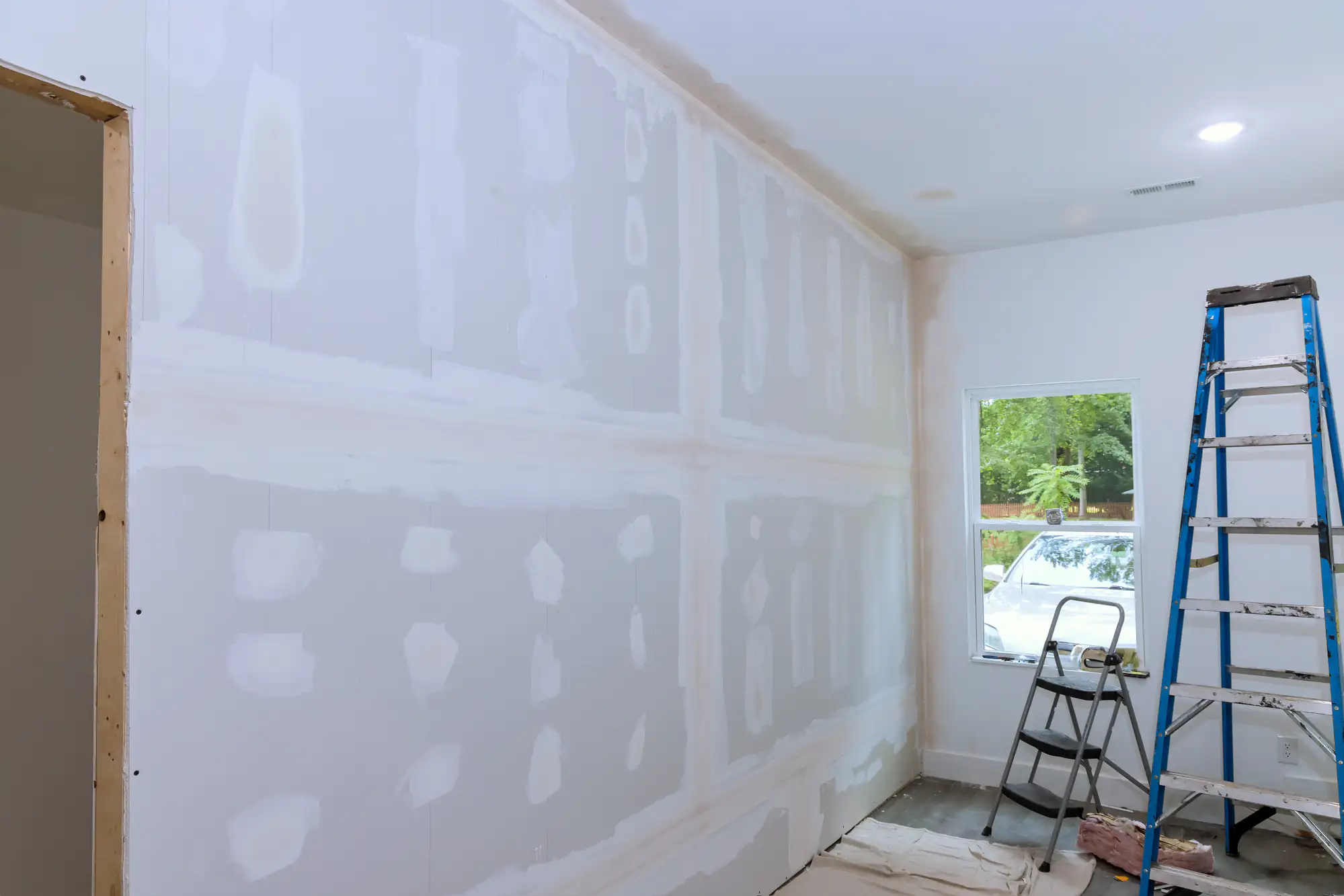
Taping and mudding come next. This is where bad contractors try to save time and ruin everything. We use the right compound for each coat, let it dry properly, and sand it smooth. The goal is a surface that’s ready for paint without extra prep work.
Finally, we clean up. You shouldn’t have dust in your vents or chunks of drywall in your yard. The job’s not done until the space is livable again.
Ready to get started?
You’re getting full sheetrock installation for new builds or renovations. That includes measuring, cutting, hanging, taping, mudding, and finishing to a smooth, paint-ready surface. We handle ceilings, walls, and tricky spaces like stairwells or vaulted areas.
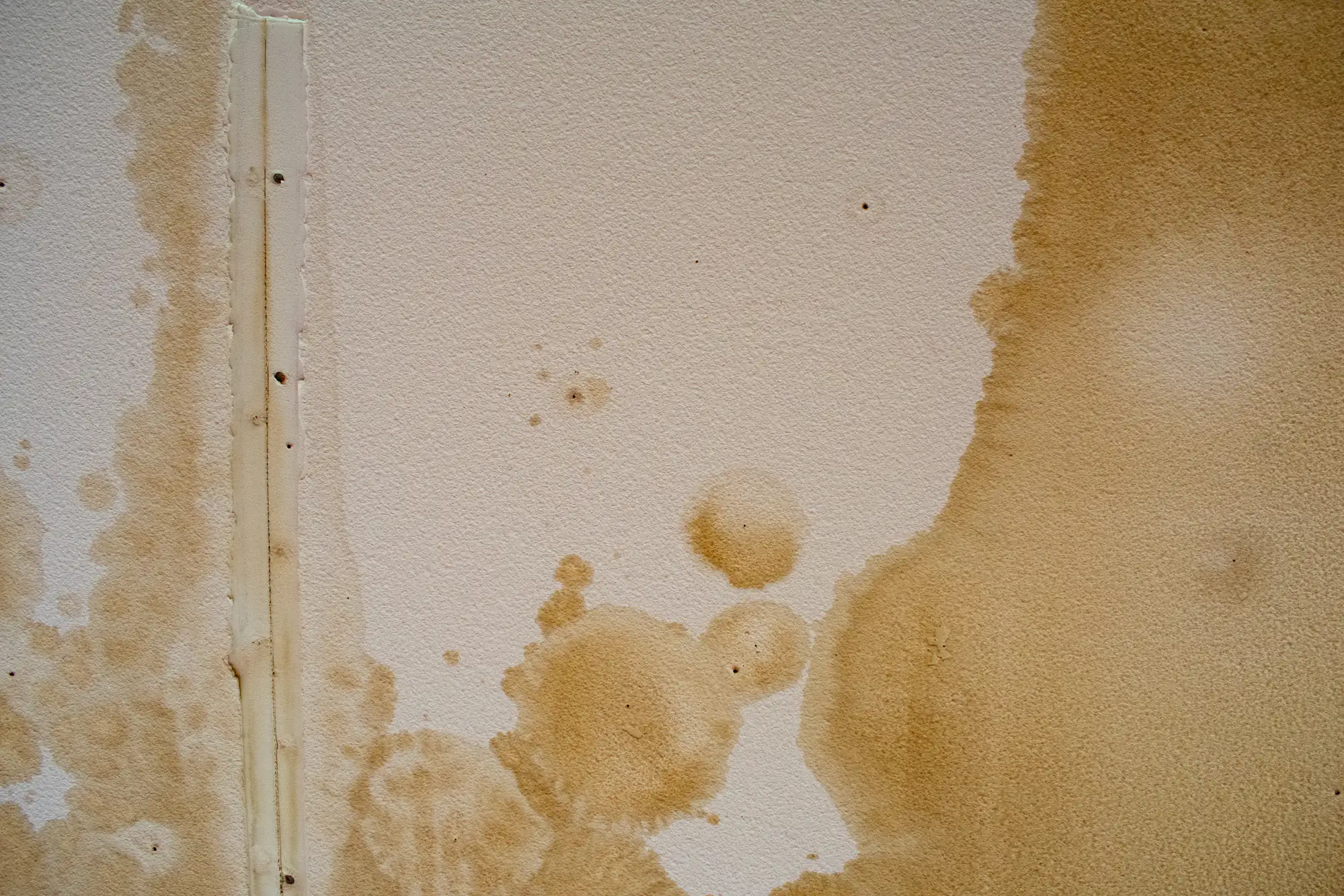
For repairs, we assess the damage first. A small hole gets patched and blended. Water damage means we’re checking for mold and replacing sections, not just covering it up. Cracks get properly reinforced so they don’t reappear in three months.
Manorville homeowners are often dealing with older homes that need updates or newer builds that need finishing work. Either way, the drywall needs to match the rest of the house. We’re not leaving visible seams or texture mismatches that make it obvious where the repair was.
Suffolk County’s housing market is strong, but that also means renovation costs are climbing. The average home renovation here runs between $15 to $60 per square foot. If you’re spending that kind of money, the foundational work—like your walls—needs to be solid. Cutting corners on sheetrock just means you’re paying twice.
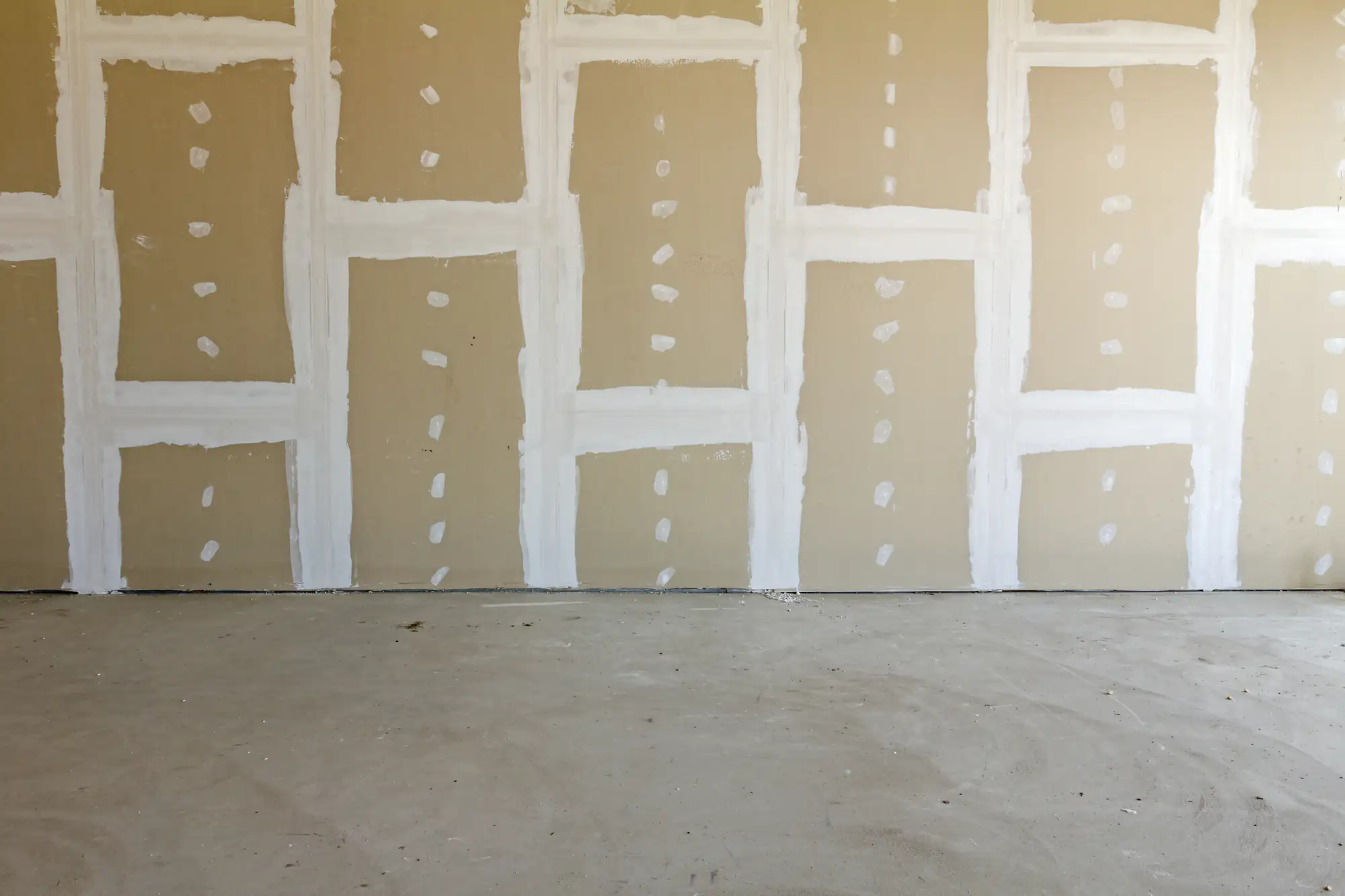
For a standard room—say 12×14 feet—you’re looking at about two to three days for complete installation and finishing. Day one is hanging the panels. Day two is taping and applying the first coats of joint compound. Day three is sanding and final coats.
Larger projects like finishing a basement or adding a new room can take a week or more, depending on the square footage and how many corners, windows, or obstacles are involved. Repairs are faster—small patches can be done in a day, though the compound needs time to dry before you can paint.
The timeline also depends on whether we’re working around other trades. If electrical or plumbing is still being finished, that pushes things back. We’ll give you a realistic schedule upfront so you’re not guessing when your space will be usable again.
Repair works when the damage is localized—a hole from moving furniture, a crack from settling, or a small water stain that’s been dried out. We cut out the damaged section, patch it with new material, and blend it into the existing wall. It’s faster and cheaper than replacing entire panels.
Full replacement is necessary when the damage is widespread or structural. If water has soaked through multiple panels, if there’s mold behind the drywall, or if the material is crumbling, patching won’t fix it. You need new sheets installed properly.
Some contractors will try to patch everything to save time, but that just means the problem comes back. We’ll tell you honestly whether a repair will hold or if replacement is the smarter move. Manorville’s older homes sometimes have outdated drywall that’s worth replacing entirely during a renovation—it’s a chance to upgrade insulation and wiring access at the same time.
For straightforward installation, expect to pay between $1.50 and $3.00 per square foot for materials and labor. A 500-square-foot basement finish would run roughly $750 to $1,500 just for the drywall work, not counting framing, insulation, or paint.
Repairs are usually priced by the job, not square footage. A small patch might be $150 to $300. Larger repairs involving multiple panels or water damage can run $500 to $1,200 depending on what’s behind the wall.
The price changes based on ceiling height, texture matching, and access. If we’re working in a tight crawl space or dealing with a two-story foyer, that takes more time and effort. We’ll give you a clear estimate after seeing the space—no ballpark guesses that turn into surprise charges later. Suffolk County pricing tends to run higher than other parts of New York because of demand and cost of living, but you’re also getting experienced local contractors who know the area’s building standards.
Yes, but it depends on what texture you currently have. Smooth walls are the easiest to match—we sand the patch flush and it blends in completely. Orange peel or knockdown textures take more work but are still very doable with the right tools and technique.
Popcorn ceilings are trickier. If your ceiling was textured before the 1980s, it might contain asbestos, which means we can’t disturb it without proper testing and abatement. For newer popcorn, we can match it, but the repair will always be slightly visible up close because the spray pattern is hard to replicate perfectly.
The goal is to make the repair invisible from normal viewing distance. If you’re standing in the doorway, you shouldn’t see where the patch was. If you’re two inches away with a flashlight, you might notice a slight difference—but that’s true for any repair. We’ll show you samples or test spots before finishing the whole area so you know what to expect.
Yes. We’ve patched single nail pops and we’ve finished entire basements. The approach is different, but the standard is the same—clean work that lasts.
Small jobs are straightforward. You’ve got a hole or a crack, we fix it, and you move on. We don’t blow these out of proportion or try to upsell you into replacing a whole wall when a patch will do the job.
Larger renovations require more coordination. If you’re gutting a kitchen or adding a primary suite, the sheetrock work is happening alongside electrical, plumbing, and HVAC. We work with other trades to make sure everything is sequenced properly and nothing gets damaged after we’ve already finished a section.
Manorville homeowners are often balancing renovation costs with property value. Suffolk County’s housing market is competitive, and smart upgrades can add real value. Whether it’s a small fix before listing your home or a full remodel to make the space work better for your family, the drywall is part of the foundation. We handle both ends of that spectrum without treating one like it’s less important than the other.
Most cracks come from movement—either the house settling, temperature changes causing expansion and contraction, or poor installation where the seams weren’t reinforced properly. Corners and ceiling joints are the most common spots because that’s where stress concentrates.
If the crack is from settling and the house is done moving, a proper repair with mesh tape and multiple coats of compound will hold. If the house is still shifting—common in newer builds or homes with foundation issues—the crack might reappear no matter what. In that case, we’re looking at the underlying cause, not just the symptom.
Poor installation is fixable. If the original contractor didn’t use enough screws, didn’t tape the seams correctly, or rushed the mudding, we redo it the right way. That means pulling off loose tape, reinforcing the joint, and building up the compound in thin, even layers. It takes longer, but it’s the only way to make sure the crack doesn’t come back next season. We’ve seen plenty of Manorville homes where a quick cosmetic patch failed within a year—we’d rather do it once and have it last.