
Hear from Our Customers
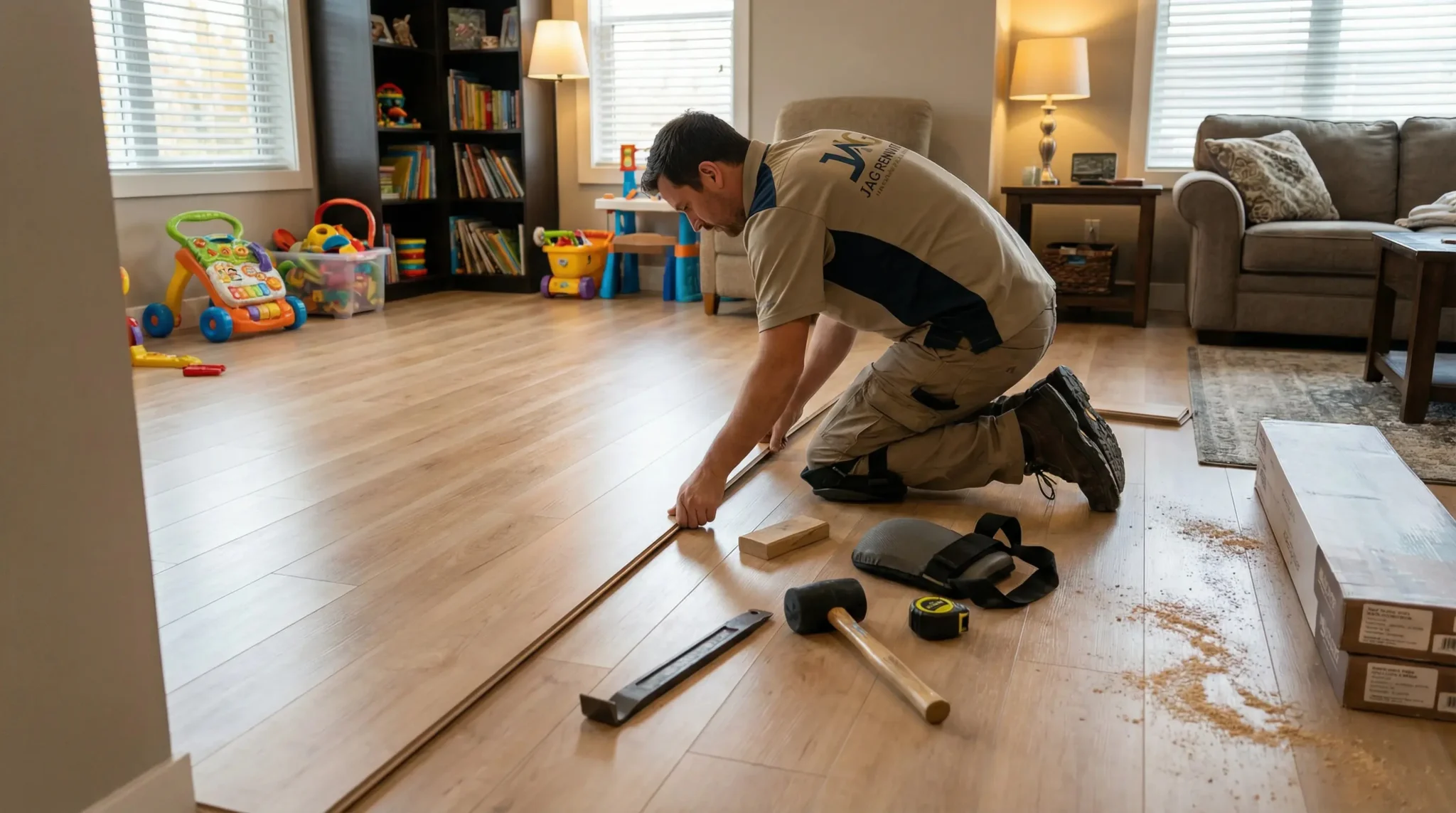
Your floors take more abuse than almost anything else in your house. Kids, pets, furniture, spills, foot traffic—it all adds up. When you replace flooring in your house, you’re not just changing how a room looks. You’re changing how it functions.
Good flooring installation means you’re not dealing with creaking, lifting edges, or uneven transitions six months later. It means the finish holds up and the seams stay tight. If you’re selling eventually, hardwood alone can recover over 100% of your investment and bump your property value by 3-5%. That’s not decorating—that’s a financial decision.
The difference between a floor that lasts and one that doesn’t usually comes down to who installed it. Professional work means precise fitting, proper adhesion, and transitions that don’t catch your toe every time you walk through a doorway. You shouldn’t have to think about your floors after they’re in. That’s the point.
We’ve been handling flooring projects across Brookhaven and Suffolk County for nearly 10 years. We’re not the biggest name in the area, and we’re fine with that. What matters more is that we show up, do the work right, and don’t bury you in hidden fees or high-pressure sales tactics.
Brookhaven’s housing stock is older—most homes here were built before 2000. That means floors that have seen decades of wear, subfloors that sometimes need attention, and layouts that don’t always play nice with modern materials. We’ve worked in enough local homes to know what to expect and how to handle it.
You’ll work with licensed, insured contractors who’ve done this enough times to spot problems before they become expensive surprises. No runaround. No disappearing after the deposit clears. Just straightforward work and communication that doesn’t leave you guessing.

First, we come to your house and look at what you’re working with. We’ll talk about what you want, what your space can handle, and what makes sense for your budget. If your subfloor has issues, we’ll tell you upfront—not three days into the job.
Once you approve the plan and pricing, we schedule the work. We’ll let you know exactly when we’re starting, how long it’ll take, and what kind of disruption to expect. Most residential flooring projects take anywhere from a few days to a week, depending on square footage and material. If we’re doing tile flooring installation or ceramic tile floor installation, there’s drying time to factor in. Laminate and vinyl flooring typically go faster.
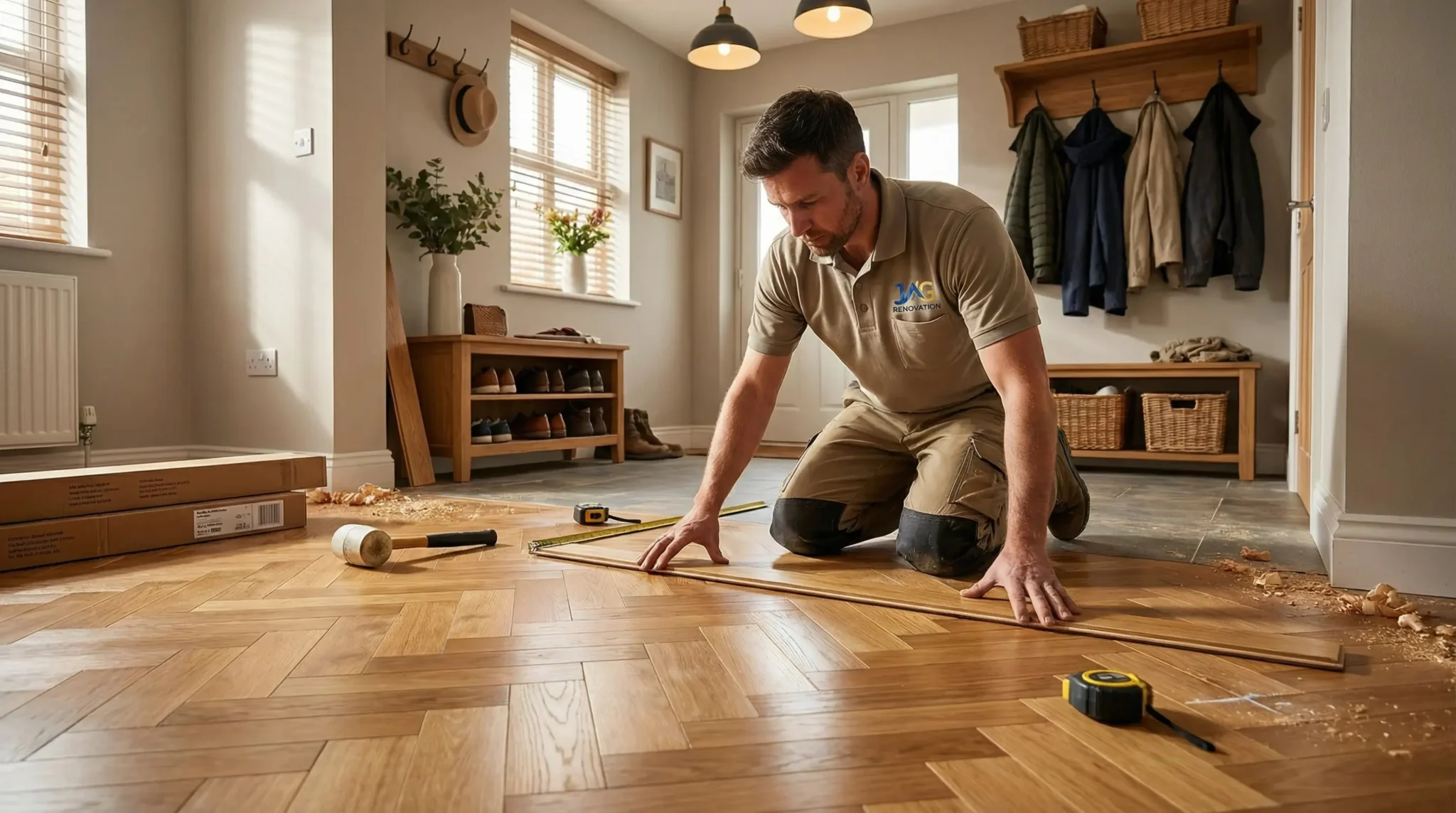
During installation, we handle the prep work, the actual install, and the cleanup. If we’re working with hardwood, we use modern sanding equipment with vacuum systems to keep dust under control. When the job’s done, we walk through it with you to make sure everything’s right. You shouldn’t have questions left hanging or touch-ups you need to chase us down for later.

Ready to get started?
Brookhaven sits on Long Island, which means humidity, temperature swings, and proximity to salt air. Not every flooring material handles that well. Hardwood is still the most popular choice for resale value and aesthetics, but it needs proper acclimation and finishing to hold up in this climate.
Vinyl flooring and luxury vinyl plank have become go-to options for homeowners who want the look of wood or tile without the maintenance. They’re waterproof, durable, and handle the kind of daily abuse that comes with family life. Laminate flooring installation is another solid middle-ground option—affordable, versatile, and easier to replace down the road if your needs change.
Tile works well in kitchens, bathrooms, and entryways where moisture is a factor. Ceramic tile floor installation is straightforward and holds up for decades if it’s done right. We also handle carpet in bedrooms and basements, though most Brookhaven homeowners are moving away from wall-to-wall carpet in main living areas.
If you’re comparing a flooring company near me and trying to figure out who actually knows what they’re doing, ask about subfloor prep, moisture barriers, and acclimation time. Those details separate contractors who care from ones who just want to get in and out.

For a standard room—say, a living room or bedroom between 200 and 400 square feet—you’re usually looking at two to four days depending on the material. Laminate and vinyl flooring installation tends to move faster because there’s no drying time. Hardwood takes longer if we’re sanding and refinishing, and tile flooring installation adds time for mortar and grout to cure.
Whole-house projects stretch that timeline. If you’re replacing flooring throughout a 1,500-square-foot home, expect one to two weeks. That includes prep, installation, and cleanup. We’ll give you a specific timeline during the estimate based on your layout, material choice, and any subfloor work that’s needed.
Delays usually come from unexpected subfloor damage or material backorders, not from us dragging our feet. We’ll let you know if something’s going to push the schedule before it becomes a problem.
Luxury vinyl plank is hard to beat if durability is your main concern. It’s waterproof, scratch-resistant, and holds up to the kind of chaos that comes with kids and animals. You’re not going to ruin it with a spilled juice box or a dog that doesn’t wipe his paws. It also doesn’t dent the way hardwood can when you drop something heavy.
Tile is another solid choice for high-traffic areas, especially in kitchens and entryways. Ceramic tile floor installation gives you a surface that’s basically indestructible, though grout lines need occasional resealing. Hardwood is beautiful and adds value, but it will show wear over time. If you go that route, choose harder species like oak or maple and plan for refinishing every 10 to 15 years.
Laminate sits in the middle. It’s tougher than it used to be, but it’s not waterproof and it can chip at the edges if you’re rough with it. For families, we usually steer people toward vinyl or tile in main living areas and save hardwood for bedrooms or formal spaces that see less abuse.
Material and labor combined, you’re generally looking at $6 to $12 per square foot for most residential flooring projects. Vinyl and laminate fall on the lower end of that range. Hardwood and tile push toward the higher end, especially if you’re using premium materials or dealing with subfloor repairs.
For a 1,000-square-foot main floor, budget somewhere between $6,000 and $12,000 depending on what you choose. That includes removal of old flooring, subfloor prep, installation, and finishing. If your subfloor is damaged or uneven, add another $2 to $4 per square foot for repairs. We’ll catch that during the estimate so there’s no surprise bill later.
Whole-house projects obviously cost more, but the per-square-foot price usually drops a bit when you’re doing larger areas. We don’t play games with pricing. You’ll get a clear breakdown upfront, and that’s what you’ll pay unless you change the scope mid-project.
Yes, but we can help with that depending on the scope of the project. Small items, fragile stuff, and anything valuable should be cleared out before we arrive. For larger furniture—couches, beds, dressers—we can move those from room to room as we work, but it’s easier and faster if the space is empty when we start.
If you’re doing a whole-house project, a lot of homeowners rent a storage unit or move everything into the garage for the week. That keeps furniture out of the way and protects it from dust and potential damage. We’ll cover anything that stays with plastic sheeting, but the cleaner the workspace, the faster and smoother the job goes.
Plan for some disruption. You’re not going to have full access to the rooms we’re working in, and depending on the material, you might need to stay off the new floors for 24 to 48 hours after installation. We’ll walk you through all of that during scheduling so you know what to expect.
Soft spots, squeaking, or visible sagging are the most obvious signs. If you walk across a room and feel the floor give under your weight, that’s a subfloor issue. Same goes for areas that creak or bounce. Water damage is another big one—if you’ve had leaks, flooding, or long-term moisture exposure, the subfloor could be compromised even if the surface looks fine.
We check the subfloor during the estimate. That means pulling up a section of your existing floor to see what’s underneath. If the plywood or OSB is rotted, warped, or delaminating, it needs to be replaced before new flooring goes down. Installing over a bad subfloor just means your new floor will fail faster, and you’ll be paying to fix it all over again in a few years.
Subfloor repairs add time and cost, but they’re not optional if the structure isn’t sound. We’ll show you what we’re dealing with and explain what needs to happen. Most subfloor work adds one to three days to the project depending on how much area needs attention.
It depends on what you have now and what you’re putting down. Vinyl flooring and laminate can sometimes go over existing vinyl or tile if the surface is smooth, level, and in good shape. Hardwood and tile almost always require removing the old floor first. You can’t install tile over carpet, and putting hardwood over vinyl creates height transitions that look bad and cause tripping hazards.
Even when it’s technically possible to install over existing flooring, it’s not always the best move. Leaving old material in place can trap moisture, hide subfloor damage, and create an uneven base that causes problems later. We’d rather pull everything up, inspect the subfloor, and start with a clean slate. It adds a day or two to the project, but it’s the right way to do it.
If you’re set on keeping the old floor in place to save money, we’ll let you know whether that’s realistic based on what you have. But in most cases, removal is part of the job and it’s already factored into the estimate.