
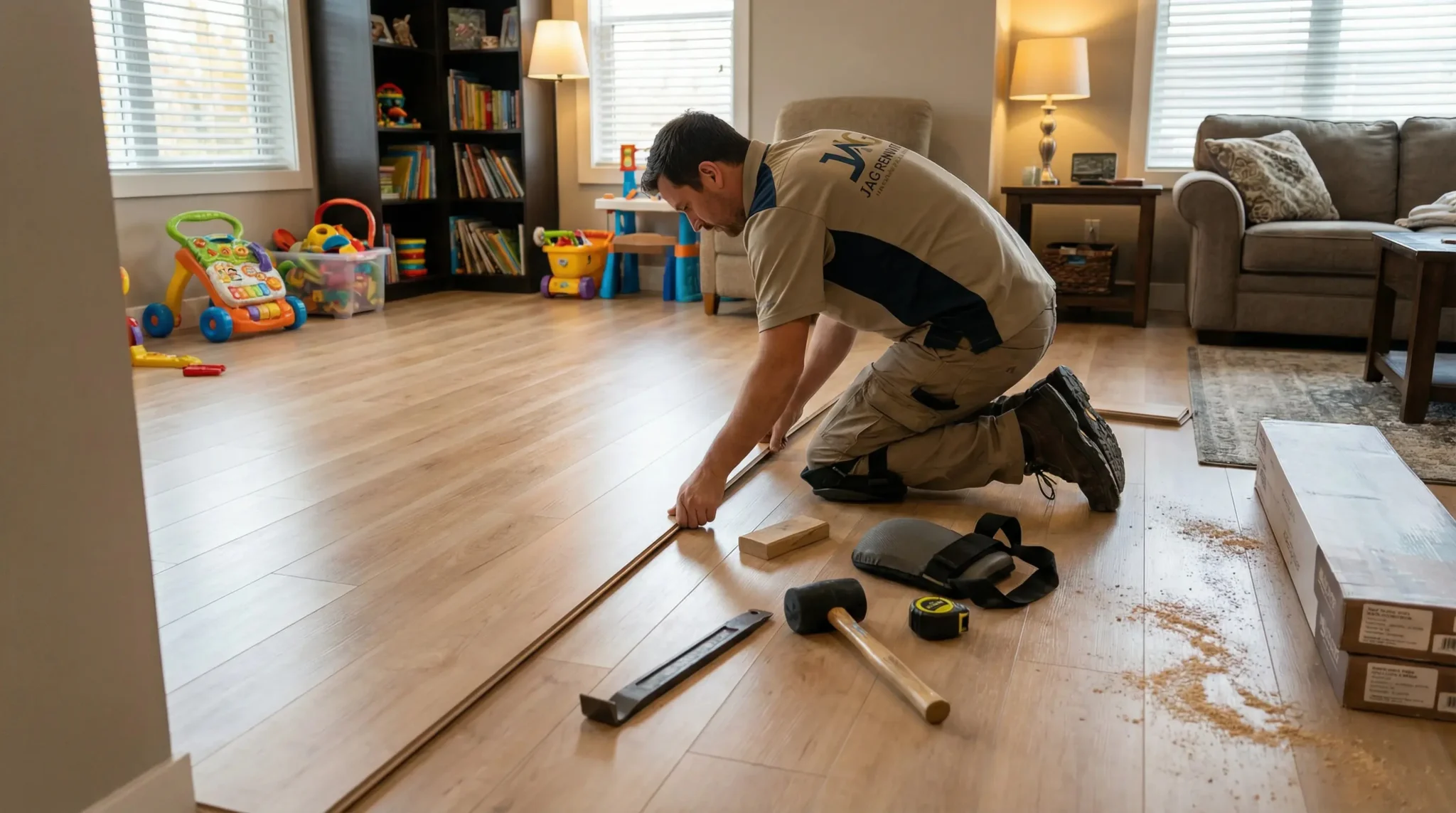
Hear from Our Customers
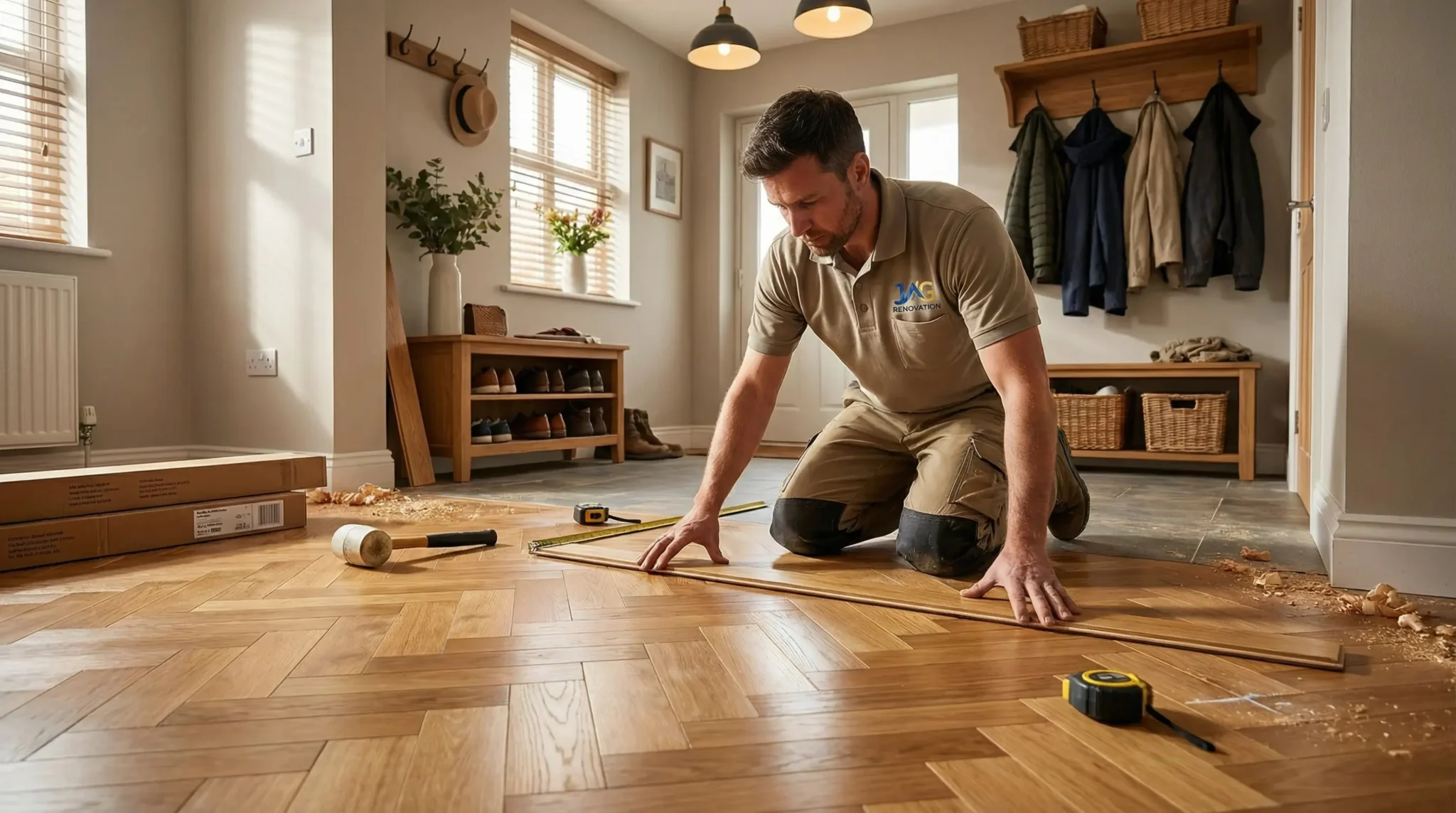
Your floors take more abuse than almost anything else in your home. Kids, pets, foot traffic, spills, furniture dragging across the surface. When they’re installed right, you stop worrying about them.
That’s what proper flooring installation does. It holds up under real life. No gaps forming between planks six months later. No tiles cracking because the subfloor wasn’t prepped correctly. No vinyl peeling at the edges because someone rushed the job.
You get durability that matches your lifestyle. Whether you need hardwood in the living room, tile in the kitchen, or vinyl in the basement, the material matters less than how it’s installed. Cut corners during installation and even expensive flooring fails early. Do it right and budget-friendly options can outlast what your neighbor paid twice as much for.
You also get your time back. A flooring project shouldn’t drag on for weeks or leave you second-guessing every decision. When you work with someone who knows what they’re doing, the process moves faster and you’re not stuck researching adhesive types at 11 p.m. because your contractor didn’t show up with the right materials.
We’ve been handling interior renovations across Suffolk County for nearly a decade. We’re not the company that shows up, pushes the most expensive option, and demands you sign something today.
We’re the ones homeowners call when they’re tired of that approach. You’ll get honest guidance on what flooring makes sense for your space, your budget, and how you actually use your home. If tile doesn’t make sense in a particular room, we’ll tell you. If you can save money on materials without sacrificing quality, we’ll walk you through it.
Centereach homeowners deal with the same challenges as the rest of Long Island: aging housing stock, moisture issues in basements, and the need for flooring that can handle Northeast winters and humid summers. We’ve worked in enough homes here to know what holds up and what doesn’t. That experience means fewer surprises during your project and better results when it’s done.

First, we look at your space. Not just measurements, but subfloor condition, moisture levels if it’s a basement, transitions between rooms, and what’s realistic for your timeline. This is where most problems get prevented or missed entirely.
Then we talk through material options. Hardwood, laminate, vinyl, tile, carpet—each has trade-offs. We’ll explain what works best for high-traffic areas, which options handle moisture, and where you can stretch your budget without cutting quality. You make the final call, but you’ll have enough information to make it confidently.
Once materials are selected, we prep the subfloor. This step gets skipped or rushed more than any other, and it’s why floors fail early. We level, clean, and address any underlying issues before a single plank or tile goes down.
Installation follows manufacturer specs and industry best practices. Proper spacing for expansion, correct adhesive application, clean cuts around obstacles. The details that separate a floor that looks good for six months from one that looks good for years.
Cleanup and final walkthrough happen before we consider the job done. You shouldn’t be sweeping up sawdust or dealing with leftover materials. We handle it, you inspect it, and if something’s not right, we fix it before we leave.
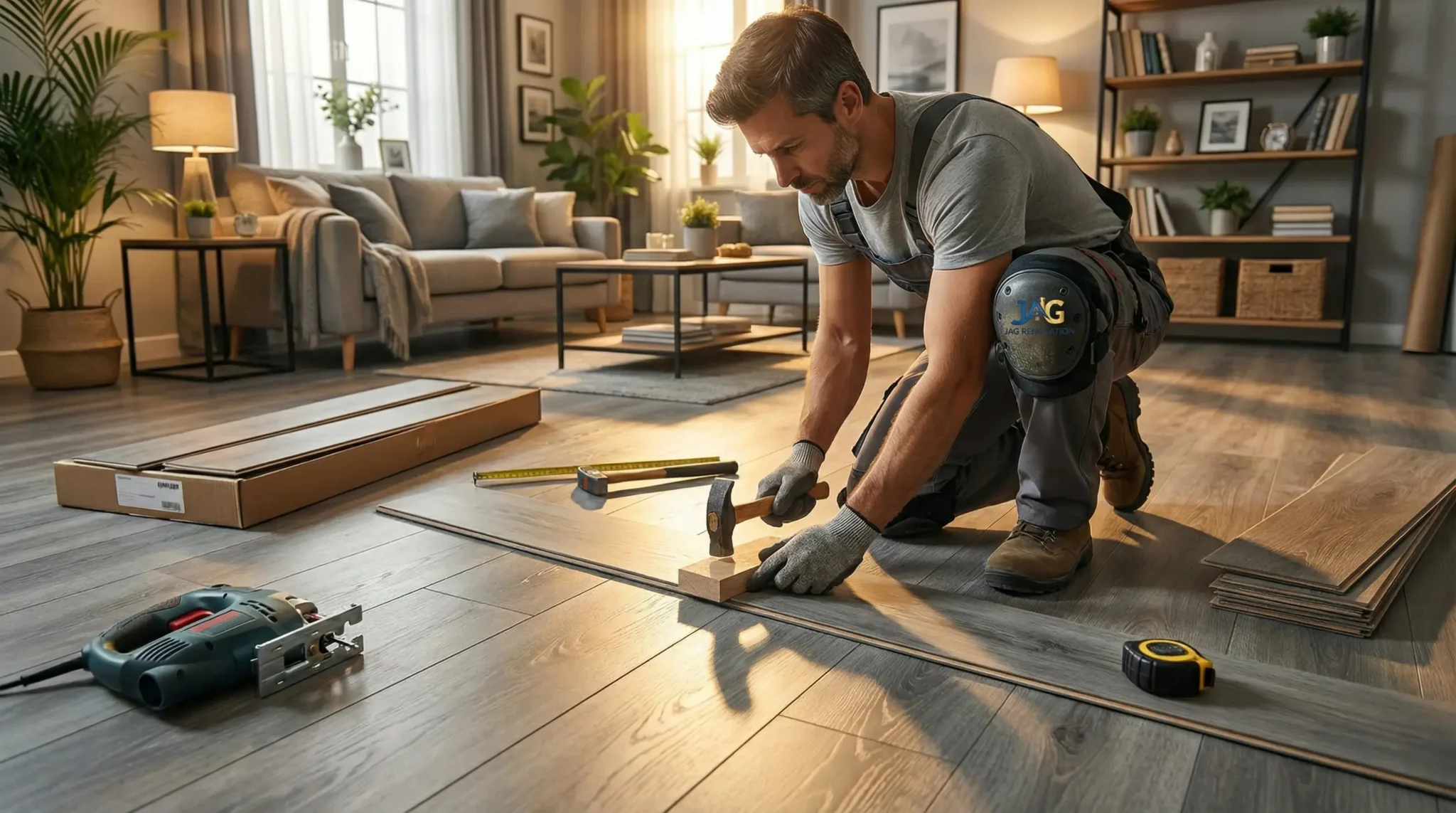
Ready to get started?
We install hardwood flooring, laminate, luxury vinyl, ceramic and porcelain tile, and carpet. Each material requires different techniques, tools, and prep work. We handle all of it.
Subfloor preparation is part of every job. If your subfloor isn’t level or has moisture issues, we address it before installation starts. This isn’t an upsell—it’s necessary for any flooring to perform correctly.
In Centereach and throughout Suffolk County, we see a lot of homes built in the 1960s through 1980s. These homes often need subfloor attention before new flooring goes in. Joists settle, moisture barriers degrade, and old adhesive needs removal. We’ve dealt with all of it enough times to handle it efficiently.
We also manage transitions between rooms and flooring types. That strip of metal or wood between your tile kitchen and hardwood living room isn’t just decorative—it allows for expansion and contraction. Done wrong, it’s a trip hazard or a gap that collects debris. Done right, it’s seamless.
Furniture moving and reinstallation can be included depending on the scope of your project. We’ll discuss what makes sense during the initial conversation. Some homeowners prefer to handle it themselves, others want it done. Either way works.

For a single room, plan on one to three days depending on size and material. A full-house flooring replacement typically takes one to two weeks.
The timeline depends on square footage, the type of flooring, and how much subfloor work is needed. Tile takes longer than vinyl because of mortar cure times. Hardwood installation moves faster than it used to, but acclimation time adds a few days upfront.
If we’re working in an occupied home, we coordinate around your schedule to minimize disruption. Most homeowners stay in the house during flooring projects, so we focus on one area at a time when possible. You won’t have your entire house torn up at once unless that’s the fastest path and you’re okay with it.
Luxury vinyl and porcelain tile are the most durable options for high-traffic areas. Both handle heavy use, resist moisture, and require minimal maintenance.
Luxury vinyl has come a long way in the last decade. It’s not the cheap peel-and-stick stuff from the 1990s. Modern luxury vinyl planks and tiles mimic hardwood and stone convincingly, hold up under scratches and dents better than actual hardwood, and cost less to install.
Porcelain tile is nearly indestructible if installed correctly. It doesn’t scratch, dent, or fade. The grout lines require occasional resealing, but the tile itself will outlast most other flooring options. It’s cold underfoot in winter, which matters in Centereach, but radiant heating or area rugs solve that.
Hardwood is beautiful but not the most durable choice for high-traffic areas unless you’re okay with refinishing it every decade or so. Laminate sits somewhere in the middle—more durable than hardwood, less durable than vinyl or tile.
Flooring installation in Centereach typically costs between $3 and $12 per square foot, depending on material and complexity. That includes labor and materials for straightforward installations.
Vinyl and laminate fall on the lower end of that range. Hardwood and tile cost more due to material prices and labor intensity. Custom patterns, diagonal layouts, or extensive subfloor repair add to the cost.
We don’t give quotes over the phone because too many variables affect pricing. Subfloor condition, room layout, material selection, and whether you need furniture moved all impact the final number. We’ll visit your home, assess the space, and provide a transparent estimate with no hidden fees. You’ll know exactly what you’re paying for before any work starts.
Sometimes, but not always. It depends on what’s currently installed and what you want to put down.
You can usually install laminate or vinyl over existing vinyl, linoleum, or tile if the surface is smooth, level, and in good condition. Installing over carpet or cushioned vinyl doesn’t work—the new floor needs a solid base.
Hardwood and tile require more careful evaluation. Tile is heavy and needs a structurally sound subfloor. Installing it over existing flooring can exceed weight limits or create height issues with doorways and transitions. Hardwood needs to acclimate and attach properly, which usually means going down to the subfloor.
We’ll assess your current flooring during the initial visit and let you know whether removal is necessary. Sometimes removing old flooring adds a day and a few hundred dollars to the project. Other times it prevents problems that would cost thousands to fix later.
Vinyl flooring is the best choice for basements in Centereach. It handles moisture better than any other option and still looks good.
Basements in this area deal with humidity and occasional moisture intrusion. Even with good waterproofing, concrete slabs can wick moisture. Hardwood warps, laminate swells, and carpet grows mold in those conditions.
Luxury vinyl planks or tiles are designed for below-grade installation. They’re waterproof, not just water-resistant. If you get a leak or flooding, you can pull them up, dry the subfloor, and reinstall them. Try that with laminate or hardwood.
Tile also works in basements, but it’s cold and harder underfoot. If you’re finishing a basement as a living space, vinyl gives you the look of wood without the moisture risk. If it’s a utility area or you’re planning radiant heating, tile is worth considering.
Yes, furniture needs to be out of the room before we start. We can handle the moving for you, or you can do it yourself—either way works.
If you want us to move furniture, we’ll discuss it during the estimate. We’ll move it to another room or to the center of the space if we’re working in sections. Large items like beds, dressers, and sofas aren’t a problem. Fragile items, valuables, and anything in cabinets or drawers should be moved by you beforehand.
Some homeowners prefer to clear rooms themselves to save a bit on labor costs. Others would rather pay to have it done. We’re flexible.
One thing to note: we’re not responsible for disconnecting or reconnecting appliances. If we’re doing kitchen flooring and you need the refrigerator moved, we’ll move it, but you’ll need to handle the water line if it’s connected to an ice maker. Same goes for washers and dryers in laundry rooms.