
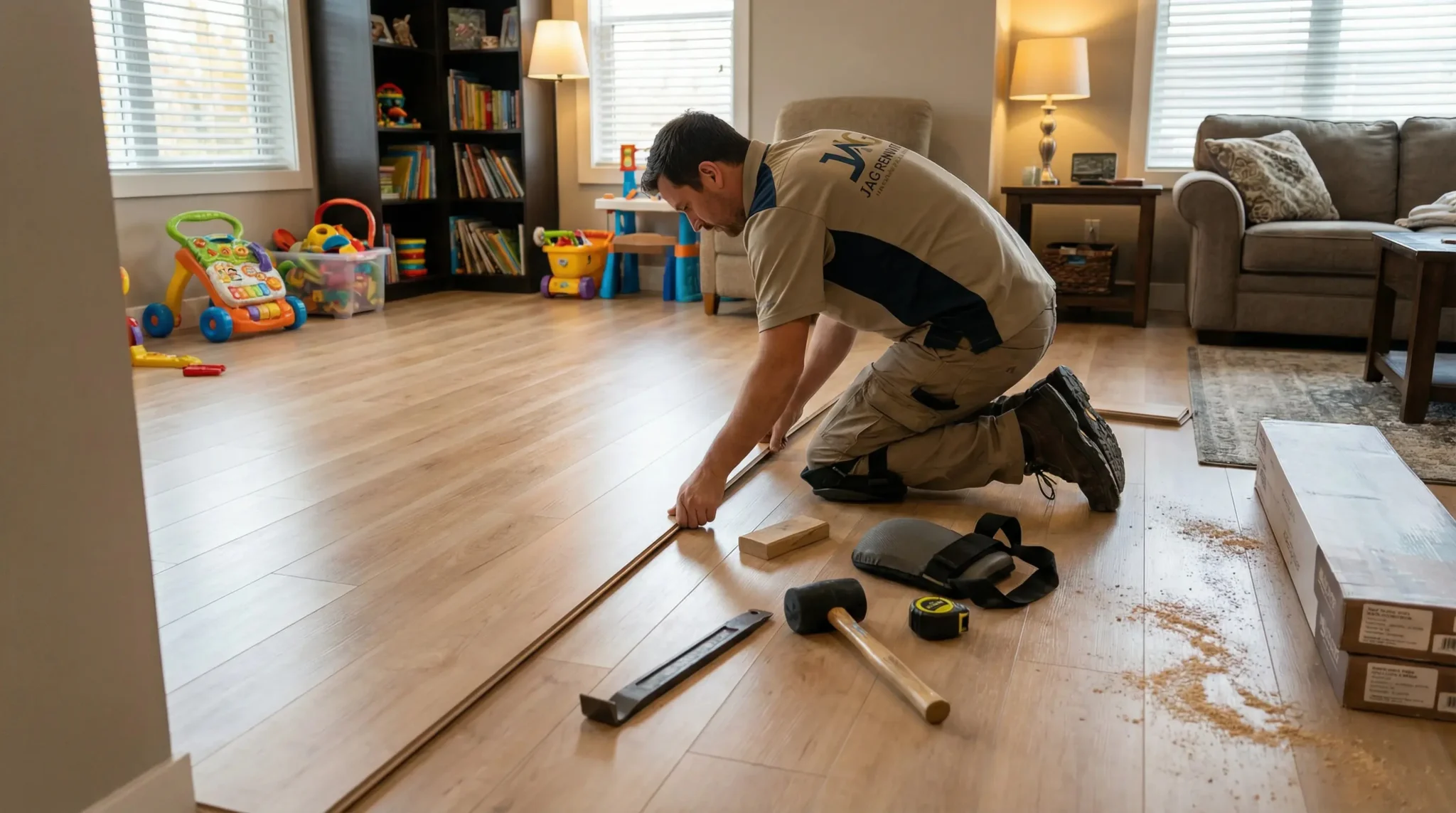
Hear from Our Customers
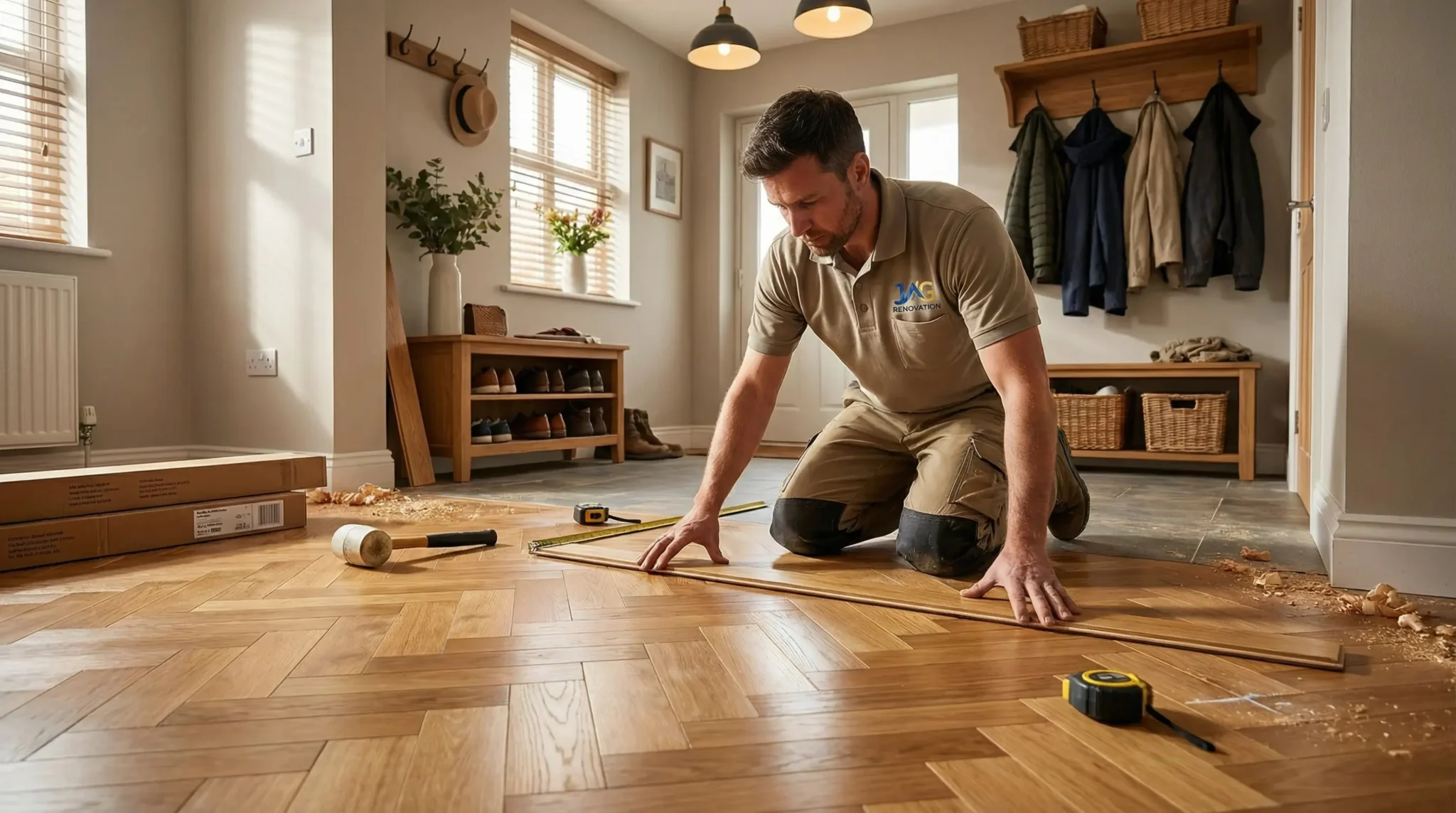
Your floors shouldn’t be something you constantly worry about. Not when the kids track in sand from the beach. Not when humidity spikes in July. Not when your dog’s paws are wet from the yard.
The right flooring handles Suffolk County conditions without the constant maintenance stress. No more watching guests walk across your hardwood wondering if their shoes will leave marks. No more panicking when someone spills a drink near the seams.
Waterproof vinyl plank doesn’t swell when moisture seeps in. Luxury vinyl tile looks like natural stone but won’t crack under pressure. Properly installed laminate flooring stays locked tight even when temperatures fluctuate. You get floors that look incredible and actually hold up to how you live.
That’s what happens when your flooring contractor understands local conditions instead of just following a generic installation manual.
We’ve spent almost ten years installing floors in homes across Flanders and Suffolk County. We’ve seen what works here and what fails six months later when the real weather test begins.
Coastal humidity isn’t a footnote in our process. It’s the reason we recommend specific underlayments, particular adhesives, and certain flooring materials over others. We know which products handle salt air and which ones deteriorate faster than manufacturers admit.
You’re not getting a crew that learned flooring installation from YouTube videos last month. You’re working with professionals who’ve handled everything from historic oak refinishing to modern luxury vinyl tile installations in homes dealing with basement moisture and sandy soil conditions that make proper subfloor prep critical.

We start with your subfloor because that’s where most flooring failures actually begin. If the foundation isn’t level and moisture-sealed properly, your beautiful new floors won’t last. We check for levelness, moisture content, and structural issues before any material gets ordered.
Then we walk you through material options based on your actual needs. If you have pets and kids, we’re not pushing high-maintenance hardwood in your kitchen. If your basement sees moisture, we’re discussing waterproof solutions, not standard laminate that’ll bubble up in two years.
Installation day means furniture protection, dust containment, and precision work. Tile flooring gets proper spacing and grout sealing. Vinyl flooring gets acclimated to your home’s temperature before installation. Hardwood gets the right expansion gaps for humidity changes.
We handle the details most homeowners don’t know to ask about. Which direction should planks run to make your room look bigger? How do transitions between rooms get handled so they don’t look like an afterthought? What’s the right underlayment for sound reduction versus moisture protection?
You get a clear timeline upfront. Most residential flooring jobs in Flanders take two to five days depending on square footage and material choice. We don’t disappear for three days mid-project or leave you walking on subfloor for a week.
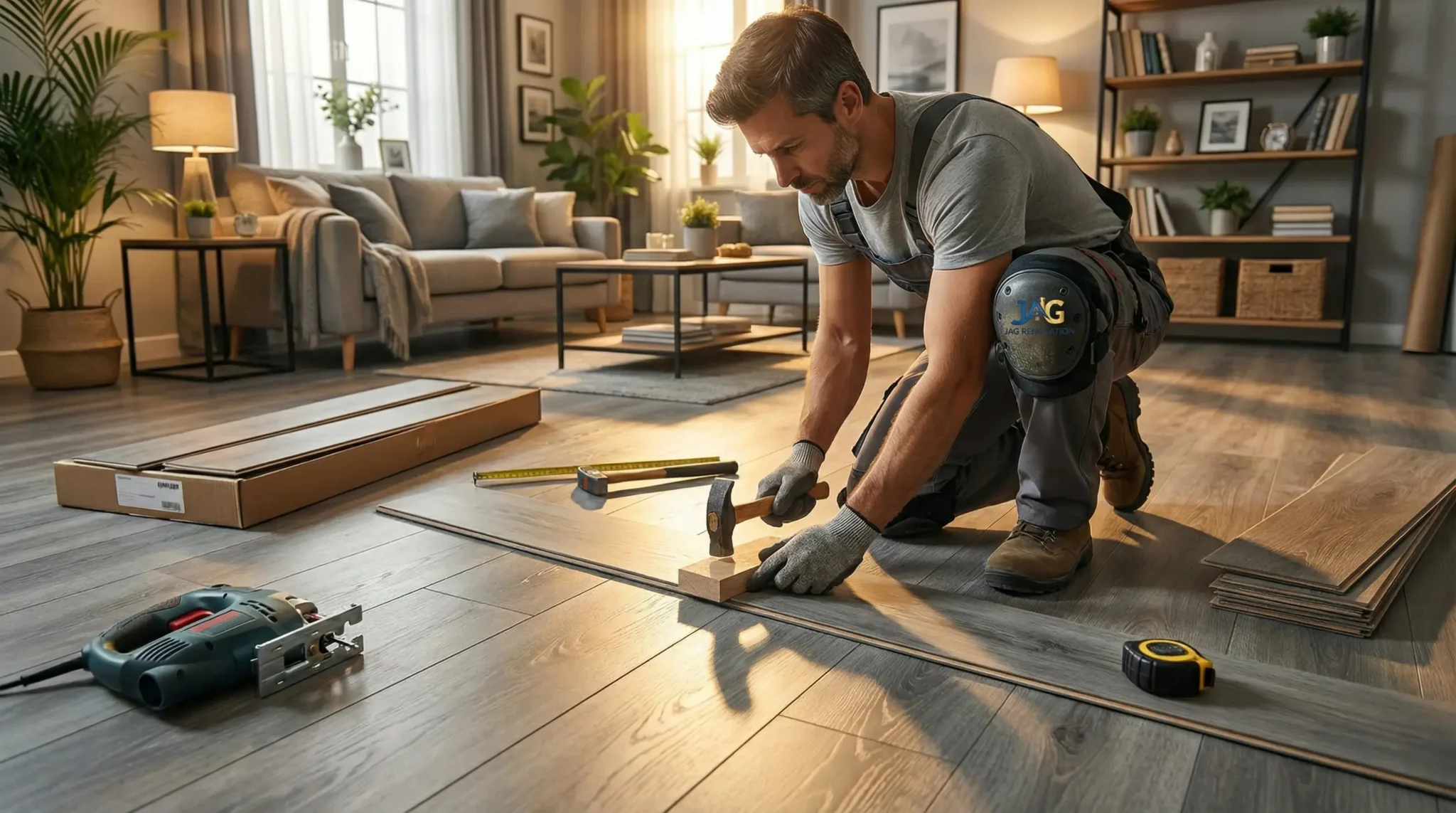
Ready to get started?
Luxury vinyl plank has become the most requested flooring material in Suffolk County for good reason. It mimics hardwood or stone but handles moisture without warping. You can install it in basements, bathrooms, and kitchens without the constant worry that comes with natural materials. Prices range significantly based on thickness and wear layer, but you’re looking at durability that outlasts cheaper options by years.
Tile flooring works beautifully in Flanders homes, especially in high-moisture areas. Porcelain and ceramic tile don’t care about humidity levels. They’re cold underfoot in winter unless you add radiant heating, but they stay cool in summer and handle spills without staining. Proper installation matters more with tile than almost any other material because one crack spreads quickly.
Hardwood still has a place in Suffolk County homes if you choose engineered wood over solid planks. Engineered hardwood has a real wood top layer but a core that resists moisture expansion better than traditional oak or maple. You get the look and feel of real hardwood with significantly better performance in our climate. Refinishing is still possible, just with fewer sandings over the floor’s lifetime.
Laminate flooring installation costs less than most alternatives and technology has improved dramatically. Modern laminate resists scratches better than hardwood and handles moderate moisture if installed correctly. It’s not waterproof like vinyl, but it’s a solid middle-ground option for bedrooms and living areas where spills are less frequent.

Waterproof vinyl flooring handles Suffolk County humidity better than any other material. Luxury vinyl plank and luxury vinyl tile are completely waterproof, not just water-resistant. That matters when humidity levels spike in July and August.
Engineered hardwood is your second-best option if you want the real wood look. The cross-layered core construction resists expansion and contraction better than solid hardwood. You’ll still see some seasonal movement, but nothing like the cupping and gaps that happen with traditional oak floors.
Avoid solid hardwood in basements, bathrooms, or anywhere moisture is common. Even with the best finish, solid wood absorbs humidity and swells. Those beautiful maple floors you install in spring can buckle by August if your home doesn’t maintain consistent humidity levels year-round. Tile and vinyl don’t have that problem.
Most residential flooring projects in Flanders take two to five days depending on square footage and material. A single room with vinyl plank might be done in a day. A whole-house hardwood installation with subfloor repairs takes closer to a week.
Tile flooring takes longer because of setting time and grouting. You’re looking at installation day, then waiting 24 hours before grouting, then another 24-48 hours before you can walk on it normally. Vinyl and laminate are faster since you can walk on them immediately after installation.
The timeline also depends on what we find when old flooring comes up. If your subfloor needs leveling compound or moisture barrier installation, that adds a day. We give you an honest timeline upfront and stick to it unless we discover structural issues that need addressing before new floors go down.
Room by room makes sense if budget is tight or you’re testing out a new material before committing to the whole house. You can live in most of your home while we work on one area. The downside is transition strips between different flooring types, which can look choppy if you’re changing materials every room.
Doing everything at once costs less per square foot since we’re already set up and material orders are larger. You also get consistent flooring throughout your home, which looks cleaner and helps with resale value. The inconvenience is bigger since you’ll need to relocate furniture and stay off larger areas during installation.
For Flanders homeowners, we often recommend doing moisture-prone areas first. Get your kitchen, bathrooms, and basement done with waterproof materials. Then tackle bedrooms and living spaces later if needed. That way your biggest risk areas are protected even if budget doesn’t allow for everything at once.
Vinyl flooring installation typically runs $3-8 per square foot including materials and labor. Laminate flooring sits in a similar range at $4-8 per square foot. Tile flooring costs more, usually $8-15 per square foot depending on tile choice and pattern complexity.
Hardwood and engineered wood are your highest cost options at $8-18 per square foot installed. That price jumps if your subfloor needs significant prep work or if you’re choosing premium wood species. Refinishing existing hardwood costs $3-5 per square foot, which is why we always evaluate whether your current floors can be saved before recommending replacement.
These are Suffolk County prices from a licensed, insured flooring contractor. You’ll find cheaper quotes from unlicensed crews, but you’re risking improper installation that fails within a year. You’ll also find higher quotes from companies with massive overhead. We price fairly for quality work without the hidden costs that show up on some final invoices.
Sometimes you can install over existing flooring, but it’s not always the smart move. Vinyl plank can go over old vinyl or laminate if the surface is smooth and level. Any bumps or dips telegraph through and you’ll see every imperfection in your new floor.
Tile must come up before new installation. There’s no way around it. The height increase from installing over tile creates tripping hazards at doorways and makes transitions to other rooms look terrible. Plus, tile removal lets us inspect your subfloor for water damage or structural issues that need fixing.
Carpet always gets removed. The padding underneath breaks down over time and creates an unstable surface for any new flooring. We also find water stains, pet damage, and subfloor problems hidden under old carpet that need addressing before new floors go down. Taking everything to the subfloor adds a day to your project but ensures your new flooring has a solid foundation that’ll last.
Luxury vinyl plank is the best flooring for homes with pets. It’s completely waterproof so accidents don’t seep into seams and create permanent odors. The wear layer resists scratches from nails better than hardwood or laminate. You can get textured finishes that hide minor scratches even better than smooth surfaces.
Tile flooring is your second choice for pet-friendly durability. Nothing scratches ceramic or porcelain tile. The grout lines can stain if you don’t seal them properly, but the tile itself is indestructible. The downside is hardness—older dogs with joint issues struggle on tile, and dropped food bowls make a loud crash.
Avoid traditional hardwood if your dogs are large or your cats are scratchers. Even the hardest wood species show wear in high-traffic areas. Engineered hardwood holds up better than solid wood, but it still scratches. Laminate is middle-ground—better than hardwood for scratch resistance but not waterproof like vinyl, so pet accidents need immediate cleanup.