
Hear from Our Customers
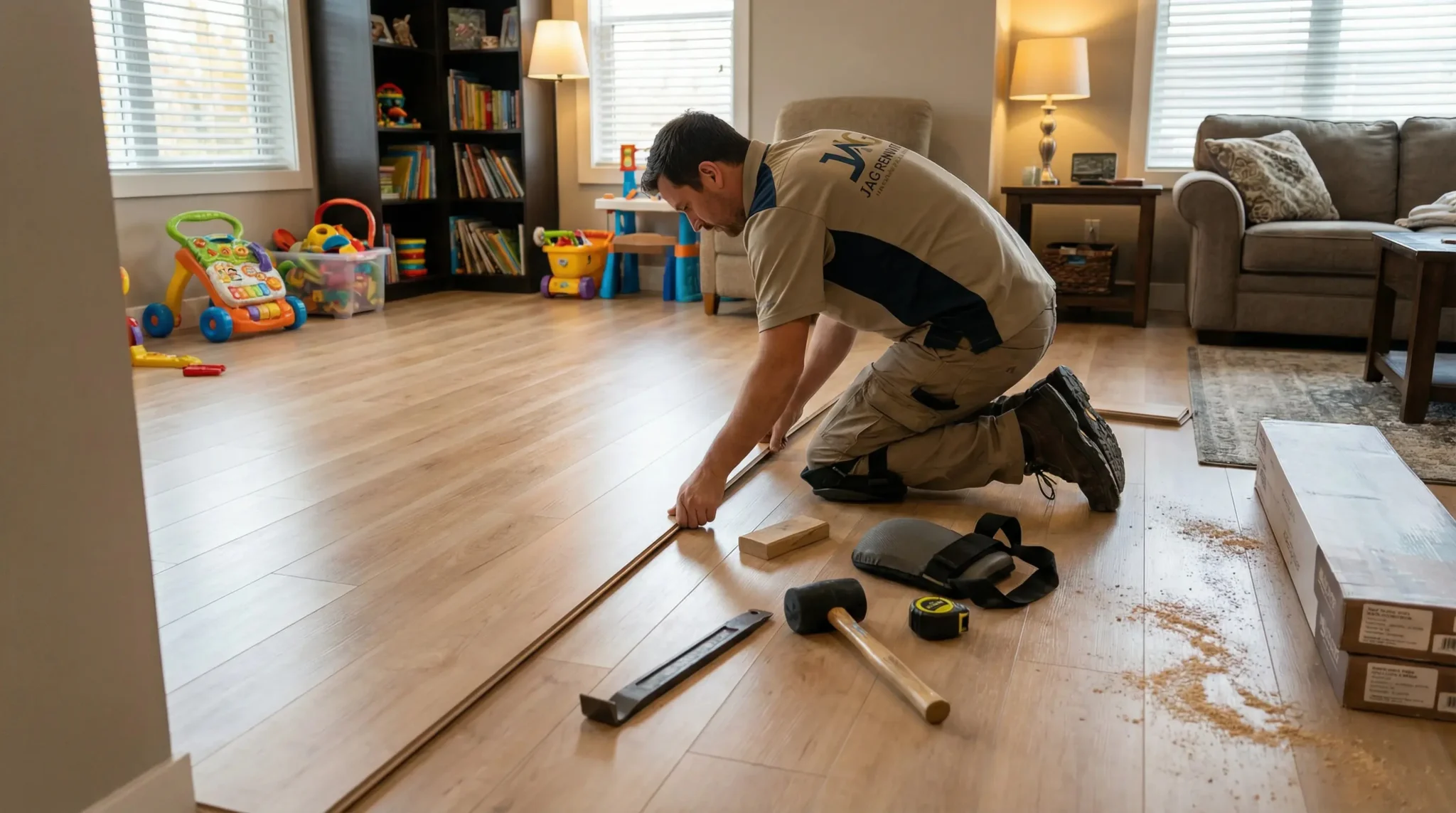
Your floors take more abuse than almost anything else in your home. You walk on them every day. Your kids spill on them. Your furniture sits on them. And if they’re not installed correctly, you’ll know it within the first year.
Good flooring installation means your planks don’t buckle when summer humidity rolls in. It means your tile doesn’t crack because someone skipped proper subfloor prep. It means you’re not calling someone back in six months because gaps opened up or seams are lifting.
When flooring is done right, it holds up to Long Island’s moisture swings, it handles foot traffic without squeaking, and it adds real value to your home. Not just cosmetic value—actual resale value. Updated flooring can return up to 70% of your investment when it’s time to sell, and that’s only true if the install was solid from the start.
You shouldn’t have to think about your floors after they’re in. That’s the outcome that matters.
We’ve been handling interior projects across Hauppauge and Suffolk County for almost ten years. We’re not a flooring-only shop—we do full kitchen and bath remodels, basements, carpentry, painting—but that range of experience makes us better at flooring, not worse.
We know what happens under the surface. We’ve seen the subfloor issues that come with older Long Island homes, the moisture problems from high water tables, the foundation settling that throws everything off level. We don’t just lay flooring. We fix what’s underneath so it actually lasts.
Hauppauge homeowners deal with specific challenges: homes built in the ’60s without vapor barriers, concrete slabs with high moisture content, radiant heating systems that cycle temperatures. We’ve worked in enough local homes to know what to look for and how to handle it. No surprises, no blame game, no subcontractors we can’t vouch for.

First, we come out and look at the space. Not just measurements—we check the subfloor, look for moisture issues, test for level, and talk through what type of flooring makes sense for how you actually use the room. If there’s a problem, we tell you before we quote anything.
Once you approve the estimate, we order materials and schedule the prep work. That might mean pulling up old flooring, fixing uneven subfloor, addressing moisture with barriers or sealants, or leveling out areas that have settled. This step matters more than most people realize, and it’s where cheaper contractors cut corners.
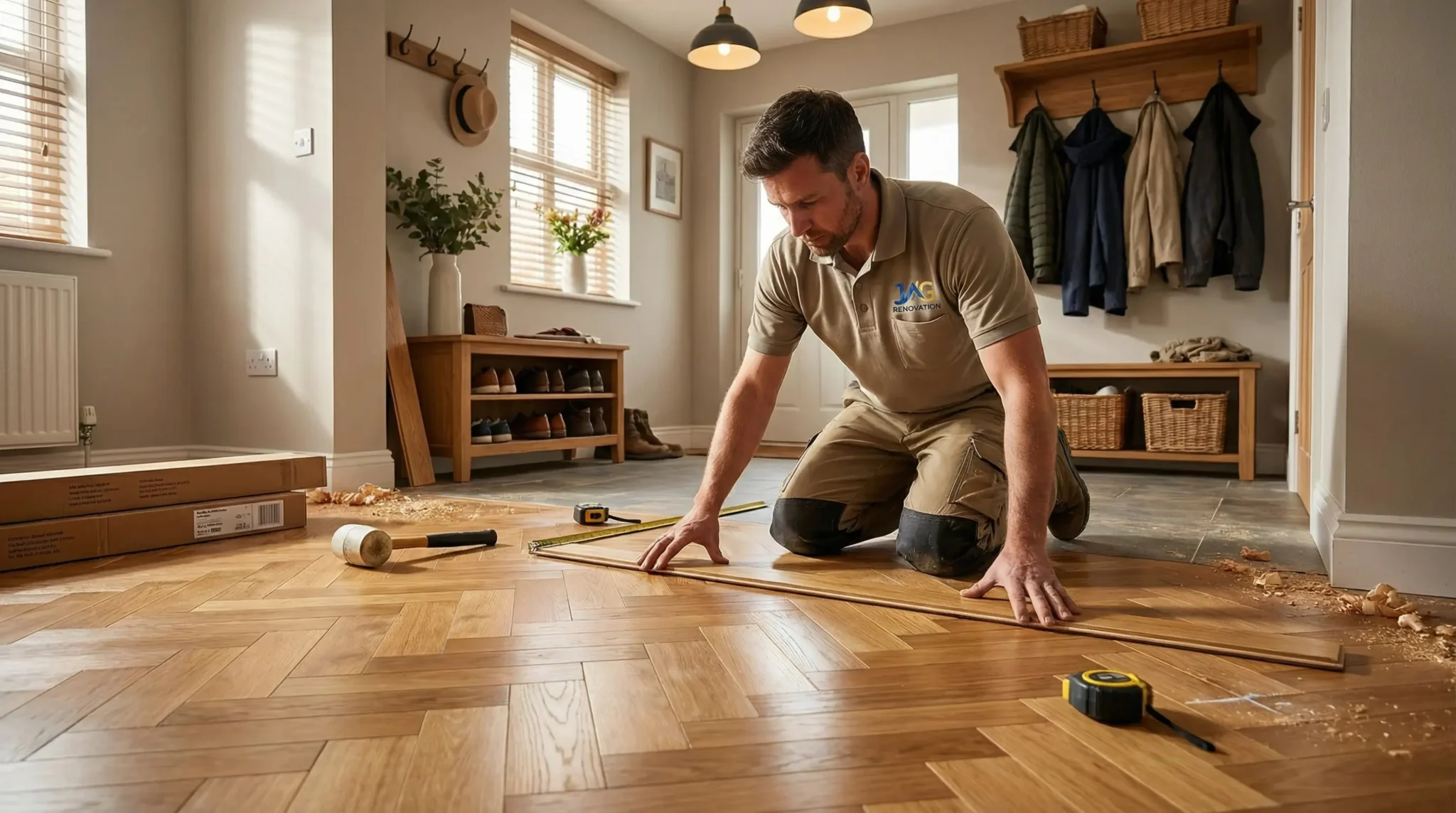
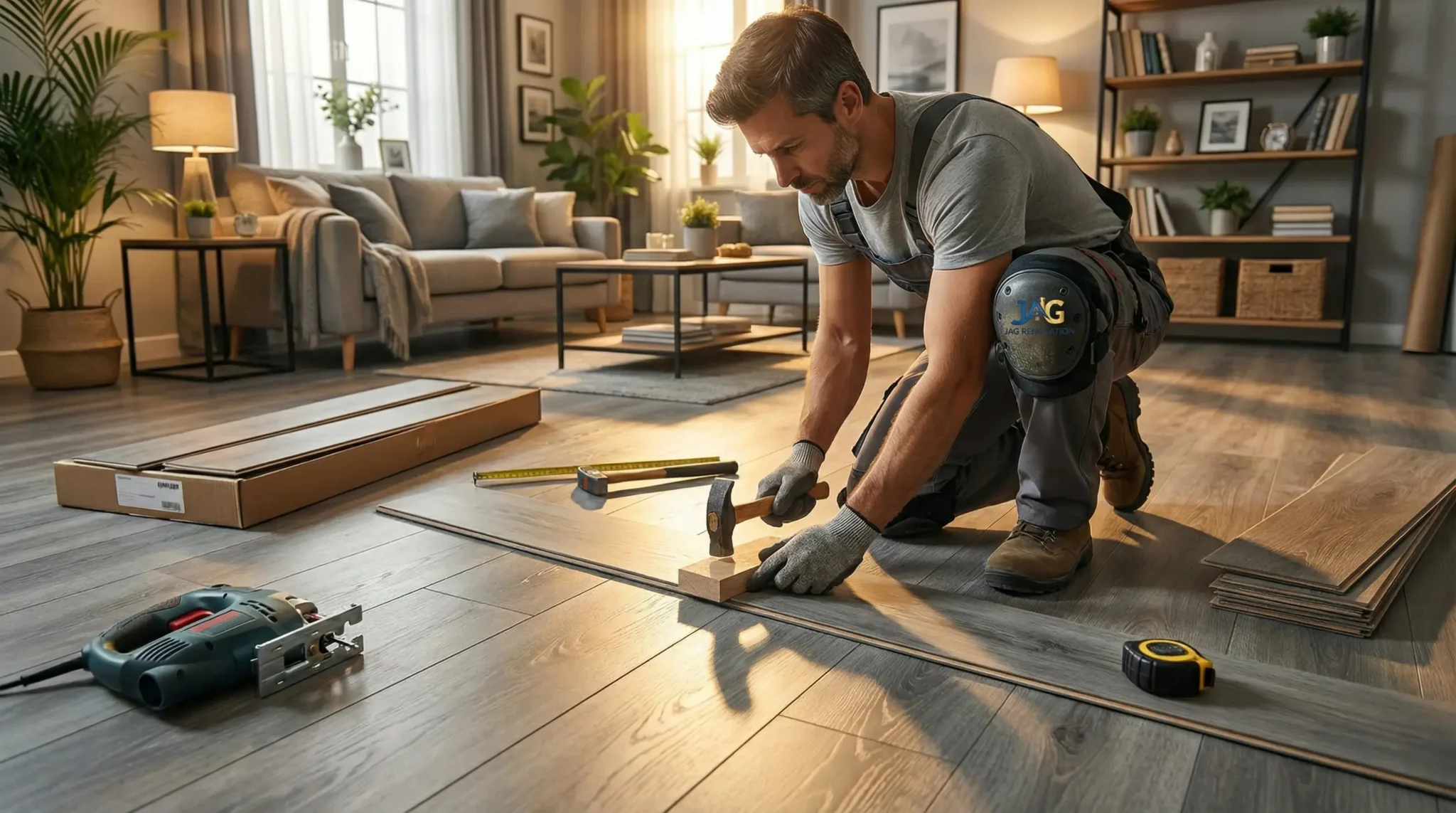
Then we install. Depending on the material—hardwood, engineered wood, tile, laminate, vinyl plank—the process changes, but the standard doesn’t. Everything gets checked for level and spacing. Expansion gaps are calculated for Long Island’s seasonal shifts. Transitions between rooms are clean and flush.
After install, we walk the job with you. You shouldn’t find gaps, lippage, or uneven seams. If something’s not right, we handle it before we leave. The goal is floors you don’t have to think about again.
Ready to get started?
We install hardwood, engineered wood, laminate, luxury vinyl plank, tile, and ceramic tile flooring. The material you choose depends on the room, your budget, and how much moisture or wear it’ll see.
Tile works well in bathrooms and entryways where water’s a concern. Vinyl plank is waterproof and handles basements or kitchens without the maintenance of hardwood. Laminate gives you the wood look at a lower price point, and it’s gotten a lot more durable in recent years—46% of new residential flooring installs in 2024 were laminate. Engineered wood handles humidity better than solid hardwood, which matters in Hauppauge where summer moisture can make solid planks swell.
For homes with radiant heating, we’ll talk through thermal cycling and which materials handle the temperature swings. For older homes with foundation issues, we’ll recommend what holds up when things aren’t perfectly level. If your basement has persistent moisture, we’ll steer you toward waterproof options and proper underlayment instead of pretending hardwood will work.
The average cost for flooring installation in Hauppauge runs around $12.50 per square foot, but that varies based on material and prep work. A 500-square-foot space typically falls between $1,500 and $5,000 depending on what you’re putting down and what condition the subfloor is in. We don’t hide costs or surprise you halfway through—the estimate reflects the real number.

Engineered wood, luxury vinyl plank, and tile handle Long Island’s humidity swings better than solid hardwood. Hauppauge sees hot, humid summers and dry winters with indoor heating, which makes solid wood planks expand and contract more than most homeowners expect.
Engineered wood is built in layers, so it resists that movement. Vinyl plank is completely waterproof and doesn’t react to moisture at all. Tile is similarly unaffected by humidity, though grout lines need to be sealed properly to avoid staining or moisture penetration.
If you’re set on solid hardwood, it can work—but it requires acclimation time before install, proper expansion gaps, and controlled indoor humidity levels year-round. Most people don’t want to manage that, so we usually recommend engineered wood for the look without the maintenance.
For a typical room—say, 300 to 500 square feet—installation takes one to three days depending on the material and subfloor condition. That doesn’t include prep work, which can add time if we’re pulling up old flooring or fixing underlying issues.
Tile takes longer than vinyl or laminate because of mortar dry time and grouting. Hardwood or engineered wood falls somewhere in the middle. If your subfloor needs leveling, moisture treatment, or structural repair, that happens first and can add a day or two.
We don’t rush installs to hit a timeline. Floors that go down too fast usually come back to haunt you. We’d rather take the extra day to do it right than leave you with gaps, uneven seams, or boards that start moving six months later.
Yes, but not every flooring type works well with radiant heat, and the install process has to account for thermal cycling. Tile and engineered wood are your best options. Luxury vinyl plank works too, as long as it’s rated for radiant heat and installed with the right underlayment.
Solid hardwood isn’t recommended because the temperature changes cause too much expansion and contraction. Laminate can work, but only certain products are designed for it—you have to check the manufacturer’s specs.
The bigger issue is making sure the radiant system is installed and functioning correctly before we put anything on top of it. We’ve seen systems with uneven heat distribution or hot spots that would damage flooring over time. If there’s any question about the system, we’ll recommend testing it under load before we proceed. Once the floor is down, fixing the heating system gets a lot more complicated.
We fix it before we install anything. An uneven subfloor will telegraph through the finished floor—you’ll see lippage in tile, feel dips in vinyl or laminate, and hear squeaks in hardwood. Moisture issues are worse because they’ll cause flooring to warp, buckle, or delaminate, sometimes within the first year.
Leveling a subfloor usually involves a self-leveling compound for concrete or plywood shims and sanding for wood subfloors. If there’s a moisture problem, we test it first, then apply a vapor barrier or moisture mitigation product depending on the severity. Older Hauppauge homes—especially those built in the ’60s—often lack vapor barriers, and Long Island’s high water table makes basement slabs particularly vulnerable.
Some contractors skip this step to save time or keep the bid low. That’s how you end up with flooring that fails early and a contractor who blames the material or the house. We’d rather spend the extra day on prep than deal with a callback six months later.
Yes, rooms need to be cleared before we start. We can help move larger pieces like dressers or bed frames if needed, but smaller items, breakables, and anything valuable should be out of the space before we arrive.
If you’re replacing flooring in a kitchen, that includes clearing out lower cabinets if we’re working around the island or need access underneath. Bathrooms need to be emptied—vanity cabinets, toilets sometimes need to come up depending on the scope, and shower areas need to be accessible if we’re tiling.
The more prep you can do ahead of time, the faster the install goes and the less risk there is of something getting damaged. We’ll go over all of this during the estimate so there’s no confusion on install day. If there’s a piece of furniture that’s too heavy or awkward to move on your own, let us know upfront and we’ll plan for it.
For a single room, most homeowners spend between $1,500 and $5,000 depending on size and material. Whole-house flooring projects in Hauppauge typically range from $8,000 to $25,000 or more, depending on square footage, the type of flooring, and how much prep work the subfloor needs.
Vinyl plank and laminate are the most affordable options, usually running $3 to $8 per square foot installed. Tile falls in the middle at $8 to $15 per square foot. Hardwood and engineered wood are higher, typically $6 to $25 per square foot depending on the species and finish.
The wildcard is always subfloor condition. If we’re ripping out old flooring and find rot, uneven joists, or serious moisture damage, that adds to the cost. We won’t know until we get in there, but we’ll tell you before we proceed. No one likes surprise charges halfway through a job, and we don’t operate that way. The estimate reflects what we can see, and if something comes up, we talk through options before moving forward.