
Hear from Our Customers
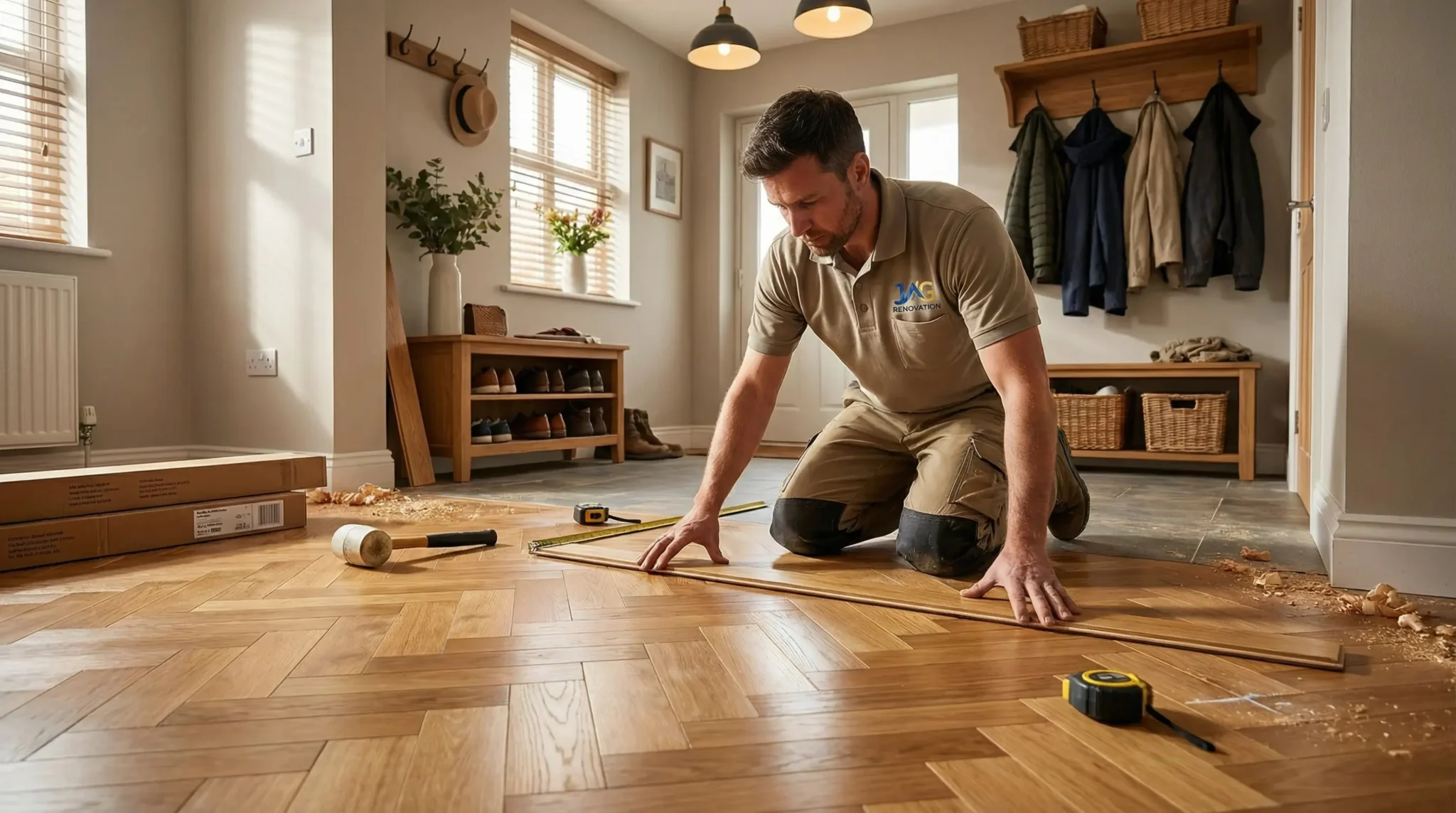
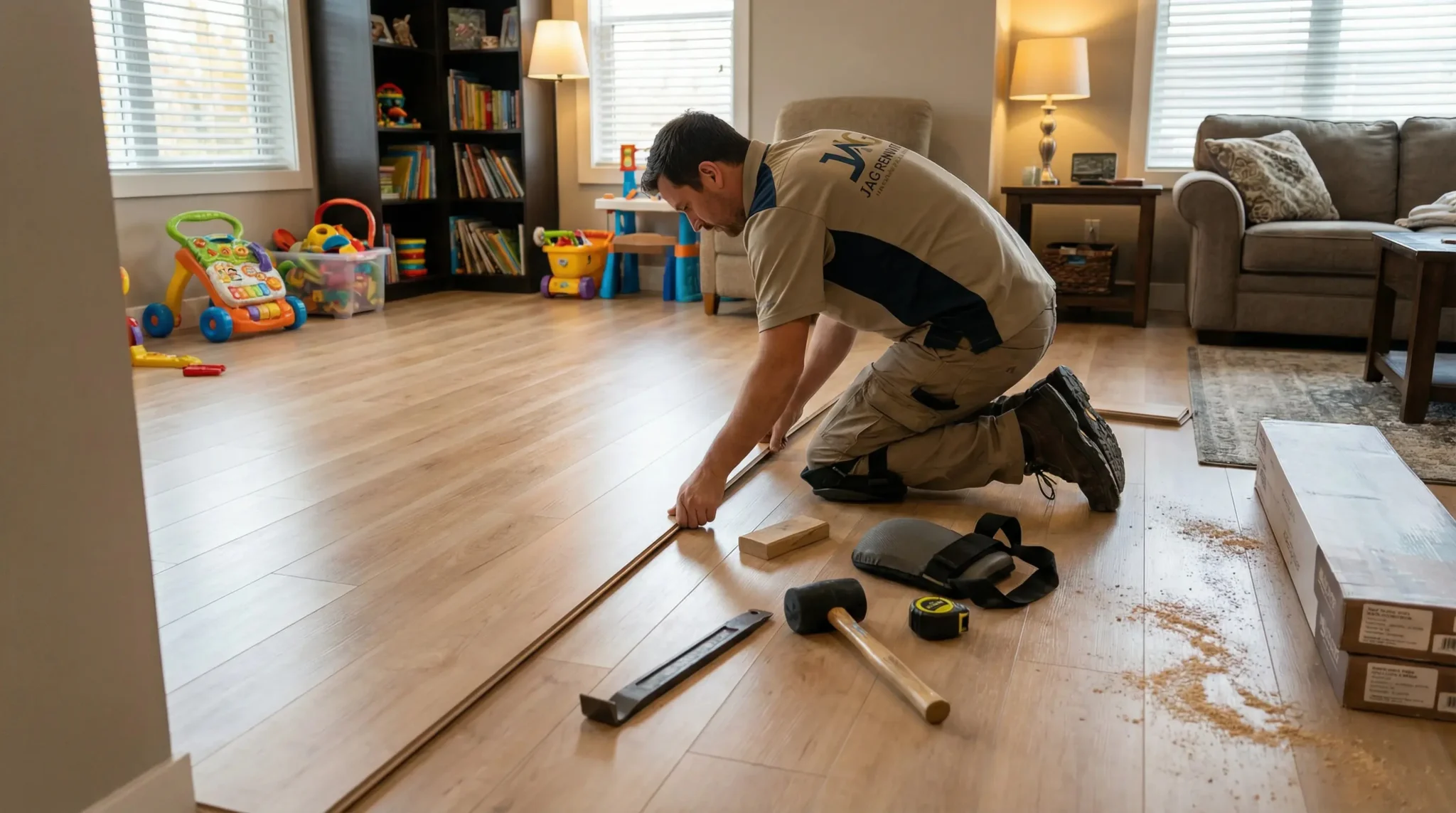
Your floors won’t buckle when summer humidity hits. They won’t gap in winter when the heat kicks on. You won’t find cupping around the basement stairs three months later because someone skipped the moisture barrier.
When flooring is installed correctly for Huntington’s climate, it looks better longer. That means fewer service calls, no premature replacement, and a floor that actually adds value when you’re ready to sell. Hardwood can return over 100% ROI if it’s done right from the start.
The difference isn’t just in the material you choose. It’s in how the subfloor gets prepped, whether moisture content is tested before installation, and if your contractor knows that white oak and maple handle Long Island’s seasonal swings better than most other hardwoods. That’s the kind of detail that separates a five-year floor from a fifty-year floor.
We’ve been handling interior renovations across Huntington and Suffolk County for almost ten years. We’re not a flooring-only company brought in to slap down planks and leave. We handle full remodels, which means we see how flooring connects to everything else in your home.
That perspective matters when you’re installing tile in a bathroom that needs better ventilation, or hardwood in a kitchen where the subfloor might need leveling. We’ve worked in enough Huntington homes to know what the common issues are—older foundations, below-grade moisture, HVAC systems that create uneven humidity.
You’re not getting a crew that learned flooring in Arizona and moved here last year. You’re working with contractors who’ve handled Long Island homes through every season and know what holds up.

First, we come out to look at your space. Not just to measure square footage, but to check subfloor condition, test for moisture if you’re going below-grade, and talk through what you’re actually trying to accomplish. If there’s a problem, you’ll hear about it in the estimate—not after demo.
Once we agree on scope and pricing, we order materials and let them acclimate in your home for at least 48 hours. That’s not optional. It’s how you prevent gaps and movement after installation. Then we prep the subfloor, install moisture barriers where needed, and lay your floor according to manufacturer specs and local building standards.
After installation, we walk you through maintenance. What to clean it with, what to avoid, how to manage humidity if you’ve got hardwood. The goal is a floor that lasts decades, and that only happens if you know how to take care of it once we’re gone.
Ready to get started?
Hardwood is popular, but it’s not always the right call. If you’ve got a basement or a bathroom, you’re better off with luxury vinyl plank or ceramic tile. LVP has come a long way—it’s waterproof, it mimics wood grain convincingly, and it costs $6.91 to $16.72 per square foot installed depending on the product. Tile runs similar, and both handle moisture better than any hardwood ever will.
For main living areas, white oak and maple are solid choices in Huntington. They’re stable in humidity, they refinish well, and they don’t show seasonal movement as much as softer woods. Laminate flooring installation is another option if you want the wood look on a tighter budget, though it won’t add resale value the way real hardwood does.
We’re not going to upsell you on the most expensive material. If vinyl makes more sense for your space and your budget, that’s what we’ll recommend. The goal is a floor that works for how you actually live, not what looks good in a showroom.

Full-home flooring replacement in Huntington typically runs $11,400 to $14,000 depending on square footage and material. That’s for a complete install with subfloor prep, moisture barriers where needed, and proper acclimation. If you’re doing one room, expect $2,500 to $6,700 for hardwood, less for vinyl or laminate.
The price changes based on what’s underneath your current floor. If the subfloor is damaged or uneven, that adds cost. Same with moisture issues—if we find a problem during demo, it has to be fixed before new flooring goes down, or you’ll be replacing it again in three years.
We give you a fixed estimate upfront. If we find something unexpected, we stop and talk to you before moving forward. No surprise invoices at the end.
Luxury vinyl plank and porcelain tile are the most stable options for high-moisture areas. They don’t expand, contract, or warp when humidity swings from 30% in winter to 70% in summer. If you’re set on hardwood, white oak and maple are your best bets—they’re denser and handle moisture better than pine or bamboo.
The bigger issue isn’t just the material. It’s whether your contractor is installing a moisture barrier, testing subfloor moisture content, and letting the flooring acclimate before installation. Skip any of those steps and even the best material will fail.
Basements and bathrooms should never get hardwood in Huntington. The moisture load is too high. You’ll end up with cupping, gaps, or worse. Vinyl or tile only for below-grade and wet areas.
Most single-room flooring jobs take two to four days once materials are acclimated. That includes demo, subfloor prep, installation, and cleanup. Whole-home projects can take one to two weeks depending on square footage and whether we’re working around furniture or other trades.
Acclimation adds 48 hours minimum before we even start. That’s non-negotiable. The flooring needs to adjust to your home’s temperature and humidity, or it’ll move after installation. Contractors who skip this step are setting you up for problems.
If we find subfloor damage or moisture issues during demo, that adds time. We’ll let you know immediately and give you a revised timeline. Most delays come from hidden problems that should’ve been caught in the estimate but weren’t.
Yes, if you’re installing over concrete or in a basement. Long Island homes deal with groundwater, humidity, and seasonal moisture that comes up through concrete slabs. Without a barrier, that moisture hits your flooring and causes warping, mold, or adhesive failure.
Even above-grade installations benefit from a moisture barrier if the subfloor is plywood over a crawlspace or if your home has a history of moisture issues. We test moisture levels before installation using a meter. If the reading is above 12% for wood subfloors or 4.5% for concrete, we’re installing a barrier.
This isn’t an upsell. It’s standard practice for any flooring contractor who’s been in Huntington longer than a year. If someone tells you it’s optional, find a different contractor.
Sometimes, but usually it’s better to remove the old floor first. Tile needs a stable, level surface. If your existing floor is vinyl or linoleum in good condition and the subfloor underneath is solid, we can install cement board over it and then tile. But if there’s any flex, damage, or height issues with door clearances, the old floor comes up.
Ceramic tile floor installation over wood subfloors requires an uncoupling membrane or cement backer board to prevent cracking. Wood moves, tile doesn’t. If those two materials aren’t properly separated, your grout cracks and tiles pop loose.
We’ll tell you in the estimate whether your existing floor can stay. If it can, that saves you demo costs. If it can’t, we explain why and what it’ll cost to do it right.
Start with where the floor is going. Bathrooms, basements, laundry rooms—vinyl only. Those areas see too much moisture for hardwood or laminate. Main living areas, bedrooms, hallways—any of the three work, and it comes down to budget and resale value.
Hardwood costs more upfront but adds the most value when you sell. It can be refinished multiple times, so it lasts 50+ years if maintained. Laminate is cheaper and looks decent, but it can’t be refinished and won’t increase your home value. Vinyl sits in the middle—waterproof, durable, lower cost than hardwood, but not the same resale appeal.
If you’re planning to stay in your home long-term and the space can handle it, hardwood is worth the investment. If you’re flipping, renovating a rental, or dealing with moisture-prone areas, vinyl makes more sense. We’ll walk through your specific situation and recommend what actually fits.