
Hear from Our Customers
You’re not just replacing what’s underfoot. You’re fixing the creaky spots your kids avoid, covering the water stains you’re tired of explaining to guests, or finally getting rid of that outdated carpet smell that hits you every time you walk in the door.
Good flooring changes how your home feels. It makes rooms look bigger, brighter, and cleaner without you lifting a finger after installation. It holds up to wet boots, dropped pans, and the daily chaos of real life.
And when it’s done right, it adds real value to your home. Not the kind realtors make up, but the kind that shows up in appraisals and buyer interest when you’re ready to sell. Hardwood can return up to 70% of what you invest. Luxury vinyl plank gives you the look of wood with waterproof durability. Tile handles moisture in kitchens and baths without warping or staining.
You get floors that work for how you actually live. No constant maintenance. No regret six months in. Just a solid foundation under everything else you do at home.
We’ve been handling interior renovations across Suffolk County for nearly a decade. We’re not the biggest name in Islip, and we’re fine with that. What matters more is that we show up when we say we will, explain what’s happening in plain terms, and don’t try to upsell you into materials you don’t need.
Most flooring projects in Islip run between $1,500 and $4,500 depending on square footage and material. We’ll tell you that upfront. We’ll also tell you if your subfloor needs work before we install anything, because covering up problems doesn’t help anyone.
We’re licensed, insured, and local. That means if something needs attention after the job, you’re not chasing down a crew from two counties over. You’re calling someone who’s been working in your neighborhood long enough to care about reputation more than shortcuts.

First, we come out to see what you’re working with. We measure the space, check the subfloor for damage or unevenness, and talk through what you’re hoping to accomplish. If you’re not sure what type of flooring makes sense, we’ll walk through the pros and cons based on your household, not our profit margin.
Once you decide on a material, we give you a transparent estimate that includes labor, materials, and any prep work your subfloor needs. No line items that magically appear later. If something unexpected comes up during demo, we talk to you before moving forward.
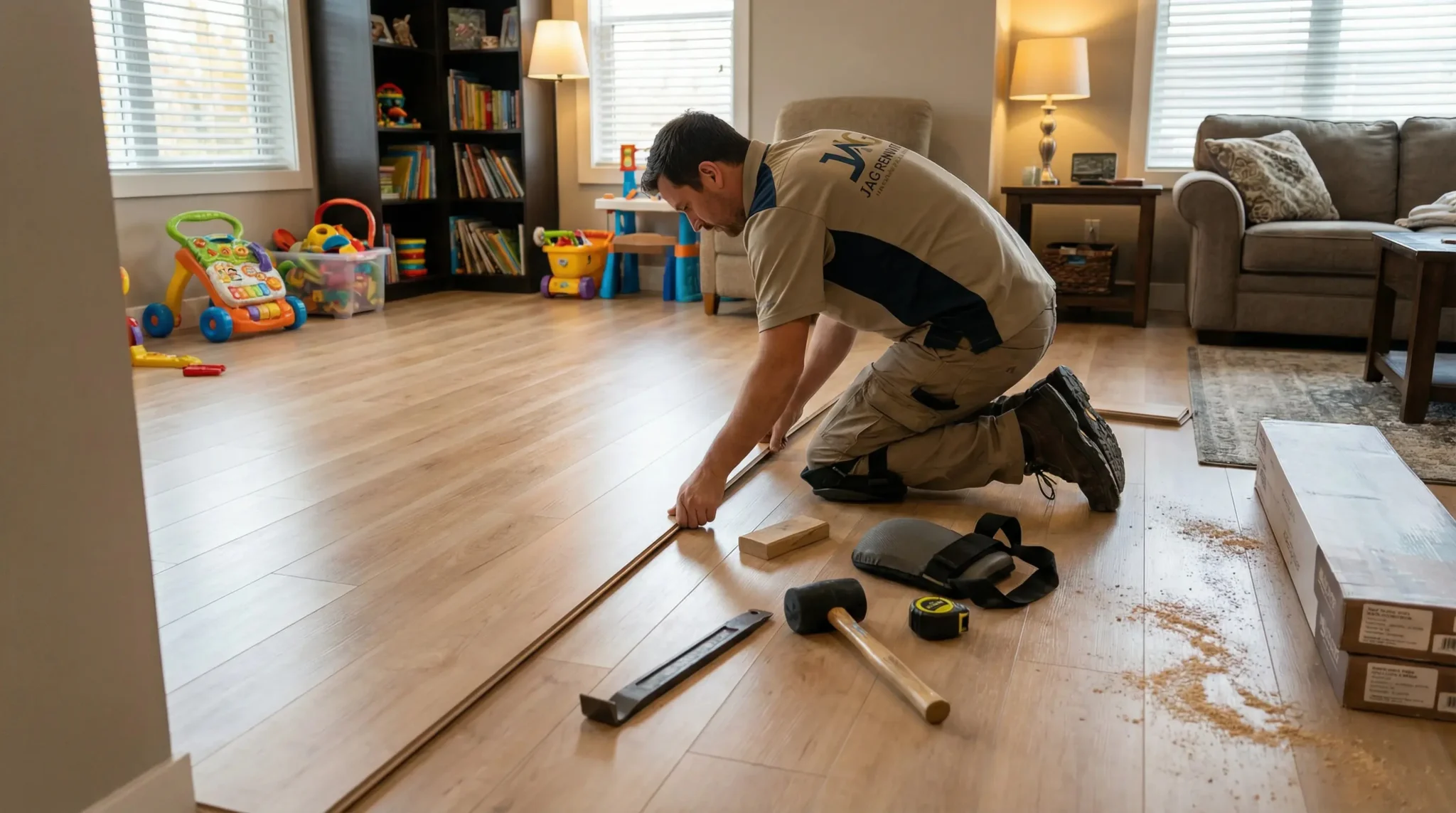
Installation timing depends on the scope. A single room might take a day or two. Whole-home projects take longer, but we keep the disruption as minimal as possible. We move furniture when needed, protect your walls and baseboards, and clean up daily so you’re not living in a construction zone.
After installation, we walk the job with you to make sure everything meets your expectations. Then we’re done. No lingering invoices, no pressure to book the next project. Just finished floors and a straightforward experience.

Ready to get started?
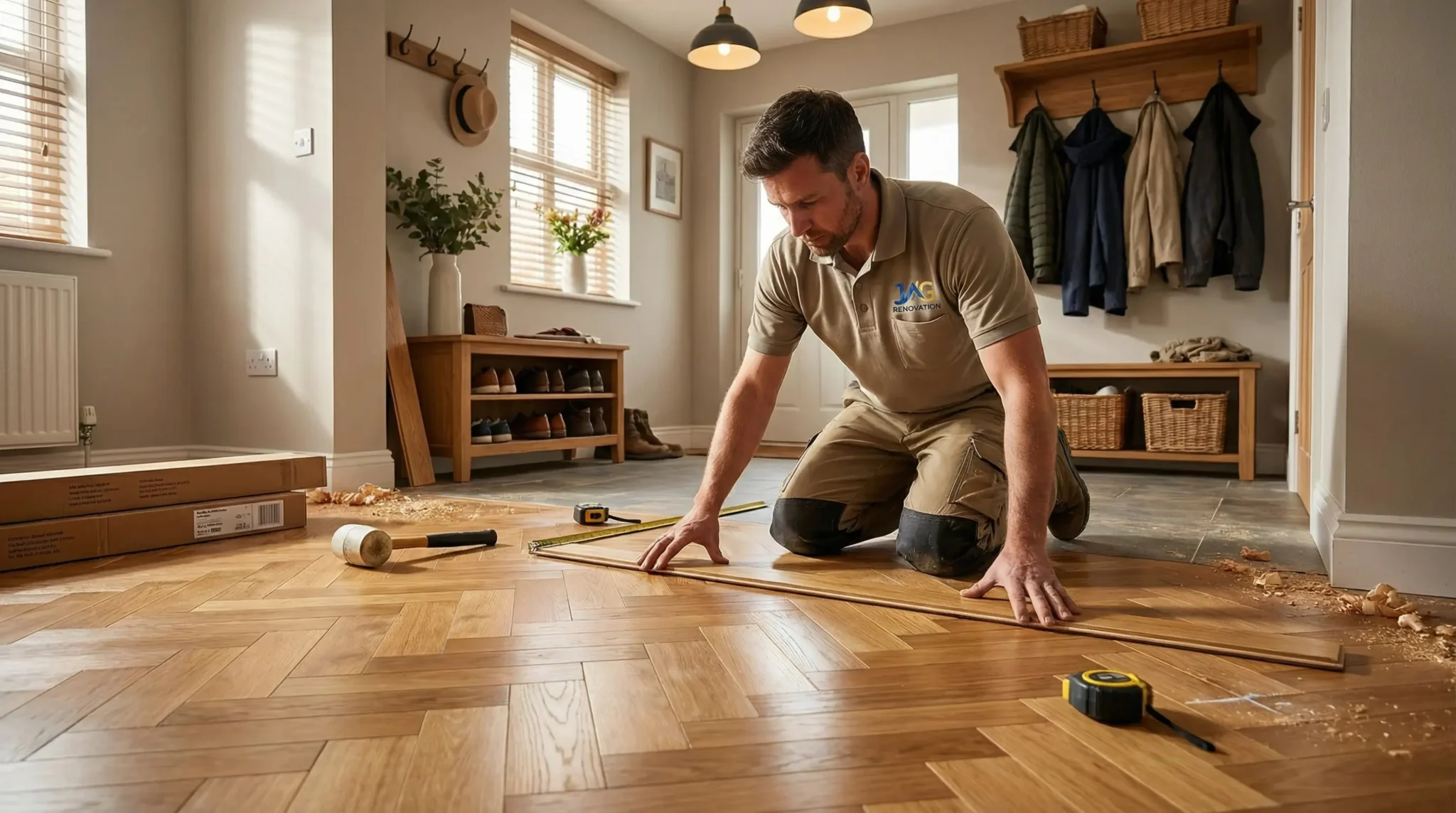
We handle hardwood, engineered wood, luxury vinyl plank, laminate, tile, and carpet installation. Each material has different prep requirements, and we adjust our process accordingly. Tile needs a perfectly level subfloor and waterproofing in wet areas. Hardwood needs acclimation time and careful moisture testing. Vinyl is more forgiving but still requires a smooth surface to avoid telegraphing imperfections.
In Islip and across Suffolk County, we’re seeing more homeowners move toward luxury vinyl plank and warm-toned hardwood. The gray floors that dominated for years are fading out. People want natural oak, honey tones, and matte finishes that feel less sterile and hold up better to visible wear.
We also see a lot of ceramic tile floor installation requests for entryways, mudrooms, and bathrooms where water resistance matters. Large-format tiles are popular because they mean fewer grout lines and a cleaner look. Laminate flooring installation is still common in rental properties and budget-conscious projects, though it doesn’t hold value like vinyl or hardwood.
If you’re replacing flooring in your house, we’ll remove and dispose of the old material. If your subfloor is damaged, we’ll repair or replace it before installing anything new. Baseboards get reinstalled or replaced depending on condition. Everything gets cleaned up before we leave.

Most flooring projects in Islip fall between $1,500 and $4,500 depending on the size of the space and the material you choose. Vinyl and laminate tend to run $3 to $8 per square foot installed. Hardwood ranges from $8 to $22 per square foot depending on the species and finish. Tile installation usually lands between $10 and $18 per square foot when you factor in materials, labor, and underlayment.
Your total cost also depends on what’s underneath. If your subfloor is rotted, uneven, or damaged, that needs to be addressed before new flooring goes down. Skipping that step leads to squeaks, gaps, and premature wear. We’ll assess the subfloor during the estimate so there are no surprises later.
The cheapest option isn’t always the smartest. Vinyl plank costs more than laminate, but it’s waterproof and more durable. Hardwood costs more upfront but adds resale value. We’ll walk you through the math so you can make a decision that fits your budget and your timeline.
Luxury vinyl plank is the most practical choice if you have kids, dogs, or both. It’s waterproof, scratch-resistant, and easy to clean. Spilled juice, muddy paws, and dropped toys won’t ruin it. It also feels warmer underfoot than tile, which matters in the winter months here in Islip.
If you prefer the look and feel of real wood, engineered hardwood with a matte finish holds up better than solid hardwood in high-traffic areas. The finish hides scratches and dents better than glossy options, and engineered wood is more stable in humid conditions. You’ll still see wear over time, but it ages more gracefully.
Tile works well in entryways, mudrooms, and kitchens where water and dirt are constant issues. Porcelain and ceramic tile won’t stain or scratch, and they’re easy to mop. The downside is they’re cold and hard, so dropped dishes break and standing for long periods gets uncomfortable. Some homeowners use tile in wet zones and vinyl or hardwood everywhere else.
A single room usually takes one to two days depending on the material and the condition of the subfloor. If we’re installing vinyl plank in a 200-square-foot bedroom with a solid subfloor, that’s a one-day job. If we’re installing tile in a bathroom and need to replace the underlayment and add waterproofing, that stretches to two or three days.
Whole-home flooring projects take longer. A 1,500-square-foot main floor might take four to seven days depending on the layout, the number of transitions between rooms, and whether we’re removing old flooring or working over existing material. Hardwood takes longer than vinyl because it requires acclimation time before installation and finishing time afterward if it’s unfinished.
We’ll give you a realistic timeline during the estimate. We don’t rush jobs to move on to the next one. Flooring that’s installed too quickly ends up with gaps, uneven transitions, and premature failure. You’re better off waiting an extra day than living with a poorly finished floor for the next decade.
We can move most furniture as part of the job, but it helps if you clear out smaller items, fragile decor, and anything valuable before we start. We’ll shift couches, beds, dressers, and tables as needed to access the floor. Heavy or awkward pieces like pianos, gun safes, and large entertainment centers may need special handling or advance planning.
If you’re replacing flooring throughout your home, you’ll need a plan for where furniture goes while we work. Some homeowners move everything into the garage or a room we’re not touching yet. Others rent a storage pod for a week. We can work room by room to minimize disruption, but that extends the timeline.
We protect your furniture and walls with padding and coverings during the move. We also reinstall everything once the floor is finished. The goal is to leave your home functional and clean, not buried in plastic and plywood for days on end.
Sometimes, but not always. Vinyl plank and laminate can go over existing vinyl, tile, or hardwood as long as the surface is smooth, level, and structurally sound. If the old floor is buckling, cracked, or uneven, we’ll need to remove it first. Installing over a damaged surface just transfers those problems to the new floor.
Tile and hardwood almost always require removal of the old flooring. Tile needs a stable, level subfloor to prevent cracking. Hardwood needs to be nailed or glued directly to the subfloor, and adding height can create issues with door clearances and transitions to other rooms.
We’ll assess your existing floor during the estimate and let you know whether removal is necessary. Skipping that step to save money usually costs more in the long run when the new floor fails prematurely. We’d rather do it right the first time than come back to fix it later.
Start with how you use the space. Bathrooms, laundry rooms, and entryways need water-resistant flooring, which means tile or vinyl. Kitchens can handle any of the three, but vinyl is the most forgiving if you drop things or stand for long periods. Living rooms, bedrooms, and hallways give you more flexibility.
Hardwood adds the most resale value and ages well if you maintain it. It can be refinished multiple times, so scratches and wear aren’t permanent. The downside is cost and sensitivity to moisture. If your home has humidity issues or you’re near the water in Islip, engineered hardwood is a safer bet than solid.
Vinyl plank gives you the look of wood with better durability and waterproofing. It costs less than hardwood and installs faster. It won’t add as much resale value, but it’s a smart choice if you’re planning to stay in your home for years and want something that holds up to daily life without constant maintenance. Tile is the most durable option but also the hardest and coldest underfoot, so it works best in specific areas rather than throughout the entire home.