
Hear from Our Customers
You’re not replacing flooring just to check a box. You want floors that can handle wet boots by the door, humidity swings from Long Island’s coastal air, and the daily wear from kids, pets, or just living in your space.
That means choosing materials that won’t buckle when moisture creeps in. It means installation done right the first time so you’re not dealing with gaps, creaks, or premature wear six months later. And it means working with someone who knows the difference between what looks good in a showroom and what actually performs in a Manorville home.
When you replace flooring in your house, you’re investing in something you’ll walk on every single day. It should feel solid underfoot, clean up easily, and still look sharp years from now. That’s what proper flooring installation gets you—less maintenance, fewer headaches, and a home that feels finished.
We’ve been handling flooring projects across Suffolk County since 2016. We’ve worked in enough Manorville homes to know what holds up and what doesn’t when you’re this close to the coast.
We’re not a high-pressure sales operation. You won’t get upsold on materials you don’t need or locked into financing schemes that don’t make sense. We give you a transparent estimate, explain your options, and let you decide what fits your home and budget.
Licensed, insured, and locally based. We show up when we say we will, finish on schedule, and clean up when we’re done. That’s not revolutionary—it’s just how this should work.

First, we come to your home and assess the space. We’re looking at subfloor condition, moisture levels, transitions between rooms, and how your existing layout affects material choice. You tell us how you use the space, and we recommend what makes sense—not what’s most expensive.
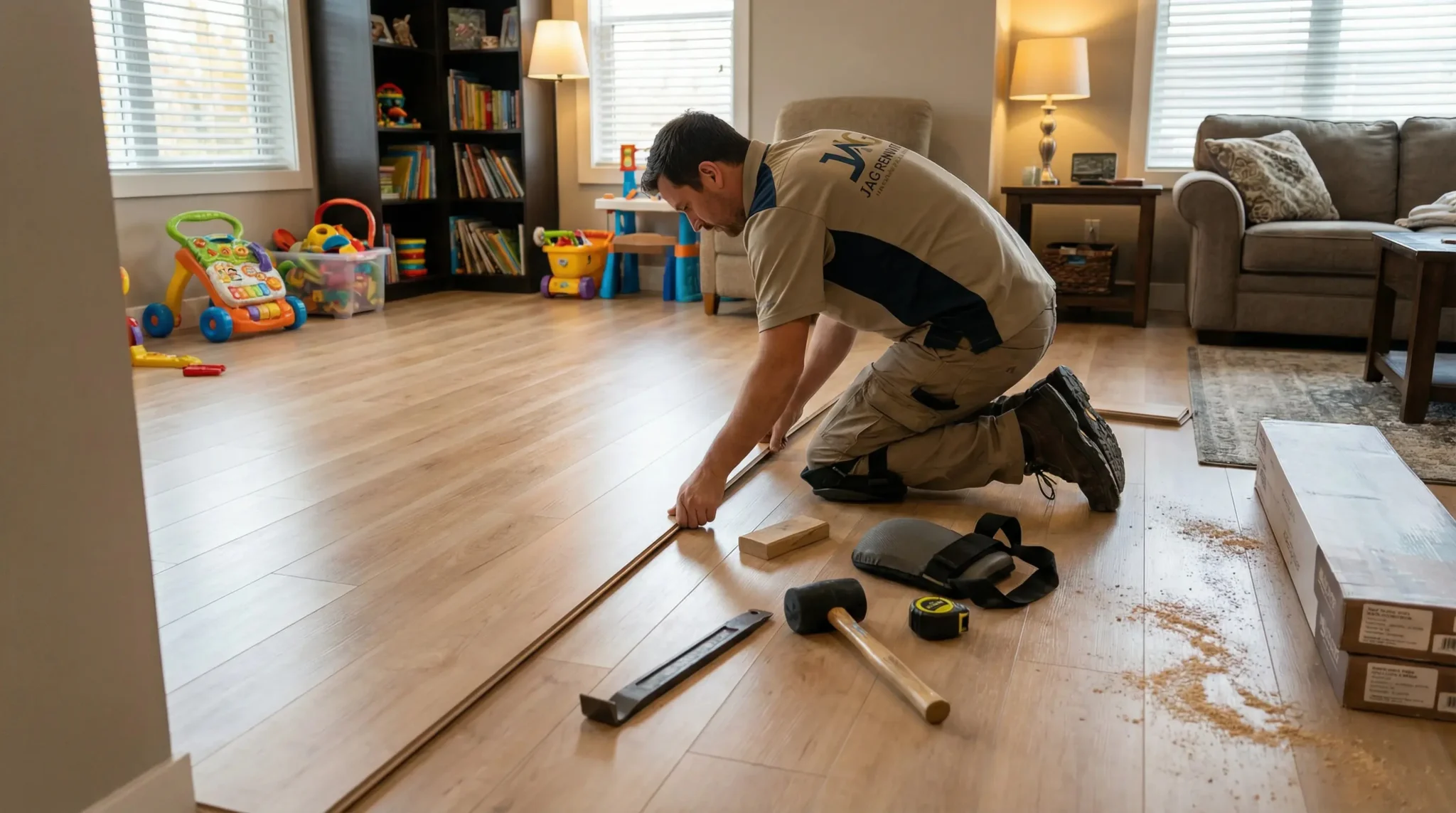
Once you approve the estimate, we schedule the work around your life. We protect your furniture, pull up old flooring if needed, and prep the subfloor so everything sits level and secure. Then we install your new floors with the right underlayment, expansion gaps, and fastening methods for the material you chose.
After installation, we clean the site, haul away debris, and walk you through care instructions. You’re left with floors that look clean, feel solid, and are ready to use. No lingering mess, no surprise charges, no wondering if it was done right.
Ready to get started?
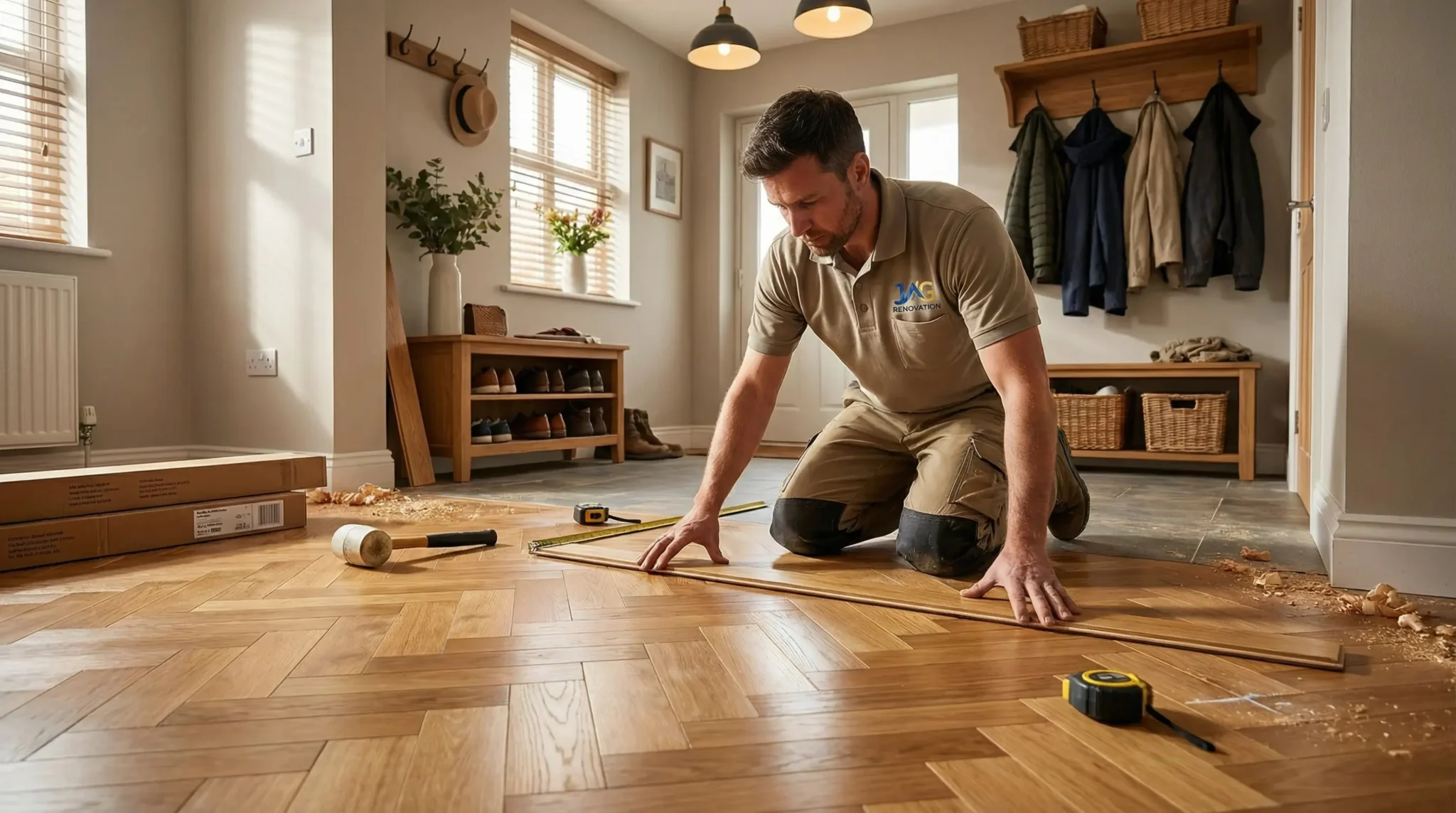
We install hardwood flooring for homeowners who want the real thing—solid or engineered wood that adds value and warmth. Engineered hardwood handles humidity better than solid planks, which matters here. We also refinish existing hardwood if your floors just need a refresh instead of full replacement.
Luxury vinyl flooring is the most requested material we install right now, and for good reason. It’s waterproof, scratch-resistant, handles pets and kids without showing every mark, and looks nearly identical to real wood or stone. Vinyl plank installation goes fast, costs less than hardwood, and performs better in moisture-prone areas like basements or entryways.
Laminate flooring sits between vinyl and hardwood in cost and durability. It’s not waterproof, but it’s water-resistant and holds up well in bedrooms, living rooms, and dining areas. We also handle tile floor installation for kitchens, bathrooms, mudrooms, and basements—ceramic tile and porcelain both work well in high-moisture zones and clean up easily.

Luxury vinyl plank and porcelain tile are your best bets if moisture is a concern. Vinyl is fully waterproof, so it won’t swell, warp, or buckle even if water sits on it. That makes it ideal for basements, bathrooms, laundry rooms, and entryways where wet shoes and humidity are constant issues.
Porcelain tile is also waterproof and extremely durable, though it’s harder underfoot and colder in winter unless you add radiant heating. Ceramic tile works too, but porcelain is denser and better for high-traffic areas.
If you prefer the look of hardwood, engineered wood handles humidity better than solid hardwood because its layered construction resists expansion and contraction. It’s not waterproof, but it’s more stable in coastal climates like ours. We don’t recommend solid hardwood in basements or bathrooms, but it works fine on main floors if your home has decent climate control.
Most residential flooring projects take two to five days depending on square footage, material type, and how much prep work the subfloor needs. A single bedroom might be done in a day. A whole main floor with kitchen, living room, and hallways usually takes three to four days.
If we’re pulling up old flooring, that adds time. Carpet removal is quick. Tile removal takes longer because we have to scrape up thinset and make sure the subfloor is smooth and level before new material goes down.
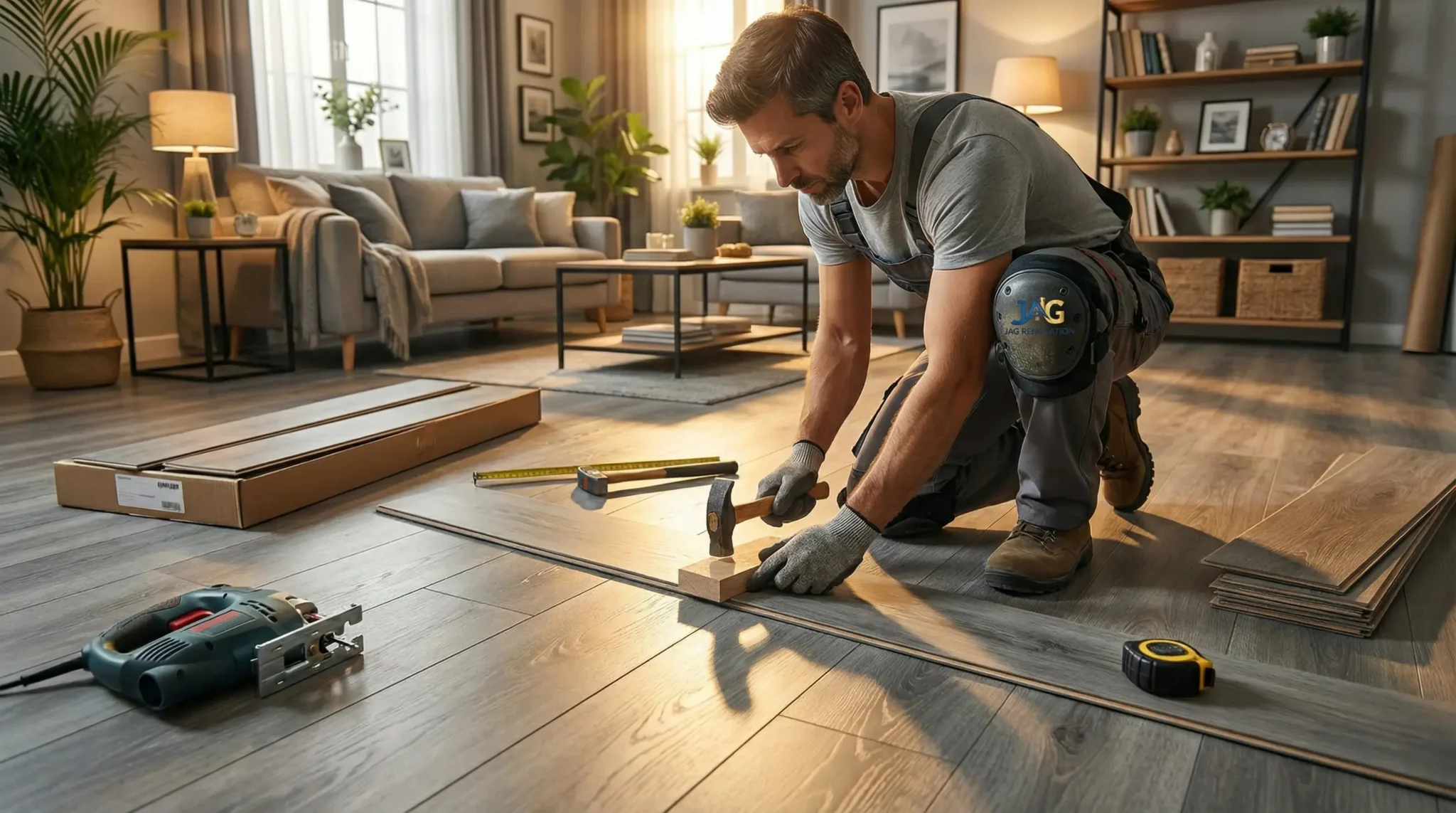
Hardwood installation takes longer than vinyl or laminate because each plank has to acclimate to your home’s humidity levels for a few days before we install it. Luxury vinyl plank goes down faster since it doesn’t need acclimation and uses a click-lock system. We’ll give you a realistic timeline during the estimate so you can plan around the work.
You don’t have to, but it helps. We can move most furniture for you, but we ask that you clear out small items, breakables, and anything valuable or personal. The more open the space is when we arrive, the faster we can start.
Heavy furniture like dressers, beds, and couches—we’ll shift those as we work through the room. We can’t move pianos, gun safes, or anything that requires special equipment. If you have those, we’ll work around them or you’ll need to arrange moving help before we start.
We also recommend clearing closets if we’re doing flooring in bedrooms. It’s easier to install everything in one pass than to come back later. Same goes for kitchens—if we’re doing the floor, the room needs to be empty enough for us to access all corners and edges cleanly.
Vinyl plank installation typically runs between $4 and $8 per square foot installed, depending on the quality of the material and the condition of your subfloor. Laminate flooring costs about the same. Hardwood installation ranges from $8 to $15 per square foot, with engineered wood on the lower end and solid hardwood on the higher end.
Tile floor installation costs vary widely based on tile size, pattern, and layout complexity. Basic ceramic tile starts around $6 per square foot installed. Larger porcelain tiles or intricate patterns can push that to $12 or more per square foot.
Those are ballpark numbers. Your actual cost depends on square footage, material choice, subfloor prep, removal of old flooring, and any transitions or custom cuts needed around cabinets, stairs, or doorways. We give you a written estimate with a clear breakdown so you know exactly what you’re paying for before we start.
Sometimes, but not always. If your existing tile is level, well-adhered, and in good shape, we can install luxury vinyl or laminate over it using the right underlayment. That saves time and money because we don’t have to demo the old floor.
If the tile is cracked, loose, or uneven, we need to remove it first. Installing over a damaged surface just transfers those problems to your new floor. Same goes for old vinyl—if it’s peeling or bubbling, it has to come up.
Hardwood over hardwood is trickier. If your existing wood floor is solid and level, we can sometimes install engineered hardwood or vinyl over it. But if the old floor has moisture damage, soft spots, or significant wear, we’ll pull it up and address the subfloor before installing anything new. We assess this during the estimate so there are no surprises.
Vinyl is waterproof. Laminate is not. That’s the biggest difference and usually the deciding factor for most homeowners. Luxury vinyl plank is made from PVC plastic with a printed design layer and a clear wear layer on top. You can install it in bathrooms, basements, kitchens—anywhere moisture is a concern—and it won’t swell or warp.
Laminate flooring is made from compressed wood fibers with a photographic image on top and a protective coating. It looks great and feels slightly more like real wood underfoot, but if water sits on it too long, the core will swell and the planks will buckle. It works well in bedrooms, living rooms, and dining areas where spills get wiped up quickly.
Both are durable, scratch-resistant, and cost-effective compared to hardwood. Vinyl is softer and quieter underfoot. Laminate is harder and can feel more rigid. If you have kids, pets, or moisture issues, go with vinyl. If you want a slightly more premium feel in a dry area, laminate works fine.