
Hear from Our Customers
Your floors shouldn’t stress you out. If you’re tiptoeing around pet accidents, panicking over spilled drinks, or watching your hardwood buckle from Long Island’s summer humidity, something’s wrong.
The right flooring changes that. Waterproof luxury vinyl plank gives you the hardwood look without the constant maintenance anxiety. Ceramic tile handles moisture in bathrooms and entryways where traditional materials fail. Properly installed laminate stands up to kids, dogs, and the daily chaos of family life.
You get floors that look great and actually perform in Mastic’s coastal climate. No more babying your investment or wondering when the next repair bill hits. Just durable, beautiful flooring that works as hard as you do.
We’ve spent close to ten years installing floors in homes just like yours throughout Mastic and Suffolk County. That means we know exactly what coastal humidity does to traditional hardwood, how basement moisture creeps up through subfloors, and why proper vapor barriers matter here more than inland.
We’re a licensed Suffolk County home improvement contractor. Fully insured, bonded, and tested on local building codes. No hidden costs, no aggressive sales tactics, no surprises when the bill comes.
Just honest flooring work from contractors who understand that your time and trust matter. We communicate clearly, show up when we say we will, and install floors that handle everything Long Island throws at them.

First, we come to your home and actually look at what you’re dealing with. We check for moisture issues, subfloor condition, and any quirks that older Mastic homes tend to have. You tell us how you use the space, what’s failed before, and what you need the floor to handle.
Then we walk through your options. Waterproof vinyl plank for high-moisture areas. Ceramic tile for bathrooms and entryways. Laminate for budget-conscious durability. Engineered hardwood for living spaces where you want that real wood look with better moisture resistance than solid hardwood.
We give you transparent pricing. No hidden charges for “prep work” or “disposal fees” that magically appear later. What we quote is what you pay.
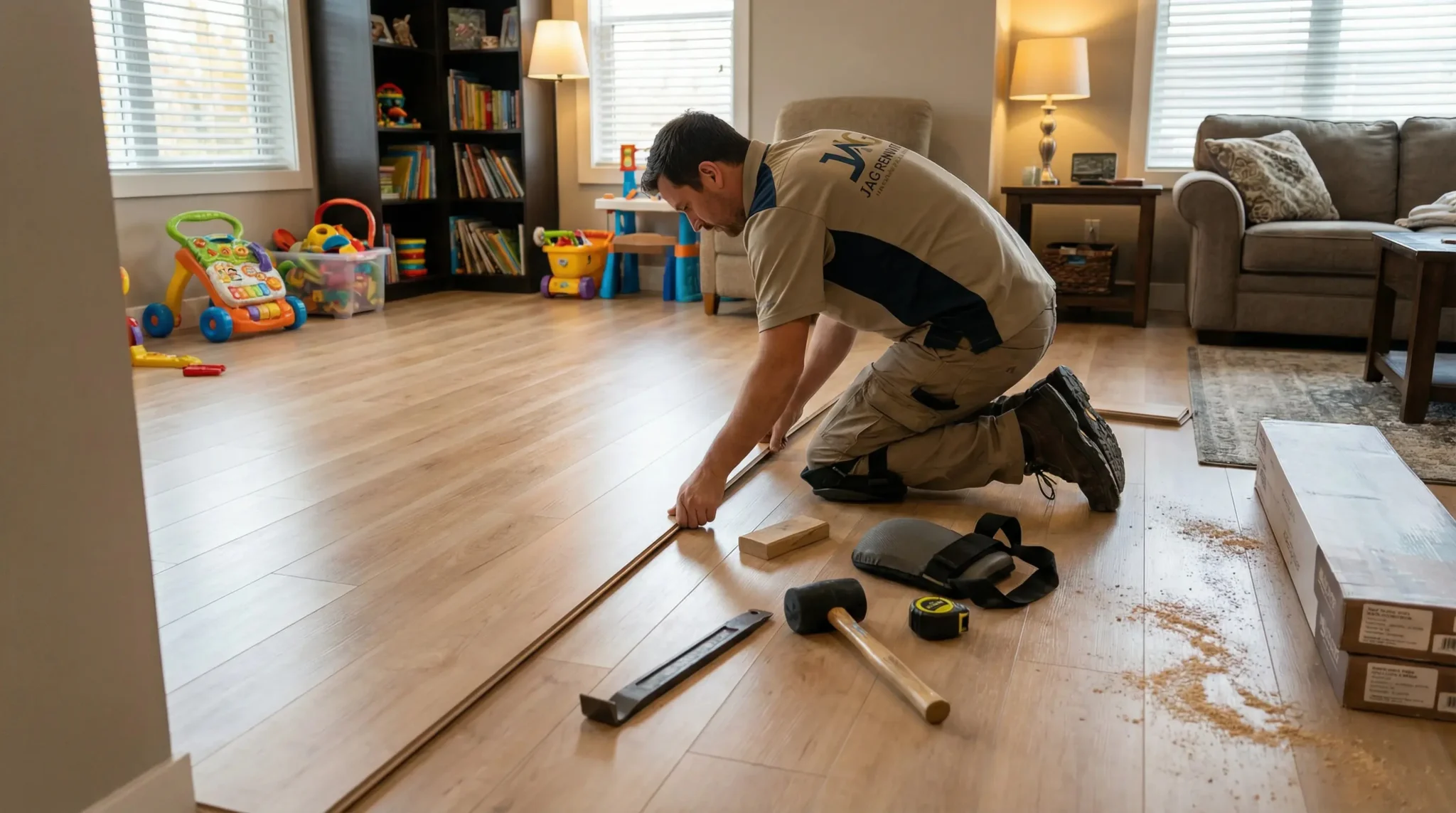
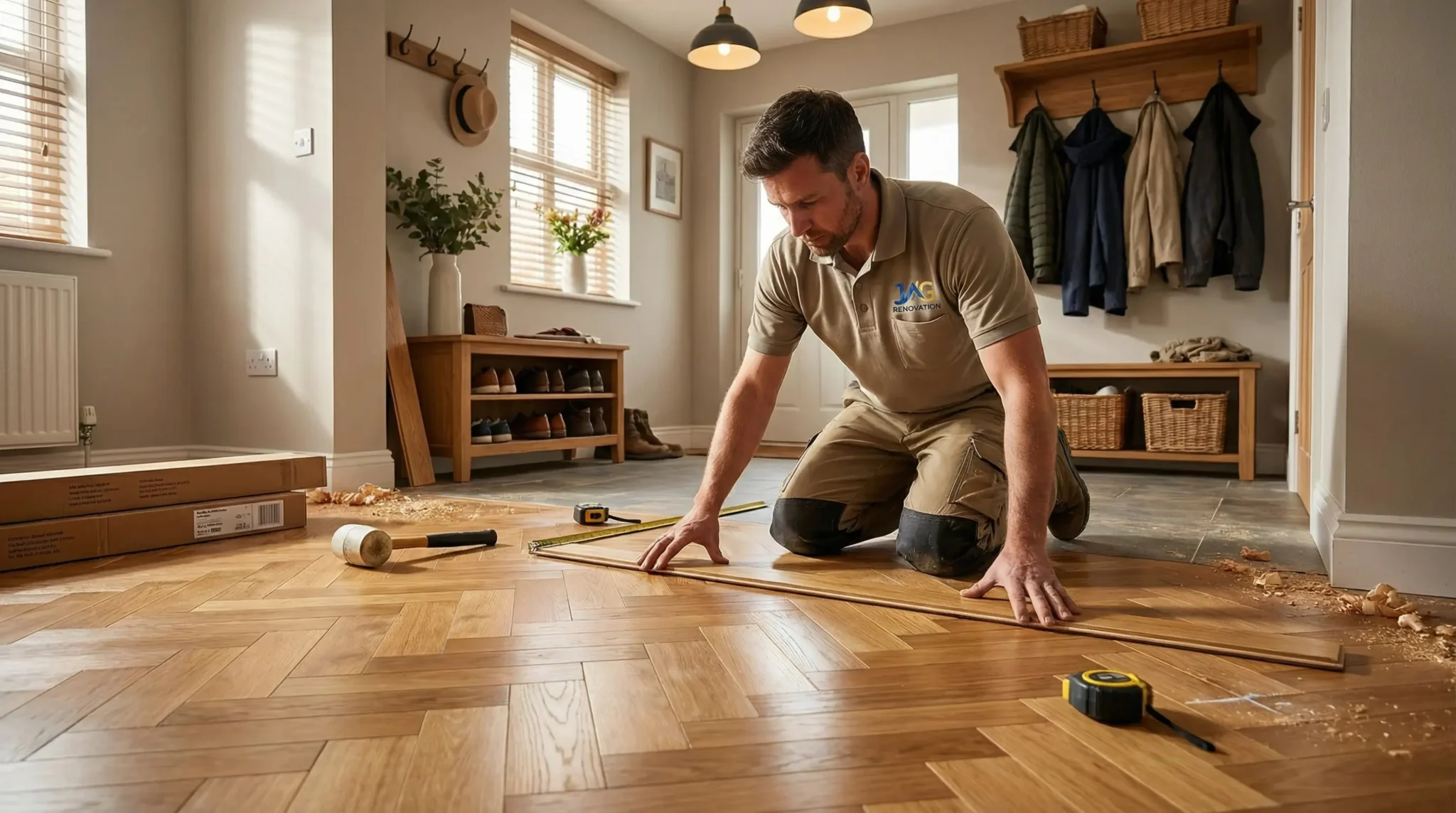
Installation starts with proper subfloor prep and moisture barriers where needed. We don’t skip steps to save time. Then we install your flooring with the attention to detail that keeps it looking good and performing well for years. Clean up, final walkthrough, and you’re done.

Ready to get started?
Luxury vinyl plank is the workhorse for Mastic homes. Completely waterproof, scratch-resistant, and it looks like real hardwood. Perfect for kitchens, basements, entryways, and anywhere moisture or heavy traffic is a concern. It handles Long Island’s humidity swings without buckling or warping.
Ceramic and porcelain tile work in bathrooms, mudrooms, and high-moisture areas where even waterproof vinyl might not be your first choice. Tile is bulletproof against water damage and holds up to salt, sand, and whatever gets tracked in from the coast.
Laminate flooring gives you a wood look at a lower price point. It’s not waterproof like vinyl, but quality laminate is water-resistant enough for living rooms, bedrooms, and dining areas where spills are occasional, not constant. Good for families watching their budget who still want something better than builder-grade carpet.
Engineered hardwood offers real wood with better moisture resistance than solid hardwood. The layered construction handles humidity changes better, making it a smarter choice for Long Island homes where solid hardwood tends to expand and contract too much.
We help you pick what makes sense for your space, your budget, and how you actually live.

Waterproof luxury vinyl plank is your best bet for handling Long Island’s coastal climate. It’s completely impervious to moisture, so summer humidity won’t make it swell, buckle, or warp like traditional hardwood does.
Ceramic or porcelain tile is another solid choice, especially in bathrooms, entryways, and basements where water exposure is likely. Tile doesn’t care about humidity levels or occasional flooding.
Engineered hardwood can work in living areas if you want real wood, but it still needs proper climate control and isn’t suitable for basements or high-moisture rooms. Solid hardwood is risky in Mastic unless you’re committed to running dehumidifiers and maintaining strict indoor humidity levels year-round.
The key is matching the flooring to the room and how much moisture it sees. We don’t install materials that are going to fail in six months because they can’t handle Long Island’s environment.
For a typical 1,000 square foot area, you’re looking at roughly $3,000 to $8,000 depending on material choice and site conditions. Luxury vinyl plank usually runs $4 to $8 per square foot installed. Ceramic tile can range from $6 to $12 per square foot. Laminate is often the most budget-friendly at $3 to $6 per square foot installed.
That includes materials, labor, and basic subfloor prep. If we find moisture issues, significant subfloor damage, or need to install vapor barriers, that adds to the cost. But we tell you that upfront during the estimate, not after we’ve ripped up your old floor.
Older Mastic homes sometimes have quirks that affect pricing—unlevel subfloors, asbestos tile that needs professional removal, or floor joists that need reinforcement. We account for what we can see and give you honest pricing based on the actual work required.
The investment pays back. Quality flooring installation can return 50-80% of the cost when you sell, and it makes your home more livable right now.
Sometimes, but not always. It depends on what you have now and what you want to install.
Luxury vinyl plank can often go over existing vinyl, tile, or concrete if the surface is smooth, level, and in good condition. Laminate can sometimes be installed over old flooring for the same reasons. But if your current floor is damaged, uneven, or has moisture issues, we need to remove it first.
Tile almost always requires removing the old flooring. You can’t install tile over carpet, and installing it over existing tile or vinyl creates height issues with transitions and doesn’t give you the solid substrate tile needs.
Here’s what matters: we don’t cut corners to save time. If your subfloor has moisture damage, soft spots, or isn’t level, we address it. Installing new flooring over a bad foundation just means your new floor fails faster. We’d rather do it right the first time than have you call us back in a year with buckling or loose planks.
A typical bedroom or living room takes one to two days for installation. Kitchens usually take two to three days because of the cabinets, appliances, and detail work around islands and transitions.
Whole-house flooring projects depend on square footage and how many rooms we’re doing, but figure on about a week for most single-story homes. Two-story homes or homes with basements take longer.
That timeline assumes normal conditions. If we’re removing old flooring, addressing subfloor issues, or installing moisture barriers, add time. We give you a realistic schedule during the estimate based on what your specific project involves.
We don’t rush. Flooring installation requires precision—proper acclimation of materials, correct spacing for expansion, clean cuts around doorways and transitions. Rushing leads to gaps, buckling, and callbacks. We’d rather take an extra day and deliver flooring that lasts than cut corners to finish faster.
Yes, almost certainly. Mastic sits in Suffolk County where groundwater and coastal moisture are constant issues. Basement concrete slabs absorb moisture from the ground, and without a proper vapor barrier, that moisture migrates up into your flooring.
Even if your basement feels dry, concrete is porous. Moisture vapor transmission happens whether you see standing water or not. Install flooring without a barrier and you’re asking for mold growth, adhesive failure, and warped planks.
We test moisture levels in your concrete before installation. If levels are high, we install a vapor barrier before the flooring goes down. For luxury vinyl plank, that might be a rolled underlayment with moisture protection. For tile, it could be a waterproof membrane.
Skipping the moisture barrier to save a few hundred dollars costs you thousands when the floor fails. We’ve seen it too many times in Long Island basements. The barrier isn’t optional—it’s the difference between flooring that lasts and flooring that becomes an expensive problem.
Waterproof means the flooring can handle standing water without damage. Luxury vinyl plank is waterproof—you can spill a glass of water, let it sit for hours, and the flooring is fine. It’s the right choice for bathrooms, basements, kitchens, and entryways where water exposure is likely.
Water-resistant means the flooring can handle occasional spills if you clean them up quickly, but prolonged water exposure will cause damage. Most laminate flooring is water-resistant, not waterproof. A quick spill in the dining room is fine. A leaking dishwasher that soaks the floor overnight will ruin it.
The distinction matters in Long Island homes where humidity and moisture are constant factors. Water-resistant flooring works in bedrooms and living rooms where spills are rare and you’re not dealing with high moisture. But in basements, bathrooms, or anywhere coastal humidity concentrates, you need actually waterproof materials.
We help you figure out which rooms need waterproof flooring and where water-resistant options are acceptable. It’s about matching the material to the real-world conditions in your home, not just picking whatever looks good in the showroom.