
Hear from Our Customers
You’re not looking for the cheapest option. You’re looking for someone who shows up on time, gives you a straight answer about cost, and installs floors that’ll still look good in five years.
In North Great River, where the median home value sits around $680,000, your floors need to reflect that investment. Whether you’re updating worn hardwood in a 1970s colonial or replacing builder-grade carpet before listing, the work needs to be clean, professional, and done without drama.
That means knowing what you’re paying before the job starts. It means installers who protect your furniture and don’t leave dust everywhere. And it means flooring that holds up to Long Island humidity, foot traffic, and the occasional water track-in from the kids.
You get a clear quote, a realistic timeline, and floors installed by people who’ve been doing this in Suffolk County for nearly a decade. No surprise charges. No disappearing for weeks. Just the floor you picked, installed the way it should be.
We’ve been handling interior renovations across Suffolk County since 2015. We’re licensed, insured, and based locally—which means we know what works in North Great River homes and what doesn’t.
Most of the houses here were built between 1940 and 1999. That means subfloors that sometimes need attention, floor plans that don’t always make installation straightforward, and homeowners who want the job done right without tearing apart their whole week.
We’ve installed hardwood in split-levels along the water, updated tile in ranch kitchens, and replaced carpet in colonials getting ready to sell. The common thread isn’t the house style—it’s homeowners who are tired of contractors who don’t return calls or tack on charges after the fact.
You’ll talk to the same people from estimate to cleanup. You’ll know what’s happening and when. And if something comes up mid-job, you’ll hear about it immediately—not after the bill arrives.

First, we come out to see the space. We measure, check the subfloor, talk about what you’re looking for, and go over material options that make sense for your home and budget. You’ll get a written estimate that breaks down labor, materials, and timeline—no vague line items.
Once you’re ready to move forward, we schedule the work around your life, not ours. If you need us there mid-morning after the kids are at school, we make that happen. We’ll prep the space, pull up old flooring if needed, address any subfloor issues, and install your new floor using the right methods for the material—not shortcuts.
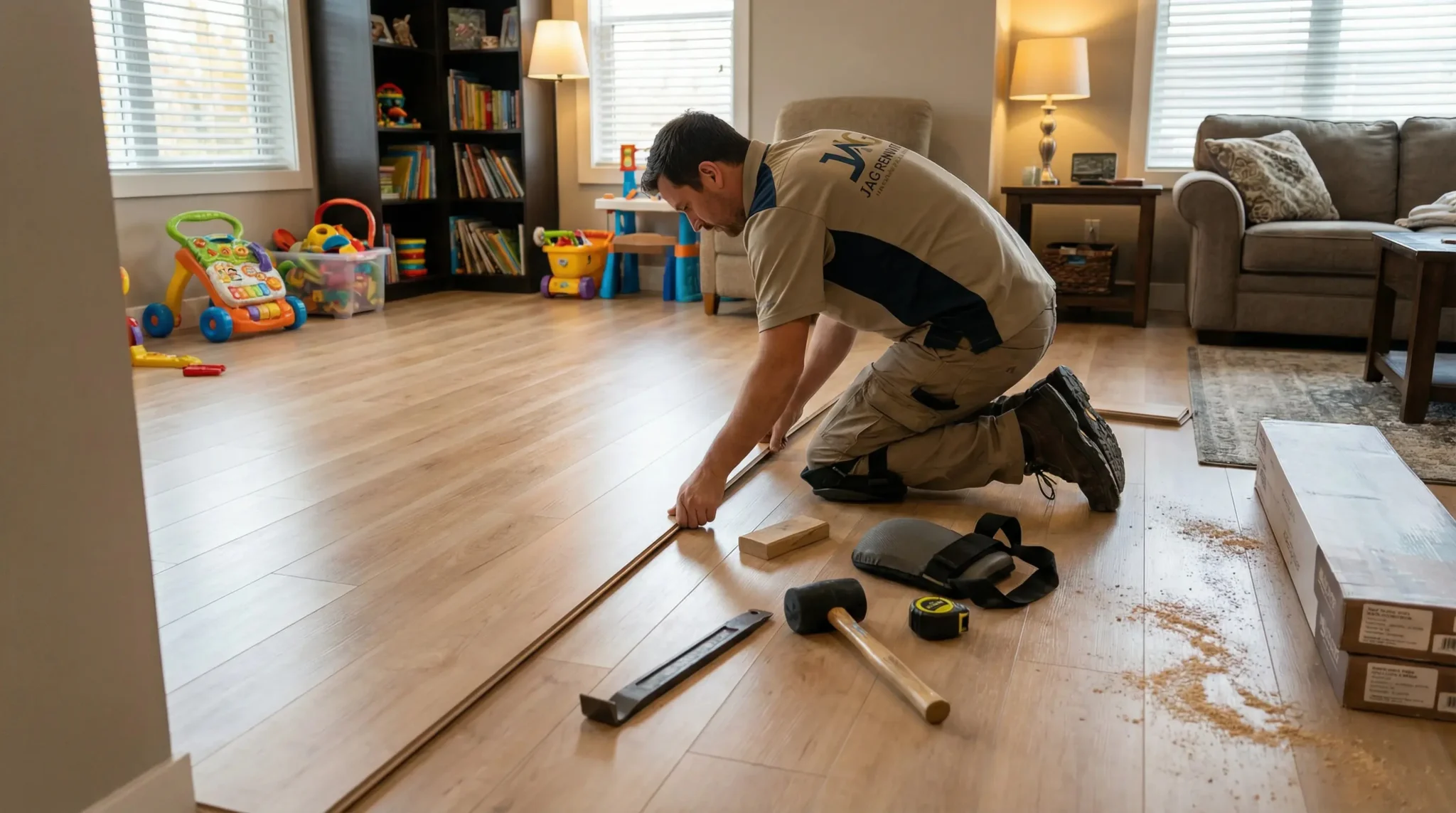
During installation, we keep the workspace contained. Dust barriers go up if we’re sanding hardwood. Furniture gets moved carefully and put back. We’re not tracking dirt through your house or leaving tools in the hallway overnight.
After installation, we walk you through care instructions and make sure you’re happy with the finished floor before we consider the job done. If something doesn’t look right, we handle it then—not three weeks later when you finally get us back on the phone.
The whole process usually takes anywhere from two days for a single room to a week for a whole-floor project, depending on square footage and material. You’ll know the timeline upfront, and we’ll tell you immediately if anything changes.

Ready to get started?
We install all the major flooring types, and we’ll tell you honestly which one makes the most sense for your space. Hardwood works beautifully in living areas and bedrooms, especially if you’re trying to match existing floors in an older home. Tile is the right call for bathrooms, entryways, and kitchens where water’s a factor. Vinyl and laminate give you the look of wood or stone at a lower price point and hold up well in basements or high-traffic areas. Carpet still makes sense for bedrooms if you want warmth underfoot.
In North Great River, we see a lot of requests to replace outdated tile in bathrooms and kitchens—ceramic tile installation has come a long way, and newer options look sharper and last longer. Laminate flooring installation is popular for finished basements and rental units. Vinyl flooring has gotten much better in recent years and handles moisture better than almost anything else.
If your home was built in the ’70s or earlier, there’s a good chance your subfloor will need some attention before new flooring goes down. We check for that during the estimate so you’re not surprised later. Same goes for transitions between rooms—we make sure new floors meet old ones cleanly, or we help you plan a larger project if that makes more sense.
You’re not locked into one material. If you want tile in the kitchen, hardwood in the dining room, and carpet upstairs, we handle all of it. One contractor, one timeline, one point of contact.

It depends on the material, square footage, and what’s underneath your current floor. For a typical 200-square-foot room, laminate or vinyl usually runs between $1,200 and $2,500 installed. Hardwood costs more—closer to $2,500 to $5,000 for the same space. Tile falls somewhere in the middle, depending on the tile you pick.
If your subfloor needs repair or leveling, that adds to the cost. Same with removing old flooring, especially if it’s glued-down tile or multiple layers of vinyl. We don’t hide those costs or surprise you with them later—we check during the estimate and include everything in the quote.
For a whole-house project, most North Great River homeowners spend between $8,000 and $20,000, depending on material choices and total square footage. You’ll get a written breakdown before we start so you know exactly where your money’s going.
It depends on the room, but for most of Long Island, you want something that handles humidity and temperature swings. Tile and vinyl are the most durable in wet areas like bathrooms, kitchens, and mudrooms. Hardwood works well in living spaces if it’s properly finished and maintained, but it’s not ideal in basements or anywhere moisture’s an issue.
Laminate is a solid middle-ground option. It looks like wood, costs less than hardwood, and handles wear better than carpet. Engineered hardwood is another good choice if you want the real wood look but need something more stable in humid conditions.
Carpet still makes sense in bedrooms, but it doesn’t hold up as well in high-traffic areas or homes with pets. If you’re near the water or have a finished basement, steer toward tile or luxury vinyl—those materials won’t warp or stain the way wood and carpet can.
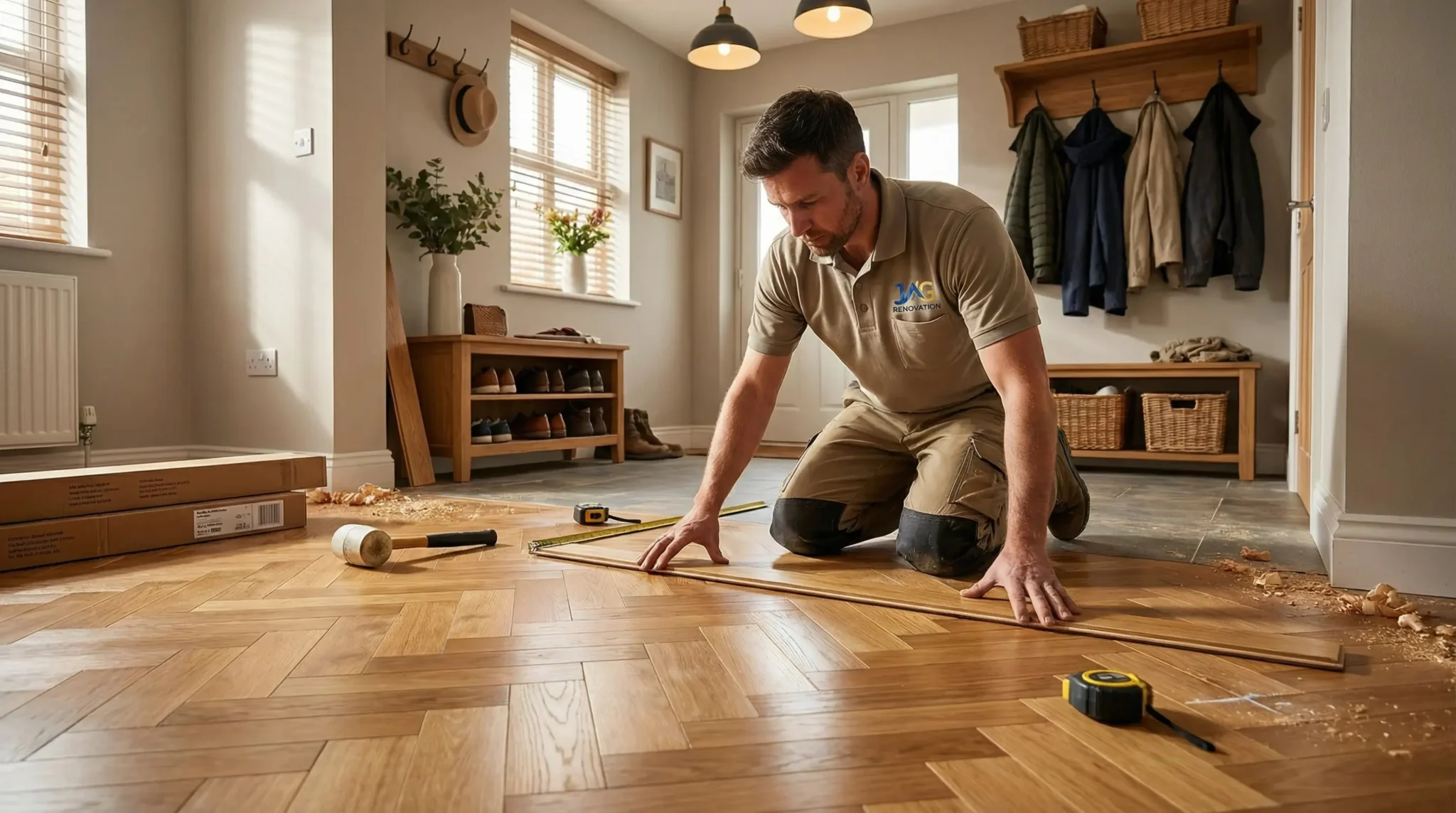
A single room usually takes one to three days, depending on the material and whether we’re removing old flooring. Vinyl and laminate go down faster—often in a day or two once the subfloor’s prepped. Tile takes longer because of drying time for mortar and grout. Hardwood installation can take a few days, and if we’re sanding and refinishing existing hardwood, add another day or two for drying.
For a whole-floor project—say, kitchen, living room, hallway, and a couple bedrooms—plan on about a week. We’ll give you a specific timeline during the estimate based on your square footage and material choice.
The bigger variable is usually subfloor prep. If we need to level the floor, replace damaged sections, or pull up multiple layers of old flooring, that adds time. We flag those issues upfront so you’re not waiting around wondering why the job’s taking longer than expected.
We can move most furniture as part of the job, but it helps if you clear out smaller items, breakables, and anything valuable beforehand. We’ll handle beds, dressers, couches, and tables—basically anything that’s not fragile or irreplaceable.
If you’ve got a piano, a massive armoire, or a gun safe, let us know during the estimate. Some items are better moved by specialists, and we’d rather tell you that upfront than risk damaging something.
We’ll also need you to clear the floors of rugs, plants, and anything sitting directly on the surface. The more prep you do ahead of time, the faster we can get started. That said, if you’re juggling work and kids and can’t move everything, we’ll figure it out—just let us know what you can and can’t handle so we can plan accordingly.
Sometimes, but not always. Laminate and vinyl can often go over existing flooring if the surface is level, stable, and in decent shape. If your current floor is tile or hardwood that’s not buckling or damaged, there’s a good chance we can install over it.
Carpet, sheet vinyl, and anything that’s uneven or soft underneath usually needs to come up first. Installing over a bad surface just means your new floor will have the same problems—squeaks, dips, movement—and it won’t last as long.
We check during the estimate and let you know whether we can install over what’s there or if removal makes more sense. Removing old flooring adds time and cost, but it’s worth it if it means your new floor sits flat and stays that way. We’d rather do it right than do it twice.
Solid hardwood is exactly what it sounds like—planks milled from a single piece of wood, usually three-quarters of an inch thick. It can be sanded and refinished multiple times, which means it can last decades if you take care of it. The downside is it expands and contracts with humidity, so it’s not ideal for basements or areas with moisture issues.
Engineered hardwood is made from layers of wood pressed together, with a real hardwood veneer on top. It’s more stable than solid hardwood, so it handles humidity better and can go in more areas of your home, including below-grade spaces. You can refinish it, but only once or twice depending on the thickness of the top layer.
For most North Great River homes, engineered hardwood is the smarter choice if you’re installing in a kitchen, basement, or anywhere near water. Solid hardwood makes sense in living rooms, dining rooms, and bedrooms where moisture isn’t a concern. Both look great—it’s really about where you’re installing and how much maintenance you want to deal with long-term.