
Hear from Our Customers
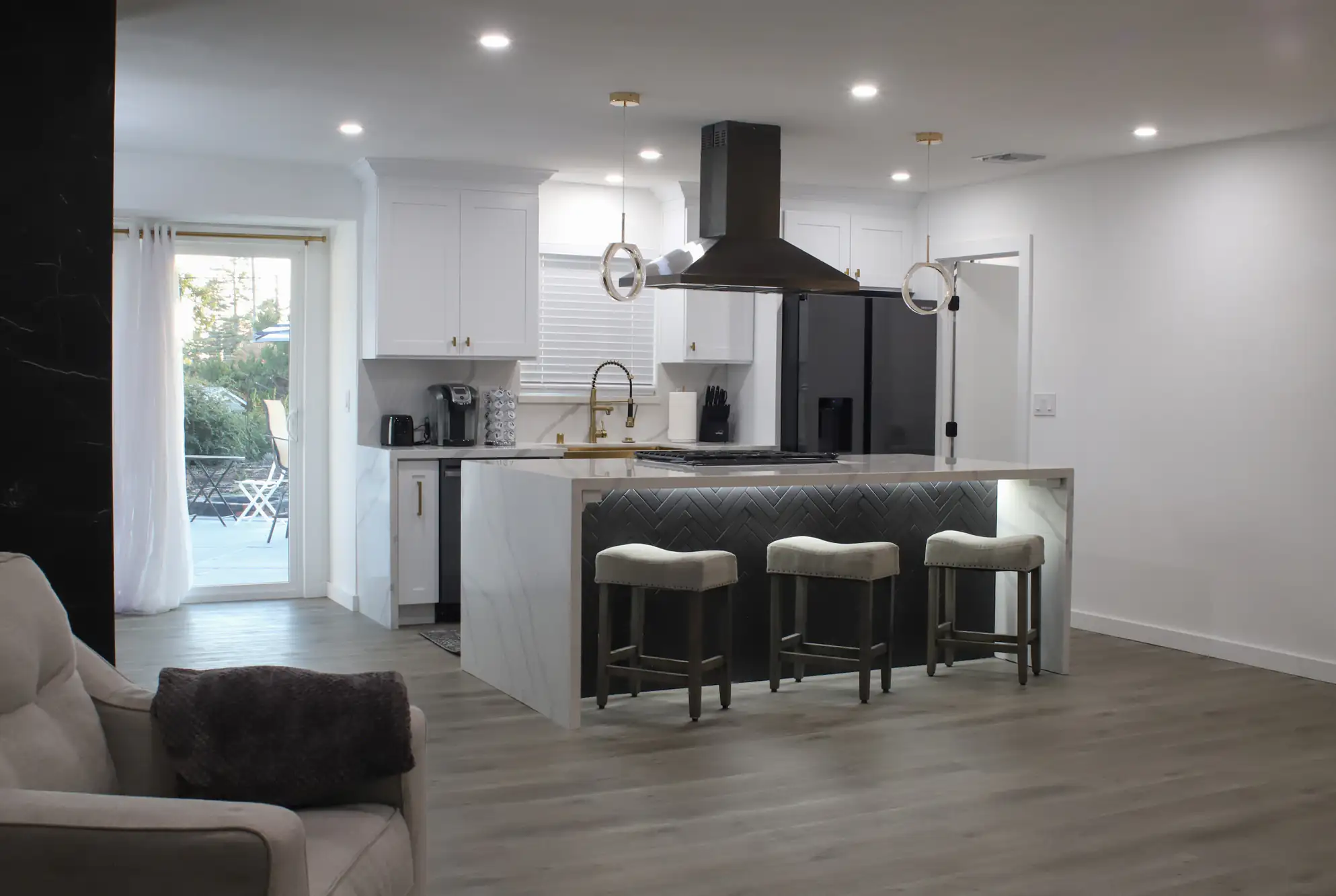
You stop working around broken drawers and countertops covered in clutter. Meal prep gets faster when everything has a place and your appliances aren’t fighting for outlet space. Mornings move smoother because the layout makes sense for how your family actually uses the room.
Open shelving and better lighting mean you can find what you need without digging. Upgraded cabinets give you storage that doesn’t require Tetris skills every time you put groceries away. Energy-efficient appliances drop your utility bills while giving you features that actually save time.
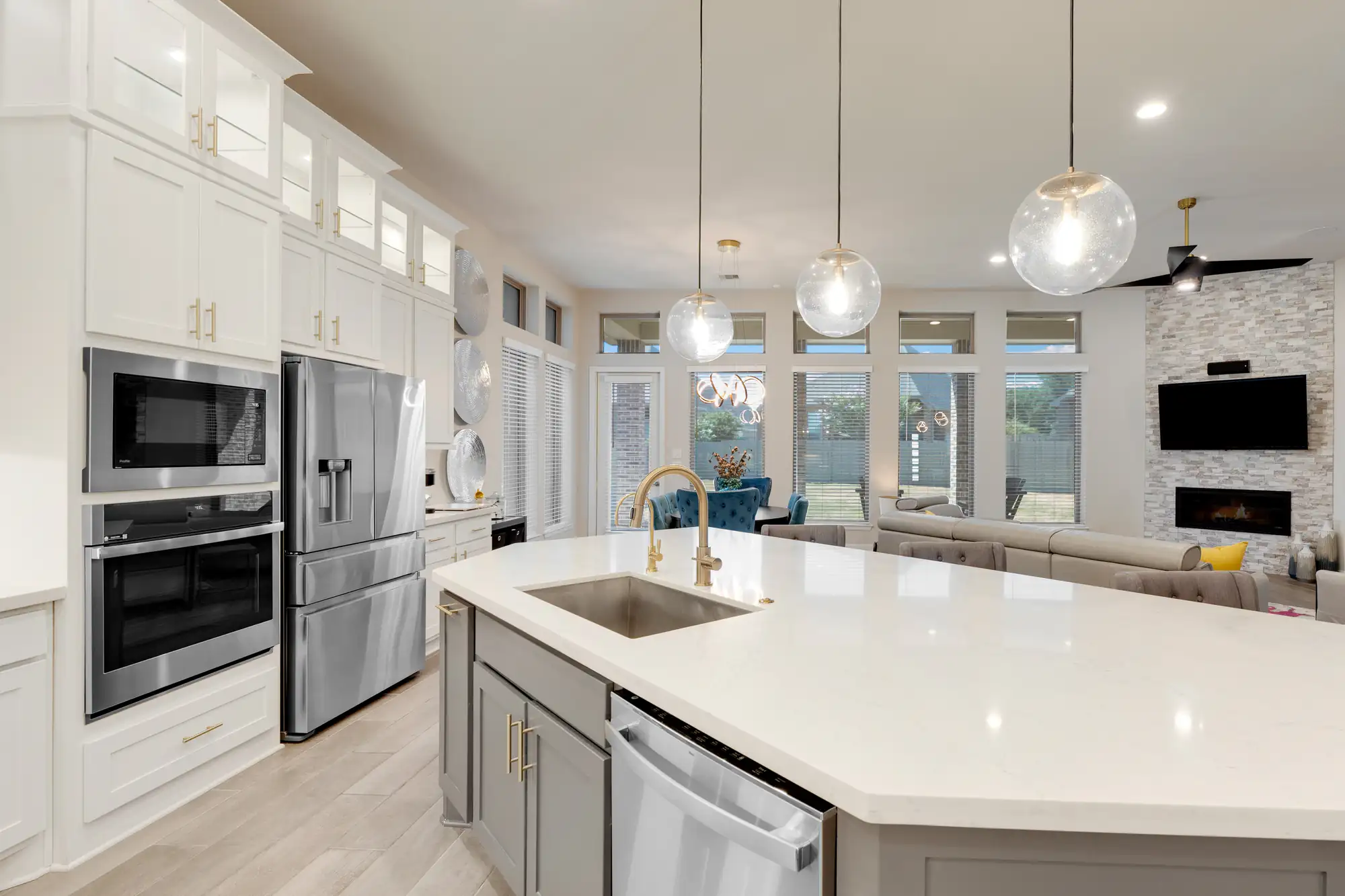
If you’re hosting, the kitchen becomes a space people want to gather in—not one you apologize for. And when it’s time to sell, buyers notice. Kitchens move homes faster and add measurable value, especially when the work is done right the first time.
We’ve been handling kitchen renovations across Amityville and Suffolk County since 2016. We’re licensed, insured, and we’ve seen what goes wrong when contractors skip steps or hide costs until it’s too late.
Our work covers everything from cabinet installation and countertop replacement to full layout redesigns. We pull permits, coordinate inspections, and make sure the job meets local codes—not because we have to, but because cutting corners costs you more later.
Amityville homeowners deal with older home layouts, tight spaces, and outdated electrical that needs upgrading before anything else can happen. We account for that in the estimate, not after demo starts. You’ll know what the project costs, how long it takes, and what’s happening each week.
First, we walk through your kitchen and talk about what’s not working. You tell us what you need more of—counter space, storage, better flow—and we measure everything. Then we give you an estimate that includes materials, labor, permits, and timeline. No placeholder numbers.
Once you approve the plan, we handle permits with the Town of Babylon and schedule inspections for electrical and plumbing if your project requires them. Demo comes next, and that’s when we see what’s behind the walls. If there’s an issue, we call you before we fix it.
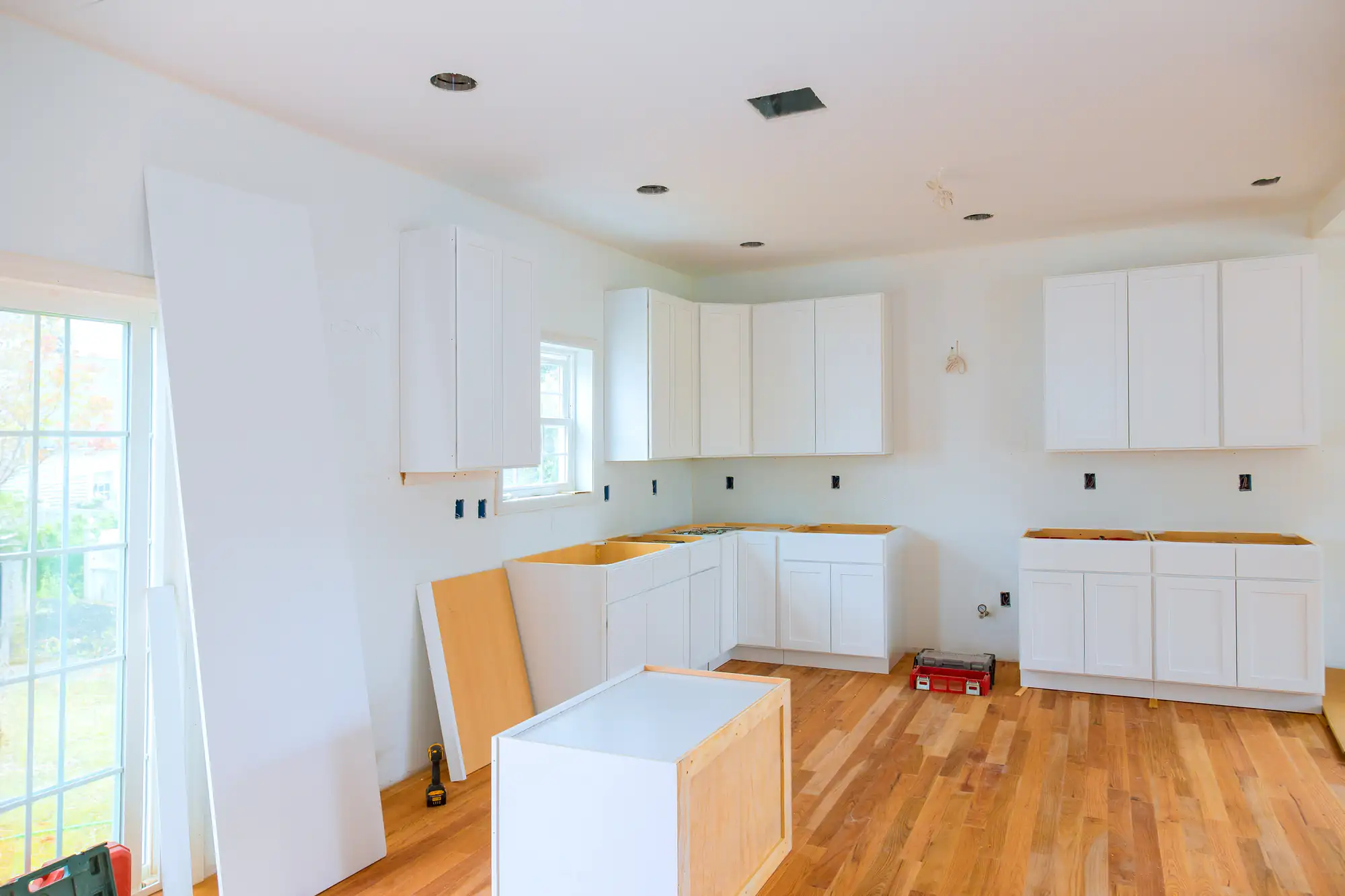
Installation follows: cabinets go in first, then countertops, backsplash, and appliances. Flooring comes last to avoid damage during the heavy work. We clean up daily because you’re still living there, and dust travels.
Final walkthrough happens when everything’s done. You check the work, we address anything that’s off, and then we close out permits. The whole process typically runs six to ten weeks depending on the scope, and we’ll tell you upfront if your project sits on the longer end.
Ready to get started?
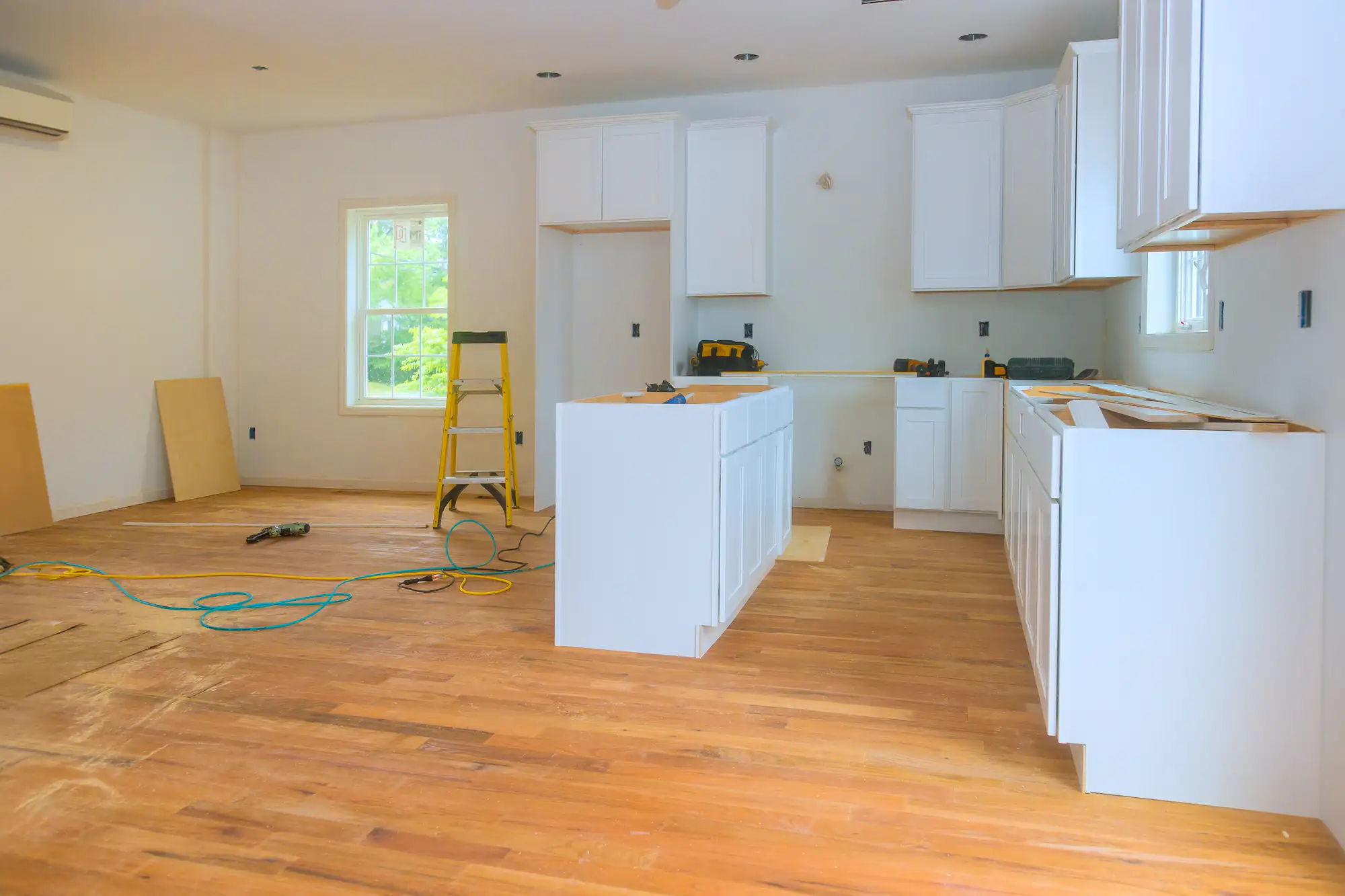
Custom kitchen cabinet installation starts with removing old cabinets and prepping walls for the new layout. We install base cabinets first, level everything, then mount uppers and add hardware. If you’re keeping existing cabinets, we can reface or repaint them instead of replacing.
Countertops get templated after cabinets are in. We work with granite, quartz, and laminate depending on your budget. Backsplash installation follows, whether that’s subway tile, glass, or stone. Undermount sinks require coordination between countertop fabricators and plumbers, and we handle that scheduling.
Flooring options include tile, luxury vinyl plank, or hardwood. We pull up old flooring, check the subfloor for damage, and install the new material after cabinets and countertops are set. That order prevents scratches and keeps grout lines clean.
Amityville homes near the water sometimes deal with humidity issues that affect cabinetry over time. We recommend materials that hold up in those conditions and make sure ventilation is adequate before we close walls back up. Electrical upgrades often include adding outlets for small appliances, under-cabinet lighting, and dedicated circuits for ranges or refrigerators. Plumbing work covers new sink installations, dishwasher hookups, and updated supply lines if yours are old enough to leak.
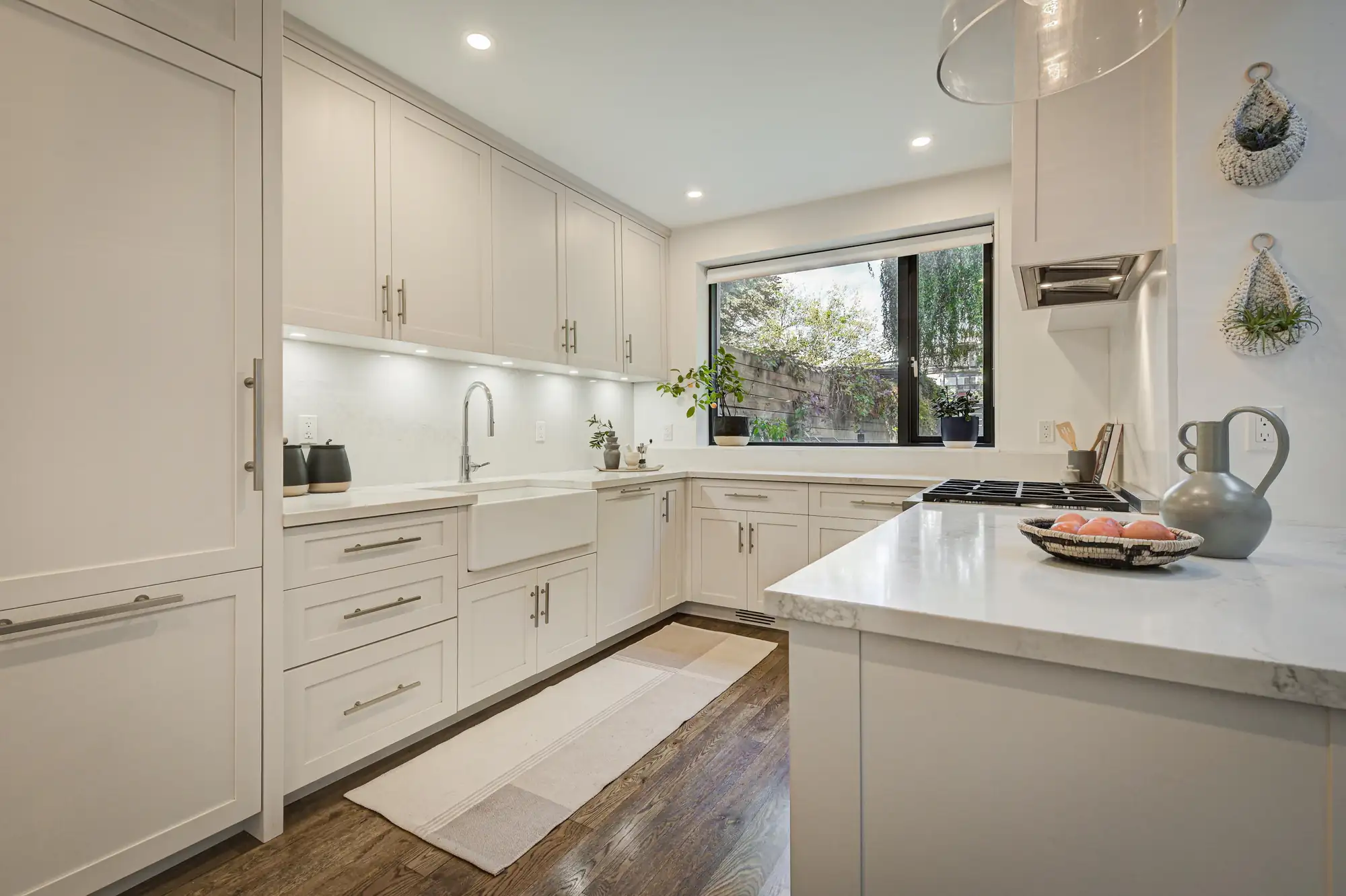
Budget remodels in Amityville typically start around $20,000 to $30,000. That covers refacing or replacing cabinets, laminate countertops, basic tile backsplash, and vinyl plank flooring. You’re keeping the same layout, so no plumbing or electrical relocation.
Mid-grade projects run $30,000 to $50,000 and include custom cabinets, quartz or granite countertops, tile flooring, and updated lighting. This range usually involves some layout changes, which means moving a sink or adding an island.
High-end renovations start at $75,000 and go up depending on size and finishes. You’re looking at custom cabinetry, stone countertops, hardwood or premium tile flooring, high-end appliances, and possibly knocking down a wall to open the space. Permits in Suffolk County add $250 to $500 depending on project scope, plus separate fees for plumbing and electrical if those systems get upgraded.
Plan on six to ten weeks for construction once permits are approved. Smaller projects like cabinet refacing and countertop replacement can finish in four to six weeks. Full remodels with layout changes, new plumbing, and electrical work take closer to ten weeks or longer.
Permit approval with the Town of Babylon adds another two to four weeks before we start demo. Design and planning take about four weeks on the front end if you’re still deciding on materials and layout.
Delays happen when materials are backordered, inspections get rescheduled, or we find issues behind walls that need fixing before we move forward. We build a buffer into the timeline and keep you updated if anything shifts. Spring and early summer are the busiest seasons for kitchen remodeling, so starting your project in fall or winter can sometimes move faster.
Yes, if you’re doing anything structural, electrical, or plumbing-related. Moving a sink, adding outlets, relocating a gas line, or removing a wall all require permits through the Town of Babylon building department.
If you’re just replacing cabinets and countertops without touching plumbing or electrical, you typically don’t need a permit. But if we’re doing the work, we’ll confirm that with the town before starting.
Permit fees start at $250 for projects up to $50,000 and go up from there. Electrical and plumbing permits are separate and start around $50 each. Inspections happen at rough-in stages and again at completion. Skipping permits might save money upfront, but it causes problems when you sell. Buyers’ inspectors flag unpermitted work, and you’ll either need to get retroactive permits or drop your asking price.
Kitchen remodels in Long Island typically return 60% to 80% of the project cost when you sell. A $50,000 renovation adds roughly $30,000 to $40,000 in home value, and homes with updated kitchens sell faster than ones with outdated layouts and appliances.
Minor remodels—new countertops, cabinet refacing, updated hardware—return closer to 80% because the cost is lower and buyers see immediate value. Major remodels with layout changes and high-end finishes return closer to 60%, but they make your home competitive in a market where buyers expect move-in-ready kitchens.
Amityville’s median home price sits around $640,000, and buyers in that range expect functional kitchens with modern appliances and decent storage. If your kitchen still has laminate countertops from the ’90s and cabinets that don’t close right, you’re losing buyers before they make an offer. Energy-efficient appliances and smart features also appeal to buyers looking for lower utility costs and updated technology.
Yes, most of our clients stay in their homes during the remodel. It’s not comfortable, but it’s doable if you plan for it. You’ll lose access to your kitchen for most of the project, so you’ll need a temporary setup somewhere else in the house—microwave, toaster oven, cooler for perishables.
We section off the work area with plastic sheeting to contain dust, and we clean up at the end of each day. You’ll still get dust in other rooms, especially during demo, but we minimize it as much as possible. Noise is unavoidable during demo and installation, and work typically runs from 8 a.m. to 4 p.m. on weekdays.
If you have kids or work from home, the first week is the hardest because demo is loud and messy. After that, it’s mostly installation work, which is quieter. We coordinate with you on timing for inspections and any work that requires shutting off water or power. Some clients choose to stay with family for the first week or two, then move back in once the heavy work is done.
Refacing makes sense if your cabinet boxes are solid and the layout works for you. We remove doors and drawer fronts, apply new veneer to the frames, and install new doors and hardware. It costs about half what replacement does—usually $4,000 to $9,000 depending on kitchen size—and takes less time because we’re not demoing or reinstalling boxes.
Replacement is the better move if your cabinets are damaged, the layout doesn’t function well, or you want to add storage where there isn’t any now. New cabinets let you reconfigure the space, add features like pull-out shelves or lazy Susans, and choose materials that hold up better long-term.
If your cabinet boxes are particle board and they’re sagging or water-damaged, refacing won’t fix that. You’re just putting new faces on a structure that’s going to fail. Replacement also makes sense if you’re changing the footprint—adding an island, extending cabinets to the ceiling, or removing a section to open up the space. Refacing only works when you’re keeping everything where it is.