DIY painting seems simple until you're hours in with uneven coverage and aching shoulders. Discover why professionals deliver better results faster.
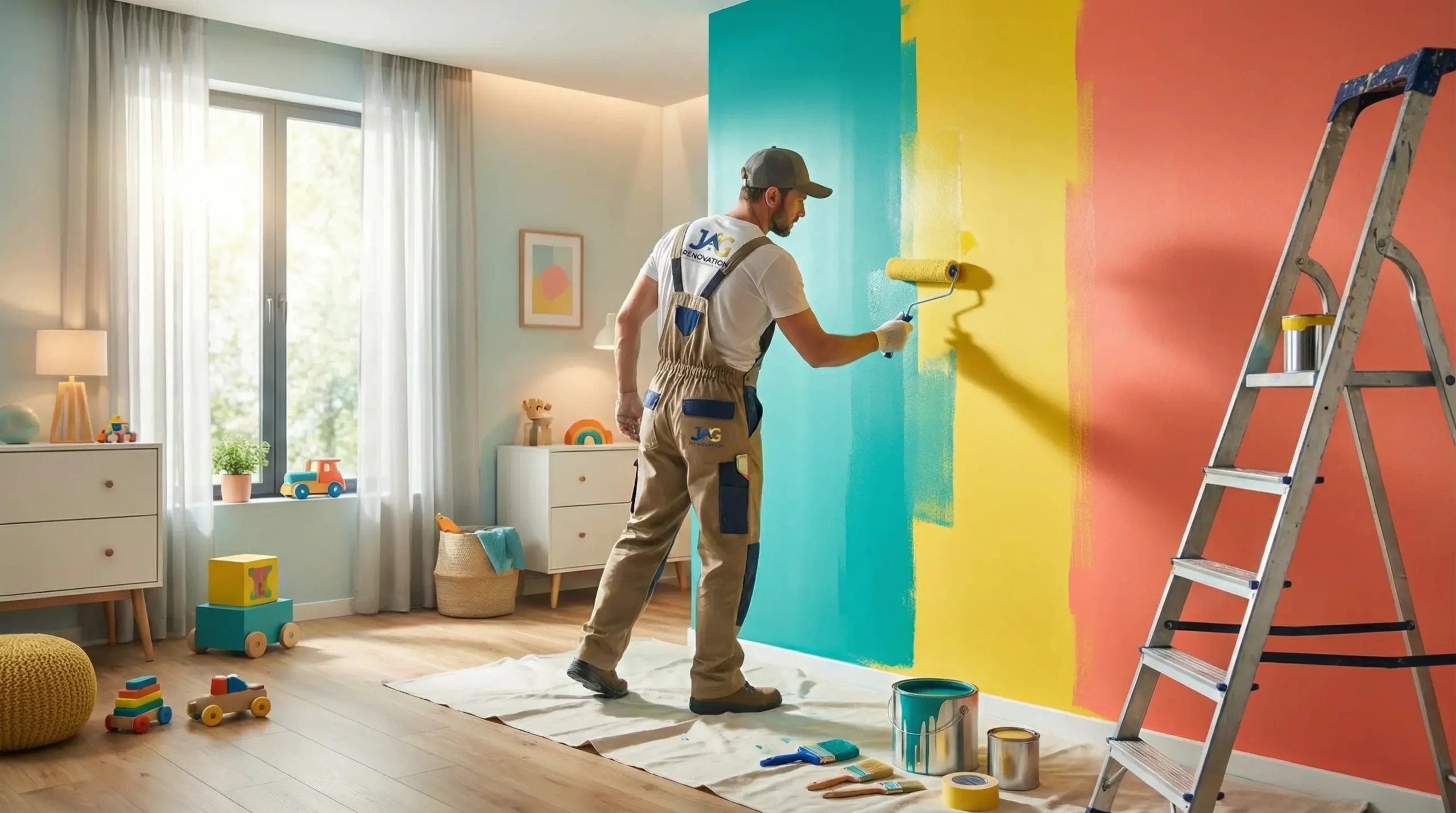
Think you’ll knock out that bedroom in a weekend? Most homeowners underestimate painting time by half or more.
A professional painter finishes a standard room in about 4 to 6 hours. That same room takes the average DIYer 10 to 16 hours, and that’s assuming everything goes smoothly. Studies show professionals work roughly 40% faster than DIY painters on similar projects.
The difference isn’t just speed. It’s efficiency. While you’re making your third trip to the hardware store for supplies you forgot, a professional crew is already moving furniture back into place. We know exactly what we need, how much prep each surface requires, and how to coordinate tasks so nothing sits waiting to dry while we stand around.
For Suffolk County homeowners juggling work and family, that time savings translates to getting your space back in days instead of weeks. No more living with plastic-covered furniture or half-finished walls eating into your evenings and weekends.
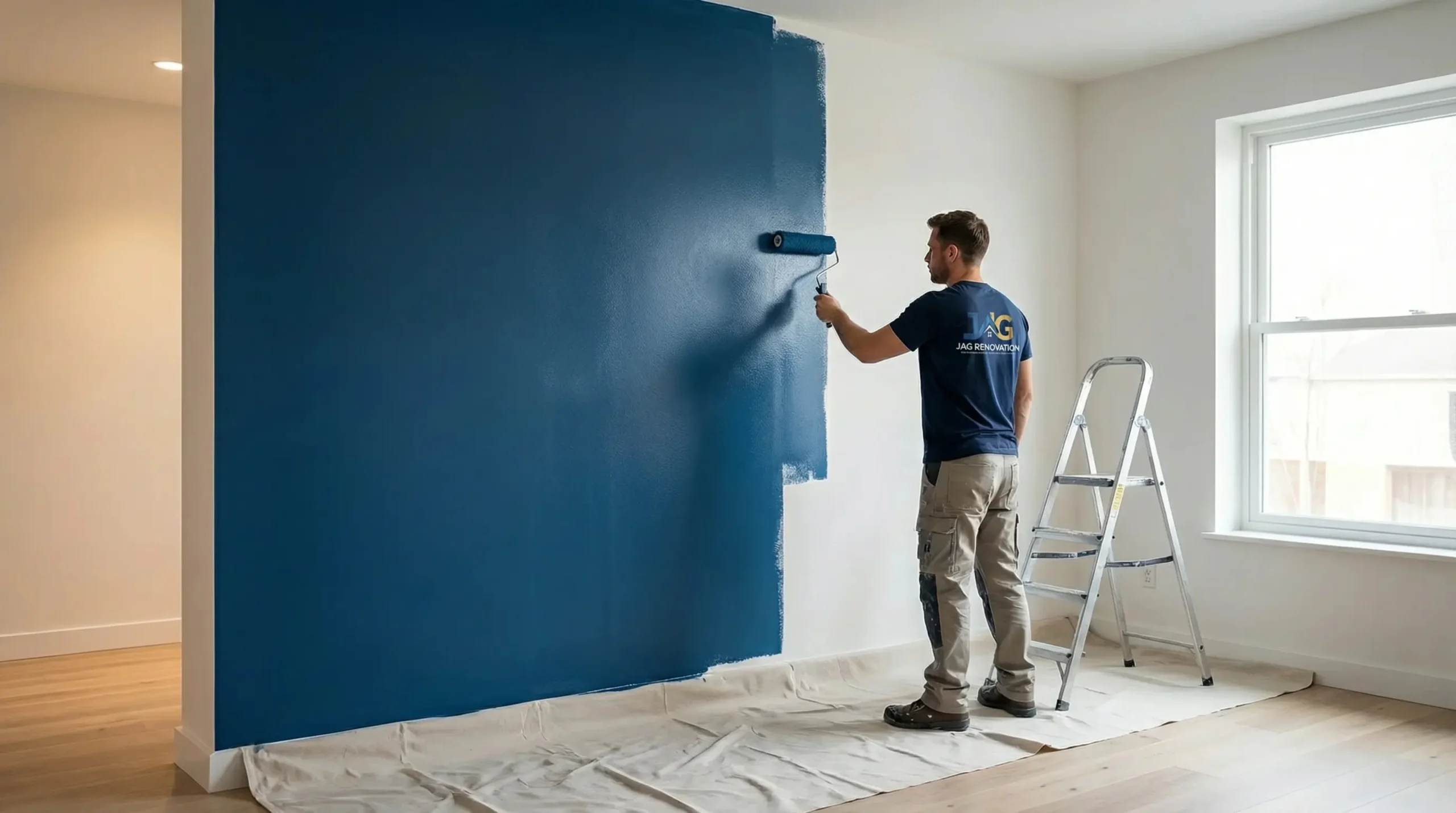
Here’s where DIY time disappears: surface preparation eats up way more hours than you’d expect. You need to move furniture, tape edges, patch holes, sand rough spots, clean walls, and prime surfaces before you even open the paint can.
Then there’s the learning curve. Cutting in around trim without making a mess takes practice. Loading a roller properly so it doesn’t drip or leave thin spots isn’t intuitive. Maintaining a wet edge to avoid lap marks requires timing you probably don’t have down yet.
Most first-timers also underestimate drying time between coats. Latex paint needs 2 to 4 hours between applications, oil-based can take up to 8 hours. If you’re painting after work or squeezing it into weekends, that stretches a “quick project” across multiple days or even weeks. You’re living with plastic-covered furniture, paint smell, and half-finished walls longer than you planned.
And mistakes? They cost time too. Drips that need scraping off. Edges that weren’t crisp so you’re going back with a tiny brush trying to fix them. Spots you missed that only show up after everything’s dry. Each error adds another hour or two to a project that was supposed to be simple.
We avoid all this because we’ve done it hundreds of times. We prep efficiently, apply paint correctly the first time, and work in teams where one person preps while another paints. That coordination alone cuts project time in half compared to working solo.
We don’t just work faster. We work smarter with interior painting techniques refined over years of daily practice.
Take cutting in, for example. That’s painting the edges and corners where rollers can’t reach. We use angled brushes and load them properly so the paint flows smoothly without dripping. We create clean, straight lines freehand or with minimal tape because our hand control comes from muscle memory. You’re learning as you go, which means wobbly lines and frequent touch-ups.
Roller technique matters more than most people realize. We use the right nap length for your wall texture, load the roller evenly, and apply paint in overlapping W or N patterns that prevent streaking. We know how to maintain consistent pressure and keep a wet edge so the finish looks uniform. DIYers often roll too fast, apply too much or too little paint, and end up with visible roller marks or thin coverage that requires extra coats.
Surface preparation is where we really separate ourselves. We know that paint only adheres as well as the surface underneath allows. That means thoroughly cleaning walls to remove grease and grime, sanding glossy surfaces to create tooth for the new paint, filling every crack and hole properly, and priming where needed. Skipping or rushing any of these steps causes peeling, bubbling, or visible imperfections that ruin the finish.
We also understand paint selection in ways that go beyond picking a color. We know which sheen works best for each room based on traffic and moisture. We understand when to use primer and which type. We can tell you if your walls need two coats or three based on the color change you’re making. This expertise prevents the common DIY mistake of buying the wrong products and discovering the problem only after you’ve already applied them.
The result is a professional paint finish that looks smooth, even, and flawless because it was done by someone who’s mastered these techniques through daily repetition, not someone learning on the fly.
Want live answers?
Connect with a Jaguar Renovation expert for fast, friendly support.
A paint job should last 7 to 10 years when done correctly. DIY jobs with poor prep or wrong materials often start showing problems in 2 to 3 years.
The difference comes down to preparation and proper technique. We spend about 80% of our time on prep work because we know that’s what makes paint stick and stay. We repair substrate issues, select correct primers, and control environmental conditions during application. This attention to detail creates adhesion and durability that DIY projects often lack.
You’re also getting better materials. We use high-quality paint brands like Benjamin Moore and Sherwin-Williams at contractor pricing. These premium paints have better pigments, binders, and coverage than economy options. They resist fading, require fewer coats, and hold up to cleaning and wear much better over time.
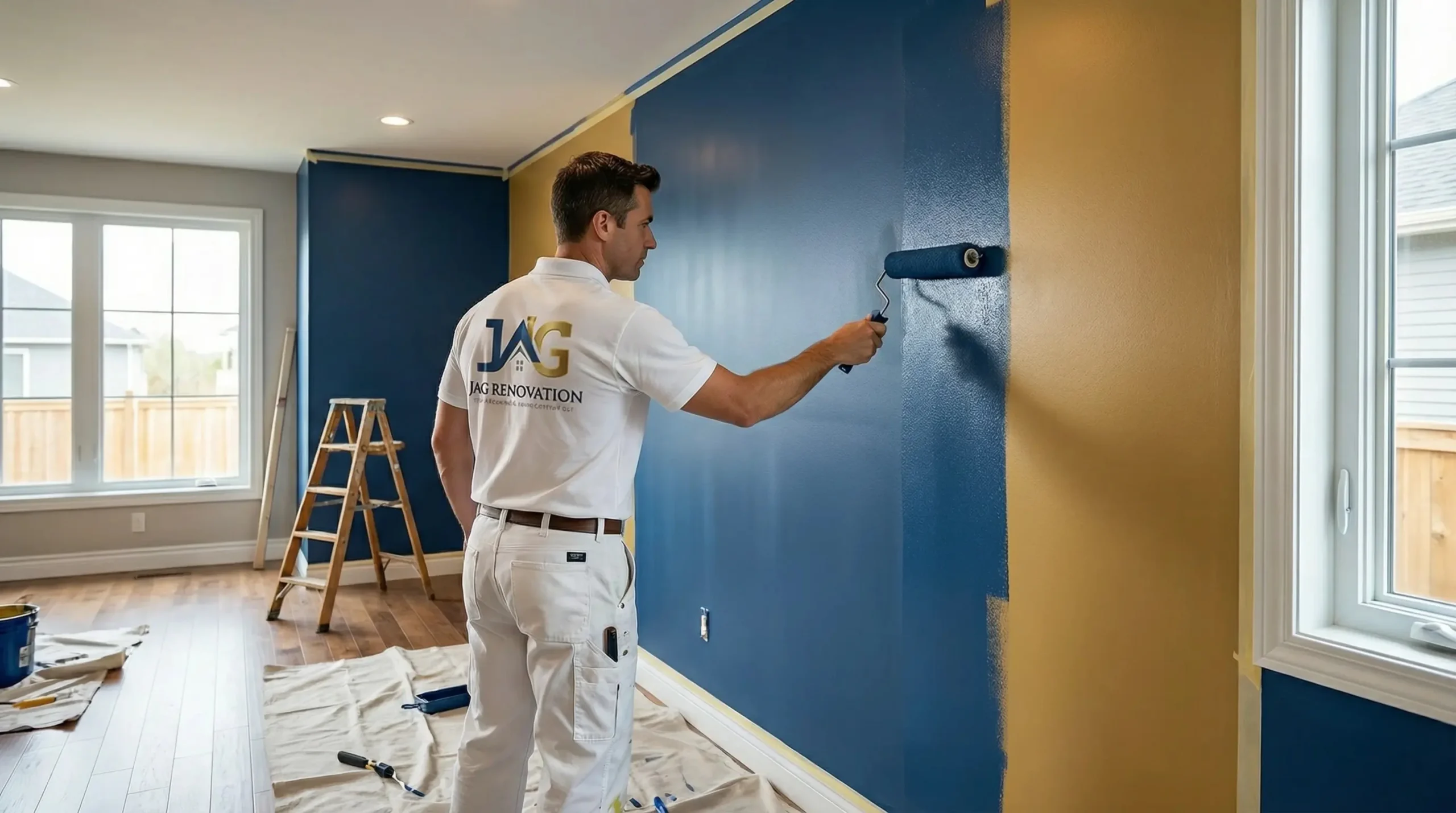
Ask any professional painter what makes the biggest difference in how long paint lasts, and we’ll tell you: surface preparation. It’s not glamorous, but it’s everything.
Proper surface prep means walls must be clean, dry, and dull before paint touches them. Kitchens and high-traffic areas accumulate oils from hands and cooking that create invisible barriers. Paint applied over these oils won’t bond properly. It might look fine initially, but within months you’ll see peeling or discoloration. We wash walls with appropriate cleaners, sometimes using TSP or degreasers on stubborn areas.
Sanding matters more than most homeowners realize. Glossy surfaces need to be scuffed thoroughly to give new paint something to grip. A quick pass with sandpaper isn’t enough. You need to rough up the entire surface uniformly. Damaged areas must be smoothed completely or every imperfection will show through the new paint, sometimes even more obviously than before. Flaking or peeling old paint has to be scraped away entirely because painting over compromised areas just traps the problem underneath.
Patching and repairs come next. Every hole, crack, and dent gets filled with the right material for the job, whether that’s spackle, joint compound, or caulk. Then those patches need sanding flush with the surrounding surface. Miss this step or rush it, and you’ll see every repair through your new paint. We know how to feather edges so patches disappear completely.
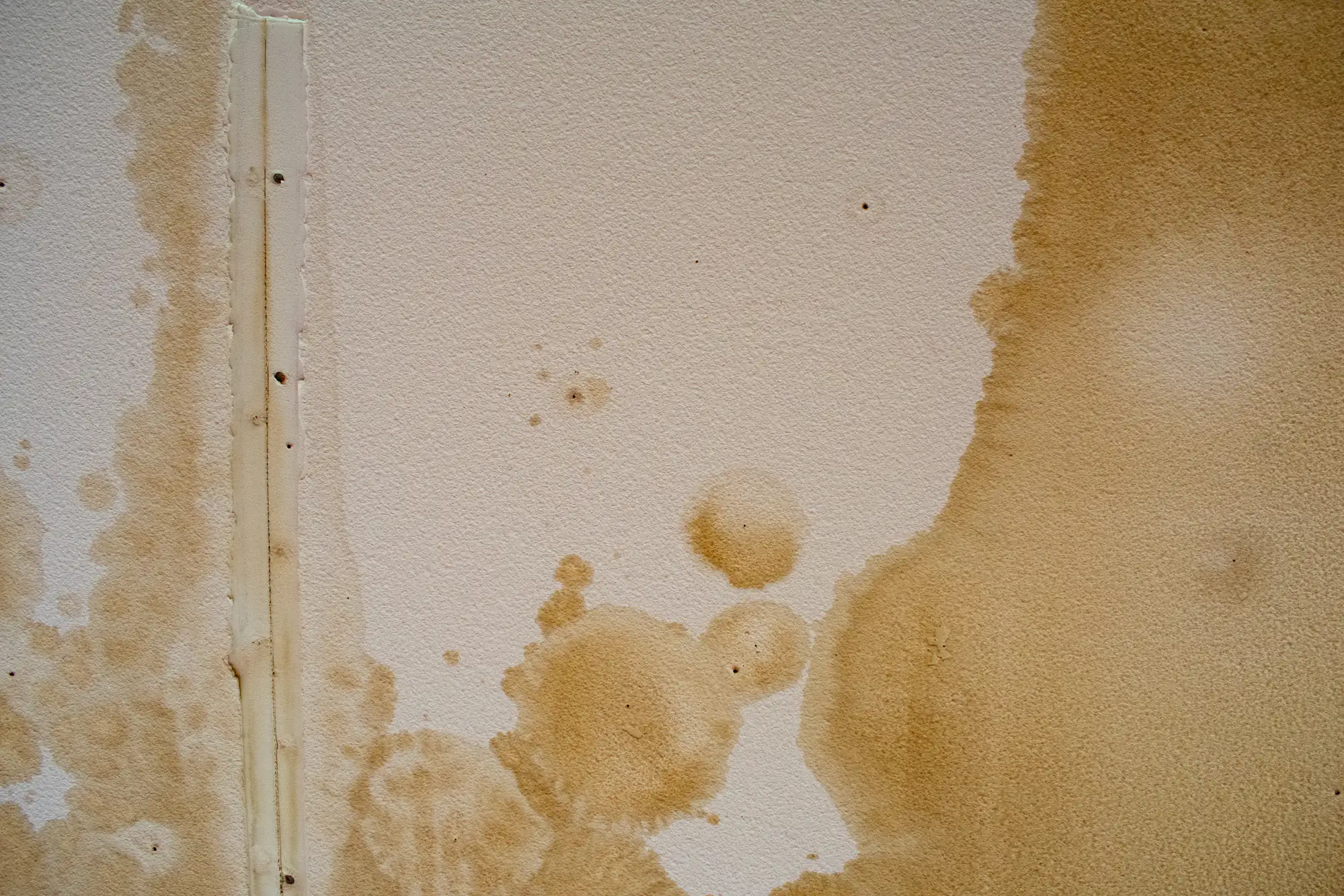
Priming is often skipped by DIYers trying to save time or money, but it’s critical for adhesion and coverage. Bare drywall is porous and will suck up your topcoat unevenly without primer. Stains from water damage, smoke, or wood tannins will bleed right through paint unless sealed with a stain-blocking primer. Dramatic color changes require primer or you’ll need four coats of paint instead of two. Glossy surfaces that have been sanded still benefit from a bonding primer that helps the new paint stick.
All this prep work is why we spend most of our time before we ever open a paint can. We know that shortcuts here mean problems later. Paint can’t fix a bad surface. It can only highlight flaws or fail to stick properly when the foundation isn’t right.
Not all paint is created equal. The difference between contractor-grade and big-box economy paint shows up in both application and longevity.
We typically use Benjamin Moore or Sherwin-Williams products because these brands consistently deliver superior performance. Their formulations have higher-quality pigments that provide richer, more accurate colors. The binders are better, which means paint adheres more strongly and resists chipping or peeling. Coverage is superior, so you need fewer coats to achieve full hide, especially over darker colors or repairs.
These premium paints also handle better during application. They flow more smoothly from brush or roller. They level out better to minimize brush marks and roller stipple. They maintain a wet edge longer so you’re less likely to create lap marks. For us as professionals who paint daily, these characteristics make the job faster and the results more consistent. For DIYers, the difference between fighting cheap paint and working with quality material can mean the difference between acceptable results and frustration.
Durability is where the investment really pays off. Premium paints resist fading from sunlight better. They stand up to cleaning and scrubbing without losing their finish or showing wear patterns. They’re formulated to resist moisture in bathrooms and kitchens. Many have mildew resistance built in. Over time, these qualities mean your paint job lasts years longer before it needs refreshing.
We also have access to contractor pricing and can buy in bulk, which offsets some of the cost difference. More importantly, we know which product line works best for your specific situation. Benjamin Moore Aura for high-end interiors where you want the most luxurious finish. Sherwin-Williams Emerald for durability in high-traffic areas. The right primer for your substrate and situation. This knowledge prevents the common DIY mistake of buying the wrong product and discovering it only after you’ve already applied it.
Paint quality affects more than just appearance. It affects how easy the job is, how long it lasts, and ultimately whether you’re satisfied with your investment or repainting in a few years. We use better materials because we know the difference it makes. That quality becomes part of what you’re paying for when you hire us.
DIY painting works for small touch-ups or single rooms if you have time and patience. But for quality results that last, we bring expertise you can’t match with a weekend and a YouTube tutorial.
You’re getting proper surface preparation that ensures adhesion. Professional-grade materials that resist wear and fading. Techniques refined through thousands of hours of practice. Time savings that let you spend weekends doing what you actually enjoy. And peace of mind knowing the job is done right, backed by a warranty if anything goes wrong.
The upfront cost is higher, sure. But when you factor in your time, the materials you’d need to buy, the potential for mistakes that require fixing, and how much longer a professional job lasts, the value becomes clear. You’re investing in results that enhance your home for years, not a project that needs redoing in two. Excellence built in, extra cost left out.
If you’re ready to transform your Suffolk County, NY home with a paint job done right the first time, we at Jaguar Renovations bring nearly a decade of experience and a commitment to craftsmanship without hidden costs or pressure. Sometimes the smartest move is letting professionals handle what we do best while you enjoy the results.
Summary:
Share: