

Hear from Our Customers
You’re not looking for the cheapest bid. You’re looking for someone who shows up when they say they will, does the work right, and doesn’t disappear when something needs fixing six months later.
That’s what licensed contractors with in-house crews can offer. No subcontractors means the people tearing out your kitchen or refinishing your basement work directly for us. They’re accountable to us, and we’re accountable to you.
Fixed pricing means the number we agree on is the number you pay. No surprise charges for “unforeseen conditions” that any experienced contractor should have caught during the estimate. And a one-year warranty on workmanship means if something isn’t right, we come back and make it right.
Your home in Sayville is worth somewhere around $640,000 based on current Suffolk County market values. The work you put into it should protect that investment, not put it at risk with unlicensed contractors or crews that vanish after the deposit clears.
We’ve been doing interior renovations across Suffolk County for close to ten years now. Kitchens, bathrooms, basements, flooring, custom carpentry, and the kind of spackling and painting that actually looks professional when it’s done.
Sayville homeowners deal with the same challenges as the rest of Long Island: older housing stock, strict local codes, and a contractor market flooded with unlicensed operators who undercut pricing by skipping permits and insurance. We’re licensed in Suffolk County, fully insured, and we pull permits when the work requires it.
You’re not hiring a salesperson. You’re hiring people who do the physical work and have been doing it long enough to know what holds up and what doesn’t.

First, we come out to see the space and hear what you’re trying to accomplish. We’re not there to upsell you into a bigger project. We’re there to understand the scope and give you an honest assessment of what’s involved.
Then we give you a fixed-price estimate. That price includes labor, materials, permits if needed, and our one-year warranty. If you move forward, we schedule a start date and stick to it.
Our crews show up on time. They’re employees, not subcontractors, so they answer to us and we answer to you. We handle the demo, the build, the finishing work, and the cleanup. If the job requires a permit, we pull it and schedule inspections with the town.
When the work is done, we walk through it with you. If something isn’t right, we fix it before we call it finished. And if something comes up in the year after we’re gone, we come back and address it under warranty.

Ready to get started?
Interior remodeling covers a lot of ground. Kitchens and bathrooms are the most common projects we handle in Sayville, and they’re also the ones where homeowners lose the most money to poor planning or unqualified contractors.
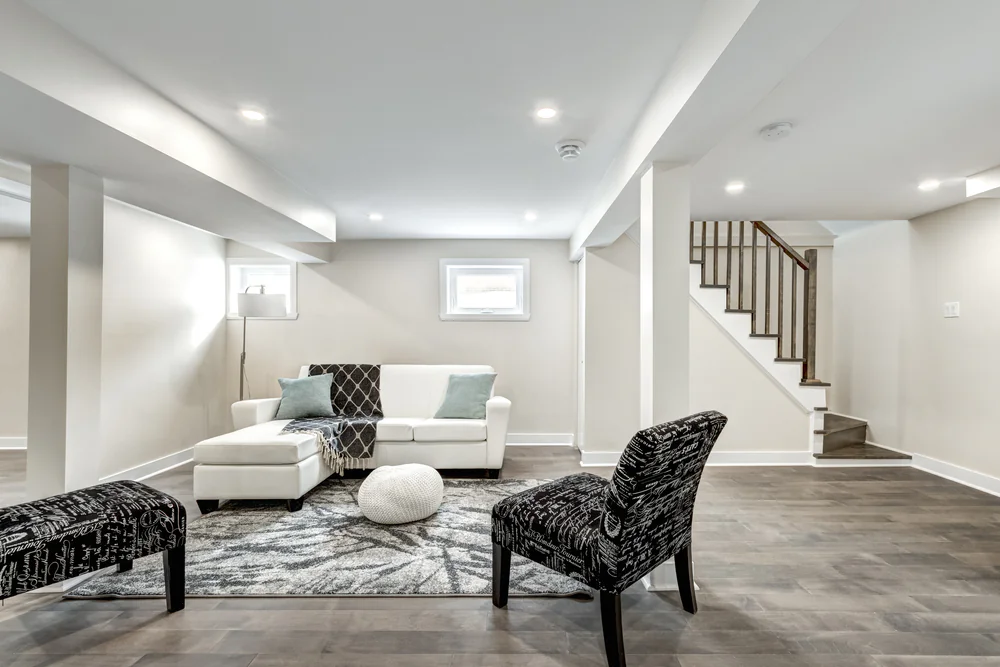
A full kitchen remodel means cabinets, countertops, flooring, electrical, plumbing, and finishing work. Same with bathrooms, though the scope is smaller and the timeline is usually shorter. Basement renovations turn unused space into functional living areas, but they require proper moisture management and egress planning if you’re adding bedrooms.
Suffolk County has specific codes for all of this. Electrical work needs permits. Plumbing alterations need permits. Structural changes definitely need permits. We handle that process because it’s part of doing the job correctly, not an inconvenience we try to skip.
Flooring, carpentry, and painting don’t always require permits, but they do require skill if you want them to look right and last. We’ve been doing this long enough to know the difference between work that holds up and work that starts failing the moment humidity or temperature shifts.

Bathroom remodels in Suffolk County typically run between $15,000 and $40,000 depending on size, materials, and how much of the existing layout you’re changing. A basic refresh with new fixtures, tile, and vanity sits on the lower end. A full gut renovation with relocated plumbing and high-end finishes pushes toward the upper range.
Kitchen remodels vary even more. A modest update might cost $30,000. A complete overhaul with custom cabinets, stone countertops, new appliances, and layout changes can easily reach $60,000 to $80,000 or more.
The biggest variable is materials. Homeowners going over budget usually happens because they fall in love with products that cost more than they planned for. We give you a fixed price based on the materials we specify together upfront, so there’s no confusion later.
Yes. It’s illegal to operate a home improvement business in Suffolk County without a license. Licensed contractors have to prove they understand liability, insurance requirements, and local building codes. They also have to carry insurance and post bond.
Unlicensed contractors can’t pull permits, which means any work that requires inspection either doesn’t get done legally or gets done without oversight. That creates problems when you try to sell your home or file an insurance claim after damage.
Suffolk County fines unlicensed contractors up to $750 for first violations and $1,500 for repeat offenses, but enforcement is inconsistent. The risk falls on you as the homeowner. If someone gets hurt on your property and the contractor isn’t insured, you’re liable. If the work isn’t permitted and the town finds out, you’re responsible for bringing it up to code.
A general contractor coordinates the entire project: scheduling, permits, inspections, materials, labor, and problem-solving when things don’t go as planned. If you’re handling it yourself, all of that falls on you.
Most homeowners underestimate how much time that takes. You’re calling suppliers, scheduling deliveries, coordinating electricians and plumbers, dealing with permit delays, and troubleshooting when the wrong materials show up or a subcontractor doesn’t.
The other issue is accountability. If you hire individual tradespeople and something goes wrong, it’s your job to figure out who’s responsible and get them back to fix it. With a general contractor, there’s one point of contact and one entity responsible for making sure the work is done correctly.
We use in-house crews instead of subcontractors, which tightens that accountability even further. The people doing your renovation work directly for us, so quality control stays consistent.
A straightforward bathroom remodel usually takes two to three weeks from demo to completion. A kitchen remodel typically runs four to six weeks, though that timeline stretches if you’re doing structural work or waiting on custom cabinets.
Delays happen when permits take longer than expected, materials arrive damaged or late, or the scope changes mid-project because something unexpected turns up during demo. Older homes in Sayville sometimes have outdated plumbing or electrical that needs upgrading once walls are opened.
We build buffer time into our schedules and communicate clearly if something pushes the timeline. You’re not left guessing when we’ll be back or why work stopped. If we hit a delay, you’ll know what caused it and when we expect to resume.
Price matters, but it’s not the only thing that matters. A low bid from an unlicensed contractor might look appealing until you realize they’re skipping permits, using subpar materials, or planning to ask for more money halfway through the job.
Check if the estimate is itemized. You should see a breakdown of labor, materials, and any other costs. Vague lump-sum pricing makes it hard to know what you’re actually paying for.
Ask about payment terms. Suffolk County law requires contractors to deposit payments into escrow within five business days and notify you where the money is held within ten days. If someone wants the full amount upfront or asks you to pay in cash, that’s a red flag.
Verify their license, insurance, and references. A contractor who’s been in business for years and has a Suffolk County license is far less likely to disappear mid-project than someone working out of a truck with no verifiable history.
Yes. If your project requires a permit, we pull it and schedule inspections with the town. That’s part of doing the work correctly, not an optional step.
Permits are required for electrical work, plumbing alterations, structural changes, and certain types of finish work depending on scope. Sayville follows Suffolk County building codes, and inspectors check that work meets safety and quality standards.
Some contractors avoid permits to save time or because they’re not licensed to pull them. That leaves you exposed if the town finds out or if you try to sell your home and the buyer’s inspector flags unpermitted work. We handle permits as part of the project because it protects you and ensures the work is done to code.