
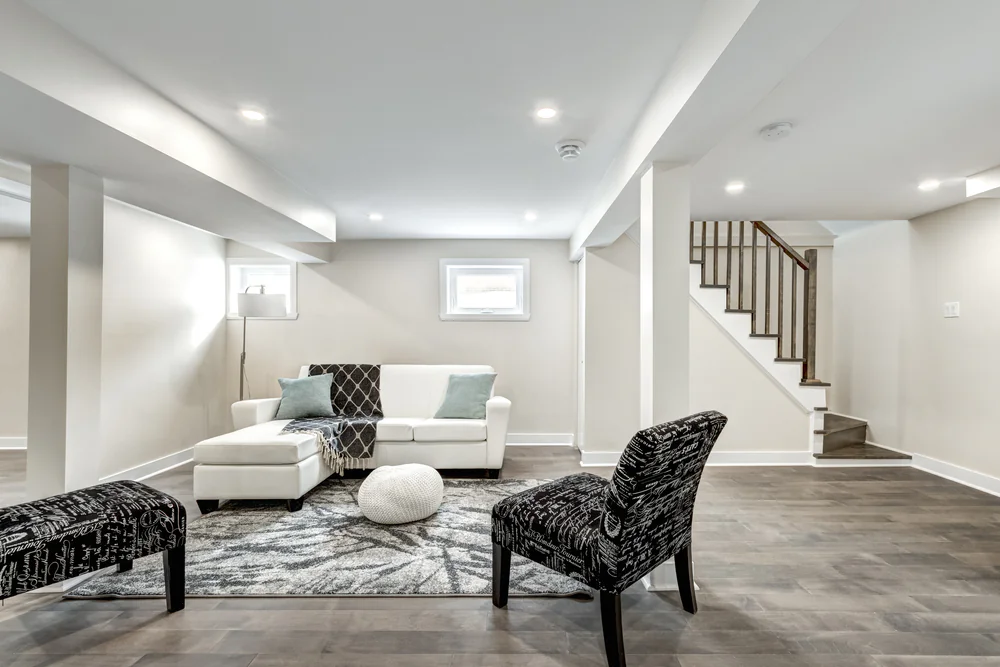
Hear from Our Customers
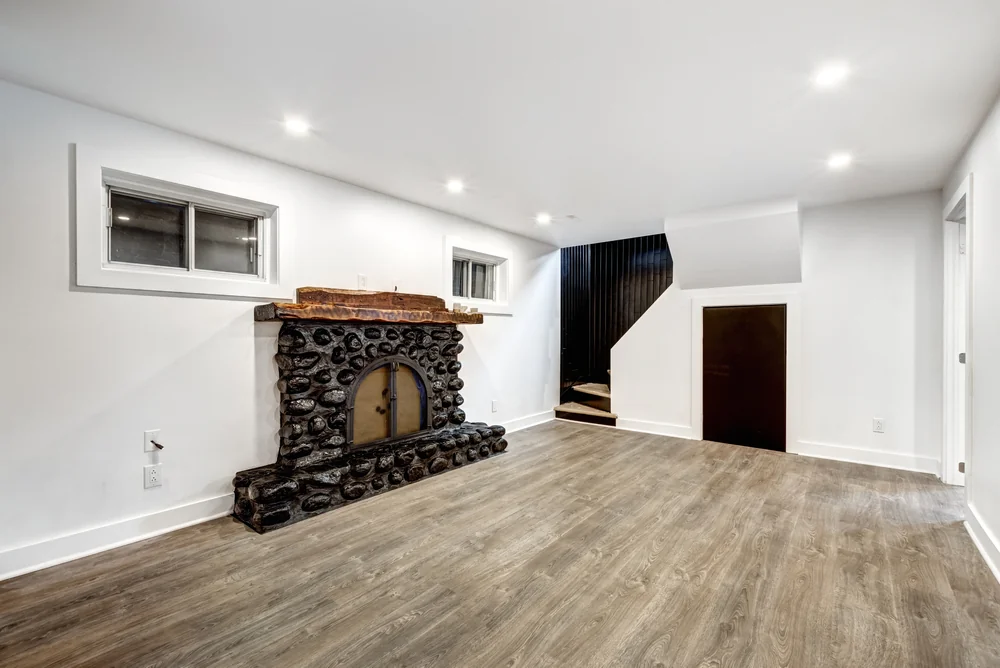
Your basement sits there—unfinished, underused, maybe a little damp. Meanwhile, you’re running out of room upstairs. The kids need space. You need an office. Guests need somewhere comfortable to stay.
Finishing your basement gives you that space without the cost or hassle of an addition. You’re not changing your property line or your roofline. You’re just making better use of what you already own.
In Suffolk County, a properly finished basement can return 70-75% of your investment when it’s time to sell. But before that, it gives you years of functional living space—whether that’s a family room, home office, guest suite, or entertainment area. The space is already there. You just need someone who knows how to finish it correctly.
That means handling moisture the right way. Meeting Suffolk County code requirements. Installing proper egress windows. Using materials that won’t mold or warp when humidity creeps in. It’s not complicated work, but it has to be done right.
We’ve been handling basement remodels across Central Islip, Brentwood, Bay Shore, Commack, and surrounding Suffolk County towns since 2015. We’re licensed, insured, and we only use in-house crews—no subcontractors rotating through your home.
Every basement renovation we take on comes with fixed pricing. No hidden fees. No surprise add-ons halfway through the job. You’ll know what you’re paying before we start, and that number doesn’t change unless you change the scope.
We also back our work with a one-year warranty on workmanship. If something’s not right, we come back and fix it. Central Islip homeowners deal with specific challenges—older foundations, varying water tables, strict Suffolk County permitting. We’ve handled enough basements in this area to know what works and what doesn’t.
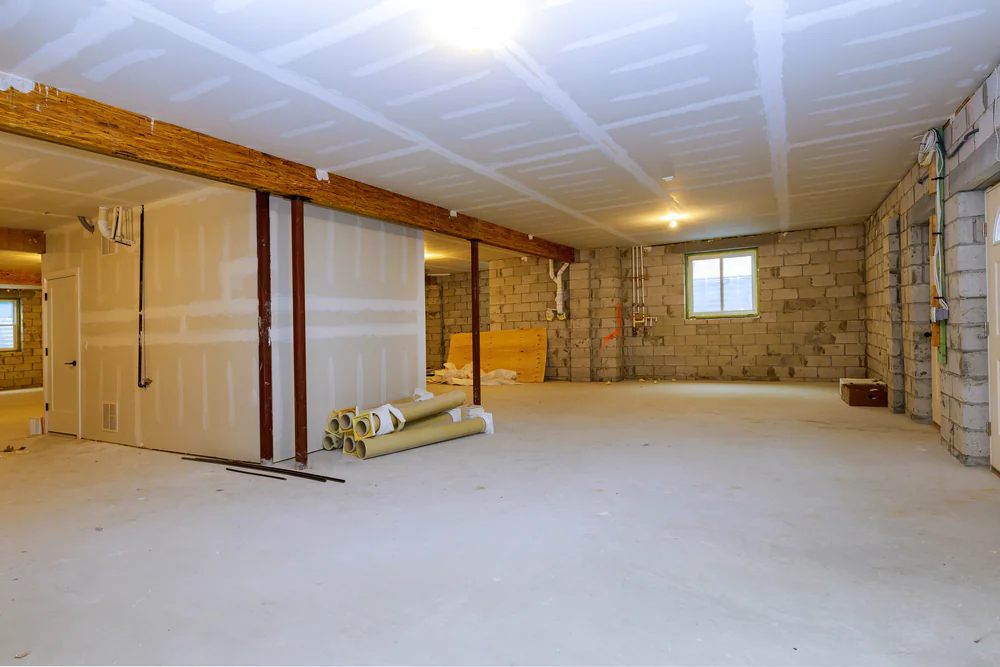
First, we come out and look at your basement. We’re checking for moisture issues, foundation cracks, ceiling height, and existing mechanicals. Suffolk County requires a minimum of 7 feet of finished height for habitable space, so we measure that early.
If there’s water coming in, we address it before finishing anything. That might mean interior drainage, sump pumps, vapor barriers, or exterior grading work. Finishing over a moisture problem just hides it until it becomes a bigger problem.
Once the space is dry and structurally sound, we pull permits through Suffolk County. Yes, you need a permit to finish a basement here—it’s not optional. We handle the paperwork, the inspections, and the code compliance. That includes egress windows if you’re adding bedrooms, proper ventilation, electrical to code, and fire-rated materials where required.
Then we frame, insulate, run electrical and HVAC as needed, install drywall, and finish with flooring and trim. We use moisture-resistant materials throughout—not because they look different, but because they perform better in below-grade spaces. The timeline depends on size and scope, but most basements take 8-12 weeks once we start.
You’ll get regular updates. No disappearing for days. No vague timelines. Just clear communication about where we are and what’s next.
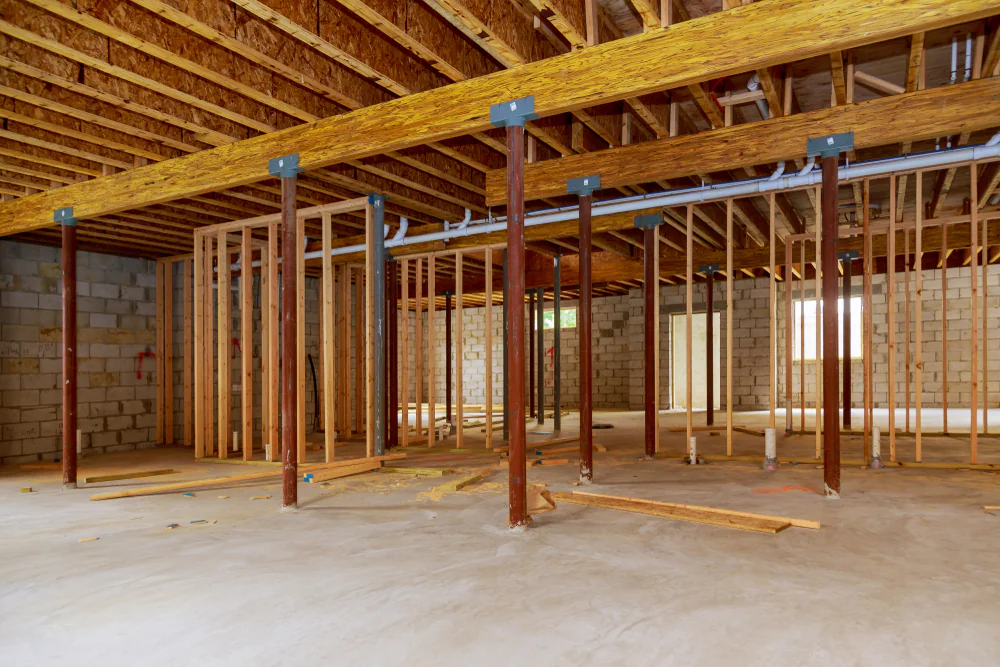
Ready to get started?
A full basement finishing project in Central Islip typically includes framing, insulation, drywall, electrical, HVAC adjustments, flooring, trim, and paint. If you’re adding a bedroom, bathroom, or kitchenette, those get built to code with proper plumbing, ventilation, and egress.
Egress windows are required for any basement bedroom in Suffolk County. These aren’t regular windows—they’re large enough for emergency exit and have window wells that meet size and drainage requirements. We handle the installation, the exterior excavation, and the inspection.
Moisture control is part of every job. We don’t just cover up concrete and hope for the best. Depending on your basement, that might mean installing a vapor barrier, sealing foundation cracks, adding a sump pump, or upgrading exterior drainage. If your basement has a history of water intrusion, we’ll talk through your options before finishing anything.
Flooring options include luxury vinyl plank, tile, engineered wood, or carpet. We steer most Central Islip homeowners toward LVP or tile in basements—they handle moisture better and last longer below grade. You get the look of hardwood without the risk of warping or mold.
All work is done to Suffolk County code. All permits are pulled in your name. All inspections are scheduled and passed before we call the job complete. You’re not just getting a finished basement—you’re getting one that’s legal, safe, and won’t cause issues down the road.

Most basement finishing projects in Central Islip run between $50,000 and $150,000 depending on size, layout, and what you’re adding. A 1,000-square-foot basement finished to mid-grade standards typically lands around $100,000-$130,000 in Suffolk County.
That’s higher than the national average, and there’s a reason. Labor costs more here—carpenters and electricians on Long Island average $72-$85 per hour. Permits and inspections add another layer of cost. Egress windows that meet hurricane ratings cost more than standard basement windows. Materials cost more to deliver here.
If you’re adding a bathroom, bedroom, or kitchenette, expect to add $15,000-$40,000 depending on finishes and plumbing complexity. If your basement needs waterproofing or structural work before finishing, that’s separate and depends on what’s needed.
We give you a fixed price upfront. That number includes permits, materials, labor, and cleanup. It doesn’t change unless you change the scope. No surprises, no hidden fees, no pressure to add things you don’t need.
Yes. Suffolk County requires a permit for any basement finishing project that involves framing, electrical, plumbing, or creating habitable space. It’s not optional, and skipping it creates problems later.
First, unpermitted work can kill a home sale. When you go to sell, the buyer’s inspector will spot the finished basement. If there’s no permit on file, the buyer’s attorney will flag it. You’ll either need to rip it out, get it permitted retroactively (which is harder and more expensive), or lose the sale.
Second, unpermitted work isn’t covered by insurance. If there’s a fire or flood and the insurance adjuster finds unpermitted electrical or structural work, they can deny your claim.
Third, Suffolk County reassesses your property taxes based on finished square footage—usually around $30-$40 per square foot of added value. If you finish your basement without a permit, you’re still liable for those taxes once it’s discovered. You just don’t have the legal protection that comes with permitted work.
We handle all permitting and inspections. The process adds a few weeks to the timeline, but it protects you legally and financially. It’s worth it.
Moisture is the biggest issue in Long Island basements, and it has to be addressed before you finish anything. We don’t just cover it up and hope—it always comes back.
First, we inspect for active water intrusion. That means looking for staining, efflorescence, cracks, and checking humidity levels. If water is coming in through the foundation, we need to stop it at the source. That might mean exterior grading work, installing or repairing gutters and downspouts, sealing foundation cracks with epoxy or polyurethane, or installing a perimeter drain and sump pump system.
Once active leaks are handled, we install vapor barriers on walls and floors before framing. We use closed-cell spray foam insulation in rim joists to prevent condensation. We frame with treated lumber at the bottom plate. We install moisture-resistant drywall and use materials that won’t support mold growth.
If your basement has high humidity but no active leaks, we’ll recommend a dehumidifier system that runs year-round. Keeping humidity below 50% prevents mold, musty smells, and material degradation.
Every basement is different. Some need minimal moisture control. Others need full waterproofing systems. We’ll tell you what yours needs and why—no upselling, just honest assessment based on what we see.
Finishing a basement correctly means building it as habitable space that meets code, handles moisture, and lasts. Just hanging drywall over concrete is a shortcut that creates problems.
A proper basement finish includes framing walls with treated bottom plates and moisture barriers. It includes insulation that prevents condensation and meets energy code. It includes electrical work done to code with proper outlets, lighting, and circuit capacity. It includes HVAC adjustments so the space actually heats and cools. It includes flooring that can handle below-grade conditions without warping or molding.
If you’re adding a bedroom, it includes an egress window that meets size, height, and well requirements for emergency exit. If you’re adding a bathroom, it includes proper venting, plumbing, and drainage that ties into your existing system correctly.
Just drywalling over concrete skips all of that. You end up with a space that’s cold, damp, and not legally habitable. The drywall will mold. The space won’t be comfortable. And when you go to sell, it won’t appraise as finished square footage because it doesn’t meet code.
Finishing a basement costs more than drywalling it, but you’re getting a space you can actually use—and one that adds value to your home instead of creating liability.
Most basement finishing projects take 8-12 weeks from start to finish once we begin work. That timeline assumes no major surprises and normal permitting timelines with Suffolk County.
The first week or two involves any necessary waterproofing, foundation repairs, or prep work. Then we pull permits, which typically take 1-2 weeks for review and approval in Suffolk County. Once permits are approved, framing and rough-in work (electrical, plumbing, HVAC) takes 2-3 weeks. Insulation and drywall take another 1-2 weeks. Finishing work—flooring, trim, paint—takes 1-2 weeks depending on size and detail.
If you’re adding a bathroom or kitchenette, add another 1-2 weeks for plumbing and fixture installation. If we’re installing egress windows, that adds a few days for excavation and installation.
Inspections happen at rough-in and final stages. We schedule those and make sure everything passes before moving forward. That can add a few days if inspectors are backed up, but it’s part of doing the work legally.
We don’t disappear for days or drag jobs out. You’ll have a crew on-site consistently, and you’ll know the schedule upfront. If something changes, we tell you immediately—not three weeks later.
Legally, that depends on your property’s zoning and whether Suffolk County allows accessory apartments in your zone. Many Central Islip neighborhoods allow accessory apartments with proper permitting, but some don’t. We can help you figure out what’s allowed before you invest in the work.
If an accessory apartment is allowed, it needs to meet specific code requirements. That includes a separate entrance, a full kitchen, a full bathroom, at least one bedroom with an egress window, proper ceiling height, separate utilities or submeters, smoke and carbon monoxide detectors, and fire-rated separation from the main house.
You’ll also need a certificate of occupancy for the accessory unit, which requires inspections and approval from Suffolk County. The process takes longer and costs more than a standard basement finish, but it’s doable if your property qualifies.
If your property doesn’t allow accessory apartments, you can still finish the basement as additional living space for family use. You just can’t legally rent it as a separate unit. Some homeowners finish basements as in-law suites or guest areas without separate kitchens, which keeps them compliant while still adding functional space.
We’ll walk you through what’s allowed on your property and what it takes to do it right. If you want rental income, we’ll help you get there legally. If that’s not an option, we’ll design something that works within the rules.
Other Services we provide in Central Islip