
Hear from Our Customers
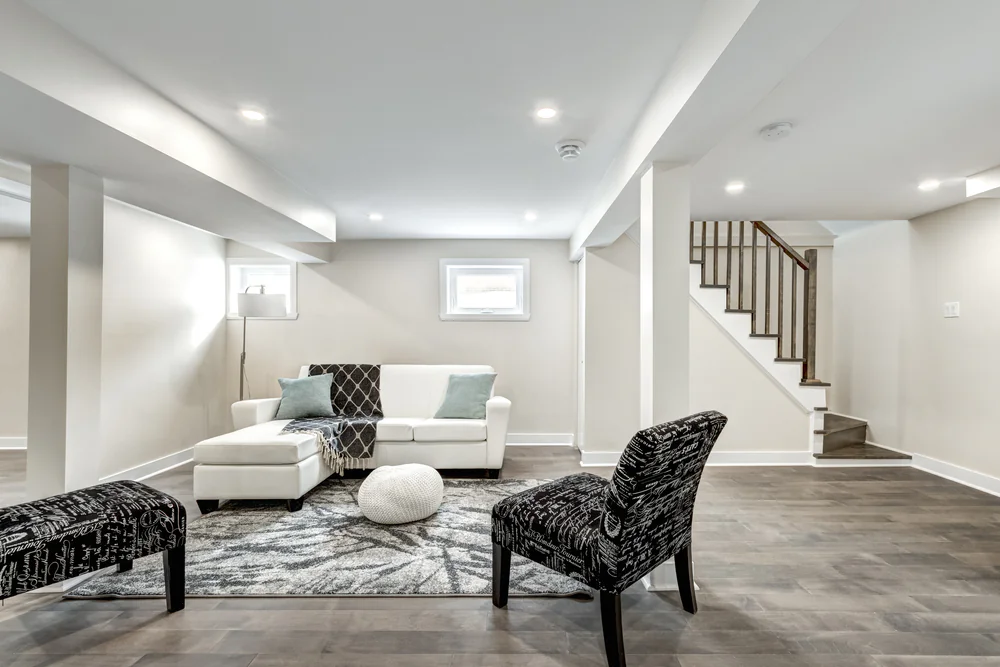
You get space that works for your life right now. A home office where you can actually close the door and focus. A guest suite so family doesn’t camp out in your living room. A gym that’s always open and never crowded.
The financial side matters too. A finished basement typically returns 50-75% of your investment when you sell, and in Commack’s market where the median home value sits around $578,400, that’s real equity you’re building.
But most homeowners finish their basements because they need the space today. Your kids are getting older and need their own areas. You’re working from home more. You want a place to unwind that isn’t the kitchen table. Whatever your reason, a basement remodel gives you that extra room without the cost and hassle of an addition.
The difference between a basement that sits empty and one you actually use comes down to doing it right the first time. That means proper moisture control for Long Island’s climate, code-compliant electrical and HVAC work, and finishes that’ll hold up to real use.
We’ve been finishing basements in Suffolk County for nearly a decade. That matters in Commack because we know what your basement is dealing with. The moisture issues that come with Long Island’s humidity. The soil conditions that affect foundation work. The local code requirements that vary from one town to the next.
You’re working with licensed Suffolk County contractors who pull permits, carry full insurance, and use in-house crews for every job. No subcontractors means you’re not dealing with a rotating cast of workers who may or may not show up.
Our pricing is fixed before we start. You’ll know exactly what you’re spending, and that number doesn’t change unless you change the scope. We back our work with a one-year warranty on workmanship because we’re still going to be here when you need us.
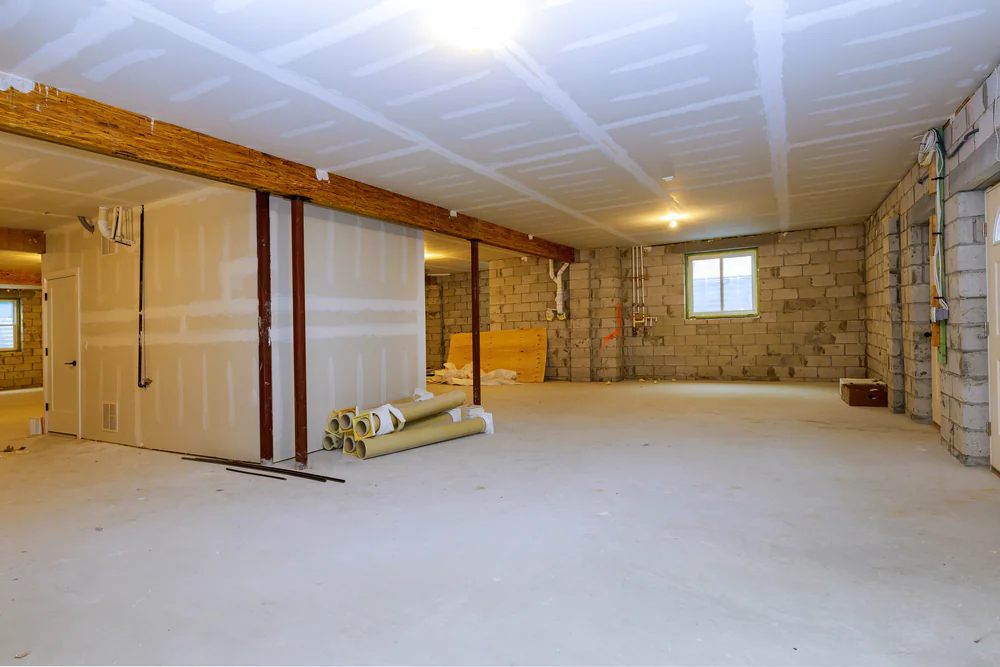
We start with a consultation at your home. You show us your basement, tell us what you want to use it for, and we talk through what’s realistic for your space and budget. We’ll check for moisture issues, look at your mechanicals, and measure everything.
Then we put together a detailed estimate with fixed pricing. You’ll see exactly what’s included, from framing and insulation to electrical, flooring, and trim. If we need to address waterproofing or structural concerns, we’ll tell you upfront.
Once you’re ready to move forward, we handle the permit applications with Suffolk County. Most basement finishing projects require permits, especially when you’re adding electrical, plumbing, or egress windows. We manage that process so you don’t have to figure out what the town needs.
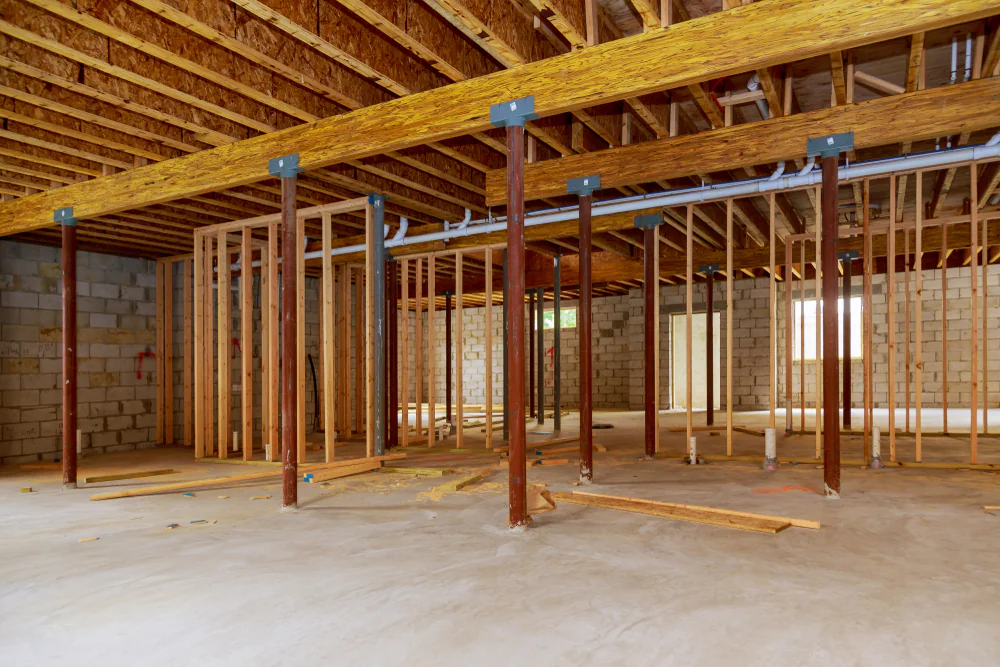
The actual construction follows a logical sequence. We address any moisture or foundation issues first. Then rough-in work for electrical, plumbing, and HVAC. Insulation and framing. Drywall and finishing. Flooring, trim, and paint. Our crew works through each phase, and we schedule inspections at the required stages.
You’ll have a clear timeline before we start, and we communicate throughout the project. When we’re done, your basement is ready to use, and you have a one-year warranty covering our workmanship.
Ready to get started?
Your basement finishing project covers everything needed to turn raw space into finished living area. That includes moisture control and waterproofing if needed, which is critical in Commack where Long Island’s water table and humidity create real challenges.
We handle all framing, insulation rated for below-grade spaces, and drywall with mold-resistant materials in moisture-prone areas. Electrical work includes new circuits, outlets, lighting, and switches installed to code. If you’re adding a bathroom, kitchenette, or wet bar, we rough in the plumbing and complete the fixtures.
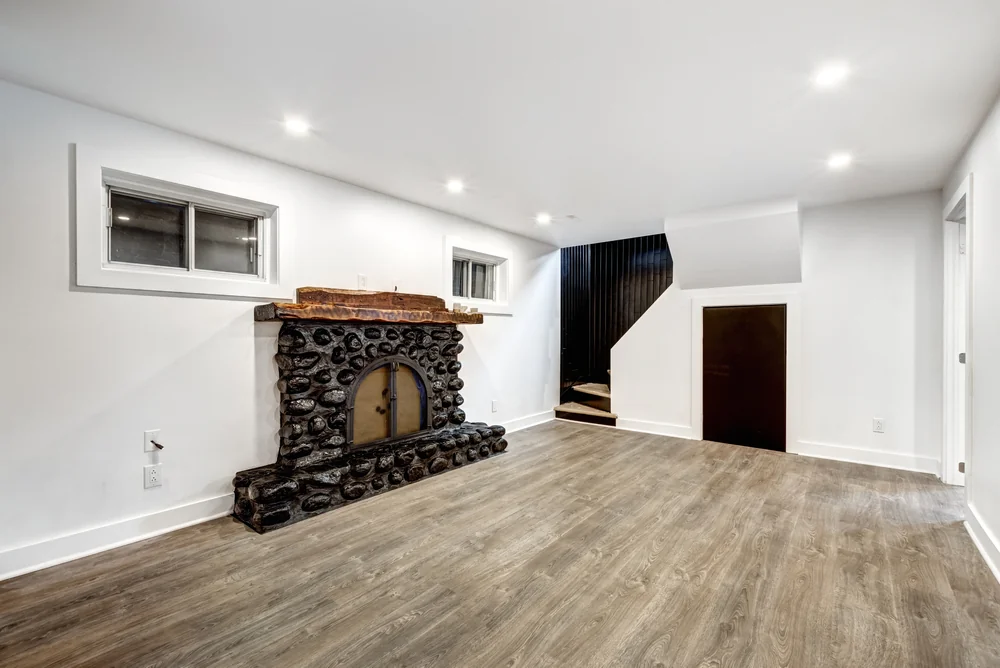
Flooring options range from luxury vinyl plank and engineered hardwood to carpet and tile, depending on how you’ll use the space. We install egress windows where required by code for bedrooms, which also brings in natural light and makes the space feel less like a basement.
Trim, doors, and paint complete the finish work. We also coordinate HVAC modifications to heat and cool your new space properly. In Commack’s climate, you need temperature control year-round, and your existing system may need adjustments or extensions to handle the additional square footage.
Every basement is different, so your specific project might include custom built-ins, specialty lighting, soundproofing, or other features based on how you plan to use the space. We walk through all of this during the estimate so there’s no confusion about what you’re getting.

Most basement finishing projects in Commack run between $30,000 and $80,000, depending on size and what you’re building. A basic 600-square-foot finish with one open room, basic flooring, and standard fixtures will land on the lower end. Add a bathroom, custom built-ins, higher-end finishes, or multiple rooms, and you’re looking at the higher range.
The per-square-foot cost in Suffolk County typically runs $100-$150 for quality work. That includes proper moisture control, code-compliant electrical and HVAC, decent finishes, and licensed contractors who pull permits. You can find cheaper quotes, but they usually cut corners on waterproofing, use unlicensed subs, or skip permits entirely.
Your specific cost depends on your basement’s current condition and what you want to create. If we need to address foundation cracks, install a sump pump, or add egress windows, that affects the budget. Same goes for plumbing rough-ins for bathrooms or wet bars. We give you fixed pricing upfront so you know exactly what you’re spending before we start.
Yes, Suffolk County requires building permits for most basement finishing work, especially when you’re adding electrical, plumbing, or changing the use of the space. If you’re framing walls, installing new circuits, adding a bathroom, or putting in egress windows, you need permits.
The permit process protects you. Inspections ensure the work meets code for fire safety, structural integrity, and proper installation. If you ever sell your home, unpermitted work can kill a deal or force you to rip everything out and start over.
We handle permit applications and coordinate inspections as part of your project. The town wants to see plans, and they’ll inspect at specific stages like rough electrical and final completion. It adds some time to the schedule, but it’s not optional. Working with licensed contractors who know Suffolk County’s requirements means you don’t have to figure this out yourself.
Moisture control starts before we finish anything. We inspect your basement for active water intrusion, foundation cracks, humidity issues, and poor drainage. Long Island’s water table and soil conditions make this step critical, and skipping it leads to mold and failed finishes within a few years.
If you have water coming in, we address that first. Solutions range from exterior grading and gutter improvements to interior drainage systems and sump pumps. Foundation cracks get properly sealed. We also check humidity levels and recommend dehumidification if needed.
Once the space is dry, we use moisture-resistant materials throughout the finish. That means mold-resistant drywall in vulnerable areas, closed-cell foam insulation that doesn’t absorb water, and flooring that can handle below-grade conditions. We also maintain proper vapor barriers and ensure good air circulation. A finished basement in Commack needs to account for humidity and potential moisture year-round, and we build that protection into every project.
Most basement finishing projects take 6-10 weeks from start to completion, depending on size, scope, and permit approval timing. A straightforward 500-square-foot finish with no plumbing runs faster than a 1,200-square-foot buildout with a full bathroom and custom features.
The timeline breaks down into phases. Permit approval with Suffolk County typically takes 2-3 weeks. Then we schedule the work in stages: moisture remediation if needed, rough-in work for electrical and plumbing, framing and insulation, drywall and finishing, flooring and trim. Each phase needs to be completed before the next one starts, and inspections happen at required points.
Weather doesn’t affect interior work, but material deliveries and inspector availability can shift the schedule. We give you a realistic timeline before starting and keep you updated throughout. If you’re planning to finish your basement for a specific reason like a home office or guest suite, factor in at least two months from signing a contract to using the space.
You’ll typically recoup 50-75% of your basement finishing costs when you sell, which is solid for a home improvement project. In Commack’s market where homes average around $578,400, a well-finished basement adds real value and makes your home more competitive.
The financial return depends on how well the work is done and what you create. A properly finished space with a bedroom, bathroom, and living area adds more value than a basic rec room. Buyers pay attention to quality, code compliance, and whether the space feels like actual living area versus a dressed-up basement.
Beyond resale value, you’re gaining usable square footage right now. If finishing your basement means you don’t need to move to a bigger house, you’re avoiding realtor fees, moving costs, higher property taxes, and a bigger mortgage. Most homeowners finish their basements because they need the space today, and the equity boost when they eventually sell is a bonus.
Start with licensing and insurance. Your contractor should be licensed in Suffolk County and carry both liability insurance and workers’ comp. Ask to see proof, and verify the license is current. This protects you if someone gets hurt or something gets damaged.
Find out who’s actually doing the work. Some companies subcontract everything, which means you’re dealing with different crews who may not communicate well or maintain consistent quality. We use in-house crews, which means better accountability and consistency throughout your project.
Get detailed, written estimates with fixed pricing. Vague quotes that say “approximately” or “estimated” leave room for surprise charges later. You want to know exactly what’s included, what materials are being used, and what the total cost is before any work starts.
Ask about permits and how the contractor handles code compliance. Contractors who suggest skipping permits or say “you don’t really need those” are setting you up for problems. Also ask about warranties on workmanship and what happens if something needs attention after the project is complete. A contractor who stands behind their work will put that in writing.