
Hear from Our Customers
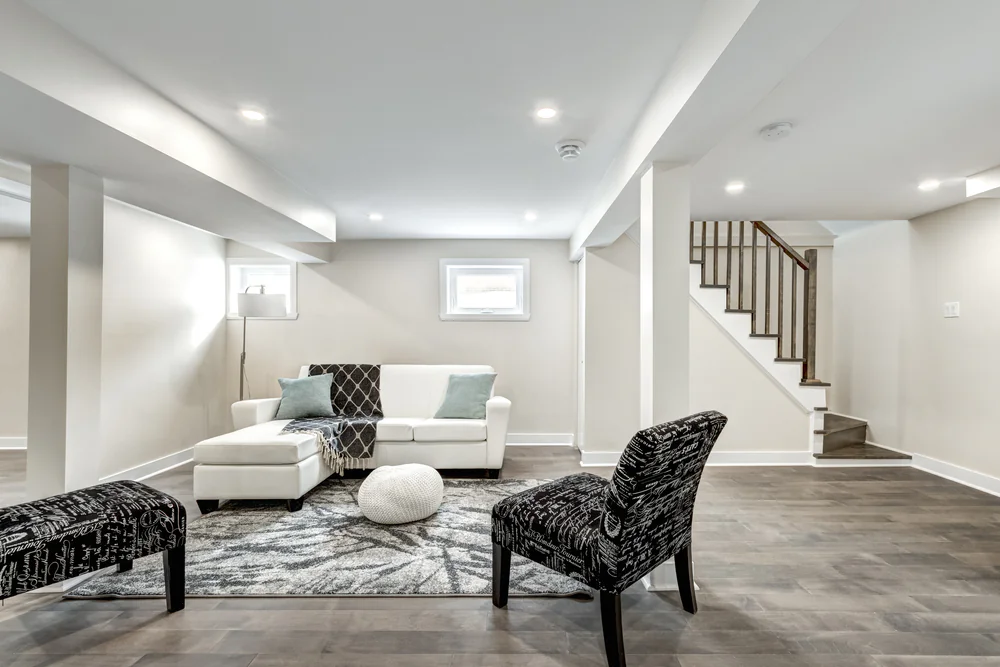
You’re not looking to finish your basement just to check a box. You need space that actually works—a home office that isn’t the kitchen table, a guest room that doesn’t double as storage, or a family room where your kids can spread out without taking over the main floor.
A finished basement in Suffolk County adds real value. Homeowners typically see around 70% return on investment, and properties with finished basements can sell for $20,000 to $30,000 more than comparable homes without them. That’s not a guess—it’s what the numbers show.
But the immediate benefit is what you get to use right now. More room to live. More flexibility when family visits. A space that feels intentional instead of wasted. You’re already paying to heat and maintain that square footage—might as well make it count.
We’ve been handling basement remodels across Suffolk County for nearly a decade. We’re licensed contractors who know the local building codes, permit requirements, and what it takes to finish a basement properly in this climate.
We don’t use subcontractors. Every person working in your home is part of our in-house crew, which means you’re dealing with the same people from start to finish. That consistency matters when you’re trying to get straight answers or stay on schedule.
Manorville homeowners deal with the same challenges as the rest of Long Island—older homes, moisture concerns, and the need for contractors who actually show up and do what they say. We’ve built our reputation on transparency and follow-through, and we back our work with a one-year warranty on workmanship.
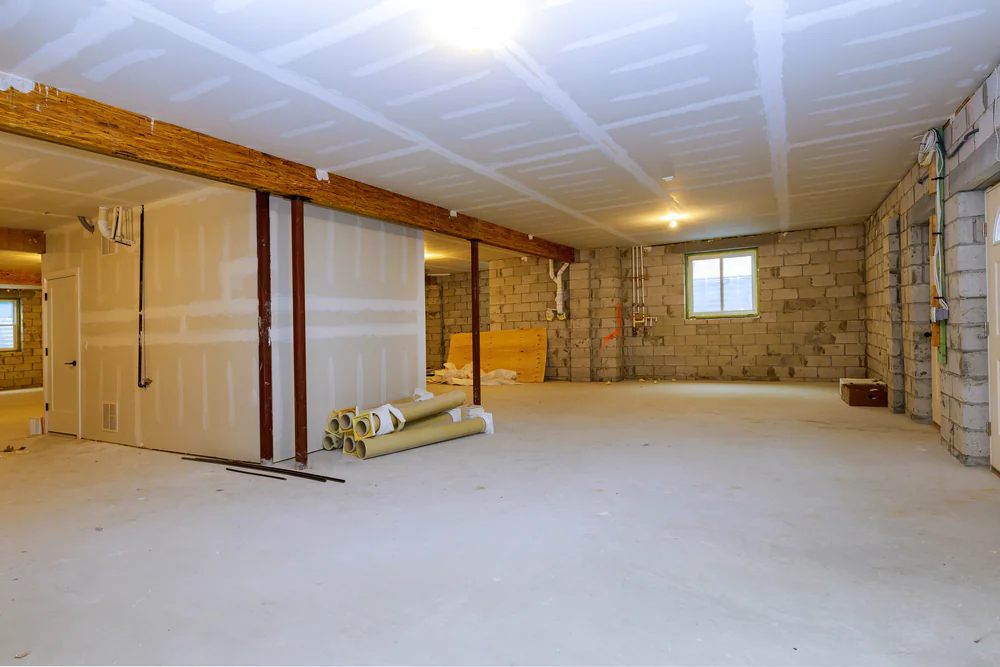
First, we come out to look at your basement. Not to sell you—to assess what you’re working with. We check for moisture issues, measure the space, talk about what you want to use it for, and identify any code requirements like egress windows or ceiling height concerns.
From there, we give you fixed pricing. No ranges, no “it depends,” no surprises halfway through. You’ll know what the project costs before we start, and that number doesn’t change unless you change the scope.
Once you’re ready to move forward, we handle the permits and schedule the work. Most basement finishing projects take between 8 and 12 weeks depending on complexity—longer if you’re adding a bathroom or multiple rooms, shorter for open layouts. We’ll walk you through the timeline upfront so you know what to expect.
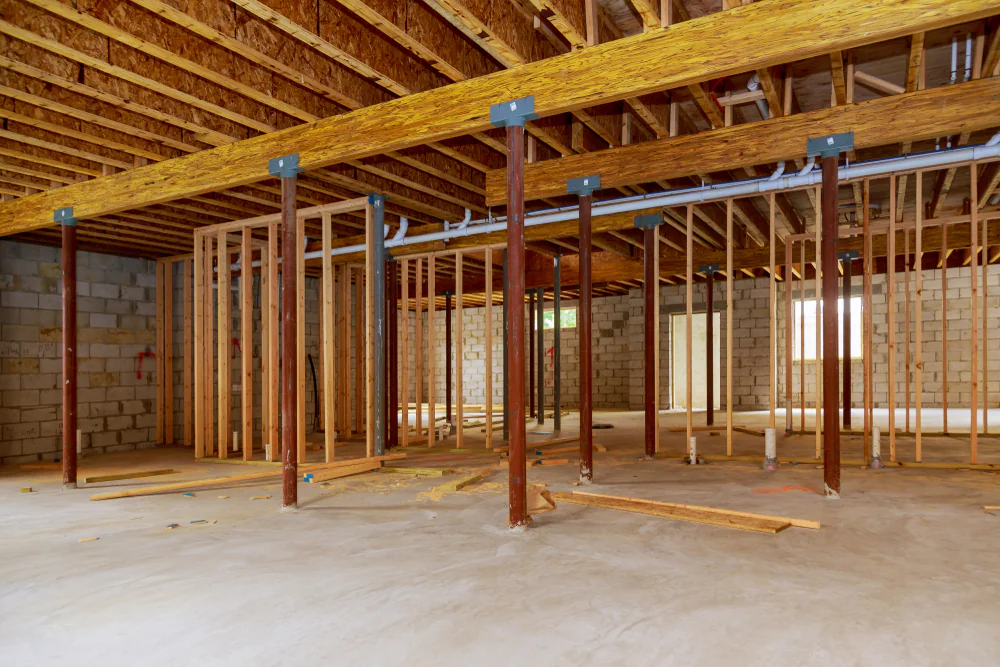
During the job, we focus on moisture protection first. That means vapor barriers, proper insulation that meets New York’s R-15 requirement, and interior drainage if needed. Then framing, electrical, drywall, flooring—all the way through to trim and paint. You’re not left with a half-finished space or a list of things to figure out on your own.
Ready to get started?
Suffolk County has specific requirements for finished basements, and we handle all of them. That includes egress windows for any bedroom space, proper insulation for Climate Zone 4A, ceiling height clearances, and electrical work that passes inspection.
Moisture control is non-negotiable here. Long Island basements sit close to the water table, and cutting corners on waterproofing leads to mold, rot, and expensive fixes down the road. We install vapor barriers, prep for sump pumps if you don’t already have one, and use moisture-resistant materials where it matters.
You’ll also get flooring options that make sense for below-grade spaces—luxury vinyl plank, engineered hardwood, or tile depending on your preference and budget. We’re not pushing the most expensive option. We’re recommending what actually holds up in a basement.
The goal is a finished space that feels like part of your home, not a basement that’s “good enough.” That means drywall that’s smooth, trim that’s tight, and paint that’s clean. The kind of work that doesn’t need excuses.

Most basement finishing projects in Suffolk County run between $98 and $135 per square foot for standard work. That includes framing, insulation, drywall, flooring, electrical, and paint. If you’re adding a bathroom, wet bar, or custom carpentry, expect costs to go up from there.
A 600-square-foot basement typically costs between $58,000 and $81,000 to finish. A 1,000-square-foot space runs closer to $98,000 to $135,000. Those are ballpark numbers—your actual cost depends on layout, materials, and what you’re trying to accomplish with the space.
We give fixed pricing after the initial walkthrough, so you’re not guessing or dealing with a moving target. The price we quote is the price you pay unless you decide to change something mid-project.
Yes. Any basement renovation that involves electrical work, plumbing, or creating livable space requires a permit in Suffolk County. That includes adding walls, installing egress windows, or finishing a basement for use as a bedroom, office, or family room.
We handle the permit process as part of the job. That means pulling the permits, scheduling inspections, and making sure the work meets code requirements. You don’t need to deal with the town or figure out what’s required—we take care of it.
Skipping permits might seem like a shortcut, but it creates problems when you sell. Buyers’ inspectors flag unpermitted work, and you’ll either need to rip it out, get it permitted after the fact, or lose negotiating power. It’s not worth the risk.
Most basement remodels take 8 to 12 weeks. Open floor plans without plumbing usually land on the shorter end—closer to 6 to 8 weeks. If you’re adding a bathroom, bedroom, or multiple rooms with doors, expect 10 to 12 weeks or more.
Permitting adds time upfront, usually a week or two depending on how backed up the town is. Inspections happen at specific stages—framing, electrical, final—and those need to be scheduled and passed before we move forward.
We’ll give you a timeline before we start, and we stick to it unless something unexpected comes up. Older homes sometimes have surprises—old wiring that needs updating, structural issues that weren’t visible—but we communicate those as soon as we find them, not at the end of the job.
Basement finishing typically returns around 70% of what you spend when you sell. So if you invest $80,000, you can expect to add roughly $56,000 to your home’s value. Homes with finished basements in Suffolk County often sell for $20,000 to $30,000 more than comparable homes without them.
But ROI isn’t just about resale. You’re also getting immediate use out of space you’re already paying to maintain. That extra square footage can eliminate the need to move, give your kids their own area, or create a rental opportunity if that’s allowed in your zone.
Quality matters for resale value. A basement finished with cheap materials or sloppy work doesn’t add much appeal. Buyers can tell the difference, and appraisers factor it in. If you’re going to do it, do it right the first time.
Moisture is the biggest risk in any basement project, especially on Long Island where the water table sits high. We start every job by checking for active leaks, dampness, or drainage issues. If there’s a problem, we address it before finishing anything.
That usually means installing vapor barriers on walls and floors, using closed-cell foam insulation that doesn’t absorb water, and making sure there’s proper drainage around the foundation. If you don’t have a sump pump, we’ll prep the space for one or recommend installing it before we close up the walls.
We also use moisture-resistant drywall in areas prone to humidity and avoid materials that trap moisture or grow mold. Finishing a basement without dealing with water issues first is a waste of money—it’ll fail within a few years, and you’ll be tearing it out to start over.
Yes, but there are code requirements you need to meet. Any bedroom in a basement requires an egress window—a window large enough for someone to climb out in an emergency. That means cutting through the foundation, installing a window well, and passing inspection.
Bathrooms require plumbing and proper drainage. If your basement floor is below the sewer line, you’ll need an ejector pump to move waste up and out. We handle that as part of the job, including the electrical and venting required to make it work.
Adding a bedroom or bathroom increases the project timeline and cost, but it also adds the most value. A basement with a full bath and bedroom is far more functional and appealing to buyers than an open rec room. If you’re planning to finish the space, it’s worth considering those upgrades from the start.