Before you sign anything or hand over a deposit, make sure you're asking the right questions. Most homeowners don't — and that's exactly how things go wrong.

Most homeowners start the contractor search the same way — a few Google searches, a couple of referrals from neighbors, maybe a Yelp scroll. Then they meet someone who seems professional, get a quote that sounds reasonable, and sign something they half-understood. A few weeks later, the price has climbed, the crew that showed up isn’t who they expected, and the contractor isn’t returning calls.
It happens more than it should. The FTC received over 81,000 home improvement scam reports in 2024 alone. The good news is that most of those situations were avoidable — not with luck, but with the right questions asked at the right time. Here’s what to ask before you hire anyone.
The goal here isn’t to grill every contractor like a cross-examination. It’s to ask the things that reveal character, accountability, and competence — the things a legitimate contractor will answer without hesitation, and a bad one will fumble or dodge.
Think of these questions as a filter. You’re not trying to trip anyone up. You’re trying to find out, before money changes hands, whether this person is actually set up to do the job right and stand behind it when something doesn’t go as planned.
This one surprises a lot of homeowners: New York State does not issue a general contractor license. Licensing is handled at the county level, and the requirements vary depending on where the work is being done. In Suffolk County, NY, that means a contractor needs a Suffolk County Home Improvement Contractor License — a separate, county-issued credential that requires proof of liability insurance, workers’ compensation coverage, and a passing score on an exam based on local home improvement law.
It’s not just a formality. Suffolk County requires contractors to carry at least $500,000 in liability insurance as part of that license. And if something goes wrong with a licensed contractor, homeowners have access to the Suffolk County Licensed Home Improvement Contractor Restitution Fund — a financial recourse mechanism that doesn’t exist for homeowners who hired someone unlicensed.
So when you ask a contractor whether they’re licensed, don’t stop at yes. Ask for the license number and verify it yourself with Suffolk County Consumer Affairs. A legitimate contractor will hand it over without blinking. Our license number is HI-71285, and it’s verifiable. That’s not a selling point — that’s the legal minimum, and every contractor you talk to should be able to say the same.
If a contractor tells you they’re licensed but can’t produce a number, that’s a problem. If they tell you they don’t need one for your type of project, that’s worth looking into before you go any further.
This is one of the most important questions to ask a contractor, and most homeowners never think to ask it. Here’s why it matters: when you hire a general contractor, you’re not always hiring the people who will actually be in your home. Many contractors — especially larger operations — win the job and then farm the work out to subcontractors. Those subs may be perfectly competent. Or they may be whoever was available that week.
The practical problems with subcontractors are real. You vetted the contractor, but you didn’t vet the crew doing the work. If a sub gets hurt on your property and isn’t covered by their own workers’ compensation policy, you could be exposed to liability. If quality control is an issue, the general contractor may point fingers at the sub, and the sub may point fingers back. And if the sub is juggling three other jobs, your timeline is now at the mercy of their schedule — not yours.
We use in-house crews only. Every person who walks into your home through us is part of our trained team — not a stranger we brought in for this one job. That matters for quality, for accountability, and honestly, for peace of mind. You should know who’s in your home.
When you ask a contractor about their crew, listen carefully. “We work with trusted subcontractors” sounds professional, but it means something different than “our own team handles everything.” Those are two very different answers, and they lead to two very different experiences.
Want live answers?
Connect with a Jaguar Renovation expert for fast, friendly support.
The first set of questions is about legitimacy — making sure the contractor is who they say they are. This next set is about protecting yourself once the work actually starts. These are the questions that determine whether a reasonable project stays reasonable, or whether you end up managing a situation you never signed up for.
Price, timeline, and accountability aren’t awkward topics. They’re the core of any working relationship with a contractor, and any professional worth hiring will welcome the conversation.
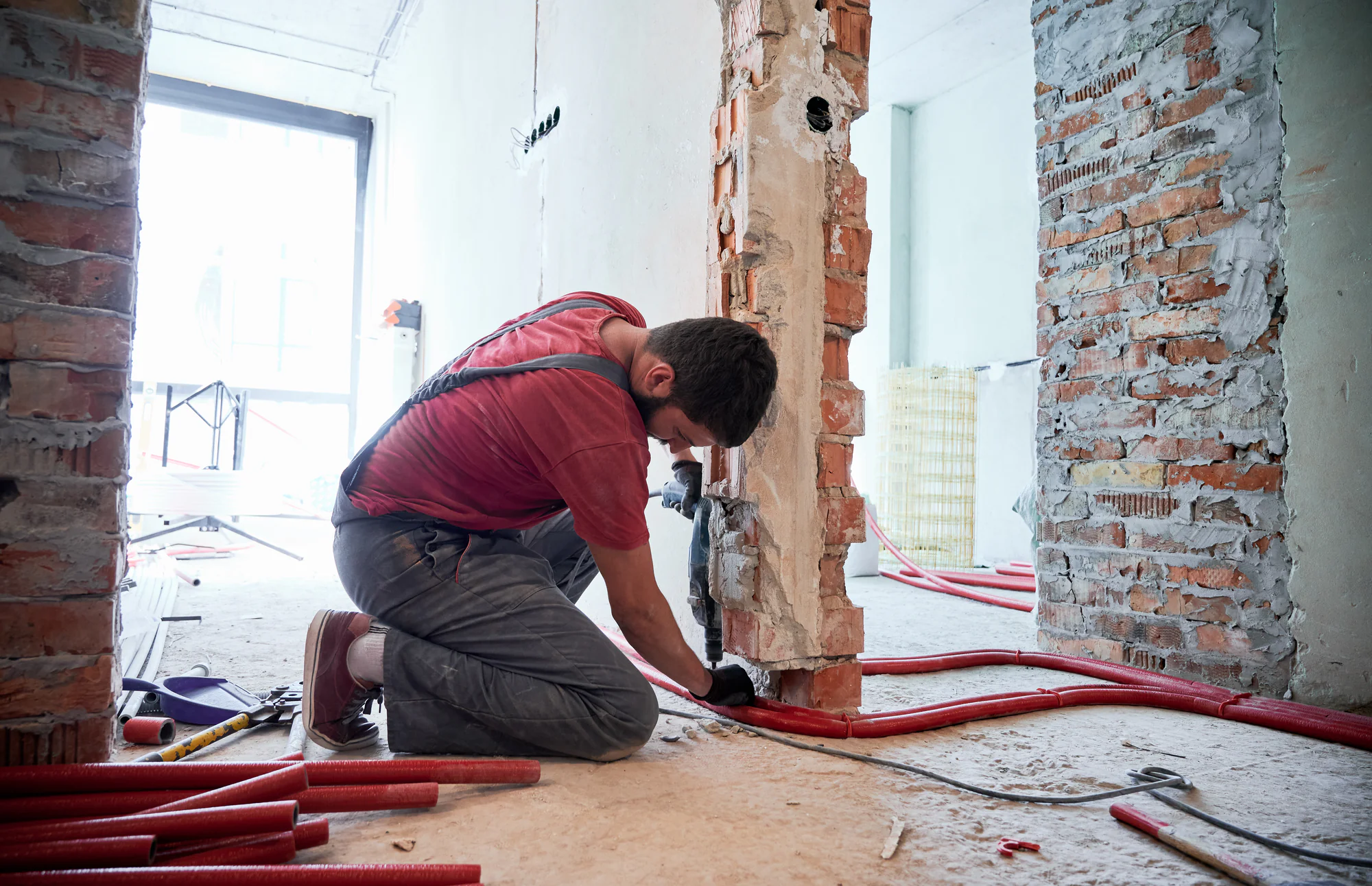
This is where a lot of homeowners get into trouble, and it’s almost always because they didn’t ask this question clearly enough upfront. There’s a significant difference between a fixed-price contract and an estimate — and not every contractor is transparent about which one they’re giving you.
An estimate is a starting point. A fixed price is a commitment. If your contractor quotes you a number and then starts adding change orders for things that any experienced contractor should have anticipated — “we opened the wall and found something unexpected,” “the materials ran a little higher than we thought” — that’s a pattern, not a coincidence. The Better Business Bureau is explicit about this: never pay 100% of a project upfront, and make sure your contract includes a structured payment schedule and a clear approval process for any budget changes.
We operate on fixed pricing. The number in your estimate is the number you pay, unless you decide mid-project that you want something different. If something genuinely unexpected comes up, we talk through it with you before anything changes — not after. That’s how it should work, and it’s how we’ve operated since we started doing renovations across Suffolk County, NY.
When you’re evaluating a quote, look at how it’s structured. Is it itemized — materials, labor, scope — or is it a single number with no breakdown? A detailed estimate signals that the contractor knows what they’re doing and has thought through the project. A vague number is a setup for a conversation you don’t want to have three weeks in.
Two more questions that homeowners often skip — and both of them can cause serious problems down the road.
On permits: in Suffolk County, NY, renovation work that involves structural changes, electrical, or plumbing typically requires a permit from your local building department. Suffolk County is made up of multiple towns — Huntington, Smithtown, Islip, Babylon, Brookhaven, and others — each with its own building department and its own process. A contractor who knows this market has established relationships with those departments and knows what each town’s inspectors are looking for. A contractor who doesn’t know the difference between pulling a permit in Bay Shore versus Port Jefferson is going to create delays and, potentially, failed inspections.
Ask directly: will you handle the permit process, or is that on me? The answer should be that we handle it. Skipping permits might seem like a shortcut, but it creates real exposure — especially when you go to sell the home and unpermitted work surfaces during inspection.
On warranties: the industry standard is a one-year workmanship warranty, and it should be in writing. A verbal promise that “we’ll come back if anything goes wrong” is not a warranty. Ask what’s covered, what’s not, and how long it lasts. We back every project with a one-year written workmanship warranty. That means if something we built or installed fails within a year, we come back and make it right — no debate, no runaround.
The remaining questions worth asking — when can you start, how long will it take, and can I speak with past customers — are important too, but they’re easier to evaluate once you’ve gotten clear answers on licensing, crew, pricing, permits, and warranty. Those five areas are where most contractor problems originate. Get straight answers on all of them, and you’ve already eliminated most of the risk.
Hiring a contractor doesn’t have to be a gamble. It feels that way because most homeowners go in without a framework — and some contractors count on that. The questions above give you a real filter: licensing you can verify, a crew you can trust, pricing that doesn’t move on you, permits handled by someone who knows the local process, and a warranty that’s actually in writing.
Suffolk County, NY has strict building codes, a county-level licensing system that most people don’t know about, and a housing stock full of homes that were built decades ago and need experienced hands. The right contractor knows all of that going in.
If you’re ready to start vetting, or if you just want a straight conversation about your project, reach out to Jaguar Renovation. We’ll get you a detailed estimate within 48 hours and tell you exactly what to expect — no pressure, no surprises.
Summary:
Share: